How To Change Boot Order/Set Default Boot OS In Ubuntu 14.10/15.04 / Linux Mint Or Other Derivatives
Possible deadlock solution
I believe that the deadlock problem can be solved by adding a bounded time to the circular wait. I think by doing so you eliminate the hold and wait criteria needed for a deadlock therefore deadlock is prevented. Picture a 4-way traffic stop where all lights are red and a timer goes on to enable pedestrians to walk in all directions. This illustrates the circular wait and without the timer, there is a deadlock. Coding this is the way I figure it just adding a time constraint condition to the while loop which is a circular or busy wait.
Samsung’s Gear S2 Tizen Watch Launches as Android Wear Opens to iOS
Samsung unveiled its Tizen Linux-based Gear S2 smartwatch, which it teased a few weeks ago at the recent Galaxy Note 5 and Edge S6+ launch. The round-faced watch boasts up to three days battery life and features a rotating bezel to augment the touchscreen UI. It will also be available in a slightly thicker 3G model with up to two hours of life that supports voice calls, according to a report from The Verge.
The Gear S2 features a round, 1.2-inch 360×360 AMOLED display with IP68 dust- and water resistance, as well as WiFi, Bluetooth, and NFC. It measures 11.5mm thick, or about a millimeter thicker than the Apple Watch. The 3G version swells to 13.4mm. The watch runs Tizen on a dual-core 1GHz processor with 512MB RAM and 4GB flash, and it offers a variety of sensors including a heart-rate monitor. The 3G version of the watch will be carried by mobile providers including Verizon, T-Mobile, and AT&T.
Samsung announced a ship date sometime in October but no pricing information as yet. Another important detai: Will the Gear S2 sync with non-Samsung mobile devices? Initially, Samsung did not reveal whether this remained true with the new watch, but now says It will work with all Android 4.4 and higher phones with more than 1.5GB of RAM. AndroidCentral notes that Samsung documentation lists more than 30 non-Samsung models that are supported from a wide variety of vendors.
Android Wear, meanwhile, seems to be heading in an opposite, and more open, direction. This week, Google announced that new Android Wear devices, starting with the LG Watch Urbane, will support synchronization with the latest iPhones (5, 5c, 5s, 6, or 6 Plus running iOS 8.2+).
Future Android Wear devices will also support Apple’s phone, such as the upcoming Asus ZenWatch 2, Huawei Watch, and an upcoming refresh of the Motorola Moto 360. Also onboard for iPhone support is the newly announced, $1,200 LG Watch Urbane Luxe. The round-faced, 24-karat gold variant of the Urbane was developed with Reeds Jewelers and is due to ship in limited quantities in October.
Although not officially supported, older Android Wear watches can also start linking up to iPhones, according to 9to5Google, which downloaded the new Android Wear for iOS app and tested it successfully with the LG G Watch R and Motorola Moto 360. Other models are also likely to work, although that could change with future versions of the app.
According to AndroidPolice, third-party, non-Google apps are currently not supported with the iOS app, and there’s no support for WiFi. However, you get Google Now voice support, fitness features, and the usual notifications for calls, messages, and social networking services.
Samsung Adds Obstacles to Smartwatch Success
The iOS app is not likely to swing a huge number of new customers toward the struggling Android Wear, but it should help. Even in the Apple-friendly U.S. market, Android phones are more common than iPhones, but most iPhone users who can afford it are opting for the Apple Watch. As AndroidPolice notes, “Your average iPhone user likely isn’t even aware Android Wear exists.” The primary users of the Android Wear iOS app will likely be iPhone users looking for a round watch-face and an under $300 price — two attributes the Apple Watch lacks.
As expected, the Apple Watch has quickly eclipsed the cumulative sales of Android Wear devices. According to a new IDC report, Apple shipped 3.6 million Apple Watches in the second quarter, or 19.9 percent of all smart wristwatches and wristbands. In a vendor comparison, Apple trailed only Fitbit, which had 24.3 percent share, and was followed by simpler, fitness-oriented wearables from Xiaomi (Mi Band) and Garmin. Samsung came in fifth with just 3.3 percent share, most of which were from the Gear S as well as its own, non-Tizen-based Gear Fit fitness band, says IDC. Samsung seems to have given up on making any more of its poorly selling Android Wear devices.
While the iOS app removes the last major restriction for Android Wear, Samsung’s Tizen watches face larger obstacles if the company continues to limit sync to Samsung devices. Yet, opening up to other Android phones is far more important. Had Samsung continued with its walled garden policy, it would have faced considerable obstacles to success.
Samsung continues to lead Android smartphone market share and has a larger lead in terms of the installed base, but that share is shrinking as Xiaomi and other mostly Chinese vendors gain in popularity. It is no longer in a position to demand an Apple-like closed ecosystem.
This is especially true because the company also has to convince even its own installed base to give Tizen a chance. Tizen for Wearables looks to be a perfectly suitable alternative to Android Wear and is in many ways superior. This is especially true if you’re interested in a richer feature set including the 3G and bezel ring extensions added to showcase the Gear S2 3G edition. The latest Tizen-based UI on the Gear S2 also looks impressive. Yet, there’s still a large app gap between Tizen for Wearables and Android Wear, which continues to grow its app library.
IDC’s report sums up the situation perfectly: “Given Samsung’s history of making its latest wearable devices compatible only with Samsung’s top models and nearly exclusive reliance on Tizen, the company has limited its potential reach. Whether that trend continues with the Gear S2 will bear close observation.”
Samsung has answered that question appropriately and can now move forward with more confidence especially since the Gear S2 looks to be a quality product.
The core problem is that there can probably only be one Apple at a time, and it’s even conceivable that Apple may be the last closed-source tech company to enjoy such success. Open source has changed the rules of the game, forcing vendors to follow suit. Samsung’s mobile success was built upon open source Android, and Samsung has been the prime mover behind the even more open source Tizen.
Betting on Tizen smartwatches makes sense considering how slow Android Wear sales have been. But that’s enough risk on its own. Then again, there’s still time for Samsung to announce it’s opening up the Gear S2 to Android and iPhone users. In that case, never mind.
Project Calico: Open Source, High-Scale Network Fabric For The Cloud
Cloud developers and operators are facing a challenge: Much of the IT toolkit that has worked well for “silo” architectures and well enough for virtual machine environments isn’t a good match for apps made using containers or for microservices, where components may be not just on different machines but in many locations, and instances may come, go, or multiply. Yesterday’s “network fabric” does not accommodate this activity efficiently or reliably.
Project Calico, an open-source initiative started by Metaswitch Networks, is crafted to provide a new “cloud-friendly network fabric” (my term, not theirs, although they’re welcome to use it).
According to Metaswitch CTO Martin Taylor, in his July 9, 2015, blog post, Calico and containers are flip sides of the same coin: “When we launched Project Calico about a year ago, our main focus was on providing a better way to network virtual machines in OpenStack environments. But over the last 6 months or so, the Calico team has been putting a great deal of effort into the Linux container space, and Calico is now emerging as one of the front runners in container networking.”
For this article, I’ve been asked to help introduce Linux.com readers to Project Calico. A full explanation would take up more than the available space – and Metaswitch already provides several detailed write-ups, including the original July 8, 2014, announcement press release, plus the Project Calico website, particularly “Why Calico?”
So instead, here are some highlights from a phone conversation I had with Christopher Liljenstolpe, Director, Solutions Architecture, at Metaswitch, on Project Calico, why Metaswitch started it, and other interesting and useful things to know.
Daniel Dern: Why did Metaswitch launch Project Calico?
Christopher Liljenstolpe: While Metaswitch is mostly known for voice and VoIP infrastructure for carriers, for the past 30 years we’ve also been writing networking specifications that we license to OEMs – the odds are, something in your network is written by us. So we have the experience on how to work with networking software.
When we started looking at helping our carrier customers move to a virtualized environment, looking at the networking then in OpenStack and now in cloud environments, we said, “That’s unnecessarily complex.”
We began working on a solution – Calico – and to maximize adoption, made it open-source, under the Apache 2.0 License.
DD: What’s the relationship between Metaswitch Networks and Project Calico?
CL: It’s currently sponsored by Metaswitch – most of the work is being done by our employees. But we won’t do free crippleware versus a working paid version. The same code base will be available for free and is what Metaswitch will offer support contracts and consulting services for.
DD: Are there other solutions for these needs? If so, why do we need yet another one?
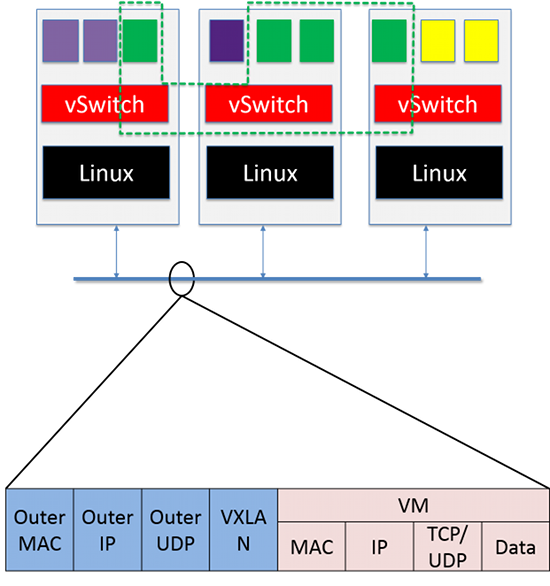
CL: You can use an OpenStack Neutron plugin with things like VMware’s NSX, Nuage, etc. But that means you still have to use VLANs, L2 segments, and complex stateful things, and manage NAT and L3 gateways. Calico plugs into the same Neutron framework. From an API point of view, we appear the same. If, on the other hand, you use Docker, Kubernetes, Mesos, etc., you can use an “overlay” model, with tunneled infrastructures, as in OpenStack – or use a NAT mapping model, using servers’ physical addresses and mapping the port numbers by using service discovery.
But both of these models do things that interfere with application function and/or hurt performance, reliability, and scaling by adding (de)-encapsulation steps, NAT mappings, and hairpin routing, for example.
I’ve talked with Web-scale content networks, financial services, and other companies that have internally developed, proprietary things pretty close to Calico’s architecture. Most have integrated their home-grown solution into their IT, and can’t or won’t change from theirs to Project Calico – although we are talking with some of these companies. We see these existing internal solutions as a validation of our approach, and we can make Calico available to a broader audience.
DD: What led you to develop Calico’s networking architecture?
CL: We went back and looked at the real requirements of scale-out [cloud] environments these days. These environments are containers or virtual machines that talk to each other. They use IP. And you need to be able to apply policy to enforce the characteristics of the communication between endpoints – who can talk to whom, at what speed, etc. I want to be able to say “These endpoints need to talk to endpoints,” with a policy wraparound and provide this in a way that will scale.
Rather than invent or re-invent a solution, we decided to try building an Internet-backbone-ish architecture for the data center and for the scale-out cloud. We use the same tools – BGP [Border Gateway Protocol], routing at the edge instead of at the core. We turn each compute server in the cloud into a router, routing traffic to and from the containers, VMs, and whatever else comes along.
We named this activity Project Calico. And we found out that it does work.

DD: Does running Calico on each device add load to the compute servers?
CL: If I’m already using that computer to do my network forwarding, in a virtualized environment, it’s already doing routing/bridging – it’s already a network device. That’s probably less work than the overlay work and less load than the load of an overlay. Any compute server today can hold more route data than any Cisco or Juniper switch.
DD: What are some important things to know about Calico?
CL: One, because we are using standard IP techniques, the things that people take as difficult in the data center come for free – like IPv6. Calico has supported IPv6 and included a fully functional IPv6 solution for OpenStack from Day 1. The Linux kernel knows how to do both IPv6 and IPv4. When we do run into issues like overlapping addresses, there are solutions for this, using IPv6 and IPv4… We are building on existing tools.
Two, we’ve designed Calico to support the general use case of the cloud environment (the 99.9+% case) in a very simple, scalable way – and one that degrades gracefully in failure scenarios, rather than building fragility and scale limits into the solution to support the very small corner cases that still might exist (such as non-IP workloads). Those can be handled via a special-case mechanism, just as they are on the general Internet.
DD: How does Calico interact with the network I’ve got?
CL: Calico talks to the outside world with existing protocols. It can talk to existing switches and routers. It’s the same type of IP packets – unlike the overlay environments, where if I have to interact with legacy or hardware-based infrastructure, I have to put “on/off” ramps, de/re-encapsulate the tunnel, in front of everything that isn’t part of the overlay. In the Calico model, each VM or container is just an endpoint. If you have a NAS farm, it won’t have Calico on the NAS head units – and that’s OK, those are IP addresses, they can talk to other IP addresses. You can turn Calico on in one node of your network and leave everything else exactly the way it is.
DD: Who’s currently using/testing Calico?
CL: We are in trials with a number of large financial services firms, SaaS, and hosting providers. We also have published integrations and partnerships with projects and companies like Kubernetes, CloudSoft, Mirantis, Piston Cloud (now Cisco), Canonical, and others.
DD: Where can people get Calico?
CL: Calico is available through GitHub, or you can go to “Get started on OpenStack VMs” and “Get started on Docker containers.” And here’s information on getting involved and on using Calico.
DD: Thank you – this has been fun!

Security Considerations When Moving from VMs to Containers
We recently ran a sponsored series from Fox Technologies on Linux.com. We want to thank the company for its support and for sharing useful information for SysAdmins and developers alike. Fox Technologies is continuing the conversation with a free webinar September 17 that will address security considerations in moving from VMs to containers. More information about this webinar is below.
Taking Your Team Live With Containers
Learning from 15 years of AIX, HP-UX and Solaris Partitions in production – Why moving from VMs to Containers will make your Linux Security headache grow.
Application containerization, and bringing on the supporting technology underpinnings on Linux to make this work has made rapid progress over the last two or three years. Out of necessity most of the focus has been initially supporting DevOps. Productionising Cloud scale solutions using Container based technologies is still a new experience to many, and there can be some serious security pitfalls to be considered and mitigated early in your Production Ops design, especially if you are starting first with a move away from Virtual Machine based infrastructure.
This will be a discussion about the challenges organizations face in implementing Linux Container Production Operations, focused on the security strengths and limitations of various strategies for accomplishing this, and the paths already taken by your existing UNIX support teams that will also get your new Linux Container based solution through its first Audit.
Please register for this webinar today!
Alliance for Open Media Established to Deliver Next-Generation Open Media Formats
Seven leading Internet companies today announced formation of the Alliance for Open Media – an open-source project that will develop next-generation media formats, codecs and technologies in the public interest. The Alliance’s founding members are Amazon, Cisco, Google, Intel Corporation, Microsoft, Mozilla and Netflix. The new Alliance is committing its collective technology and expertise to meet growing Internet demand for top-quality video, audio, imagery and streaming across devices…
Read more at aomedia.org
IBM Works with French Researchers on Exascale Computing Project
Project aims to develop the first computer with the power to perform a billion billion calculations in one second.
The French high-performance computing agency, GENCI, and IBM are working on a project to develop exascale computing. An exascale computer is a computer capable of at least one exaflop or a billion, billion floating-point operations in one second – or a thousand times more powerful than a petabyte scale computer, the first of which was introduced in 2008.
Read more at ZDNet News
Intel’s Skylake Is Beautiful
![]()
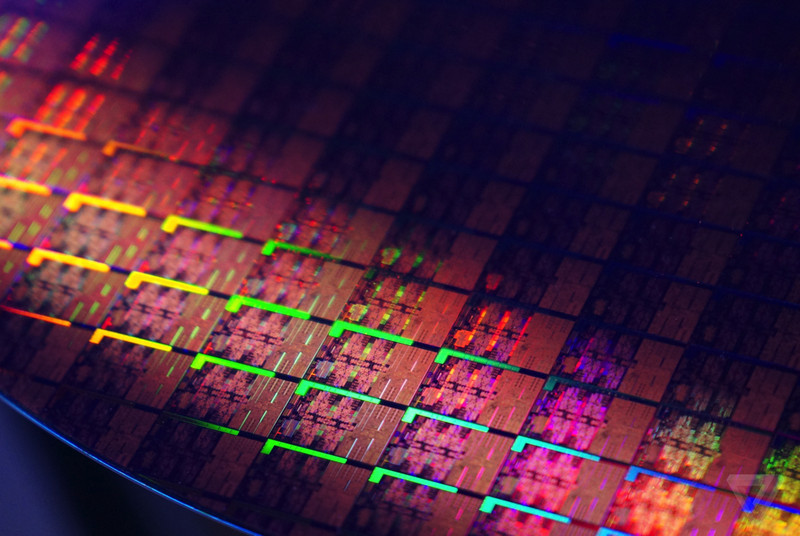
There are many superlatives you’ll hear this week about Intel’s new sixth-generation Core (codename Skylake) processors. They are fast and efficient, they can do a whole heap of other things beyond pure computation, and they’re enabling a new generation of thinner and longer-lasting mobile PCs. The one thing you probably won’t hear is how these new chips look — which is fair enough since you’re supposed to use them, not look at them.
Still, there’s an undeniable techno beauty to these chips, which I thought I’d capture for posterity and for kicks out here at IFA in Berlin. Below, you’ll find a collection of photos of a real wafer of 14nm Skylake processors, exactly like the ones that will be going into millions of new devices …
Bitcoin Developers to Tackle Security And Scalability
Bitcoin contributors and developers released an open letter that asked the cryptocurrency’s community to come together to reach a technical consensus on the currency’s security and scalability.
“The bitcoin developer community is dedicated to the future of bitcoin, looks after the health of the network, strives for the highest standards of performance, and works to keep bitcoin secure on behalf of everyone,” said the letter.
Read more at ZDNet News
How To : Install NVIDIA 352.41 Graphics Drivers in Ubuntu/Linux Mint Systems
The latest version of Nvidia Graphics driver for Linux which is Nvidia 352.41 has been released and is available for download. It comes with plenty of fixes and changes. This article will guide you to install Nvidia 352.41 in Ubuntu and Linux Mint systems.
Fixes
- Added support for the following GPUs:
- GeForce GTX 950 Quadro M4000 Quadro M5000
- Fixed a bug that caused VDPAU to only display the top half of a video frame when decoding and displaying H.265/HEVC encoded video streams.
- Fixed a bug that caused the X server to crash if an OpenGL application tried to allocate a drawable when GPU-accessible memory is exhausted.
Read full article here