Home Blog Page 1029

How To Talk To Your Company About FOSS

Free and open source software

Free and open source software (FOSS) has made huge inroads over the last decade or two, especially in the corporate world. Even so, some legal departments can be wary of their organizations using or contributing to FOSS. Convincing the lawyers, and the firms employing them, requires education according to Andrea Casillas and Deb Nicholson of the Open Invention Network. At this year’s LinuxCon North America, Andrea and Deb are giving a talk…

Read more at OpenSource.com

Linux Foundation Brings Together Industry Leaders to Advance Cloud Object Storage Technologies

The Linux Foundation today announced a new effort to define and promote open source software and standards for cloud object storage technologies. The new Collaborative Project is the Kinetic Open Storage Project and includes founding members Cisco, Cleversafe, Dell, Digital Sense, Huawei, NetApp, Open vStorage, Red Hat, Scality, Seagate, SwiftStack, Toshiba, and Western Digital.

The Kinetic Open Storage platform has gained broad interest from both hardware and software players in the storage industry and is seen as a foundational technology for providing open source object storage on next generation, Ethernet-enabled storage devices.

Read more at The Linux Foundation

​Ubuntu Linux Is Coming to IBM Mainframes

Thanks to customer demand, IBM and Canonical are working on bringing Ubuntu to the Big Blue’s z System mainframe. At LinuxCon, IBM and Canonical announced that Ubuntu Linux will soon be running on IBM mainframes.

According to Ross Mauri, IBM’s General Manager of System z, and Mark Shuttleworth, Canonical and Ubuntu’s founder, this move came about because of customer demand. For over a decade, Red Hat Enterprise Linux (RHEL) and SUSE Linux Enterprise Server (SLES) were the only supported IBM mainframe Linux distributions.

Read more at ZDNet News

Docker Working on Security Components, Live Container Migration

Docker developers take the stage at ContainerCon and discuss their work on future container innovations for security and live migration. Containers are one of the hottest topics in IT today and at the LinuxCon USA event here there is a co-located event called ContainerCon, dedicated to this virtualization technology.

Read more at eWeek

Linux Foundation Brings Together Industry Heavyweights to Advance Linux on the Mainframe

The Linux Foundation today announced the Open Mainframe Project. This initiative brings together industry experts to drive innovation and development of Linux on the mainframe. Founding Platinum members of the Open Mainframe Project include ADP, CA Technologies, IBM and SUSE. Founding Silver members include BMC, Compuware, LC3, RSM Partners and Vicom Infinity. The first academic institutions participating in the effort include Marist College, University of Bedfordshire and The Center for Information Assurance and Cybersecurity at University of Washington.

In just the last few years, demand for mainframe capabilities have drastically increased due to Big Data, mobile processing, cloud computing and virtualization. Linux excels in all these areas, often being recognized as the operating system of the cloud and for advancing the most complex technologies across data, mobile and virtualized environments. Linux on the mainframe today has reached a critical mass such that vendors, users and academia need a neutral forum to work together to advance Linux tools and technologies and increase enterprise innovation.

Read more at The Linux Foundation

New IO Visor Project to Advance Linux Networking and Virtualization for Modern Data Centers

The Linux Foundation, the nonprofit organization dedicated to accelerating the growth of Linux and collaborative development, today announced the IO Visor Project. Founding members of IO Visor include Barefoot Networks, Broadcom, Canonical, Cavium, Cisco, Huawei, Intel, PLUMgrid and SUSE. This Linux Foundation Collaborative Project will advance IO and networking technologies to address new requirements presented by cloud computing, the Internet of Things (IoT), Software-Defined Networking (SDN) and Network Function Virtualization (NFV). 

Read more at: The Linux Foundation

LinuxCon Coverage: Collaboration Can Change the World

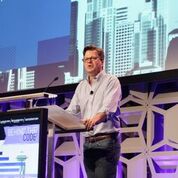
Linux-foundationToday, Jim Zemlin (Executive Director at The Linux Foundation) opened LinuxCon North America in Seattle with a welcoming keynote. Here is a quick summary of this morning’s keynote addresses.

Addressing a packed ballroom, Jim Zemlin thanked the conference sponsors, promised “tremendous content” in the days ahead, and introduced two brand-new projects:

Through support of these and other projects, Zemlin described some of The Linux Foundation’s current goals:

  • Encrypting the Internet (through Let’s Encrypt)

  • Defining the portability layer of the cloud (with the Open Container Initiative)

  • Funding the timekeepers of the Internet by supporting NTPD

  • Helping improve the security and stability of the Internet (Core Infrastructure Initiative)

  • Supporting the open source community through many projects

  • Supporting learning through edX

  • Supporting diversity in open source (through Ada Initiative and more)

zemlin-2015According to Zemlin, The Linux Foundation believes that through projects like these “collaboration can change the world.” Zemlin stated that the reason open source is successful is because the people involved are unique. He said The Linux Foundation believes in developers and encourages participation at any level. Zemlin then showed a video describing the experience of Zachary Dupont, who wrote to his hero Linus Torvalds as part of a school project and was rewarded with a personal introduction.

Following Jim Zemlin were Dr. Angel Diaz (Vice President of Cloud Technology and Architecture, IBM) and Ross Mauri (General Manager, IBM z Systems), who presented the keynote: “Unleashing the Full Potential of Linux and Open Technologies​ ​to Fuel New Innovation​.” This talk set the stage for a major announcement from IBM that, according to Mauri, combines the best of Linux and open source with the best of enterprise computing.

Mauri announced two new IBM LinuxONE systems: the Emperor and the Rockhopper, which can scale up to 8,000 virtual machines or thousands of containers in one system. The systems feature a new “elastic” pricing approach and will work with open source software such as Apache Spark, MariaDB, PostgreSQL, and Chef. Mauri, who was joined on stage by Mark Shuttleworth (Founder of Canonical) announced that IBM will distribute the Ubuntu operating system on LinuxONE systems. This announcement comes just as the industry marks 15 years of Linux on the mainframe. Zemlin then returned to the stage with Mauri for another announcement: The Open Mainframe Project.  As part of its role in this collaborative project, IBM will contribute predictive analytics code.

The Collaborative Economy Is the Future

The next keynote talk “How Collaborative Systems Are Reinventing Capitalism” was presented by Robin Chase (co-founder of Zipcar and author of Peers Inc). Chase described how open collaborative systems think of customers as member and co-creators, rather than consumers. She said these systems take advantage of excess capacity, which can be thought of as sharing, and she cited such companies as Airbnb and BlaBlaCar as examples.

Chase stated that the idea behind Peers Inc builds on taking advantage of certain strengths: the Individual (Peers) and the Industrial (Inc). She described these complementary skill sets as “swimming in a sea of excess capacity” that can be reached through in one of three ways: Slicing (as in the example of Zipcar), Aggregating (Airbnb), and Opening (as in data). Chase said that diversity is the basis of this model and that through such collaborative efforts, three miracles can occur:

  1. We can defy the laws of physics.

  2. We can tap exponential learning.

  3. The right person will appear.

Chase reiterated that “the collaborative economy is the future” and challenged the audience to consider examples such as the GPL, Creative Commons, and Blockchain as ideas on which to build a new sustainable equitable economy.

Next up, Marianna Tessel (SVP Engineering at Docker) presented “Full Sail Ahead: What’s Next For Container Technology.” She described how container technology is transforming the application landscape, and cited the example of bioboxes — a standard for creating interchangeable bioinformatics software containers. Tessel also described how container technology is evolving in two paradoxical directions: It is becoming more sophisticated with deeper complexity while at the same time becoming simpler and easier — like a cruise ship sailing smoothly over water with a complicated engine room driving it from below. Co-presenters Diogo Monica and Michael Crosby presented demos of Docker security in action.

These diverse talks made up today’s morning keynote portion of the conference. Other keynotes and many technical talks will be presented in the next few days and more coverage of LinuxCon is to come.

Best Lightweight Linux Distros

distro-arch-1 copy
You might wonder why you should care about lightweight Linux distributions in the era of multicore processors and inexpensive RAM. Basically, there are three points that make lightweight distros important: 
1) They can revive old hardware, bringing new life into it; 2) They can power modern, but low-power systems such as Raspberry Pi; and 3) They can run on the most powerful modern hardware, reserving resources for users instead of consuming them themselves.

Here are some handpicked Linux distros, suitable for any of the three use cases mentioned above. Other “lightweight”’ distros have been omitted as the focus here is on easy-to-install distros that which can be used as full-blown systems. You can also see our 2017 guide to lightweight Linux distros.

1: Arch Linux

Those looking for lightweight distros may be better off with Arch Linux with a lightweight DE installed on it. Frankly, the question boils down to the desktop environment (DE) running on a system and how bloated the distro is itself.

Because Arch itself is bare minimum distro, there won’t be any bloat that comes with some distributions. There are many lightweight DEs available for Arch Linux; in fact, I would be surprised if a particular DE was not available for Arch. Some of the lightweight DEs suitable for Arch include i3, MATE, LXDE (LxQt), OpenBox, etc.

You can easily install multiple DEs on Arch to see which one works the best on your hardware. However, to keep your system optimized, remove what you don’t use and keep only what’s going to run on your system. Although everything sounds good for Arch; on the flip side, Arch could be harder to install; I have written a guide to assist users in getting started with Arch Linux.
distro-Puppy-2

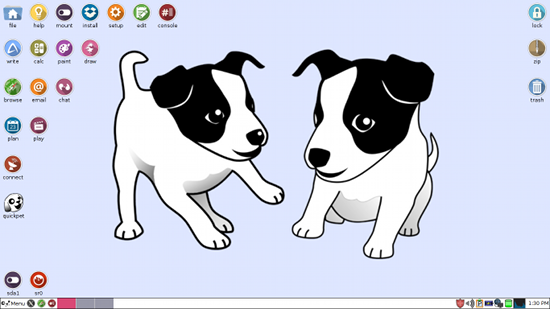
2: Puppy Linux

Puppy Linux is undoubtedly one of the lightest distros out there. It has also been around for more than a dozen years. Puppy can boot directly from the RAM and takes very little space, if you choose to install it. Additionally, if you want to run Puppy Linux from DVD, it can use the DVD as the storage device and, as you install programs or update the system, it will persistently write to the drive. So, once you have installed a program, it will remain on the DVD.

If you are using a USB, which I recommend, Puppy uses a better write-cache system to extend the limited life of USB drive. Puppy also comes with a decent set of lightweight applications such as AbiWord, MyPlayer, etc., so users can get started as soon as it’s booted.

Over time, Puppy has changed base from one distro to another. The latest version, Puppy 6, is based on Ubuntu 14.04 LTS, and as a result offers a longer shelf life.
distro-Trisquel-3

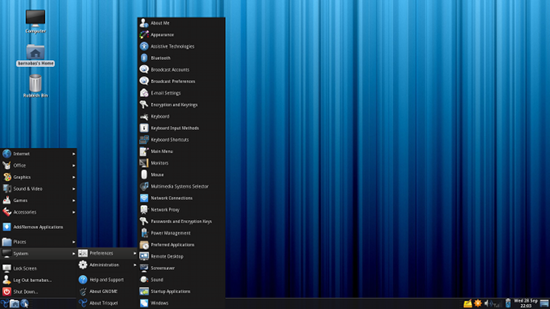
3: Trisquel Mini

Trisquel Mini is another lightweight distribution that is based on Ubuntu Linux. It’s a sub-project of the Trisquel distribution and is aimed at low-powered PCs. The distro uses LXDE as the default desktop environment to keep it light. It comes with a decent set of applications including AbiWord, MPlayer, and Midori web browser.

Similar to its parent project, Trisquel Mini aims to offer only open source applications and comes without any non-free drivers, which may make it harder to run on hardware with proprietary chips for things like wireless. Because Trisquel Mini is based on Ubuntu, it won’t be hard to find non-free drivers for your hardware.
distro-mint-mate-4

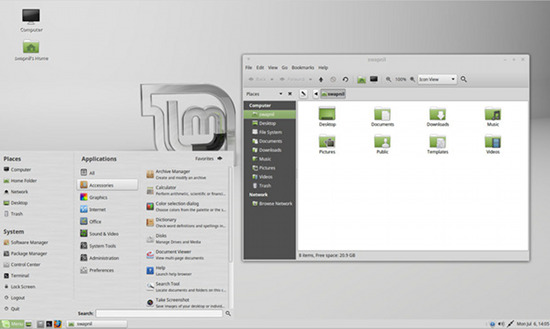
4: Ubuntu MATE + Linux Mint MATE

This is a tie. Ubuntu MATE is the newest contender in the list of lightweight distros after Martin Wimpress founded the project along with Canonical employee and Ubuntu developer Alan Pope. MATE was already well known to the world of lightweight DEs, thanks to Linux Mint. Although MATE (Linux Mint and Ubuntu) is certainly not as lightweight as Puppy, it falls in the category of those distros that reserve most system resources for applications instead of being a resource hog themselves.

Of all the lightweight distros, these two are the most polished. Linux Mint Mate is especially good looking, thanks to the Mint Menu and extra attention it receives from the Linux Mint team.
distro-Lubuntu-5 copy

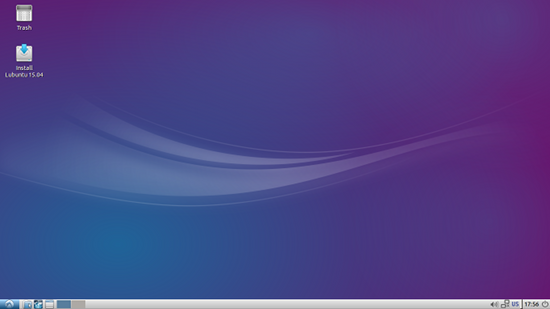
5: Lubuntu

Lubuntu is another lightweight distribution that is also an official flavor of Ubuntu Linux. It’s based on LXDE, which has merged with Razor-qt and is being developed as LXQt. As an official flavor of Ubuntu (like Ubuntu MATE), Lubuntu has access to all Canonical resources such as drivers, codecs, and PPAs.

I don’t have “really” old hardware on which to pit Lubuntu against MATE, but I found them both to be decent on my systems. However, I prefer Ubuntu/Linux Mint MATE over Lubuntu as the look and feel is more polished and modern.
distro-Debian-6

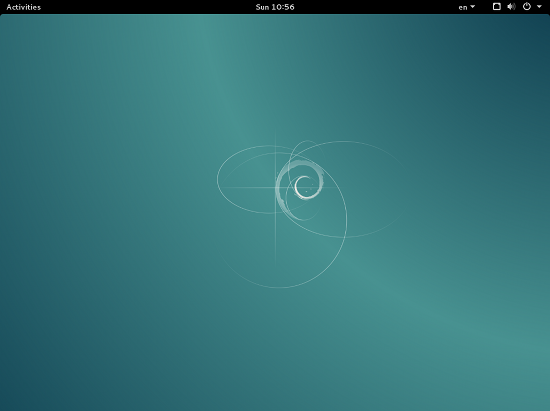
6: Debian

Debian, the mother of all Ubuntu-based distributions, doesn’t often make it to these kind of lists, but the fact is that Debian is a very lightweight distribution. Users can install a bare minimum system and then choose the lightweight DEs available for it, including Xfce4, MATE, LXDE, etc.

I have used Debian on older systems, where Ubuntu would not even boot.
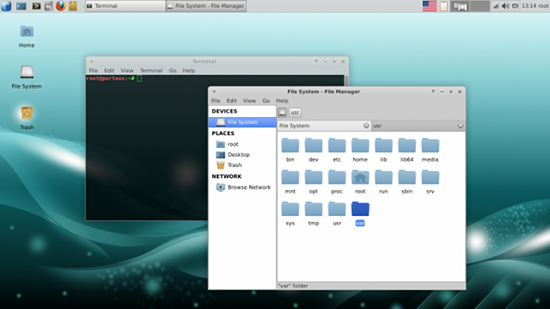
distro-porteus-7

7: Porteus

Porteus is based on Slackware, and similar to Puppy Linux, is aimed at running from removable media such as DVD or USB drive. However it can also be installed like a regular distro. It supports all lightweight DEs including LXDE, KDE4, Razor-qt, MATE, and Xfce. Although it is based on Slackware — which can be hard to install — Porteus is targeted at less experienced users.

One of the biggest differences between Porteus and the other distros mentioned here is that, instead of installing packages, it uses a modular approach. It has pre-compiled packages called modules, which users can activate or deactivate simply by clicking on them. Because this happens quickly, the overall distribution appears to be blazing fast.

Conclusion

These are just a few of the many lightweight distributions available; you can find hundreds on DistroWatch, for example. I have picked the ones that enjoy some stability, thanks to the communities backing these projects. This offers some assurance that the distro won’t disappear next year, which can happen with less-used, niche distros. The distributions mentioned here also meet the criterion of being easy to install (except for Arch Linux, which I use as a my primary distro). For this reason, I didn’t add Gentoo to the list; you have to compile everything, and that can be discouraging for a new user. The same is true for Tiny Core Linux.

So, which of these distros do you use? Do you have any tips to make them even lighter? Share your thoughts in the comments below.

(See also Carla Schroder’s picks — updated Feb 2016.)

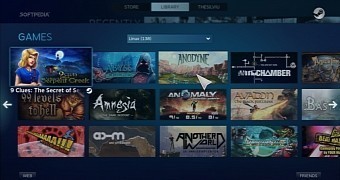
Valve Drops Suspend Function for SteamOS Due to Poor Support in Linux Graphics Stack

ValveValve is making some hard choice for SteamOS, and it looks like they are having some issues with the support for various components. In this case, it’s about the support for suspend, which is not all that good, forcing them to drop it from the operating system.

Suspend is a function that does just that. It suspends the operating system, and users can easily resume working afterwards. 

Sandbox Bypass in Android Google Admin Console Revealed

A researcher has unveiled the details of a vulnerability in the console after Google failed to patch the flaw. A security flaw allows third-party applications to bypass sandbox restrictions in the Google Admin console has been disclosed.

Read more at ZDNet News