
Home Blog Page 1032

Opening Up Computers to Millions of Individuals With Disabilities

Computer-kaleidoscope-graphic

According to the latest numbers from the World Health Organization, over a billion people in the world live with some sort of disability. Addressing the various accommodations, abilities, and disabilities of the world’s largest minority may seem like a daunting task for developers of all stripes, but Colin Fulton is up for it. He wants to change the way accessibility is viewed and perceived in the Linux and open source communities.

Read more at OpenSource.com

How To: Install/Upgrade to Linux Kernel 4.1.5 in Ubuntu/Linux Mint Systems

The Linux Kernel 4.1.5 is now available for the users, announced Linus Torvalds. This Linux Kernel version comes with plenty of fixes and improvements. This article will guide you to install or upgrade to Linux Kernel 4.1.5 in your Ubuntu or Linux Mint system.

Read more at YourOwnLinux

NASA Wants You to Design a Smartwatch App For Astronauts

NASA is hosting a challenge to build a smartwatch app that will allow astronauts in space to easily access information and tools. NASA has posted a contest to Freelancer requesting a smartwatch app that could be used by astronauts in space…

Read more at CNET News

What is the Importance of Clipping Path

Clipping path is a well-known aspect of graphic design. Most businesses (especially online merchants) prefer to showcase specific items without background. These business owners would prefer to focus on the items in order to attract their target customers, the consumers will also get a pretty great idea about the product. With top quality Photoshop clipping path services, website designers can create websites that feature high impact images designed to attract target cons.clipping path is a well-known aspect of graphic design. Most businesses (especially online merchants) prefer to showcase specific items without background. These business owners would prefer to focus on the items in order to attract their target customers, the consumers will also get a pretty great idea about the product. With top quality Photoshop clipping path services, website designers can create websites that feature high impact images designed to attract target cons

The photo industry has undergone a massive development in the recent times. The world of photography has changed entirely thanks the advancement of technology. The old method of photography has long become obsolete with the onward march of the new era of photography. Apart from the aspect of digital imaging, a major role is being played by the computers in photography. A photo-software helps in the manipulation of images in as many ways as required. This has ended up in making the photo business all the more lucrative. There are quite a number of companies that offer services. There are various companies offering image clipping path services and one must make proper research before taking the services of a professional company. There are a number of benefits that a clipping path company offers to its clients.


There are some of the most basic aspects or features that draw the difference between a clipping path company and other photo companies. The difference issues from the quality of work that they deliver to the clients. They offer remove backgroundservices at quite reasonable cost while their team of able, worthy, experienced, skilled, and committed professionals deal with the complete photo work with ease and comfort. Their management is aware of the fact that it is important to have both experienced and skilled professionals. The workers are offered training from time to time so as to improve the quality of services. The most important criteria are experience and expertise. Maintenance of quality in delivering services is another important criteria. Clipping path services are acceptable for publishing homes that are legendary for activity outstanding printing work. These are the companies that utilize these services in abundant wider intellect. Clipping paths services also are acceptable for a range of printing practice companies. Agencies and style studios conjointly utilize clipping path services ebulliently.

Google Launches Android Experiments to Showcase Your Most Creative Apps

Having recently become a newly minted subsidiary of Alphabet, Google seems to be renewing its focus on its core businesses — Android, Search, and YouTube. In keeping with that, today Google announcedAndroid Experiments, a site dedicated to encouraging and showcasing projects built off the OS.

A counterpart to Google’s Chrome Experiments that was launched in 2009, the site is open to everyone. Anyone with the required software chops can submit projects and demos, as long as they meet certain requirements. As stated, all projects must be open source, work on Android 4.4 (KitKat) and higher, and “explore how we interact with our devices, in small and big ways.” 

Read more at The Verge

LinuxCon Preview: Q&A with SUSE’s Michael Miller

suse-logo-2As a preview of next week’s LinuxCon in Seattle, we asked keynote speaker Michael Miller of SUSE to answer some questions about openness in IT infrastructure and what it means for Linux and SUSE.

For more from Michael Miller, check out his keynote presentation at LinuxCon, “Open Source Code: It’s in our DNA,” in which he will talk about open source, the progress that has been made, and why now is the perfect time to be building the future of open source together.

Linux.com: What does being open mean in IT infrastructure?

Michael Miller: Openness in IT infrastructure is about so much more than simply the availability of source code. Being Open Source is, to be sure, a huge boon for any organization in so many ways, including stability and security. But being truly “Open” runs even deeper. It means having server management tools that work well with systems from multiple vendors. It means having your choice from a wide array of virtual machine hypervisors. It means avoiding vendor lock-in. That’s what being Open means.

Linux.com: What does it mean to be open by design?

Michael Miller: Being open shouldn’t be an afterthought. All those things I just mentioned – Open Standards, Open Source, choice of systems, freedom from lock-in – should be baked in to every project. Right from the start. This is not only the right thing to do, but absolutely critical for any organization looking to keep their IT departments running smoothly and efficiently into the future.

Linux.com: How is SUSE adapting to this new model of collaboration in IT?

Michael Miller: Adapting is something we’re pretty good at. SUSE’s motto is, not coincidentally, “We adapt. You succeed.” Luckily, SUSE has been building software and systems, with openness in mind, since 1992. This is what we do, it’s who we are. Open is in our DNA.

Linux.com: What are some of the main ways that Linux is optimizing workloads on these new open platforms?

Michael Miller: What comes immediately to mind for me is the concept (and now reality) of Linux containers. Though container technology has been in Linux for some years, its only recently that the implementation and tooling has started to align with how people really work. This is a significant change and could result in a fundamental paradigm shift that helps us evolve beyond the traditional concepts of develop, deploy and manage.

Linux.com: Why is open infrastructure more necessary today than ever before?

Michael Miller: Well, first off I have to say that it has always been important. But, that said, with the evolution of more and more software-defined elements in the data center, open is actually becoming even more important. If we replace proprietary systems with software-defined but locked-in stacks we’re not progressing. It is critical that we keep the concepts of choice and flexibility in mind as we evolve further towards our (open source) software defined destiny.

MMiller

As Vice President of Global Alliances, Marketing and Product Management for SUSE, Michael Miller is responsible for growing the SUSE business globally through key alliances, innovative marketing and strategic business development. Miller has over 16 years of experience across a broad range of global leadership roles, including senior management positions in engineering, product management, marketing, sales and business development. Miller applies a practical and results-driven approach to building teams, creating alliances and developing solutions for the enterprise market.

The Potential of the Blockchain: LinuxCon Keynote Preview

bitcoinFor the past few years I have been fascinated by the rise of Bitcoin and the technology that underpins it: the blockchain. Like Linux, the blockchain is an example of the continued march towards distributed systems and technology. Trust is a central element of these types of systems and the blockchain can enable this through its unique technology. If we have unique person-to-person trusted transactions without the need for a centralized institution all types of innovation and efficiency can be unlocked, especially for those in the developing world. Decentralized and federated systems of larger and larger parts is the way our civilization is heading and the blockchain can be a core enabler of that progression.  
There are many similarities between Linux and the blockchain and so I was thrilled that Greg Maxwell, one of the core Bitcoin maintainers and a long term open source and cryptogrophy developer, accepted my invitation to keynote LinuxCon this year. I recently caught up with him to talk about his speech and the potential he sees for the Blockchain. 

Tell us about your work at Blockstream and the potential of the blockchain in areas outside Bitcoin? I am really intrigued by many of the potential applications, especially for the developing world. Can you give us a glimpse into a future powered by distributed open technology? 

Bitcoin presented a solution to a previously thought to be unsolvable problem: How can machines securely come to an agreement about the state of a shared ledger without resorting to trusted third parties. The obvious first application was creating a world wide digital money that doesn’t depend on centralized authorities. But creating a new kind of money is just a first step in building a new system for financial transactions–by leveraging this technology we can build new ways for people and machines to transact with each other where fraud and cheating are made impossible by design. Doing so lowers the cost of these interactions and improves the availability of justice world wide, especially in places without extensive traditional infrastructure. These tools that don’t depend on trusted parties for security also improve privacy and equality, because they don’t depend on continually identifying yourself or only interacting with “known good” parties.
 
At Blockstream we’re working on building tools and infrastructure to further enhance the capabilities of the initial Bitcoin system and applying insights from Bitcoin to a broader spectrum of applications. For example, in Elements Alpha the first sidechain test network, we have features to enable improved privacy, security, and transaction flexibility above and beyond what Bitcoin itself provides. 
 
Can you give us a preview on your talk at Linuxcon next week? 
 
I’ll be talking about some of the underlying technical innovation that powers the Bitcoin system as well as new work being done in this space, and it’s potential to contribute to the wider world.
 
You have a lot of experience with open source communities. How is the Bitcoin open source community similar and different to others like Linux or those at Mozilla?
 
Because Bitcoin is a system that enables the exchange of value, Bitcoin also attracts people who have interest in the economic aspects of the system including things like monetary policy. This additional diversity provides new perspectives but also new challenges, as we must work to bridge the cultural gaps between the traditional technical community that is the bread and butter of most open source efforts with a new audience which is less familiar with different organizational models. Because the systems we build are ones without a higher recourse if something goes wrong, their security is utterly critical in a way that few other projects experience. 
 
 
What about the technical governance of Bitcoin and the Blockchain? 
 
Since one of the security properties of the Bitcoin system is that is designed to be largely beyond influence governance is an especially tricky issue.  In the case of an OS kernel each person (or, at least, each device) could use its own fork, sharing a common codebase is merely important for development efficiency and compatibility. In the case of blockchain systems compatibility takes on a new dimension, because every participating system must agree exactly on the state of the shared ledger.
 
One potential solution to this is to enable forking without disrupting compatibility by building loosely coupled extensions, this is the sidechains work that I’m working on at Blockstream.
 
How can developers get involved with bitcoin and what you’re doing at Blockstream with sidechains? 
 
Bitcoin and our (much more recent) sidechains work is developed in the open: We have public mailing lists (hosted by the Linux foundation) at:
https://lists.linuxfoundation.org/mailman/listinfo/bitcoin-dev and http://lists.linuxfoundation.org/mailman/listinfo/sidechains-dev

And public git repositories:
https://github.com/bitcoin/bitcoin/
and
https://github.com/ElementsProject/elements

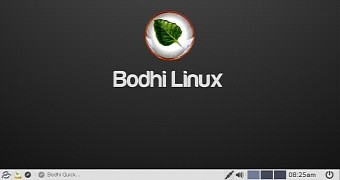
Bodhi Linux 3.1.0 Is The First OS With The Moksha Desktop Environment

Bodhi-linuxBodhi is an operating system based on Linux that uses a new desktop environment named Moksha. Bodhi Linux 3.1.0 is the first release in the series to use Moksha.
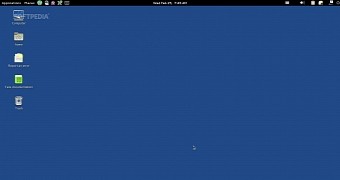
Bodhi Linux has moved to the new Moksha desktop environment after its developer became unsatisfied with the direction of their previous desktop solution, Enlightenment. In fact, you could consider Moksha some sort of fork for Enlightenment E17. The only problem with calling it a fork is the fact that E17 is no long… (read more)

Tails 1.5 OS Gets Tor Browser 5.0

Tails-TorTails, a live system that aims to preserve your privacy and that helps you use the Internet anonymously, has been upgraded to version 1.5 and is now ready for download and testing.

Tails was already an established operating system in the Linux community, but when Edward Snowden said that he used that OS when he distributed the top-secret files to journalist and that he trusted it, the distribution become much more famous. It’s especially useful if you want to remain complet… (read more)

Adept Project Looks at Using Software to Conserve Energy

In this special guest feature, Tom Wilkie from Scientific Computing World writes that software approaches to energy efficiency in HPC may yield unexpected improvements in the hardware of next-generation mobile phone networks. “Adept, a European research project addressing the energy-efficient use of parallel technologies, is expected to release a set of benchmarks that it has developed to characterize the energy consumption of programming models on different architectures.” 

Read more at insideHPC