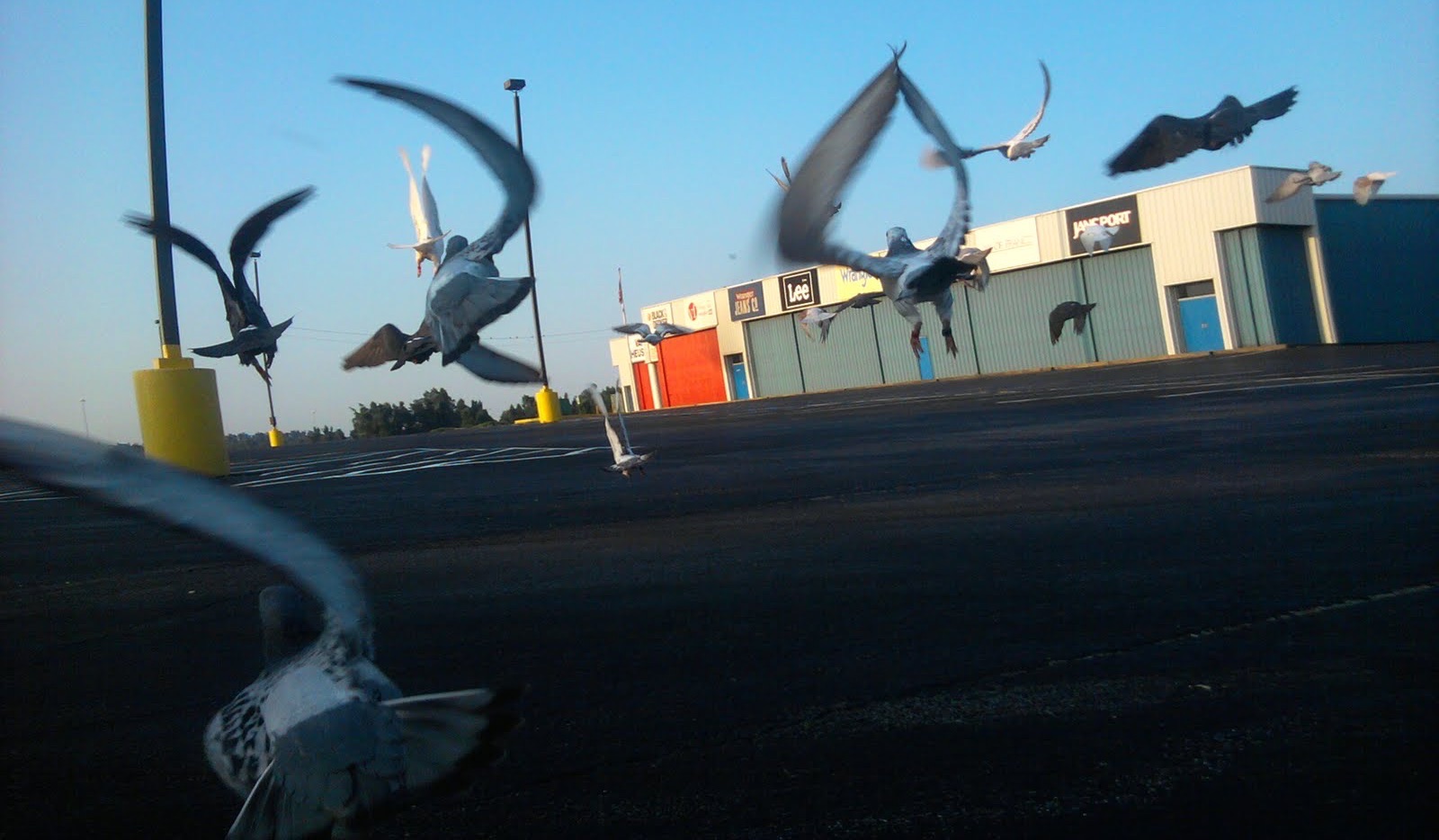
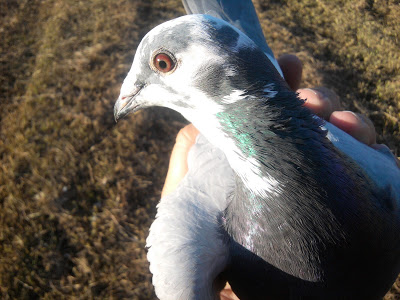
Pigeon racing season is over now but Robert Threet is still working on troubleshooting the wi-fi connection at the pigeon loft near his home in Indiana. Threet is a systems manager at the University of Southern Indiana in Evansville, but in his spare time he’s engineering a Raspberry Pi to monitor his pigeons’ whereabouts.
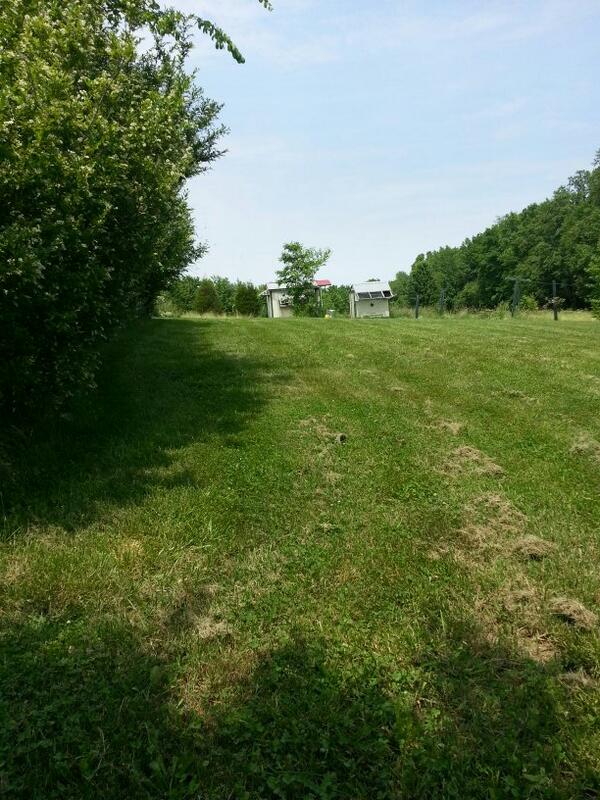
“I wanted to use it with a motion detector to take pictures of my returning racing pigeons and tweet them,” Threet said. The setup also includes a temperature probe to monitor the weather at the loft.
Pigeon races all begin in one designated place and finish at each person’s loft, Threet explains. When a new member joins the pigeon racing club, they take the GPS coordinates of the loft and use them to calculate the exact distance of each race – anywhere from 300 miles for young birds, to 400 miles for yearlings, and 500 miles for old birds. Each bird’s flight time is recorded by an electronic clock that scans an RF band on the bird. The bird with the fastest time in yards-per-minute wins the race.
Using hardware from Adafruit and their tutorials, Threet looked over the Python methods for accessing the temperature probe and the motion detector on the Raspberry Pi and wrote some simple Perl code to monitor the weather and the birds’ activities. The trouble is the wifi connection, which doesn’t quite reach the pigeon loft.
“I mainly use Perl to solve everything here. A lot of LDAP programming initially,” Threet said. “I am constantly parsing CSV files for varied reasons. Whenever I had to do interactive web programming, I used CGI.pm. Haha! So, lately, I’m working on Dancer & Mojolicious (still much better at CGI).”
Threet’s Raspberry Pi monitor gives each of his returning birds a photo finish and – once the wi-fi is connected – will post it to Twitter.
“The setup is nothing to brag about,” he says, “but you asked for something weird.”
Threet recently joined The Linux Foundation as a new individual supporter– something he has been meaning to do for years, he says. But he has been using Linux since 1993 when he first downloaded the SLS distribution from GEnie.
“I got a very minimal Linux running (kernel 0.93p11) and then later bought a set of disks from Duke University (kernel 0.93p13still SLS),” he said. “My first really useful Linux was Kernel 1.2.8 Slackware 2.3. I couldn’t get X Windows to run but this was MS DOS days so color Bash was pretty cool. I had an offline packet reader for mailing lists from bulletin boards. I also used minicom to dial up GEnie. Later I started using SLIP to get to to the Internet and dropped GEnie.”
Threet plans to make use of the training discounts that come as a Linux Foundation supporter. Being a supporter will also help keep him informed on the latest Linux innovations in virtualization and iSCSI SANs, he says.
Welcome to The Linux Foundation, Robert!

 The Meizu MX4 Ubuntu Edition is available now in China and Europe (with restrictions), but it looks that it might launch in India as well, if we are to believe the rumors.
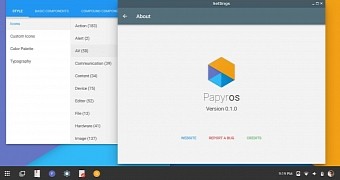 Papyros is a new Linux distribution built from scratch that uses the Material Design guidelines. Developers chose to build an entirely new desktop shell that perfectly simulates the use of Material Design, and the team is really close to releasing the first testing version for the public.