
After being in public test form the past few months, VirtualBox 5.0 was officially released this morning…
Read more at Phoronix

When you deal with a lot of documents every day, whatever you write—whitepapers, manuals, presentations, different marketing materials, contracts, etc.—at a certain point (most commonly, at the final stage) you have to interact with different people, specifying and discussing details, proofreading and approving them.
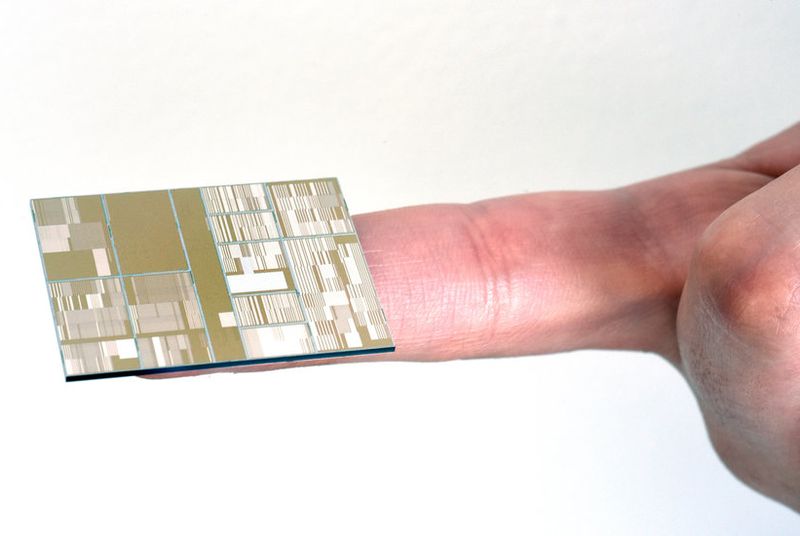
It’s usually Intel that leads the way with the latest processor innovations, but today an IBM-led consortium has leapt ahead by announcing it has produced the world’s first functional 7nm node test chips. The most advanced commercial CPUs of today are built using a 14nm process and there are plans afoot for 10nm chips in 2016, but shrinking manufacturing any further has proven challenging and not at all straightforward.
“7nm node has remained out of reach due to a number of fundamental technology barriers,” says IBM, with the most notable among them being the material properties of silicon itself. IBM’s group of collaborators, which includes Samsung and the SUNY Polytechnic Institute, replaced pure silicon with a silicon-germanium…
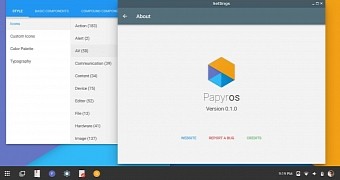 Papyros is a new Linux distribution built from scratch that uses the Material Design guidelines. Developers chose to build an entirely new desktop shell that perfectly simulates the use of Material Design, and the team is really close to releasing the first testing version for the public.
Papyros has been in the making for a long time. Now its developers are finally closing into a working version that can be tested by everyone, and the shell that has been built specifically… (read more)

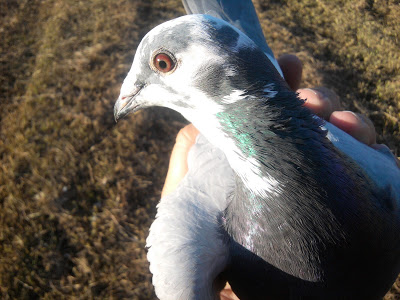
Pigeon racing season is over now but Robert Threet is still working on troubleshooting the wi-fi connection at the pigeon loft near his home in Indiana. Threet is a systems manager at the University of Southern Indiana in Evansville, but in his spare time he’s engineering a Raspberry Pi to monitor his pigeons’ whereabouts.

“I wanted to use it with a motion detector to take pictures of my returning racing pigeons and tweet them,” Threet said. The setup also includes a temperature probe to monitor the weather at the loft.
Pigeon races all begin in one designated place and finish at each person’s loft, Threet explains. When a new member joins the pigeon racing club, they take the GPS coordinates of the loft and use them to calculate the exact distance of each race – anywhere from 300 miles for young birds, to 400 miles for yearlings, and 500 miles for old birds. Each bird’s flight time is recorded by an electronic clock that scans an RF band on the bird. The bird with the fastest time in yards-per-minute wins the race.
Using hardware from Adafruit and their tutorials, Threet looked over the Python methods for accessing the temperature probe and the motion detector on the Raspberry Pi and wrote some simple Perl code to monitor the weather and the birds’ activities. The trouble is the wifi connection, which doesn’t quite reach the pigeon loft.
“I mainly use Perl to solve everything here. A lot of LDAP programming initially,” Threet said. “I am constantly parsing CSV files for varied reasons. Whenever I had to do interactive web programming, I used CGI.pm. Haha! So, lately, I’m working on Dancer & Mojolicious (still much better at CGI).”
Threet’s Raspberry Pi monitor gives each of his returning birds a photo finish and – once the wi-fi is connected – will post it to Twitter.
“The setup is nothing to brag about,” he says, “but you asked for something weird.”
Threet recently joined The Linux Foundation as a new individual supporter– something he has been meaning to do for years, he says. But he has been using Linux since 1993 when he first downloaded the SLS distribution from GEnie.
“I got a very minimal Linux running (kernel 0.93p11) and then later bought a set of disks from Duke University (kernel 0.93p13still SLS),” he said. “My first really useful Linux was Kernel 1.2.8 Slackware 2.3. I couldn’t get X Windows to run but this was MS DOS days so color Bash was pretty cool. I had an offline packet reader for mailing lists from bulletin boards. I also used minicom to dial up GEnie. Later I started using SLIP to get to to the Internet and dropped GEnie.”
Threet plans to make use of the training discounts that come as a Linux Foundation supporter. Being a supporter will also help keep him informed on the latest Linux innovations in virtualization and iSCSI SANs, he says.
Welcome to The Linux Foundation, Robert!
 Our Linux training scholarships have become highly competitive over the last few years with more than 1,000 people applying for just five scholarships annually. With the increasing use of Linux resulting in even more demand for Linux talent, this year we expanded our program to award 14 scholarship recipients. We also added two new categories to be inclusive of all age groups and skill levels: Teens-in-Training and Linux Newbies.
Since introducing Linux training courses more than five years ago and our Linux certification program last August, we’ve learned through our partners like Dice, our advisors and members and Linux professionals the world over that IT pro’s equipped with Linux skills can bank on a lucrative career. Linux has become the entry point for anyone seeking a technology career because it dominates most of today’s IT infrastructure, from cloud computing to virtualization, web, embedded and much more.
We hope our Linux training scholarships and Linux Foundation Certifications can increase access to learning opportunities and provide ways for professionals to showcase their knowledge and stand apart from their peers.
Details on this year’s categories are below. With more spaces available this year for scholarships, don’t hesitate to apply. Get your application in by this Friday!Apply here.
Linux Newbies (NEW): Open to applicants who have completed LFS101x – Intro to Linux through edX: Individuals who are new to Linux but have learned the basics by completing the Intro to Linux online course are invited to apply. Recipients in this category will be awarded a scholarship specifically for the next course in this career-focused series – LFS201 – Essentials of System Administration.
Teens-in-Training (NEW): Students under the age of 18 who have already started using Linux and want to get a head start on a career in the field.
Whiz Kids: 2015 high school or college grads already familiar with Linux but who want to prepare for their career with extra training. Applicants must be 18 years or older.
Women in Linux: We invite women who have demonstrated leadership or want to take initiative in creating opportunity for themselves or other women in Linux to submit applications in this category.
SysAdmin Super Stars: These applicants should have already begun using Linux in their workplace but want to take their work to the next level with additional training.
Developer Do-Gooder: We invite developers who are using Linux for good to submit applications, so they might expand that good work while enhancing their Linux skills.
Linux Kernel Guru: This category will recognize an individual who has already contributed to the Linux kernel community and who has promise of becoming a Linux kernel developer or maintainer.