Home Blog Page 1091

In a Swift Move, Open Source & Linux Took Center Stage at Apple’s WWDC 2015

Following the public display of love for Linux by Microsoft and “open sourcing†of .NET, now Apple is also doing something similar.

Craig Federighi, Apple’s senior vice president of software engineering said during his WWDC 2015 keynote, “We think Swift is the next big programming language. The one we will all be doing applications and systems programing on for 20 years to come. And we think Swift should be everywhere and used by everyone. And so we are going to be doing something really big. Today we’re announcing that Swift will be open source.”

Read more at IT World.

XWayland Hit By Its First Security Advisory: Missing Authentication

(X)Wayland has its first security notice today thanks to a discovery made by a Red Hat developer…

Read more at Phoronix

QEMU Affected By Another Security Vulnerability

Back in May a security vulnerability went public that let VMs escape QEMU’s security and gain access to the host via an issue in QEMU’s virtual floppy disk driver code. Another QEMU security issue is going public today…

Read more at Phoronix

Docker’s New Microservices Monitoring Program Looks Like an OS-Style Approach

Docker is a container host, a multitude of corrections tell us, and not an operating system. But the “container host” took another huge step towards looking like an operating system, as Docker Inc. officially launched this week the first in what appear to be several ecosystem technology partner programs, this one geared toward certifying monitoring systems.

With a partner program, third parties build their supporting products to a specification published by the supporting party. When those products meet or exceed the given standard, the host agrees to help with promotional efforts. It’s all reminiscent of the era when a commercial operating system bestowed its blessings upon supporting vendors, giving them co-sponsorship logos and certifying them for product promotions. One foresees a “Built for Docker” whale badge in vendors’ future.

What Monitoring Should and Should Not Be

Monitoring is a critical function of microservices management, and it’s one of those service areas whose leadership Docker Inc. would like the market to sort out for itself. Although company executives issued formal statements Tuesday morning stating the purpose of the partnership would be to ensure that monitoring products are properly integrated with Docker, the obvious truth is that the partnership’s charter members — AppDynamics, Datadog, New Relic, Scout, SignalFx, and Sysdig — are all well-known for having already integrated with Docker quite admirably.

Read more at The New Stack

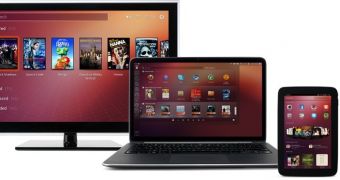
Canonical Better Defines Convergence and What They Need to Do from Now On

Canonical’s convergence concept might seem alien at first sight, but the developers are homing in on what they actually want to achieve and they have recently defined what they are looking for and what their final aim is.

You might think that convergence is a never-ending uphill battle, but that’s not really the case. There will be a point in time when Canonical will stop and say “we’ve done it, we’re there.” It won’t happen too soon, or at least not in the next year or so,… (read more)

Licensing Standards that Include Code: Heads or Tails?

Once upon a time, standards were standards and open source software was open source software (OSS)

Read more at Linux Today

Sharp’s First 4K Android TVs are Now Available

Sharp’s first 4K televisions running Android TV are now hitting stores. Five sets, ranging from a 60-inch set to 80-inch sets, are now “shipping into the marketplace,” Sharp said this morning. That makes Sharp among the first few supporters of Google’s latest smart TV platform — easily its best attempt yet. Sony put sets running Android TV on sale earlier this spring, and Philips is supposed to bring Android TV to its 2015 lineup as well.


Continue reading…

Read more at The Verge

[Video] Unity 5.1 Has Been Released, With Tizen Support and New Tizen Developer Forum

  Unity 5.1 Tizen Support We have previously seen Unity releasing Beta support for Tizen and now following lots of testing and Integrating they have released Unity 5.1, that also has official support for the Tizen Operating System.  

Unity is a flexible game development platform that enables developers to create 2D and 3D games. If you want to know more about it, then check the video below.

Read more at Tizen Experts

Community Blog Series: INSTEON

Share

INSTEON logoINSTEON provides networking technology for the connected home. Its product line includes more than 200 devices, from lamp dimmers to thermostats and LED bulbs. With its dual-band and simulcast mesh technology for wireless communication, INSTEON has created an Internet of Things platform for lighting control, leak, door and motion sensing, garage door control and other applications.

Why did you join the AllSeen Alliance?

In November 2014, Insteon joined the AllSeen Alliance to utilize its collaborative and transparent forum to help develop the future of the Internet of Things. The AllSeen Alliance provides an open, universal language that supports the booming home automation industry and Insteon’s ultimate goal is to make life simple by bringing all connected devices into elegant command, so it’s a perfect alignment of efforts.

What does your company hope to achieve through its participation in the Alliance?

Above all, Insteon wants home automation to be simple. Our incorporation into the Allseen Alliance furthers that goal. Insteon joined the AllSeen Alliance to continue to expand its 200+ offerings and provide seamless integration with new devices for current and future Insteon customers. With the countless connected devices coming to market, Insteon is working with the AllSeen Alliance to provide simple and reliable technology that can be leveraged by others.

Read more at AllSeen Blog

VMware Unleashes Linux on the (Virtual) Desktop

Hey, boss, there’s no reason to keep your penguinistas caged! Or pay Microsoft

VMware’s released Horizon 6 for Linux, thereby making it possible to deliver virtual Linux desktops.…

Read more at The Register