 This week’s Mobile World Congress show in Barcelona focused primarily on phones and tablets, but also featured major new processors, game consoles, smartwatches, and more. Our slideshow of the top 10 products running Linux or the Linux-based Android isn’t called the “Best of MWC” since the proof is in the use, and also in the pricing. Many of these products have yet to be priced, and most have yet to ship. Yet, they’re all significant in one way or another, and should influence other products that appear through 2016.
Home automation was everywhere, in one fashion or other, but with the market already reaching saturation, there were fewer new platforms than last year. We saw nothing to add to our list. Virtual reality was a major theme, but these are typically peripherals, not embedded computers. Valve, which collaborated with HTC on the coolest new VR headset, the Vive, had more announcements for its Linux-based Steam Machine gaming consoles, but they won’t ship until November.
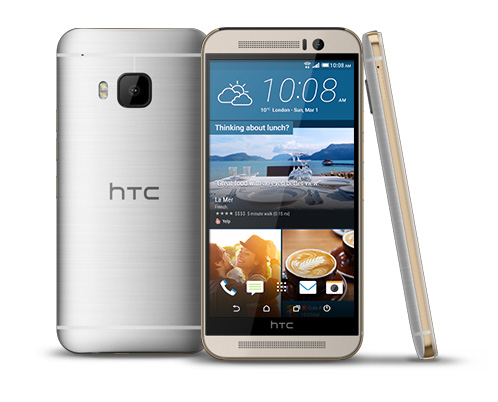
The stars of the show were the new flagship smartphones from Samsung (Galaxy S6) and HTC (One H9), both running Android 5.0 on 64-bit, octacore system-on-chips with advanced GPUs. With the state-of-the-art Galaxy S6, which features Samsung’s latest Exynos 7 SoC, the company is fighting back against a resilient iPhone 6, which last year trounced its somewhat disappointing Galaxy S5. Gartner’s latest global smartphone report shows that Apple nudged ahead of Samsung in Q4 2014 for the first time in years to take a 20.4 percent share.
HTC and Sony have been on the comeback trail for several years now. At MWC, Sony unveiled an impressive Xperia Z4 Android tablet, which like the One H9 uses Qualcomm’s octacore, Cortex-A57 and -A53 Snapdragon 810 SoC. Like Samsung, HTC and Sony are not only combatting their 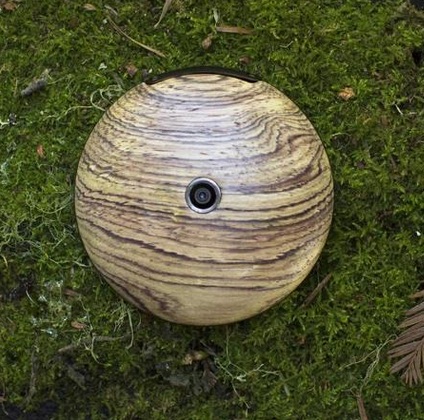 traditional foe Apple, but trying to hold their own against the rising tide of Chinese Android vendors like Lenovo, Huawei, and Xiaomi.
Mobile Linux projects strut their stuff at MWC
One of the smaller Chinese vendors is Meizu, which showed off the Ubuntu Edition of its octacore MX4 Android phone. We did not see a formal announcement for the Ubuntu Edition, however, which has yet to go on sale. It follows the now available Ubuntu version of the BQ Aquaris E4.5 phone.
Like Canonical’s Ubuntu, the other major mobile Linux contenders showed their wares at MWC, including Samsung, which demonstrated its previously announced, Tizen-based Z1 phone. Meanwhile, Jolla’s first tablet, which was a huge Indiegogo success, had its public unveiling in Barcelona. The $249 tablet features a much improved 2.0 version of Sailfish OS.
Mozilla, Alcatel OneTouch, and Orange, announced a new dual-core Orange Klif phone running Firefox OS that will go on sale across Africa for only $40. Mozilla, which said it will soon field a total of 17 different Firefox OS phone models in more than 40 markets, also announced a partnership with Verizon Wireless, KDDI, LG U+, and Telefonica. The partners will introduce feature phone-like Firefox OS models in 2016, including flip phones and sliders.
KDDI, which says it has enjoyed success in Japan with a quad-core, transparent-covered Fx0 phone running Firefox OS, will later this year launch an unusual, disc-shaped Runcible phone using Mozilla’s HTML5 flavored Linux platform. Designed by startup called Monohm, the Runcible features a subdued, non-intrusive UI on top of Firefox OS.
An alternative Linux OS also appears to play a role in the only smartwatch on our list, the LG Urbane Watch LTE, which is widely rumored to be based on WebOS, despite LG’s refusal to specify. The watch acts as an autonomous smartphone, complete with 4G LTE, and is accordingly somewhat oversized. However, it’s reasonably attractive, given the size, and it features a slick, innovative UI.
The watch shares billing with the simpler, but similarly round-faced, LG Urbane, which was one of the prettiest Android Wear watches at MWC aside from the Huawei Watch. We dropped the latter from our list when we read a BGR story that claims it will sell for $1,000. At publication time, Huawei had yet to deny it.
14nm Atoms and the first Cortex-A72 SoC
As usual, several major processors debuted at Mobile World Congress, but one of the biggest announcements was not a product, but a merger. Microcontroller vendor NXP Semiconductor announced plans to merge with Freescale Semiconductor, which makes a number of Linux-ready processors including the popular i.MX6. NXP is acquiring Freescale for $11.8 billion to create a $40 billion firm with a primary focus on automotive and IoT apps.
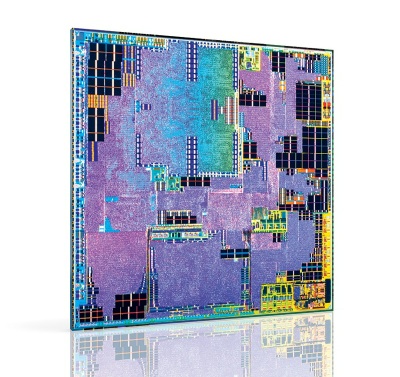 The biggest processor introduction was for several new Intel Atom SoCs. Intel announced a line of Atom x3 SoCs, previously code-named “Sofia,” designed for mass-market phones and tablets aimed at Asia. The Atom x3 is a departure for Intel in that it features built-in 3G or 4G basebands and ARM Mali GPUs, and it’s fabricated by another company (TSMC). One of the x3 models is actually co-designed and manufactured by Rockchip.
The more significant announcement for the U.S. is the arrival of Intel’s first 14nm fabricated “Cherry Trail” Atom SoCs. The quad-core, 1.6GHz Atom x5 and 2.4GHz Atom x7 will appear soon in mid- to high-end Android and Windows tablets. Intel promises up to twice the 3D graphics performance of previous Atoms, plus support for its new RealSense depth cameras.
MediaTek unveiled the MT8173, which is the first SoC to use ARM’s powerhouse Cortex-A72 processor design. The quad-core SoC is designed for playing 4K Ultra HD content and graphic-heavy games on Android tablets.
Finally, one of the highlights of the show was a set-top box version of the Nvidia Shield game player, which debuts another recently announced high-end ARM SoC, the Nvidia Tegra X1. The box is notable for being the first device to run Google’s Android TV platform.
Below is our list of Top 10 Linux- and Android products from MWC 2015, with links to vendor announcements or product pages. Click on the Gallery link to see the slide show of the 10 tuxified showstoppers, listed in alphabetical order by vendor name.
HTC One M9
Intel Atom x3, x5, and x7
Jolla Tablet
LG Urbane Watch/Urbane LTE
MediaTek MT8173
Monohm Runcible
Nvidia Shield
Orange Klif
Samsung Galaxy S6
Sony Xperia Z4


 The Tor Project has announced recently the immediate availability for download of Tor Browser Bundle 4.0.4, a maintenance release that includes updated packages, several bug fixes, as well as an updated base from the upstream ESR (Extended Support Release) edition of the Mozilla Firefox project.
 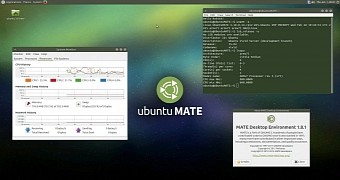 The Ubuntu MATE community has been very active and supportive of the project, so much so that someone has just released a version of the Ubuntu MATE distro for Raspberry Pi 2.
 About Daniel Farrell
