
Home Blog Page 1258

Top 5: Legal Issues in Open Source in 2014

The most-read articles this year on Opensource.com demonstrated a strong interest in the changing aspects of complicated issues. For example, the toptwo stories this year both relate to a complex series of cases involving a dispute between Versata and Aperiprise surrounding alleged violations of the GNU General Public License (GPL).

read more

Read more at OpenSource.com

Live Patching Support Planned For Linux 3.20/4.0 Kernel

It looks like for the Linux 3.20 kernel is when the new kernel live patching technology will be integrated to mainline…

Read more at Phoronix

Quadcopter Drone Packs First All-Linux Autopilot

Erle Robotics has launched the “Erie-brain,” claimed to be the first open source drone to run both a Pixhawk APM autopilot and ROS directly on Linux. Over the last year, Spanish firm Erle Robotics S.L. has been working with 3DRobotics to develop an open source BeaglePilot autopilot for drones that can run Linux on 3DR’s […]

Read more at LinuxGizmos

Getting Ready for 2015’s Cloud, Let’s Embrace The Advancements

Getting Ready for 2015’s Cloud, Let’s Embrace The Advancements

As we get ready to embrace the New Year, most enterprises are already preparing themselves with new business strategies for 2015. Technology continues to innovate even if there are ups and downs in businesses. Starting with a new year is always the best time for new goals, aligning strategies, re-assessing and an internal-analysis as well for ensuring improvements.

Most organisations that rely over IT would already know about the cloud models (IaaS, SaaS and PaaS) and have researched on the major services providers. Where most would be looking forward to moving completely to gain success and manage the IaaS layer.

There will be more choices in the cloud for organizations than ever before. The new year would see a shift towards the multi-cloud world where one would advantage of cloud services from different services providers depending upon the workloads. Cloud is not only going to burst into torrent of services that will be delivered at a cheaper cost but would also see an easy in usage. Though this may be a new concept for some ventures, but many have already adopted it where it’s a mix of private and public clouds to suffice IT needs within the businesses. Need for cloud technology is felt by the organizations as it gives a strong boost to analytics and offers agile and flexible environment. “By giving a new approach to IT, it allows the individuals or ventures to select a method to acquire or deliver IT services to the clients with less reliability on restraints of the outdated software and hardware licensing models”, according to David Cearley, vice president and Gartner Fellow.

In addition to countless choices, the emphasis on what drives good value will be the major theme for 2015. Value isn’t specifically referred to cost but the time and energy that is spent on handling and scaling the corporate environment. This will facilitate providers being more skeptical, strengthening the need for a trusted partner whether you depend on that partner for managing public or private cloud, program the DevOps or maintain tabs on your apps like Google Apps for Work. Instead of recruiting resources to manage the tools and technologies and maximizing the cost for them, it will be eminent for the companies to focus on IT management and decide on their partner to generate more value.

As per the global survey by Equinix, around 38 percent of companies plan to install between 3-5 cloud services over next year along with 11 percent planning on more than 10 services. While the report published by the Cloud Industry Forum (CIF) predicted that UK’s cloud penetration will spike up to 90 percent in 2015 introducing new challenges for firms to manage the significant data inflow. Currently, an approximate of 78 percent of UK businesses are using cloud services as per the CIF figures. More users will make a fresh start by moving their server workloads to cloud, where some would upgrade to primary level while others will try to enhance their IT strategy, commented Alex Hilton, the CIF’s chief executive.

Switching over to the cloud environment doesn’t mean simply shifting everything into another company’s container but it’s a template shift in the way you and your company need to work. Since there has been a great change in the system administration, the next step in cloud evolution is the automation of processes that should further make your life easier. But while selecting a cloud service provider you should find out whether it offers all the essentials including good management and automation tools/skills. Elasticity plays a vital role in any venture and one knows that the capability of scaling up and down, decreases the cost when referring to the balance sheet at the end of the year.

Though we are mentioning all the facts and information here, it completely depends upon you, what type of cloud platform to choose – public, private or hybrid. Moving to cloud provides greater agility, reduces complexity, cuts down on overall cost and allows shifting from capital-intensive to operational cost models. The coming year 2015, is going to be a make or break year for many enterprises who take an initiative step towards cloud. So, utilize your holidays to relax and enjoy as the real tough technology wars are to start from next January. Best luck!

Enterprise Advances Brought Linux Success in 2014

2014 enterprise review

For Linux, 2014 could easily be labeled the year enterprise really and truly embraced Linux. It could just as easily be labeled the year that nearly forgot Linux on the desktop. If you weren’t Docker, containers, OpenStack, or big data ─ chances are the spotlight didn’t brighten your day much. If, however, you (or your product) fell into one of those categories, that spotlight shined so brightly, it was almost blinding.

Let’s glance back into our own wayback machine and see where Linux succeeded and where it did not. The conclusions should be fairly simple to draw and are incredibly significant to the state of Linux as a whole.

Successes

The year 2014 will very possibly go down as one of the single most successful years to date for Linux. This is perfectly illustrated when you glance at the relationship between Linux and enterprise-level business. Taking center stage for the better part of the year was OpenStack.  A number of enterprise-level clients have taken up the OpenStack banner and are proving just how powerful it can be. Included in that list of successes are:

  • Cisco WebEx

  • Overstock.com

  • Hubspot

  • Paypal

  • Purdue University

  • Wells Fargo

  • CERN

  • Florida State University

  • Harvard University

The list goes on and on.

It was June, 2014 that Red Hat Linux formally announced the Red Hat OpenStack Cloud Infrastructure Partner Network. According to Red Hat, this partner network was designed to appeal specifically to enterprise organizations that offer hardware, software and services for cloud infrastructure solutions based on Red Hat OpenStack. Red Hat also launched the Red Hat OpenStack Certification program which armed solution providers with the means to certify their hardware as OpenStack approved. At that time (June), Red Hat declared over 4,000 servers and 13,000 applications OpenStack certified.

2014 wasn’t just the year for OpenStack. One of Linux’s prime successes came at the hand of SUSE Linux. The launch of their Live Kernel Patching is undoubtedly one of the most impressive achievements of the year. This solution offered subscribers to SUSE Enterprise Linux the ability to patch their kernels without the necessity of an immediate reboot. SUSE wasn’t about to stop there. In conjunction with SAP Hana, SUSE navigated themselves into a perfect position to serve up the needs of big data. In-memory databases are the bread and butter of big data. In 2014 SUSE declared it would back an initiative to help big data startups develop new applications based on the SAP HANA platform.

The next major success for Linux was the first stable (enterprise-ready) release of Docker in November. Docker is an open platform that enables administrators to build, roll out, and run distributed applications. Docker allows for quick assembly of apps from components (instead of having to build from scratch) so IT can ship faster and run easier. This happened thanks to Linux and open source.

Less-than Successes

When you look back at 2014, you might see a rather bleak time for Linux on the desktop. Not one distribution was released with much in the way of hype. Look at Ubuntu 14.10 and how antithetical that was for the Linux desktop hype machine. Of course, you almost have to look at all recent Ubuntu releases as nothing more than a holding pattern until Unity 8/Mir are finally released into the wild. Outside of Ubuntu, can you think of a single Linux desktop release in 2014 that made much of a stir? Here’s my short list of answers:

  • Linux Deepin 2014 (the 2014 release brought a new, exciting take on the desktop interface)

  • Evolve OS (even though this is still very much in beta)

  • Quantum OS (another early concept-stage distribution of Linux that borrows heavily on Android’s Material Design).

Other than those three desktops, it was pretty much business as usual. Sure, some desktops saw improvement, but none really brought any dealmaker releases to the table.

Unless you count ChromeOS. Built on the Linux kernel, ChromeOS found itself taking 2014 by storm. Constantly selling in the top five, Chromebooks became the new darling child within the consumer space. Gartner predicted Chromebook sales would reach 5.2 million in 2014. The reality wasn’t too far off. Between January and May, Chromebooks accounted for nearly 35 percent of all commercial channel notebook sales (an estimated 1.4 million). That’s a serious amount of Linux-based laptops in the hands of consumers. Unfortunately, because of the Google association, many are hesitant to attach the Linux label to ChromeOS.

The other “success that’s not a success” would fall into the lap of Android. Another platform dependent upon the Linux kernel, one that many do not see as Linux, managed to continue its epic rise to dominance. In 2014, Android global dominance reached 84 percent ─ with over 283 million units shipped. Think about it ─ over 283 million smartphones running the Linux kernel. Yes, it only makes use of the Linux kernel (no libraries or toolkits), but without that kernel, Android might not exist.

And then there was the Munich Linux migration that came under question from every angle. This migration was a very long time in the works and promised to become one of the biggest Linux rollouts in the history of the platform. But then a city government funded study came to light that could bring Munich returning to the Windows ecosystem. Should this be undone, not only could it negatively affect Linux viability in the future, it would cause a massive loss of time, effort, and money.

Regardless of the how and why, what should have been a major win for Linux wound up a dark spot on the Linux desktop. Did this prove anything? Outside of the fact that such a massive migration from one platform to another is fraught with obstacles … not much.

Complete Failure

The year 2014 should have been the year we finally saw the convergent desktop. Canonical was supposed to ship the Ubuntu phone which would then bring to life a seamless desktop and mobile experience. That didn’t happen (nor does it seem to show any sign that it actually will happen).

This is a shame because mobility makes up up for nearly 75 percent of network usage across the globe. That means more and more users are viewing the web from their smartphones. That Canonical did not deliver that seamless connection between mobile and desktop means one thing: Someone else will do it. Clearly that someone else will be either Apple or Microsoft.

This particular failure is fairly condemning, considering that Canonical has been working on the convergent desktop for some time. Had they not been so set on Unity 8/Mir, we probably would have witnessed the first ever convergent desktop in 2014 ─ all thanks to Linux. Instead, we have nothing to show for it outside of a vaporware smartphone.

Shellshock and Heartbleed

You cannot look at Linux and 2014 and not address two of the worst security issues to plague the platform ─ Heartbleed and Shellshock.

Heartbleed was a security issue, disclosed in April 2014, that exploited the OpenSSL security layer.  At the time of disclosure around half a million of the Internet’s secure web servers were vulnerable, allowing theft of the servers’ private keys and users’ session cookies and passwords. This bug was deemed catastrophic. Bodo Moeller and Adam Langley of Google prepared the patch and on April 7 the patch was made available.

The second vulnerability discovered in 2014 was called Shellshock because it was a family of security bugs in the bash shell system. Within hours of the initial Shellshock disclosure, attackers exploited the vulnerability by creating botnets on compromised computers to perform distributed denial-of-service attacks and vulnerability scanning. This bug was deemed (by many) to be even worse than Heartbleed. On Sept. 26, it was reported (by Incapsula) that 17,400 attacks on more than 1,800 web domains, originating from 400 unique IP addresses occurred. On Oct. 1, Michał Zalewski from Google Inc. declared that Florian Weimer’s code and bash43-027 resolved the issue.

Enterprise saves the day

The year 2014 will be seen as a banner year for Linux ─ thanks to the amazing work done on the enterprise level. With OpenStack, SUSE, Red Hat, Containers, and Docker leading the charge, Linux has made more headway into the world of enterprise computing than it has in a very long time.

The other side of that coin doesn’t look so shiny. Between the disappointing desktop releases and two of the nastiest bugs in the history of the platform, Linux didn’t fare so well for end users and administrators. That doesn’t mean the year was a complete failure on the desktop. Arch Linux, Linux Mint, Fedora, Debian, openSUSE, and even Ubuntu did release solid entries in the desktop space ─ they did, however, fail to make much more than a ripple in the waters.

Here’s hoping that 2015 will bring even more spectacular finds for the enterprise and a drastic rise in the popularity of Linux on the desktop.

Correction: A previous version of this article stated that the Munich migration didn’t happen.  It was deemed complete in 2013, according to ZDNet.

Databricks Delivers Online Courses Focused on Apache Spark

Databricks, a company founded by the creators of the popular open-source Big Data processing engine Apache Spark, is a firm that you may not have heard much from in 2014, but you will throughout 2015. The company has healthy venture funding of $47 million, and  Andreesen Horowitz is one of the investors, with Ben Horowitz on board.

Folks in the Big Data and Hadoop communities are becoming increasingly interested in Apache Spark, an open source processing engine for Hadoop data built for speed and advanced analytics. It was developed in 2009 in UC Berkeley’s AMPLab, and open sourced in 2010. Now, Databricks has announced the launch of two massive open online courses (MOOCs) focused on distributed analytics using Spark. The courses will be made available in Spring 2015 via BerkeleyX, in collaboration with the MOOC provider and online learning platform, edX.
The two five-week courses are designed to augment Databricks’ efforts to grow the Spark community. They provide students with hands-on experience with Spark’s analytics and real-time capabilities to deliver insights into data. The launch of these courses comes on the heels of a series of Apache Spark training offerings from Databricks, including the Spark Certification Program for System Integrators and the Spark Certification Program for Developers.


Read more at Ostatic

Tizen Samsung Z1 Full Specifications Leaked, India Release Followed by China and Korea

  Samsung Z1 is HERE … almost. We have been waiting for the Samsung Z1 launch event, and it looks like its finally happening at a secret Samsung Z1 launch event in India. It’s exciting to see that we have final specifications of the Z1 which runs Tizen 2.3, 4.0 inch 800 x 480 PLS TFT display, 768MB RAM, 1.2GHz Dual-core processor, 3MP primary camera with a LED flash, VGA Front Facing Camera, 4GB internal storage, microSD card slot, with a 1,500 mAh battery. Additional features include a Ultra Power Saving Mode, offline web, HERE Maps with offline mapping capability, auto Selfie mode, and also low-light photography but we don’t have specific technology details on this at the moment, most likely a fast aperture will come into play here. 

Read more at Tizen Experts

Severe NTP Vulnerabilities

Here is a CERT advisory warning of a number of code-execution vulnerabilities in the network time protocol (NTP) implementation. “These vulnerabilities could be exploited remotely. Exploits that target these vulnerabilities are publicly available.” Most distributors already have updates available; applying them seems like a good idea.

Read more at LWN

Open Source Online Game Gets Students Excited About Linux

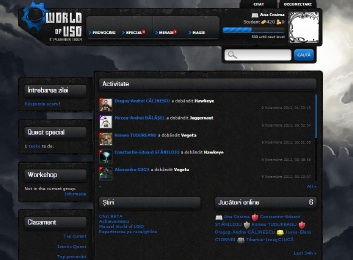
World of USOWhen Razvan Rughinis began teaching the introductory operating systems course at University Politehnica of Bucharest in Romania 10 years ago, he was challenged to get students interested in Linux and keep them interested for the entire three-month course.

Many first-year computer science students have no experience with Linux, and they have no interest in learning it, said Rughinis a professor in the Computer Science and Engineering Department. And those students who do know Linux are regarded as unusual and treated as social outcasts, he said.

“They wouldn’t pay attention to the first experience to see what Linux has to offer; not just the desktop, but how the services work and the depth of the system,” he said. “It’s a steep learning curve for students coming from high school. Their first encounter was too difficult.”

To help his students get interested in and engaged with Linux, Rughinis created World of USO, an open source, interactive online game that teaches the basics of the operating system at the same time it encourages participation and competition. He’s now run the game the last eight years, with great results.

Participation is completely voluntary and isn’t tied to the students’ grades in the course. Still, about 60 to 70 of his roughly 300 students each term participate. They do it largely because it’s fun, according to student surveys, but those students who participate also, not surprisingly, end up doing better in the course.

“My main focus is on building confidence in a completely new environment with this gamified platform,” Rughinis said. “They learn that they can interact with Linux and they can do things that they can’t do with other operating systems.”

Three Levels of World of USO

The game presents a series of quiz-style multiple choice questions, that take about 2-3 minutes per day to answer. The questions are easy, in order to help students gain confidence, and can be answered with a simple Google search. This is the first layer of engagement, Rughinis said.

The second layer is a social component. Students can challenge each other to duels to test their Linux knowledge. Both students receive five questions at a range of difficulties. The one with the most correct answers, wins. This helps foster competition and also drives adoption of the game as participating students challenge their friends to join.

The last layer happens about 5 weeks into the game when they launch a quest. It starts at level one with a simple question and gets progressively more difficult as it builds to level 40. Students receive points not only based on correct answers, but also on how quickly they complete the quest.

“The best students would take 30 hours, working in hackathon style, doing just this for three days in a row,” Rughinis said. “This is possible because we built up the community. They’re very motivated because their achievement would be relevant to a lot of students.”

Fostering Linux and Open Source Careers

At the end of the course, the students not only learn Linux, but want to learn more. And those with the most knowledge are viewed as heroes and champions. (The first-place winner gets a t-shirt.) Many have also pursued careers in Linux and open source software after graduation, Rughinis says.

Laura Vasilescu, a former Linux kernel intern through the Outreach Program for Women, finished fifth in World of USO when she took the class in 2008. Like most, she started with zero knowledge of Linux and programming. She was good at physics and math and wanted to learn how to build intelligent robots.

“During my first semester I had USO (Razvan’s course) and that gave me a completely different view about what I would like to do and what I really wanted to learn. For me, the course was more like an umbrella where I developed my geekyness,” Vasilescu said. “The game gave me the excitement and motivation to learn how to master the CLI… and it gave me a technical direction: operating systems and low-level programming.”

She is now involved with the Romanian Open Source Education organization, pursuing her PhD in computer engineering, and is a teaching assistant at the university.

An Open Source Learning Platform

World of USO was developed over several years by Rughinis and a community of about 40 other contributors, including graduate students and former graduates of the course. The source code is open and available for download on Github, though there is quite a bit of customization of the game’s content, based on the course materials and objectives.

“If you agree with the curricula we are following you can use it out of the box,” Rughinis said. “But it is adaptable and we can help with customization, and it would be a great experience if any other university would be interested to lend a hand.”

Best of Open Hardware in 2014

Gadgets and open hardware

Open hardware is the physical foundation of the open movement. It is through understanding, designing, manufacturing, commercializing, and adopting open hardware, that we built the basis for a healthy and self-reliant community of open. And the year of 2014 had plenty of activities in the open hardware front.

read more

Read more at OpenSource.com