Home Blog Page 1265

5 Community Managers Give Their Biggest Tip for 2015

I’ve grown a lot as a community manager this past year. Much of that growth was focused on learning and listening. Throughout my travels to various events and conferences this year I’ve seen a few themes come through that I think are important—they are: inclusiveness, diversity, and empathy. So, when I started to think about what to share with you this year from what I’ve learned, I decided to amplify some of what others have learned too that reinforce these themes.

read more

Read more at OpenSource.com

Fedora 21 Workstation Installation Guide with Screenshots

Fedora 21 has been released several days ago with many new changes and updated packages, if you want to view all the new changes and updates in Fedora 21, you may check our previous article about it. In this tutorial we’ll explain how to install Fedora 21 step-by-step on your computer using…

Read more at TecMint

Distribution Release: Wifislax 4.10

Version 4.10 of Wifislax, a Slackware-based distribution with a collection of utilities for performing wireless connection analyses and related security tests, has been released. This the first time the ISO image file exceeds 700 MB which means that it will no longer fit on a CD. The release….

Read more at DistroWatch

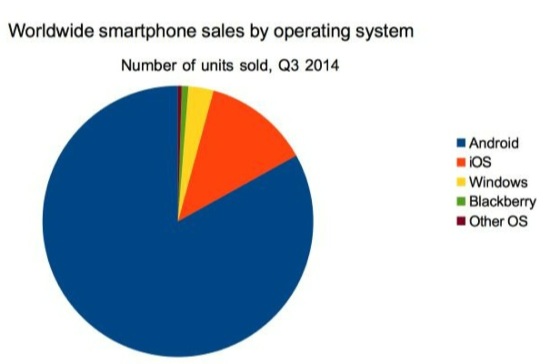
Android Dominates Global Smartphone Market in 2014

Q3 2014 smartphone sales by opearting system.

Americans still love their iPhones, but globally Android shows little sign of budging from its dominant position in mobile devices. Android represented 83.1 percent of the smartphone market, as of Q3 2014, according to Gartner’s Dec. 15 report. IDC estimated Android at 82.1 percent as of Q2 2014.

Like iOS, which moved to 12.7 percent market share thanks to the popular iPhone 6, Android continues to gain market share, according to Gartner. Meanwhile, Windows Phone, Blackberry, and “others” have all slipped. Breaking it down by vendor, Samsung, which has ruled the Android roost in recent years, took a nosedive from 32.1 to 24.4 percent, while Chinese Android vendors Huawei, Lenovo, and fast-growing Xiaomi led the Android-focused competition, with each taking over 5 percent, says Gartner.

Most of smartphone growth has come from budget phones in emerging markets. Here, Android has been quickly pushing feature phones toward the exits, even before Android launched its Android One program in India and elsewhere. Like Google’s Nexus, Android One is based on a clean, up-to-date Android 5.0 stack. However, it also defines a hardware reference platform aimed at low- to mid-range devices, and comes with free direct OTA updates.

Android also continues to dominate in the tablet market, which has cooled off in part due to the popularity of phablets and lower cost notebooks, especially Chrome OS models. Apple’s iPads will drop to 27.5 percent of global tablet share in 2014, according to IDC. Android will represent 67.7 percent while Windows trails at 4.6 percent.

 For a broader perspective on Android in 2014, see the companion article, 2014 Was the Year of Android Everywhere.


2014 Was the Year of Android Everywhere

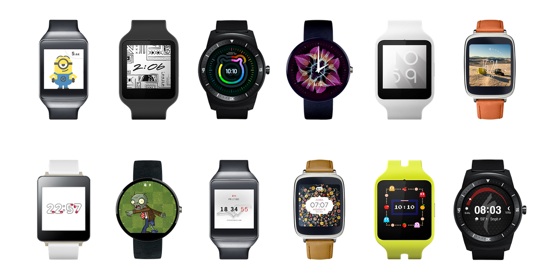
Android wear

Android has never enjoyed quite the same fanboy enthusiasm among its users as Apple’s iOS or desktop Linux. Yet, thanks in part to the fairly open licensing of the Linux-based mobile OS, Android quickly evolved and improved. Like Google Search, it quietly crept into our lives, and decided to stay. Android smartphones and tablets now represent about 80 percent and 70 percent global market share, respectively (see the companion article, Android Dominates Global Smartphone Market in 2014.)

2014 was the year that Android aggressively expanded into new categories, as Google established major new profiles for Android smartwatches and wearables (Android Wear), TVs and set-tops (Android TV), and car computers (Android Auto). The expansion opens new opportunities while also posing new challenges in fragmentation.

Lollipop: Not just for smartphones

The new profiles continue a process of diversification into embedded form factors that began years ago, with both Google-backed projects such as the failed Google TV, the struggling Google Glass, and a variety of third-party ports to new device types. The difference now is that Android Wear, TV, and Auto are all based on a common, unifying Android 5.0 (“Lollipop”) release.

Theoretically developers can write a single app that can be ported to all of these platforms, as well as tablets and smartphones. Lollipop also provides a more consistent UI across diverse devices, including Google’s voice-driven AI genie, Google Now.

Lollipop offers improved notifications, security enhancements such as automatic Full Disk Encryption (FDE), and a stylish, yet subdued look and feel. Android now supports more capable 64-bit processors, thanks to replacing the Dalvik runtime with Android Runtime (ART), which uses an AOT (ahead-of-time) compiler. The compiler helps improves overall performance, and, with the help of other Lollipop enhancements, extends battery life.

Benchmarks have confirmed varying levels of performance improvements, depending on the source. However, storage performance degrades considerably when you activate the new FDE encryption feature, according to Anandtech.

Android Wear evolves before our eyes

Of the three device profiles that build upon Android 5.0, Android Wear is the most established. Like the first Android phones, the first Android Wear smartwatches were pretty unremarkable. Yet, more recent models such as the Sony Smartwatch 3, using later Android Wear revisions, have garnered better reviews. Vendors are finding out what people want from their smartwatches and are tweaking the devices accordingly. The same goes for Google and Android Wear itself.
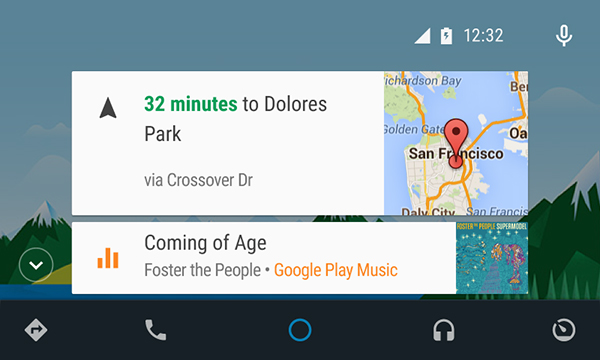
Android-autoAndroid Auto and Android TV are still works in progress. Initially, Auto is not a full IVI specification, but an effort like Apple CarPlay to ease the integration of mobile devices with existing IVI gear. It could become much more than that if Google can convince auto manufacturers to join in. Considering how Google’s Linux-based Self Driving Car has upstaged the automakers’ own autonomous roadmaps, Google may have a tough time turning this into a full automotive spec.

Android TV, meanwhile, must shed the ghosts of Google TV past while learning from the experience. For example, Google’s hardware requirements are now less specific, giving more leeway to vendors of TVs and set-tops. Another difference is that Android TV seems to be as focused on gaming as it is on the integrated TV experience. In a recent Forbes interview Android TV engineering manager Chris McKillop barely touched on TV, focusing entirely on games.

While Google spins these new vertical variants, diversification continues independently in third-party builds running on devices within and without these categories. A growing number of Android-based media players, set-tops, in-vehicle infotainment computers, smartwatches, smart goggles, signage computers, Point of Sale devices, and all-in-one (AiO) desktops have appeared in 2014. We’ve even seen some Android-based robots, drones, industrial equipment, and home automation devices.

Many of these devices don’t require the Google Apps from which Google makes much of its Android profits. Vendors big and small can download open source code from AOSP and head out on their own.

Android’s further migration into consumer electronics and embedded tech has been encouraged by growing contributions of Android code to the Linux kernel, as well as efforts such as Linaro, which helps standardize embedded development of Linux and Android on ARM platforms. Device developers can now develop much of the design first, before deciding which flavor of Linux to employ, whether it is Android, Yocto, Ubuntu, or various derivatives of Debian and other Linux rootstock. Android tends to win out when multiple apps are required, or if there’s a particularly sophisticated touchscreen interface.

Fragmentation: Better and Worse

It will be interesting to see if Android 5.0 is as unifying as Google claims. After all, it’s bridging a mighty distance between devices as different as in-vehicle infotainment systems and smartwatches. Even if app development is eased somewhat, the diversification potentially revives some of the fragmentation worries that threatened to derail Android in years past.

Despite the increasing diversity of the Android ecosystem, you don’t hear many complaints about fragmentation anymore. This is primarily because Google and its hardware partners have done a better job pushing out new releases on the platforms where timeliness matters the most: smartphones and tablets.

Lollipop is already well on its way to appearing on most major new mobile devices, starting with a Motorola-built Nexus 6 phablet featuring the quad-core, 2.7GHz Qualcomm Snapdragon 805 processor. Android 5.0 also ships on the HTC manufactured Nexus 9 tablet, which debuts the 64-bit “Denver” version of the Nvidia Tegra K1 chip. Intel gets the nod on the first Android TV media player, a Lollipop-based Nexus Player set-top with a quad-core Intel Atom.

Despite faster upgrades, Android is in some ways more fragmented now than ever. An OpenSignal report on fragmentation in August estimated that Android developers face the daunting challenge of potentially writing for 18,796 distinct Android devices, 11,868 of which have appeared only in the last year.

While the number of major device profiles is far fewer than that, fragmentation is increasing from the growing number of manufacturers, screen sizes, and new hardware features, says the report. For example, the latest high-end phones now offer a variety of environmental and ambient light sensors, and in some cases even heart rate sensors and biometric scanners.

Google’s Android-based Project Tango points to a near future where mobile devices use sensors to build 3D scenes for augmented reality applications, including indoor navigation and immersive gaming. Meanwhile, Google’s simple, affordable Cardboard stereoscopic viewing kit could turn into a major platform for augmenting mobile devices with virtual reality. Then there’s the rumored Intel-based revamp of Google Glass.

In 2015 we may see how Google plans to integrate all these augmented reality projects, as well as related efforts such as gaming on Android TV. In 2015, we are likely to see more signs of Android’s evolution into an increasingly immersive, augmented reality future. We may also see a glimpse of how Google might attempt to integrate Android and its increasingly popular Chrome OS.

2015 Will Be the Year Linux Takes Over the Enterprise (And Other Predictions)

This coming year there are some fairly bold predictions to be made, some of which are sure things. Read on and see if you agree.

Linux takes over big data

This should come as no surprise, considering the advancements Linux and open source has made over the previous few years. With the help of SuSE, Red Hat, and SAP Hana, Linux will hold powerful sway over big data in 2015. In-memory computing and live kernel patching will be the thing that catapults big data into realms of uptime and reliability never before known. SuSE will lead this charge like a warrior rushing into a battle it cannot possibly lose.

This rise of Linux in the world of big data will have serious trickle down over the rest of the business world. We already know how fond enterprise businesses are of Linux and big data. What we don’t know is how this relationship will alter the course of Linux with regards to the rest of the business world.

Read more at Tech Republic.

Tizen IVI 3.0 Gains GENIVI 7.0 Compliance

Tizen logo

It’s not news that open source is rolling through many industries like a well-oiled machine, so of course automotive is no exception. Organizations like GENIVI are helping to move this along, by creating specifications for open source platforms that provide a consistent foundation for the use of open source for In-Vehicle Infotainment systems.

In yet another step along this path, Tizen IVI recently achieved GENIVI 7.0 compliance. In fact, it was the first platform to do so, and was certified on both the Nexcom VTC 1010-IVI and the MinnowBoard Max.

Tizen IVI (more specifically, Tizen IVI 3.0-M3-Oct2014) is available for both 32-bit and 64-bit systems. As I’ve mentioned before, Tizen was designed as a platform that can be used for a great many things. From Tizen 3.0 onward this is largely achieved by having a certain minimum set of functionality (we call this “tizen-common”) that’s extended through “profiles” such as IVI, mobile, etc.

As a result, the Tizen IVI stack looks somewhat different from other Tizen stacks – and this is expected and completely ok. For example, Tizen IVI includes a variety of GENIVI OSS components, the Automotive Message Broker, and a Web Runtime environment that’s specific to automotive, based on Crosswalk. A lot of work has gone into building a platform that can be used as a stepping stone, to bootstrap development of the next generation of IVI systems.

You can find out more about it at tizen.org, and find the release notes here.

Now if you’ll excuse me, I’m off to see how my Yocto build of tizen-common is proceeding…

Looking Ahead: Rebuilding PaaS in a Containerized World

crystal ballPlatform-as-a-Service (PaaS) technology has transformed the way enterprise applications and services are deployed and delivered. Benefits including flexibility, agility, scalability and efficiency continue to attract growing numbers of business users. Globally, the PaaS market was valued at $1.60 billion in 2013, and it’s forecast to grow at a compound annual growth rate of 25.7 percent over the next few years to reach $7.98 billion by 2020, according to a recent Transparency Market Research report.

As 2014 draws to a close, however, it also seems fair to say that the PaaS market is in a new state of flux. Why? The cause can be more or less summed up in a single word: Docker. Currently the leading example of containerization technology, Docker’s growing popularity has already affected the PaaS arena, as new offerings built around it — Deis is one shining example — begin to emerge.

Looking ahead, the continuing containerization trend promises even more disruption over the coming years. How will PaaS be affected? Linux.com spoke with some experts recently to get their take.

‘Significant Benefit to Be Had’

“This is a really interesting area,” Paul Fremantle, cofounder and CTO at WSO2 and a contributor to the Apache StratosPaaS project, told Linux.com. “It’s clear that Docker is rapidly gaining traction in this space and that there is significant benefit to be had from using lightweight containers in a PaaS model.”

Several different factors — including microservices, multi-tenancy and elastic scaling latency — are all driving people towards Docker and containerization, Fremantle explained.

“We realized this in the Apache Stratos project a while ago, and we decided to evaluate the whole container ecosystem, not just Docker,” he noted. “We have done a lot of work with Docker, CoreOS and Kubernetes to make Stratos work seamlessly in a containerized world, and to look where we can add value onto those projects and into that ecosystem. We are just about to release Stratos 4.1, which works on top of those projects.”

Stratos has “some significant technical and nontechnical advantages in the PaaS space, and this close link and first-class support for containers is part of that,” Fremantle added.

‘Containers Offer This Disruptive Change’

Deis, meanwhile, was “the first PaaS technology to market that was purpose-built to leverage Docker,” creator Gabriel Monroy, who is CTO at OpDemand, told Linux.com.

“What’s happened with Docker is that at the CIO level, or even the senior technical leadership level, folks have realized that containers offer this disruptive change,” Monroy explained, with benefits including “the ability to be agile and to use less resources because you don’t have to share the host kernel.”

In general, one trend now affecting the market is the move toward increased density in the data center, he said; another is about how people build software, such as the move toward microservices and service-oriented architectures.

“People are writing applications in a way that they can leverage a distributed system and are tolerant of failures in a distributed system,” he said. “What these new, next-generation PaaS do is hold software teams’ hands through the process. The platform provides guidelines and provides a target toward which to build.”

Of course, Docker isn’t the only player in the container arena, Monroy pointed out. “I think there’s still going to be a lot of movement in the container space, but we’re grateful to Docker for giving it revived life.”

‘An Ideal Place to Support Containers’

Looking forward, enterprise-oriented private PaaS will be driven by continued enterprise interest and use of clouds — “particularly private clouds and hybrid clouds that combine the elasticity, scalability and other advantages of public clouds used in tandem with private clouds under the control of organizations for security, compliance and other concerns,” Jay Lyman, a senior analyst for enterprise software with 451 Research, told Linux.com.

“While the public PaaS offerings have been used mainly for Web and mobile applications and mobile back ends, this is starting to change as they begin to gain more enterprise use and as private PaaS becomes more credible and legitimate for more complex, multi-tier, data-intensive and enterprise applications,” Lyman said.

Docker and application containers, meanwhile, are “certainly playing a significant role in enterprise PaaS, and this should continue given that PaaS is still an ideal place to support containers and the widespread support among PaaS offerings,” he predicted. “I think IaaS and these cloud providers will also continue to play a significant role in the PaaS market as we see further convergence in IaaS and PaaS management capabilities and continued M&A (mergers and acquisitions) involving IaaS and PaaS vendors.”

Timely FOSS Training and Tutorial Resources for Year’s End

It’s that time of year, when many bloggers and authors round up their favorite open source tutotials and educational resources. Opensource.com has a nice roundup of tutorials that showed up this year, including a tutorial in which Jiri Folta explains how to use an instance of ownCloud to integrate Dropbox or Google Drive with the GNOME desktop.

One of the best ongoing projects for producing free open source-related documentation is FLOSS Manuals. It’s an ongoing and ambitious effort to build online guides for open source software.  It has some notable new tutorials out, and in this post you’ll also find some of our best like tutorials overall.

Read more at Ostatic

Cloud Foundry Foundation: A Smart Move for VMware

In a move that parallels some smart moves made by Red Hat in the cloud computing space, VMware has launched an independent foundation supporting its Cloud Foundry platform. The Cloud Foundry Foundation is focused on VMware’s own Platform-as-a-Service offering of the same name, but will concentrate on fostering an ecosystem surrounding Cloud Foundry. In this game, as Red Hat has shown with its efforts surrounding OpenStack, partnerships will be everything.

The Cloud Foundry Foundation is a nonprofit entity and will be managed as a Linux Foundation Collaborative Project governed by a team of open source experts from founding Platinum Members EMC, HP, IBM, Intel, Pivotal, SAP and VMware. In the world of tech, those are some pretty big names.

Read more at Ostatic