Both Web-based software and Linux software offer significant costs savings. Is one actually better in the long term?
Eclipse Foundation Delivers Open IoT Stack for Java
The Eclipse IoT community is helping Java developers to connect and manage devices in an IoT solution by delivering an Open IoT Stack for Java.
The Internet Is Broken, and Shellshock Is Just the Start of Our Woes
Brian Fox drove from Boston to Santa Barbara, with two tapes stashed in his trunk.
These weren’t music tapes or video tapes. They were computer tapes—two massive reels loaded software code and data, the sort you can see spinning on furniture-sized computers in classic movies like Dr. Strangelove and Three Days of the Condor.
The year was 1987, and as Fox drove cross-country to his new home, the tapes held a software program called Bash, a tool for the UNIX operating system he had written and tagged with a license that let anyone use the code and even redistribute it to others. Fox—a high school dropout who spent his time hanging out with MIT computer geeks such as Richard Stallman—was a foot soldier in an ambitious effort to create software that was free, hackable, and unencumbered by onerous copy restrictions. It was called the Free Software Movement, and the idea was to gradually rebuild all of the components of the UNIX operating system into a free product called GNU and share them with the world at large. It was the dawn of open source software.
Read more at Wired.
Improved Patch Tackles New Shellshock Bash Bug Attack Vectors
System administrators who spent last week making sure their computers are patched against Shellshock, a critical vulnerability in the Bash Unix command-line interpreter, will have to install a new patch that addresses additional attack vectors.
The Shellshock vulnerability was originally discovered by Akamai Technologies security researcher Stephane Chazelas and can be exploited in several ways to remotely execute code on systems like Linux and Mac OS X that use Bash as their default shell.
Read more at PC World.
HP Unveils ARM-Based Moonshot Servers
The new systems ramp up ARM’s competition with Intel and give data centers greater compute choices.
Preview: Radeon Gallium3D Performance For CS:GO On Linux
Following last week’s release of Counter-Strike: Global Offensive for Linux I published many AMD/NVIDIA GPU benchmarks of CS:GO. Those initial results were done using the proprietary AMD and NVIDIA Linux graphics drivers while starting today will be the open-source graphics driver results for this highly popular Valve game.
LibreSSL: More Than 30 Days Later
Ted Unangst has posted an update on LibreSSL development. “Joel and I have been working on a replacement API for OpenSSL, appropriately entitled ressl. Reimagined SSL is how I think of it. Our goals are consistency and simplicity. In particular, we answer the question ‘What would the user like to do?’ and not ‘What does the TLS protocol allow the user to do?’. You can make a secure connection to a server. You can host a secure server. You can read and write some data over that connection.“
Protect yourself from the big bad shellshock
It has been announced on Wednesday, that a serious vulnerability has been found in the bash program installed on Linux, Unix and MacOSX systems. Because this bug is a hidden open-door to your system, hackers can gain access to your system from the internet, a run programs completely taking over the system.
This is a serious problem, that if not handled quickly, and properly, will cause serious damage to your computer and Internet infrastructures since most of the computers servicing the Internet are running a Linux or Unix OS.
Heed these warnings. Read these links thoroughly and make sure you update your Linux, Unix and MacOS X systems with the latest patch for bash. Start patching immediately.
http://www.zdnet.com/shellshock-better-bash-patches-now-available-7000034115/
http://arstechnica.com/security/2014/09/bug-in-bash-shell-creates-big-security-hole-on-anything-with-nix-in-it/
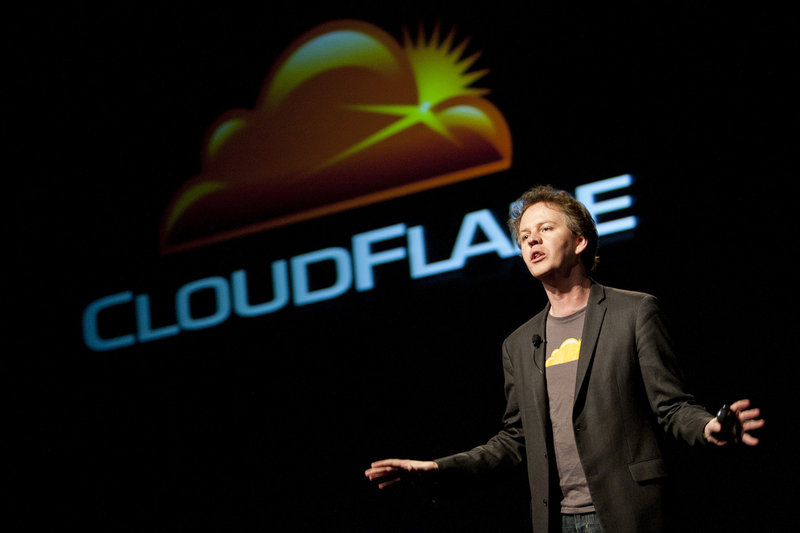
Cloudflare Just Added SSL Encryption to Two Million Websites for Free

Last year, the web optimization network CloudFlare promised it would double SSL usage on the web in 2014 — and last night, the company made good on its promise. Overnight, CloudFlare deployed its Universal SSL feature, offering free SSL encryption to any site that opted in. All told, that meant two million new sites with the feature, effectively doubling encryption on the web overnight.
Open, Open, Open: OpenDaylight Helium is Here
Everywhere you turn these days you hear the term “open” in networking. The idea of openness in networking has come a long way in the past year and it’s now considered the de facto standard way that we’ll achieve interoperability and innovation.
OpenDaylight is taking another step closer to helping the industry achieve the vision of SDN and NFV with its second software release called Helium announced today. It’s aimed at developers and users who are progressing on their journey to SDN. But the most unique thing about Helium is what it signifies for the industry. A year ago conversations around SDN were all about protocols or proprietary controllers. Today it’s all about openness. I fully expect to see many vendors announce and release products based on OpenDaylight Helium. Here is one early example, but be on the lookout for many more!
Andrew Lerner of Gartner pointed out on his blog that “[p]erhaps the biggest benefit of SDN is that it fosters long-term innovation in networking…”