Home Blog Page 1348

5 New Enterprise Open Source Projects to Watch

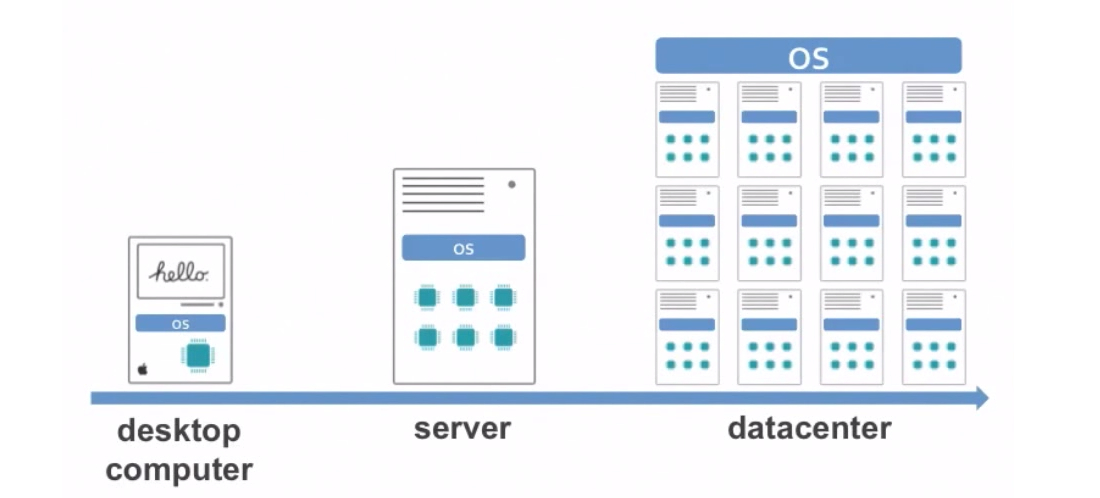
datacenter operating systemThe open source software community is nothing if not prolific, and exciting new projects arrive on the scene practically every day. Keeping up with it all can be a formidable challenge; on the other hand, failing to do so could mean you miss out on something great.

Nowhere is that more true than in enterprises, where upstart new contenders can change the way business is done almost overnight. Take Docker, for example. Though it only just launched last year, the container technology tool has taken the enterprise world by storm, becoming a fundamental part of the way many businesses work.

With that in mind, we recently took a stroll through Open Hub and reached out to several open source watchers in the hopes of highlighting a few of the latest up-and-comers in this space. What, we asked, are the most exciting open source projects to launch recently with a focus on enterprises?

1. Mesos

Since Docker launched in 2013, it has become “the basis of an ecosystem and market that is taking shape as rapidly as anything we have ever seen in enterprise IT,” Jay Lyman, a senior analyst for enterprise software with 451 Research, told Linux.com. Accordingly, Mesos is one of Lyman’s favorite new projects.

Mesos is a cluster management tool that also serves as the basis of running and managing Docker containers. “We are seeing more and more Docker development and management tools emerge,” Lyman noted, but Mesos was among the first to serve as a “sort of stripped-down runtime environment for Docker.”

For more on Mesos, see the YouTube playlist of MesosCon 2014 presentations.

2. Sysdig

Launched early this year, Sysdig is an open source system exploration and troubleshooting tool from Draios, whose founder — Loris Degioanni — also created the popular Wireshark tool for network professionals. “What makes Sysdig interesting is that it’s designed with a Lua wrapper on top of the tool, allowing for chisels to be applied,” Jonah Kowall, a research vice president in Gartner’s IT Operations Research group, told Linux.com.

“You can do interesting combinatory analysis using process data (lsof), system calls (log or other system calls), wire data (packets),” Kowall explained. “This allows for more complex combinations of data going across data sources with a single open source tool.”

3. Open Mirage

Mirage is an open source operating system for constructing secure, high-performance and reliable network applications across a variety of cloud computing and mobile platforms. It’s also a good representation of the trend toward microkernels, which is rapidly gaining momentum.

Using Mirage, code can be developed on a normal operating system such as Linux or MacOS X, for example, before compiling into a stand-alone, specialized OS kernel that runs under the Xen hypervisor. As the Mirage team notes, “since Xen powers most public cloud computing infrastructure such as Amazon EC2, this lets your servers elastically scale up massively with little effort on your part.”

4. Kubernetes

Another contender riding the Docker wave is Kubernetes, a container cluster manager from Google that was singled out as notable by the team at Black Duck Software, operator of the Open Hub (previously Ohloh) site.

Though it just launched this summer and is still in pre-production beta, this open source implementation of container cluster management is designed to be able to run anywhere. A stable, production-ready product is expected to arrive in the coming year. The video below from Google I/O 2014 describes the premise in more detail.

5. OpenPOWER

Though it’s not so much a single project, IBM’s OpenPOWER Foundation was launched in late 2013 as an open development community focused on data center innovation, and “it really started taking off this year,” Charles King, principal analyst with Pund-IT, told Linux.com.

“The core strategy revolves around IBM licensing its POWER processor architecture in an open source model, allowing licensees to change/alter the core architecture for their own individual or commercial purposes,” King explained. “The initial five companies that signed on included a couple of luminaries — Google, NVIDIA and Tyan — that lent the effort more gravity than it might have had otherwise. Since then, 50+ other companies have joined and are leveraging the POWER architecture across numerous projects.”

Overall, King added, IBM’s goal “is to capture for POWER Systems the kind of commercial advantages that Linux delivered to IBM’s mainframe systems.” 

https://www.youtube.com/watch?v=tsk0pWf4ipw” frameborder=”0

GNOME 3.14 Officially Released

GNOME 3.14 has been officially released today as the latest major advancement to the GNOME Shell driven desktop environment…

Read more at Phoronix

End of the Line for Red Hat Enterprise Linux 5

In March of 2007, Red Hat first announced its Red Hat Enterprise Linux 5 ( RHEL) platform. Though it might seem quant today, RHEL 5 was particularly notable in that it was the first major release for Red Hat to emphasize virtualization, which is a feature all modern distros now take for granted.

Originally the plan was for RHEL 5 to have seven years of life, but that plan changed in 2012 when when Red Hat extended its standard support for RHEL 5 to 10 years.

This past week, Red Hat released RHEL 5.11 which is the final minor milestone release for RHEL 5.X. RHEL now enters what Red Hat calls it production 3 support which will last for another three years. During the production three phase no new functionality is added to the platform and Red Hat will only provide critical impact security fixes and urgent priority bug fixes.

Read more at Linux Planet.

IBM CEO Ginni Rometty Gets Past the Big Blues

An IBMer since the early ’80s, CEO Virginia “Ginni†Rometty assumed the top job in 2012 and has since made a series of sweeping changes. She snapped up cloud-services provider SoftLayer Technologies for $2 billion last year and has pledged to invest $1 billion toward the development and commercialization of Watson, a so-called cognitive-computing system capable of sifting through millions of scientific papers in seconds. She has also sold off some of IBM’s lower-margin businesses, made cuts in its still-massive employee base, and even simplified contracts for clients (bringing down the typical number of pages from 30 to just four).

More recently she has brought the dowdy centenarian IT company into head-turning relationships with some hot California celebrities. Witness its unprecedented alliance with its old rival Apple, announced in July, which will bring IBM services to the iPhone maker’s iOS platform.

Read more at Fortune.

Android Apps Are Finally Arriving for Chrome OS

Google is finally making a move that has long been discussed among Chrome OS users: It’s bringing Android apps to Chrome OS, opening the Chrome OS desktop up to a huge library of apps written for Android. Some observers are even predicting that Google could merge Android and Chrome OS in the future, although that move is unlikely for various reasons.
Here are the details on Google’s latest platform moves.

Some makers of Android apps are even confirming that the best versions of their creations will run on Chrome OS.

Read more at Ostatic

Patent Trolls are Starting to Get Trampled

The Open Invention Network now has over a thousand licensees and the court cases are starting to go against the patent trolls.

Virtualization in the Cloud

HPC Cloud

One of the best ways to realize the full performance benefits of virtualization is to make it available through a private cloud. The VMware vCloud Suite realizes operational efficiency through policy-driven operations. By providing simplified operations management, the cloud solution drives greater resource utilization and staff productivity.

The post Virtualization in the Cloud appeared first on insideHPC.

 
Read more at insideHPC.

Tizen Developer Summit Shanghai 2014 Schedule Released #TDS14SH

 The schedule for the upcoming Tizen Developer Summit Shanghai 2014 has been released. Reminder: If you want to attend than the early bird registration ends on 30th September, so get registering now (links at the bottom of the page).

We have keynotes from the Technical Steering Group (TSG), which is comprised of Hyogun Lee (Samsung) & Mark Skarpness (Intel). Hyogun Lee replaces J.D. Choi who has transferred to new pastures within Samsung. Additional keynotes are from: Mr. Qiu Shan Qin – Chairman, China Open Source Promotion Union Liu Jun – Vice President Baidu Xie Pingzhang – Vice President, Mobile Internet Business Groups, Tencent Yu Yongfu, CEO UC Mobile Business Group, Alibaba Wang Zhe – Vice President, Chukong Technologies Founder, Cocos2d-x.   

Read more at Tizen Experts

Samsung Gear S Smartwatch Coming to Four American Carriers This Fall

Samsung’s Gear S smartwatch will hit US shores sometime this fall. According to a succinct press release, the device will be available through AT&T, Sprint, T-Mobile, and Verizon Wireless. Android Central reports receiving an email from T-Mobile that states the Gear S will be available through the company’s Equipment Installment Plan, with more details to follow in October.

The upcoming smartwatch features a curved Super AMOLED display, 3G connectivity, and customizable screen clock faces. On top of the usual panoply of sensors, the Gear S also comes outfitted with the Tizen operating software and can be paired with the Samsung Gear Circle headset, a Bluetooth accessory that allows users to receive calls or listen to music wirelessly.

Continue reading…

Read more at The Verge

IBM Champions Cloud, Big Data, Open Source to Transform Healthcare at TED Summit

IBM suggest how eliminating noise in the patient ward, while slightly eerie and unnerving, can actually improve healthcare. But it can’t be done without big data and the cloud.