With yesterday’s GNOME 3.14 release the Wayland support is considered sufficient for day-to-day use running the GNOME stack on Wayland rather than an X11 Server on Linux. However, the GNOME developers don’t consider this to be “100% complete” yet and there’s still some more work needed to be cleared up on the Wayland side…
Samsung Electronics have decided to move 500 Software Engineers out of their mobile phone development unit into other consumer electronics parts such as TVs, network, printer and its corporate software R&D divisions, according to various reports on the net. Looking at the reaction on the Internet, the vast majority of tech sites see this as Samsung not having faith in their Smartphone business, and in Particular Tizen Smartphones. I disagree with this.
There are lots of unknowns in this equation and without knowing their current Android development strategy, its not clear if these software engineers were even surplus to requirements. “To further strengthen the company’s overall software prowess,†the company said in a statement. The focus will be “to enhance our competitive edge in the Internet of Things (IoT) industry and increase synergies for the Tizen platform,†it said [Samsung].
Just a few days after the Linux Foundation announced its new certification program in August, Will Sheldon took the certified engineer exam and passed.
Sheldon, an IT manager for open source consulting company Appnovation Technologies, already held certifications from Microsoft and Cisco, but hadn’t yet gotten a Linux certification.
“I’ve been considering getting RHCE certified for some time,” Sheldon said, “but being more focused on Debian-based distros I’ve never really felt confident enough to take on the Red Hat environment.”
The Linux Foundation’s distribution-neutral exam – available on CentOS, Ubuntu, or OpenSUSE – was just what he’d been waiting for. He’s now one of the first IT pros to earn the title Linux Foundation Certified Engineer – a designation he believes will become increasingly important to recruiters.
“I’m confident that as LFCE becomes more established it’ll become one of the de facto HR search terms and greatly assist in getting the right sort of attention to my (LinkedIn) profile,” he said.
In this Q&A, Sheldon discusses why he took the exam, how he prepared, what the test was like, and gives some helpful advice for anyone who plans to take it.
How long have you used Linux and how did you get started doing system administration?
About 10-15 years now. I was drawn to the stability of the platform and the vast array of GNU FOSS software available coupled with the fantastic community surrounding so many software projects.
How did you get to where you are today?
I started my professional life as a computer bench technician building machines at a local computer store during summer holidays, from there I progressed to systems administrator for a small business where I studied for and achieved my CCNP, to eventually move to a role as a systems engineer and then project manager for a group of schools in London, UK where I obtained my MCSE and PMP certs. I then made the hop across the pond to Canada where I now live, and after two years working as IT manager for a group of schools across Canada, I found my way to Appnovation.
What, if anything, did you do to prepare for the exam?
I read the syllabus and thought that it seemed within my skill set, so I figured I’d have a go.
What did you think of the exam?
I much prefer the live environment scenario to the more conventional multiple choice questions of other certifications. There is often more than one way to do it in Linux and by focusing on the outcomes, not the methods, the LFCE exam requirements more closely mirror real-world situations.
What surprised you, or stood out about the exam? (Did it meet your expectations?)
It surprised me how quickly the time passed. I’d certainly keep closer watch on how long I spent on the various tasks if i had to take it again.
Do you have any advice for anyone considering taking the exam to get certified?
Go for it, it’s a challenge in places but it’s truly not that hard if you have been through the syllabus and had a play in a VM.
What are you hoping to do with the certification, now that you have it?
Put it up on LinkedIn? Haha. Seriously though I already have Microsoft and Cisco certs, and now that Linux skills are becoming increasingly in demand I’m confident that as LFCE becomes more established it’ll become one of the de facto HR search terms and greatly assist in getting the right sort of attention to my profile.
Whoops. Mac OS X’s Bash shell is vulnerable to remote execution attacks.
Sean Gallagher
A security vulnerability in the GNU Bourne Again Shell (Bash), the command-line shell used in many Linux and Unix operating systems, could leave systems running those operating systems open to exploitation by specially crafted attacks. “This issue is especially dangerous as there are many possible ways Bash can be called by an application,” a Red Hat security advisory warned.
The bug, discovered by Stephane Schazelas, is related to how Bash processes environmental variables passed by the operating system or by a program calling a Bash-based script. If Bash has been configured as the default system shell, it can be used by network–based attackers against servers and other Unix and Linux devices via Web requests, secure shell, telnet sessions, or other programs that use Bash to execute scripts.
Because of its wide distribution, the vulnerability could be as wide-ranging as the Heartbleed bug, though it may not be nearly as dangerous. The vulnerability affects versions 1.14 through 4.3 of GNU Bash. Patches have been issued by many of the major Linux distribution vendors for affected versions, including:
The open source software community is nothing if not prolific, and exciting new projects arrive on the scene practically every day. Keeping up with it all can be a formidable challenge; on the other hand, failing to do so could mean you miss out on something great.
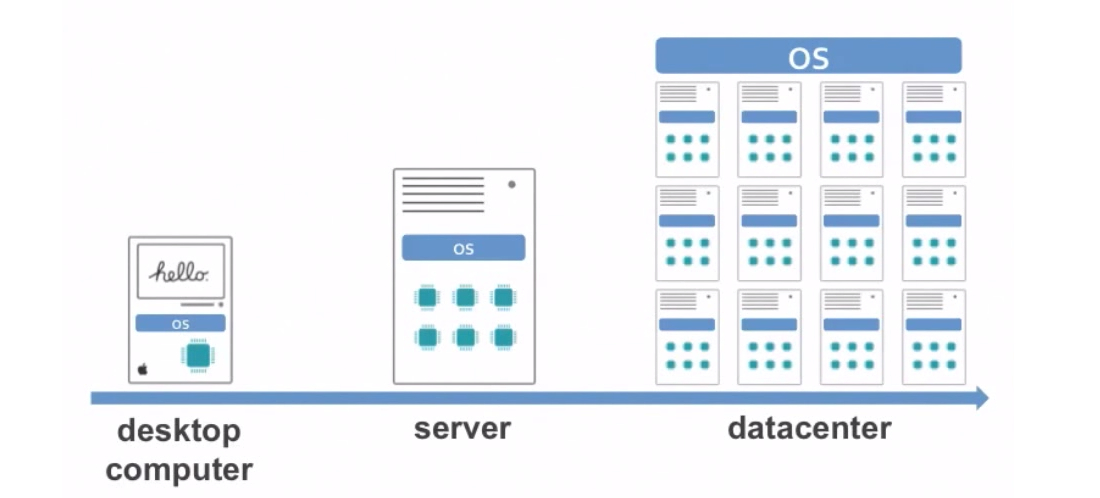
Nowhere is that more true than in enterprises, where upstart new contenders can change the way business is done almost overnight. Take Docker, for example. Though it only just launched last year, the container technology tool has taken the enterprise world by storm, becoming a fundamental part of the way many businesses work.
With that in mind, we recently took a stroll through Open Hub and reached out to several open source watchers in the hopes of highlighting a few of the latest up-and-comers in this space. What, we asked, are the most exciting open source projects to launch recently with a focus on enterprises?
Since Docker launched in 2013, it has become “the basis of an ecosystem and market that is taking shape as rapidly as anything we have ever seen in enterprise IT,” Jay Lyman, a senior analyst for enterprise software with 451 Research, told Linux.com. Accordingly, Mesos is one of Lyman’s favorite new projects.
Mesos is a cluster management tool that also serves as the basis of running and managing Docker containers. “We are seeing more and more Docker development and management tools emerge,” Lyman noted, but Mesos was among the first to serve as a “sort of stripped-down runtime environment for Docker.”
Launched early this year, Sysdig is an open source system exploration and troubleshooting tool from Draios, whose founder — Loris Degioanni — also created the popular Wireshark tool for network professionals. “What makes Sysdig interesting is that it’s designed with a Lua wrapper on top of the tool, allowing for chisels to be applied,” Jonah Kowall, a research vice president in Gartner’s IT Operations Research group, told Linux.com.
“You can do interesting combinatory analysis using process data (lsof), system calls (log or other system calls), wire data (packets),” Kowall explained. “This allows for more complex combinations of data going across data sources with a single open source tool.”
Mirage is an open source operating system for constructing secure, high-performance and reliable network applications across a variety of cloud computing and mobile platforms. It’s also a good representation of the trend toward microkernels, which is rapidly gaining momentum.
Using Mirage, code can be developed on a normal operating system such as Linux or MacOS X, for example, before compiling into a stand-alone, specialized OS kernel that runs under the Xen hypervisor. As the Mirage team notes, “since Xen powers most public cloud computing infrastructure such as Amazon EC2, this lets your servers elastically scale up massively with little effort on your part.”
Another contender riding the Docker wave is Kubernetes, a container cluster manager from Google that was singled out as notable by the team at Black Duck Software, operator of the Open Hub (previously Ohloh) site.
Though it just launched this summer and is still in pre-production beta, this open source implementation of container cluster management is designed to be able to run anywhere. A stable, production-ready product is expected to arrive in the coming year. The video below from Google I/O 2014 describes the premise in more detail.
Though it’s not so much a single project, IBM’s OpenPOWER Foundation was launched in late 2013 as an open development community focused on data center innovation, and “it really started taking off this year,” Charles King, principal analyst with Pund-IT, told Linux.com.
“The core strategy revolves around IBM licensing its POWER processor architecture in an open source model, allowing licensees to change/alter the core architecture for their own individual or commercial purposes,” King explained. “The initial five companies that signed on included a couple of luminaries — Google, NVIDIA and Tyan — that lent the effort more gravity than it might have had otherwise. Since then, 50+ other companies have joined and are leveraging the POWER architecture across numerous projects.”
Overall, King added, IBM’s goal “is to capture for POWER Systems the kind of commercial advantages that Linux delivered to IBM’s mainframe systems.”
In March of 2007, Red Hat first announced its Red Hat Enterprise Linux 5 ( RHEL) platform. Though it might seem quant today, RHEL 5 was particularly notable in that it was the first major release for Red Hat to emphasize virtualization, which is a feature all modern distros now take for granted.
Originally the plan was for RHEL 5 to have seven years of life, but that plan changed in 2012 when when Red Hat extended its standard support for RHEL 5 to 10 years.
This past week, Red Hat released RHEL 5.11 which is the final minor milestone release for RHEL 5.X. RHEL now enters what Red Hat calls it production 3 support which will last for another three years. During the production three phase no new functionality is added to the platform and Red Hat will only provide critical impact security fixes and urgent priority bug fixes.
An IBMer since the early ’80s, CEO Virginia “Ginni†Rometty assumed the top job in 2012 and has since made a series of sweeping changes. She snapped up cloud-services provider SoftLayer Technologies for $2 billion last year and has pledged to invest $1 billion toward the development and commercialization of Watson, a so-called cognitive-computing system capable of sifting through millions of scientific papers in seconds. She has also sold off some of IBM’s lower-margin businesses, made cuts in its still-massive employee base, and even simplified contracts for clients (bringing down the typical number of pages from 30 to just four).
More recently she has brought the dowdy centenarian IT company into head-turning relationships with some hot California celebrities. Witness its unprecedented alliance with its old rival Apple, announced in July, which will bring IBM services to the iPhone maker’s iOS platform.
Google is finally making a move that has long been discussed among Chrome OS users: It’s bringing Android apps to Chrome OS, opening the Chrome OS desktop up to a huge library of apps written for Android. Some observers are even predicting that Google could merge Android and Chrome OS in the future, although that move is unlikely for various reasons.
Here are the details on Google’s latest platform moves.
Some makers of Android apps are even confirming that the best versions of their creations will run on Chrome OS.

 Just a few days after the Linux Foundation announced its
  What did you think of the exam?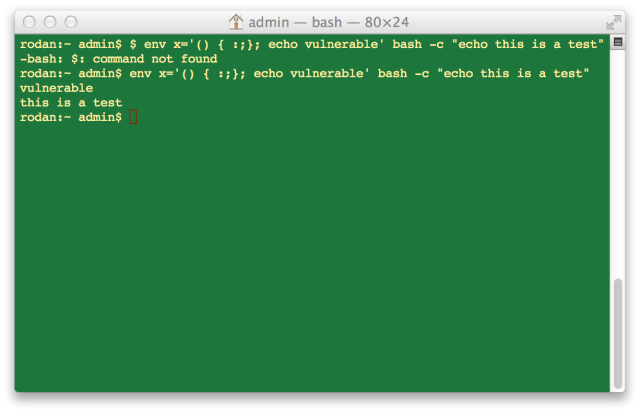
 The open source software community is nothing if not prolific, and exciting new projects arrive on the scene practically every day. Keeping up with it all can be a formidable challenge; on the other hand, failing to do so could mean you miss out on something great.
 Google is finally making a move that has long been discussed among Chrome OS users: It’s bringing