Home Blog Page 1361

Apple Watch Follows in Android’s Footsteps

Apple Watch

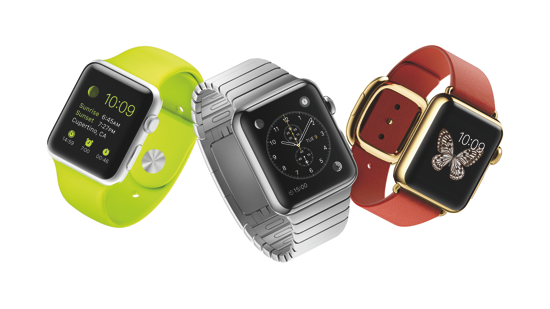
Apple once led the way in mobile devices, leaving those scurvy pirates of the Android world to imitate, innovate, and fill in the niches that Apple neglected. Unlike the iPhone and iPad, however, the Apple Watch announced this week appears to be following more than leading.

Despite its high $349 price, the Apple Watch will no doubt be a strong seller, at least as smartwatches go, and will almost certainly lead the pack in its first year. But it’s not shipping until early 2015, at which point several vendors building smartwatches with Android Wear and Tizen will be on their second or third generation. By then, vendors will also start shipping watches and other wearables incorporating the Yocto Linux and Intel Atom-based Edison module that was also released this week.

Most agree that the Apple Watch is nicely designed, but that was almost a given. The build quality appears to be top-notch, and Apple wisely broke from tradition and announced two different sizes and a variety of colors and watch-band styles. Yet, from a distance it looks much like any other smartwatch, with a prettier face than most, but with a typically chunky form-factor.

The Apple Watch also seems to act much like a typical smartwatch, too. Like Android Wear models, it’s primarily intended as a wireless fitness and notifications accessory to a phone. Just in time, too — the larger size of the new iPhone 6 models suggests that like the latest Android phablets they may remain in pockets and purses while users are on the run.

Like Samsung, Apple has made its smartwatches compatible only with its own mobile devices. Considering the greater corporate devotion of the Apple customers, this makes a lot more sense than it does with Samsung.

The most innovative feature of the Apple Watch appears to be its scrolling, side-mounted “digital crown” control, which offers an interesting solution to the smartwatch touchscreen problem. However, the long-term success of all these watches may come down to how Siri and Google Now progress as voice interfaces. The newly announced Samsung-Gear-S-Tizen-watchApple Pay transaction system could boost the watch’s sales, too, although the lack of success of Google Wallet and similar services does not bode well.
On the down side, Apple did not disclose battery life, which suggests it’s nothing to crow about. And judging from this Engadget hands-on, the watch will offer water resistance, but not the IP65-and-up water proofing found on most of the latest Android and Tizen models.

Android and Tizen Offer More Features

It’s too early to fully judge the Apple Watch. A number of tech details have yet to be revealed, and while the UI looks to be the usual solid Apple effort, most of the interface has yet to be unveiled. Still, aside from the crown, it’s hard to get excited about the device unless you’re already wedded to all things Apple.

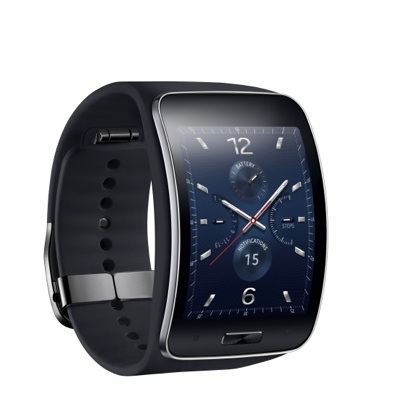
Meanwhile, the recent Android and Tizen watches, while still far from perfection, offer a number of new features. Motorola’s newly shipping Moto 360 Android Wear watch has innovated with a round screen, a form-factor that is also being used in LG’s second Android Wear effort, the G Watch R. The new Tizen Linux-based Samsung Gear S not only offers a curved screen with relatively high resolution, but provides more autonomous features than most smartwatches, including built-in 3G, WiFi, and GPS. The new Asus ZenWatch has a slighter curve to the screen, but it’s just enough to give it a fashion edge over most of its fellow Android Wear watches.

Most of these watches are already on their second generation, or, as with the quad-core Sony Smartwatch 3, their third. Thanks to the tougher competition in the Android realm, we can expect to see many more innovations by the time the iFaithful queue up in early 2015.

By late 2015 or 2016, when Apple offers its second generation Apple Watch, perhaps adding a round or curved screen, and promising better battery life, the Android and Linux ecosystem should already be ticking and tocking toward smartwatch domination.

HP Buys Private-Cloud Software Player Eucalyptus, in a Nod to Amazon

Tech giant HP is buying Eucalyptus, an early cloud-software startup. The acquisition points to HP’s acknowledgement that the public cloud spans beyond just HP’s data centers.

And HP will gain a key executive from the deal. Eucalyptus’ chief executive, MÃ¥rten Mickos, was previously chief executive of open-source database company MySQL, which Sun bought for $1 billion. Mickos will now report to HP chief executive Meg Whitman.

Read more at VentureBeat.

6 Strategies for Cancelling a Major IT Project

 In the recent book Think Like a Freak, well-known authors Steven D. Levitt and Stephen J. Dubner touch on a difficult topic for those in charge of IT budgets and project development: What if your project fails? In their witty and highly opinionated style, they explain how failure in business isn’t always a bad thing. At times, they explain, it can lead to new realizations about company direction or force you to think about a smarter strategy as you move forward.

Still, for those who manage a large IT organization, cancelled projects can cause great stress. They are complex, expensive and often interconnected. Yet, there are times when a project runs out of funds, there’s a change in company direction, or executives realize the project won’t be as valuable to the organization as everyone hoped. Here are six strategies for how to cancel a major IT project once you decide it’s the only course of action.

Read more at IT World.

The State of ZFS on Linux

Linux users familiar with other filesystems or ZFS users from other platforms will often ask whether ZFS on Linux (ZoL) is “stable”.

The short answer is yes, depending on your definition of stable. The term stable itself is somewhat ambiguous. While one would think that stable means “ready for production use”, that can mean that it does not lose data, that it does not crash, that it is a drop-in replacement for an existing filesystem, that changes to the disk format are forward compatible, that updates are always flawless or some combination thereof. Consequently, the long answer is much more nuanced than a single word can express.

Read more from ZFS contributor Richard Yao at ClusterHQ blog.

Netflix: Introducing Chaos Engineering

Ideally distributed systems are designed to be so robust and fault-tolerant that they never fail. We must anticipate failure modes, determine ways to inject these conditions in a controlled manner and evolve our reliability design patterns.  Anticipating such events requires creativity and deep understanding of distributed systems; two of the most critical characteristics of Chaos Engineers.

New forms of Chaos and Reliability Design Patterns are two ways we are researching at Chaos Engineering.  As we get deeper into our research we will continue to post our findings.
 
Read more at Netflix blog.

Twitter and Other Tech Companies to Adopt Bug Bounty Programs

Twitter recently announced that it will give security researchers who find security flaws in its tools cold, hard cash, not just a pat on the back. The company is partnered with the existing bug bounty program HackerOne, which offers a minimum of $140 for each bug and has no maximum payout for bugs disclosed responsibly.  Meanwhile, Gizmodo has called for Apple to launch a bug bounty program.

These commercially-focused companies are taking cues from the successful bug bounty programs that have existed at companies like Mozilla and Google for years. The trend will only continue, and leverages principles that come from the open source community.


Read more at Ostatic

Intel ILO Gallium3D Driver Sees New Improvements

For users of the unofficial Intel Gallium3D driver, ILO, it’s been updated with some minor improvements…

Read more at Phoronix

Mirantis and Piston Deliver New OpenStack Upgrades

Mirantis, which has been expanding its set of training, support and development initiatives surrounding the OpenStack cloud computing platform, today announced the launch of Mirantis OpenStack Express 2.0. The offering now enables enterprises to deploy the most current OpenStack edition, OpenStack Icehouse as an enterprise-grade cloud service. The new release simplifies the setup process by providing a minimal Web form.

Also arriving now is Piston Cloud Computing’s OpenStack distribution version 3.5.  It features commercial add-ons including support for Intel Trusted Execution Technology and a rolling-upgrade plan that is similar to how Red hat regularly updates its OpenStack platform.


Read more at Ostatic

Debian LTS Off To A Slow Start But Progressing

Earlier this year was the announcement of Debian to be handled with Long Term Support for the Squeeze, Wheezy, and Jessie releases. That LTS support is working but their initial funding is coming up less than desirable and there’s still open issues…

Read more at Phoronix

Tizen IVI Build With Yocto Now Available

  For developers and commercial companies Interested in Tizen IVI, here is the Tizen IVI image with Yocto, provided by Ronan from Eurogiciel. You can find links for Tizen IVI image. https://wiki.tizen.org/wiki/Build_Tizen_with_Yocto#Bootable_USB

For Tizen IVI on Yocto a meta tag was created: meta-tizen git ivi_rev_0. https://review.tizen.org/gerrit/#/admin/projects/scm/bb/meta-tizen

It is strongly recommended that you follow the wiki page here.   Some packages are not included for the current release: We do not build the ico-* packages. We do not build rygel yet (yocto does not support gobject-introspection). So we temporary removed rygel, Modello_Phone, Modello_Installer # BTY-36 Thank to Ronan for providing this Information to the mailing list.

Read more at Tizen Experts