
NVIDIA’s Mark Kilgard presented at SIGGRAPH 2014 in Vancouver to cover the changes found in the just-released OpenGL 4.5 specification. He also went over some of NVIDIA’s Linux driver changes…
Read more at Phoronix

 IT infrastructure has long been an enterprise commodity – relatively cheap and abundant. But hardware is no less important in solving today’s IT challenges, from big data and the cloud, to mobile, social and security, says Doug Balog, the general manager for IBM Power Systems.
“Big Data work (for example) requires lots of processors, cores and threads to spread out the queries for parallel analysis,” Balog says in the Q&A interview below. “These workloads also need large cache and memory spaces to provide the best context for the business insights. And whether it be in the cloud or on premise, network bandwidth with lower latency is critical to these new demands.”
Balog, who was previously general manager for IBM System z, will give a keynote presentation on how to revolutionize the way IT is created and consumed at LinuxCon and CloudOpen North America next week in Chicago. Here he discusses the challenges facing the enterprise today, the role of infrastructure and open source development in addressing them, and the ideas behind IBM’s OpenPOWER Foundation initiative.
Linux.com: What are some of the most pressing challenges facing architects of infrastructure and software solutions today?
Doug Balog: One of the biggest IT challenges today is the pace of change driven by cloud, Big Data, mobile, social and security. These technologies fundamentally affect how infrastructure and software are developed, architected and, ultimately, how they perform. Look at Big Data: there is an estimated 2.5 quintillion bytes of data created every day, and it’s not just the amount of the data that’s significant. It’s the variety, velocity and veracity of the data that creates challenges. The way that data is collected, stored and analyzed can put incredible strain on hardware and software. Of course, this is just one example of how the major technological shifts are having a ripple effect on the design of infrastructures.
How do these challenges affect the way organizations approach infrastructure design?
While some believe that infrastructure doesn’t matter, what we’re hearing from clients is that it matters now more than ever. The right infrastructure is able to address the challenges presented by cloud, Big Data, mobile, social and security in an efficient, sometimes application-specific manner. Big Data work requires lots of processors, cores and threads to spread out the queries for parallel analysis. These workloads also need large cache and memory spaces to provide the best context for the business insights. And whether it be in the cloud or on premise, network bandwidth with lower latency is critical to these new demands. By delivering choice to the marketplace, organizations can run their breadth of workloads on the most appropriate infrastructure. Openness delivers the benefit of innovation for those choices.
How is IBM working to address these issues?
IBM is completely committed to openness, and we have a long history of contributing to open source projects, both software and now hardware. Related to that, we truly believe that infrastructure matters, and that’s driving our recent investments of $3 billion for research and development of chip technology, $2.4 billion in the latest Power technology, and $1 billion in Linux on Power.
In fact, this past April, we released our new generation of Power Systems servers that run on the POWER8 processor. IBM along with Linux partners such as Canonical are also making it easier to port, develop and deploy applications written on an open stack of software to our Linux on Power platforms. IBM continues to add Linux distributions, tools and applications into its platforms with the inclusion of KVM and Ubuntu, and we continue to offer Linux distributions from Red Hat and SUSE. In addition, IBM has worked with others in the industry to found the OpenPOWER Foundation to drive open end-to-end innovation around the POWER8 architecture.
How can open source software and collaboration help meet these challenges?
In this new era, no single company can – or should – set an entire innovation agenda for the information technology industry. That’s why open source is critical to help address the challenges of cloud, Big Data, mobile, social and security. With collaboration and optimization across the computing stack and a community to innovate at each level, we can move to a more collaborative, open and transformative kind of innovation in order to deliver computing performance well into the future.
Anything else you’d like to mention about your upcoming keynote at LinuxCon?
Linux is everywhere from personal devices, to the enterprise, to embedded use cases, and IBM is very excited about the ongoing innovation and commitment that Linux brings. We’re looking forward to ways in which open source communities can exploit the OpenPOWER Foundation, which has a shared view of openness. The keynote will discuss how we accelerate Linux and openness for enterprises to deliver against the speed of demands driven by cloud, Big Data, mobile, social and security changes with infrastructure that matters.
Register now for LinuxCon and CloudOpen North America.
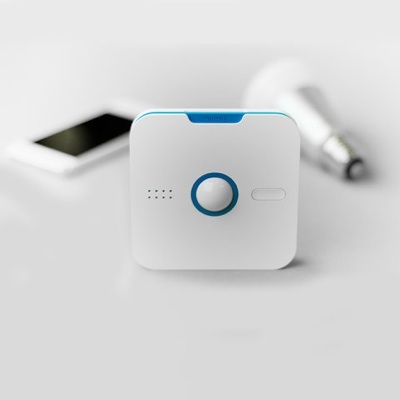 Home automation hubs have emerged as the tech startup product of choice in 2014, and most run on embedded Linux. The category has been re-energized with the dropping costs of wireless radios and embedded processors, as well as the ubiquity of readymade touchscreen interfaces in the form of Android and iOS devices. This slide show presentation covers 10 Linux-based and two Android-based home automation systems starting at under $300.
Home automation systems have been around for more than a decade, but were usually affordable only to a few. Early Linux-based products include the circa-2002 CorAccess Companion, as well as later tuxified products from Control4, such as the Control4 Home Controller HC-500. While the HC-500’s $1,500 was a price breakthrough back in 2008, Control4’s entry level system is now an HC-250 model selling for under $500 plus licensing. You’ll find most of the systems listed here starting at under $200, with some hubs selling for as little as $49. Of course, you’ll likely spend much more than that on compatible smart devices, and equipping a large home could easily push you over the $1,000 mark.
The price competition has been led by retailer-sold systems such as Staples Connect as well as Quirky’s new Home Depot backed newcomer, Wink, each of which sells $49 hubs. Lowe’s Linux-based Iris is a bit pricier, but is still affordable, starting at $179, including several sensor devices. Retail-driven vendors like these can afford to lose a bit of money on the hub hardware, with the assumption that customers will buy a stream of compatible 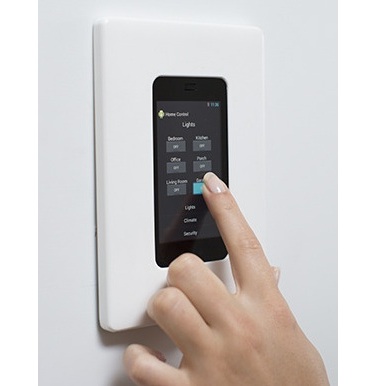 connected devices available at their stores.
Staples has not responded to our request for OS identification, so we’ll leave the Connect off our list, despite the fact that it likely runs Linux. The Staples Connect hub is based on Linksys technology, which has long used Linux for its routers, as well as a firmware platform designed by Zonoff, which specializes in Linux-based home automation.
Another major home automation competitor — SmartThings — runs on a proprietary OS, but will likely move to Linux in the next version, according to an email from a SmartThings rep. There were widespread reports last month that Samsung was in talks to acquire the company in order to keep up with Google, which earlier this year acquired Linux automation vendor Nest Labs. Samsung has also been building smart “Internet of Things” devices based on the Linux-based Tizen OS.
We have excluded a variety of hobbyist gizmos based on the Raspberry Pi and other platforms, and we’re also omitting some Linux-based wireless speaker systems with some home automation hooks. These include systems such as the Sonos, as well as the upcoming Q Station and Musaic devices.
The 12 Linux-based platforms in our slide show are either shipping or have achieved crowd funding goals, with promises to ship this year. Most of these systems offer standard or optional wireless sensor devices that work with the hubs, such as smart LEDs, motion detectors, and thermostats, while others are designed to work with  third-party smart devices and ecosystems. Most offer a bit of both, with more compatible products promised for the future.
All but the Ivee Sleek support access via Android and/or iOS mobile devices via cloud-based services, and many provide Javascript app development or simpler conditional scripting systems such as IFTTT. While it’s beyond the scope of this article to delineate open source support, most of these devices offer open source software development platforms, and many open up the hardware, as well.
The following home automation platforms, including links to company websites, are further described and illustrated in the slide show (select Gallery below). Aside from the first two Android-based systems — ALYT and HIO — they all run on embedded Linux. Additional resources on home automation include LinuxGizmos.com, which has covered all of these systems over the last year and a half, and for a more hands-on, how-to approach, LifeHacker.
ALYT — ALYT
HIO Wallpad — Habey, HIO project
Iris — Lowe’s
Ivee Sleek — Ivee
Nest Learning Thermostat — Nest Labs (Google)
Ninja Block/Ninja Sphere — Ninja Blocks
Piper — iControl
Revolv — Revolv
Wattio — Wattio
WeMo — Belkin
WigWag — WigWag
Wink — Wink/Qwirky