
Home Blog Page 1399

Open Prosthetics Founder: Challenges Ahead for Open Source Medical Devices

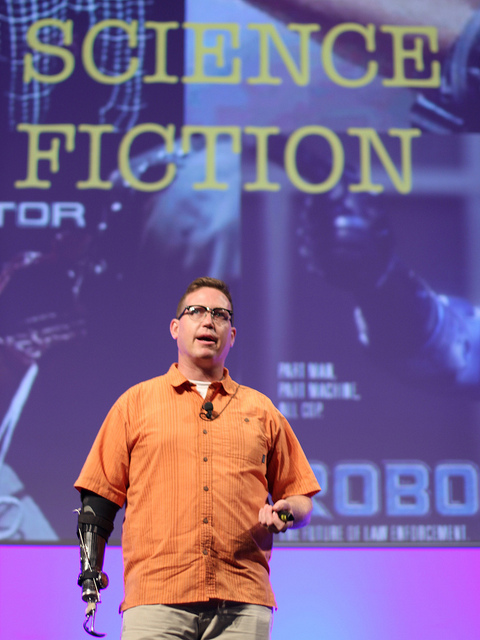
Jonathan KuniholmBefore he lost his arm serving as a Marine in Iraq in 2005, Jonathan Kuniholm was pursuing a PhD in biomedical engineering. Now as a founder and president of the Open Prosthetics Project Kuniholm is working to make advanced, inexpensive prosthetics available to amputees around the globe through the creation and sharing of open source hardware designs.

In a keynote talk at LinuxCon and CloudOpen North America this month in Chicago, Kuniholm will discuss how the health care industry and the Linux and open source communities can work together to improve medical devices that are otherwise too specialized or expensive to develop. Here he discusses the current state of his initiative, the role of collaborative development in innovation, and how the Linux community can contribute to the Open Prosthetics Project.

Linux.com: How are open source and collaborative methods being applied to prosthetics?

Jonathan Kuniholm: In short, they aren’t, at least in the way that they are to large and successful software projects.

I’ll explain. We have a fledgling effort on openprosthetics.org, and our openprosthetics.ning.com site has been pretty successful as a patient community, but the majority of our and others’ efforts that have used open source suffer from the same problem that many such projects have: They have failed to attract a real community of user-contributors and seem to begin and end with the initial posting. An example would be all of the press over the last two years on 3D-printed prostheses. Most of the projects that have been written about in the media aren’t even actually available for download, and if they are, they’re not able to withstand further scrutiny. Someone needs to write a peer-reviewed article testing some of these designs.

That said, we do have a functioning open hardware/software project, the Myopen, which is used by two neural research labs, has recent commits and some wider interest. Because of the expense and complexity of the hardware, we are not aware of any independent builds of the hardware.

What are some of the other challenges facing your project?

One issue is the truly confusing state of licensing and IP protection for open source hardware. Essentially every effort to brand and create licenses for open source hardware has ignored the legal realities of the problem, and has relied on requirements that are unenforceable or have no legal basis. A great example is the MakerBot, which has gone closed and been acquired by the major player in the industry, without even resulting in limited contributions to the design as with OSX/BSD.

A second, and perhaps the most important issue is that open source cannot necessarily create market pressure where there isn’t any. While the approach does give users a chance to “scratch their own itch,” it’s no surprise that open development would suffer from the same or even greater scarcity of resources than traditional commercial development, which has been scant in prosthetic arms. 

An obvious solution to this problem is for government, which has recently been the only game in town as far as prosthetic arm research funding, to look to open source and architecture to increase the impact of the spending they are already doing. While it represents a nearly insignificant portion of the spending over the last decade, an in-progress project that I helped envision is attempting such an approach and I’m hopeful that we’ll see an impact soon.

Why is open collaboration a good model for designing new prosthetics, and for the health care industry in general?

It’s clear that open source is a very good, if sometimes messy way, to progress further in development, taking advantage of as many of the best ideas along the way, even if it may take longer sometimes to reach maturity.

How is the Open Prosthetics project involved?

We serve mainly as a location on the Internet to discuss the issues, and a matchmaker for interested individuals. All of this has been done so far with pretty unsuitable tools, something we’re looking to change.

How did you personally become involved in this effort?

The OPP was the brainchild of my partners at my now defunct design firm, following my injury in Iraq. They noticed before I did what a sad state upper limb prosthetics were in, realized that we were unlikely to get rich solving this problem (they were right) and that we had nothing to lose by trying to share ideas in a way new to the industry. I’ve kept at it.

How can the Linux community contribute?

I’d love to see more folks interested in helping rewrite our software on the Myopen project to free us from Matlab. If we could get over the “activation energy” barrier that currently requires academic or other access to something like $20,000 of toolboxes to run by creating a prototyping environment (say in Java), I think that we’d see more widespread use of the software in labs, and potentially even commercially. Unfortunately, because there is hardware involved, we need folks willing to both spend on and engage with the hardware in order to get us over the other barrier, which is dev kit access to the hardware, which currently doesn’t exist. I’d be interested in talking to anyone who might be able to help attack either problem.

Another thing perhaps even more appropriate to this community might be to help us improve the tools that we have available to collaborate and organize people and information about this niche area of interest. I’ll be posting before the conference a spec document that I’ve prepared for some funded web development that we hope will update OPP’s web presence for the first time since we created the project.

Can you give us a short preview of your LinuxCon keynote, what will you discuss?

I’ll start by making the case for Public Interest Design in support of orphan medical communities like prosthetic arms. Despite calls to action from many sides, meaningful and well-funded efforts at design in the public interest remain much more rare than they should be. Even those funded by foundations justifiably focus on the most pressing utilitarian goals: clean water, sanitation, and preventable and widespread disease.

But significant problems for insignificant numbers of people remain. “Medical orphans” have been targets for policy encouraging drug development, with limited success. Where those who suffer from rare medical conditions are orphaned for want of a medical device, we have yet to see a policy solution. I will outline a few ways that governments, corporations and individuals might help to create an environment where solutions to such problems might be more likely, or even inevitable, through a spectrum of measures of varying degrees of difficulty. I invite you to help me add to this list.

I want to focus on the things that members of the Linux community might do to help. Specifically, we could use help with our web redesign, a complex and deep integration of the VIVO semantic ontology and social networking tools into a single URL community at openprosthetics.org, and through software and hardware development on the Myopen project.

I’m looking forward to meeting you all.
NVIDIA 343 Linux Driver Improves EGL Support, Fixes Many Bugs

NVIDIA today has announced their first beta Linux/Solaris/FreeBSD driver release in the 343.xx driver series. As expected, this release drops pre-Fermi hardware support from the Linux mainline driver code-base…

Read more at Phoronix

Gesture-Controlled Home Automation Hub Runs Linux

Pre-orders are open for “Ninja Sphere,” a $329 gesture-controlled home automation hub featuring Arduino hooks, ZigBee controls, and location tracking. Ninja Block hub Sydney, Australia-based Ninja Blocks was one of the earlier entries in the Linux home automation game. The startup’s open source Ninja Block hub launched on Kickstarter in 2012, and began shipping in […]

Read more at LinuxGizmos

The State Of Wayland For Fedora 21

Matthias Clasen of Red Hat shared a status update about Wayland on Fedora 21 today, the first day of this year’s Flock conference…

Read more at Phoronix

Verizon Cloud Adds Business Value With Xen

Both businesses and consumers rely on public clouds for a range of tasks and activities from collaboration and video streaming to gmail and Netflix. New companies are born with just a dozen employees, a laptop and an Internet connection practically overnight. This is all thanks to cloud computing.

It’s no surprise that in the next six years, almost 90 percent of new spending on Internet and communications technologies, a $5 trillion global business, will be on cloud-based technology, according to industry analyst firm IDC. Cloud applications will also account for 90 percent of total mobile data traffic by 2018, according to the Cisco Visual Networking Index: Global Mobile Data Traffic Forecast Update, 2013–2018.

The benefits for users are almost too numerous to count, but most IT professionals agree that cloud computing epitomizes constant change. Its ability to provide ubiquitous, on-demand access to a shared pool of networks, servers, storage, and services whenever and wherever they are needed is creating both market opportunity and market upheaval.

To temper the turbulence, capitalize on the opportunities and best prepare for any number of cloud unknowns, several of the world’s largest public providers including Amazon Web Services, Rackspace, IBM/SoftLayer and Verizon Terremark rely on Xen Project virtualization. Open source Xen Project software offers superior IT efficiencies, workload balancing, hyperscalability and tight security by running VMs on a cloud service.

While today the media is focusing on price wars and the possible commoditization of infrastructure as a service (IaaS), cloud providers like Verizon Terremark are innovating with novel Quality of Service agreements and new levels of automation. In his talk in Chicago at our Xen Project Developer Summit, Verizon Terremark’s Don Slutz will present an overview of the Verizon Cloud architecture based on Xen.

Read more at the Xen Project blog.

How Microsoft Dragged Its Development Practices Into the 21st Century

For the longest time, Microsoft had something of a poor reputation as a software developer. The issue wasn’t so much the quality of the company’s software but the way it was developed and delivered. The company’s traditional model involved cranking out a new major version of Office, Windows, SQL Server, Exchange, and so on every three or so years.

The releases may have been infrequent, but delays, or at least perceived delays, were not. Microsoft’s reputation in this regard never quite matched the reality—the company tended to shy away from making any official announcements of when something would ship until such a point as the company knew it would hit the date—but leaks, assumptions, and speculation were routine. Windows 95 was late. Windows 2000 was late. Windows Vista was very late and only came out after the original software was scrapped.

Read more at ArsTechnica.

Qt to be Spun Off Into a Separate Company

Digia, the current owner of the Qt toolkit, has announced that Qt will be split off into a separate company that will be able to focus more on commercial licensing. “The importance of Digia’s commercial business for securing the future of Qt cannot be underestimated as it drives Qt’s foundation and everyday operations. A look into the commit statistics shows that around 75% of all code submissions to qt-project.org come from Digia employees. In addition, Digia manages the release process and the CI and testing infrastructure, thus covering more than 85% of the costs of developing Qt.“

Read more at LWN

Input Drivers Get Renewed For Linux 3.17

The HID (Human Interface Device) pull request was sent in this morning for the Linux 3.17 merge window…

Read more at Phoronix

What is Web signage?

signage graphicWhat is Web signage? It’s the future of signage aka DOOH. Powered by Linux.

Allow me to explain.

First generation sign – Static

An etching on a cave wall, to a flashing Neon sign. These are static signs usually fixed to a particular location. Their often cumbersome to replace, though are pretty simple and reliable.

Second generation sign – Digital

Using usually a standard TV screen, a series of images are displayed in rotation or a video is simply looped. Some televisions are capable of being programmed to become a sign, simply by inserting a USB stick. Most solutions sadly fail to provide a polished out of the box solution for this use case, requiring someone to setup the DVD player or re-configure the software on the “SMART TV”, every single time that device is power cycled or fails. Awkward.

Even though most “SMART TV”s are powered by Linux, typically TV manufacturers provide no documentation or way to modify the existing software to stream line this relatively simple use case. Which is a shame.

This generation of signage is where we are mostly at the moment. Advertisers like this as they can convey “experiences” well with short clips, sometimes with an annoying sounded message, in rotation. They are usually easy to update, but often they are not for hours at a time, since most of them use a USB stick as their source which manually needs to be swapped out.

Third generation sign – Internet powered

There are many players in the “DOOH” industry vying for your custom, peddaling their own proprietary systems that lock customers onto their particular platform, e.g. BrightSign or Harris are leading examples.

You can recognise these locked in systems easily because they are not Web powered or confusingly embrace and extend the Web.

There are even “opensource” platforms to create signage content, but since they do not use Web standards to layout the content, they should be avoided, as they are effectively locking you into their format only they control.

Note that all you need to configure a proper Web signage operating system is a URL. So switching between Web signage players should be even easier than switching between Chrome & Firefox today.

There are a couple of major stumbling blocks to Web signage, the first being that many advertisers and “DOOH” content producers are really quite poor at creating and managing Web content with information.

The second is that the “Web sign” playback devices are typically clumsily put together boxes running a full screen browser, with no “polish”.

I don’t have quick solutions to offer for the first problem, though for the second problem, one solution is Webconverger Neon.

It runs Linux. It’s opensource It supports a wide range of hardware. It’s stable. It keeps the browser upto date, supporting the latest standards like the Web Video Text Tracks Format.

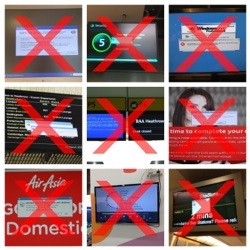
Furthermore Webconverger Neon is polished, if it fails in often hostile outdoor environments, such as a hardware issue of loss of connectivity, it defaults to a black screen. No silly network can’t be found messages. No blue screens. No modal dialog boxes. And then network/hardware is restored, it lights back up as best it can as it’s retrying in the background.

As for networked Web signage itself, information can be delivered as fast as a Web page takes to load. Images, videos and other HTML useful technologies such as caching can be used to deliver useful information. Just like your favourite Web application.

How To Install Drupal On Ubuntu 14.04

How To Install Drupal On Ubuntu 14.04

This document describes how to install and configure Drupal on Ubuntu 14.04. Drupal is an open source content management platform powering millions of websites and applications. It’s built, used, and supported by an active and diverse community of people around the world.

Read more at HowtoForge