
Home Blog Page 1405

The Companies that Support Linux: Daynix Consults on Cloud and Virtualization Technologies

Dmitry FleytmanThe modern data center is rapidly evolving, with the advent of cloud computing bringing new technologies, tools and best practices. As enterprises seek to understand and take advantage of emerging areas in virtualization and the cloud such as software-defined networking and storage, microservers and containers, many are seeking third-party consultants and services to ease the transition.

Daynix is a software development and consulting company based in Israel that helps companies navigate this new world of cloud infrastructure and virtualization. Its services range from hypervisors and paravirtualized devices development to cloud infrastructure. The company also works closely with open source communities on cloud-related technologies, which are rooted in Linux.

Last week Daynix was one of four companies to join The Linux Foundation as a new corporate member, along with BearingPoint GmbH, Linaro Limited, and Systena. Here, CTO and co-founder Dmitry Fleytman discusses the services Daynix offers, why they use Linux, why they joined the Linux Foundation, the emerging trend of hybrid cloud, and more.

Linux.com: What does Daynix do?

Dmitry Fleytman: Daynix is the knowledge center for cloud technologies. We provide consulting and development services for virtualization and cloud core technologies. Our company is a strong believer in open source technologies and is actively helping its customers to convert to open source and become an active part of the related communities. Our services range from hypervisors and paravirtualized devices to cloud infrastructure development.

How and why do you use Linux?

When you look at the open source virtualization and cloud infrastructure – Linux is everywhere. It is a strong foundation that helps to grow the virtualization and cloud market and has a strong influence on other open source projects.
support Linux graphicWhy did you join the Linux Foundation?

We hope that this move will help us to convince our customers to become more active in the open source world. The Linux Foundation is a sign of the maturity of the Linux community and it helps to build the confidence in open source and Linux-based solutions.

What interesting or innovative trends in the tech industry are you witnessing and what role does Linux play in them?

We are looking now at the emergence of the hybrid cloud. Linux has a major role in this trend both being the cornerstone of the modern data center and being a base for many innovative technologies in this field. Other interesting trends are software-defined networking and software-defined storage, both having strong roots in Linux.

How is your company participating in that innovation?

We are contributors to virtualization-related open source projects. We are also helping our customers to adopt open source as part of their core technology and enable them to become active members of open source communities.

Anything else you’d like to add?

From my perspective every SW engineer should care about open source adoption in his company. Open source contributions are becoming your professional resume. Participation and active contribution to open source communities are the essential parts of being a software engineer.

Dmitry Fleytman is one of the founders of Daynix. He holds a PhD in computer science and has been a frequent participant of open source communities and contributed to various open source virtualization projects such as QEMU and OSv (a new cloud operating system). He is also very active in bringing open source to areas that have being traditionally closed by driving projects such as virtio-win guest drivers and USB redirection framework (USBDK).  
Free Intro to Linux Online Course Starts Today

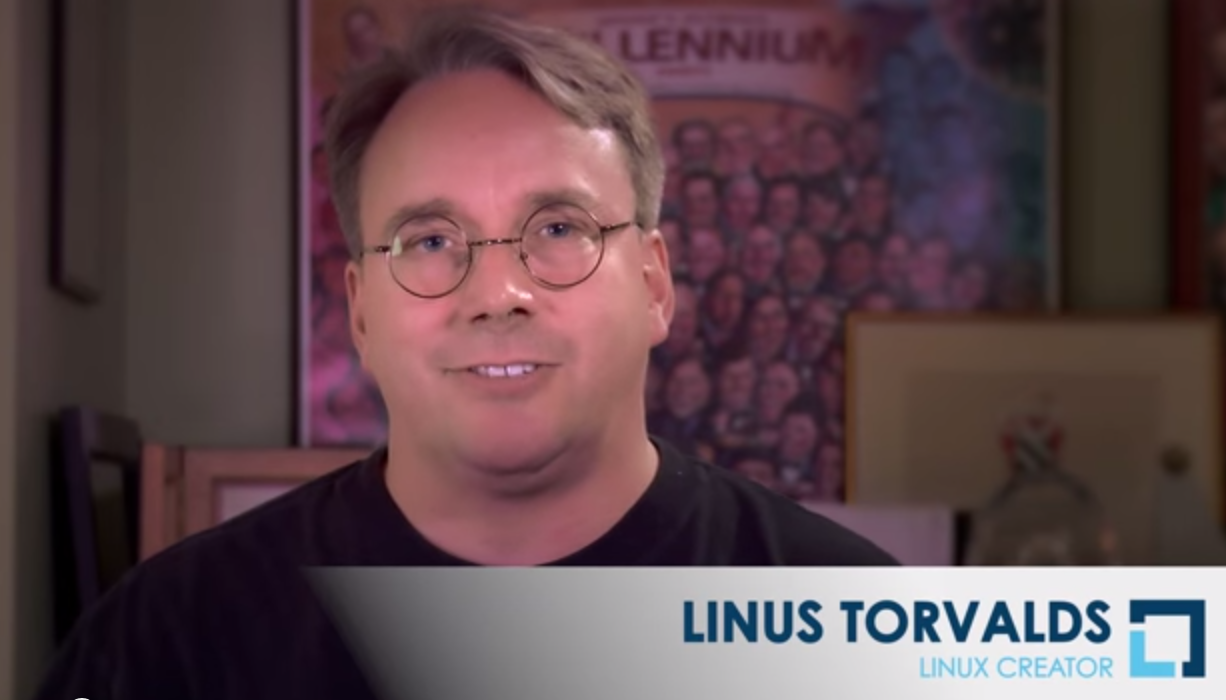
Linus Torvalds Intro to LinuxThe Linux Foundation’s free online course, Introduction to Linux, started today on the edX website. Students have already begun to take the course, which covers the basic tools and techniques commonly used by Linux programmers, system administrators and end users.

It’s not too late to sign up! You can complete the lessons, interact with students and instructors on the message board, and take the tests at your own pace. The first thing you’ll do is install Linux – instructions are available in a PDF sent to all students enrolled in the course. Topics covered during the course include:

– Linux Philosophy and Components

– System Configuration from the Graphical Interface

– Command-line Operations

– Finding Linux Documentation

– File Operations

– Network Operations

– Bash Shell Scripting

-Common Applications

– Local Security Principles

– And more.

The entire course is expected to take about 40 to 60 hours and you may audit the course for free or pay for a certificate of completion.

To sign up visit edX.org.

And for more information see our Intro to Linux Q&A with Linux Foundation Executive Director Jim Zemlin and edX CEO Anant Agarwal.

Still not convinced? Here are 10 good reasons to learn Linux.

https://www.youtube.com/watch?v=BmDricQGK6w” frameborder=”0

The RPi-Based NASA Simulator This Dad Built for His Kids Is the Best

Dad of two Jeff Highsmith built a mission control desk and spaceship for his two sons. There are LED lights, real switches and inputs that trigger sound effects and flashing, and even a bass shaker in the floor so you can feel the rocket taking off.Come on.

Make: magazine describes how the different sequences of lights and sound effects are coordinated by Arduino boards and a Raspberry Pi, and Highsmith wired the whole thing so it’s adjustable and expandable in case he wants to add other features later. There’s even an iPhone mount in the spaceship that plays real NASA footage and could be used to extend the ship’s features in the future.

Read more at Slate.

New Flaws in USB Devices Let Attackers Install Malware: Black Hat

NEWS ANALYSIS: New research on USB vulnerabilities is set to be revealed at a Black Hat conference presentation. Should anyone be surprised?

Read more at eWeek

This Motherboard Looks Sick

If you’re not a PC gamer you’re about to be one, all because of the ASUS Republic of Gamers Maximus VII Formula Z97 motherboard. Sure, you might be interested in its maximum DDR3 RAM capacity of 32GB, or its dual PCIe 3.0 expansion slots, or its copper “hybrid cooling” system, but there’s really only one thing you need to know: it’s the sickest looking motherboard ever created by humans. It’s like staring right into the face of Michael Bay’s Optimus Prime except without all the crying.

Go ahead, look at it.


Continue reading…

Read more at The Verge

10 Good Reasons To Learn Linux

Our Introduction to Linux edX course starts today, so if you’re not already enrolled, here are 10 reasons why you should sign up now:

  1. You’ll be getting a $2,400 training course for free.
  2. You won’t be the only person in your subreddit NOT taking it.
  3. You can bash (script) your computer without making a (physical) mess.
  4. You’ll get to learn how to use Linux from a nuclear physicist.
  5. You’ll finally get allthoseXKCDjokes.
  6. You’ll be able to enjoy the increased security that comes from using an open source operating system.
  7. You’ll be taking your first steps down a highly desirable career path.
  8. You won’t have to resort to bitTorrent to get free software.
  9. Did we mention that learning Linux is a great way to get a job?
  10. You’ll get to be part of an awesome community of both beginners and experts who are all using Linux to make a difference in the world.

So if you haven’t signed up yet, go do so now! And if you have already enrolled, we hope you enjoy the course as much as we enjoyed making it. Happy learning!

What Next for Samsung?

For the past few years, Samsung has been on top of the smartphone world, outselling Apple’s iPhone and besting everyone else by creating powerful phones with big screens and small prices. But now the Korean company is getting a taste of its own medicine as a variety of small Chinese manufacturers are starting to deliver even cheaper phones with no less impressive capabilities. The smartphone market can’t stop growing, but Samsung smartphone sales are actually falling — and while undercutting the competition on price is still a viable strategy, others are now doing it better.

The world’s biggest smartphone maker didn’t get there by accident. Having spent years toiling in the shadow of feature-phone leaders like Nokia and Sony Ericsson,…

Continue reading…

Read more at The Verge

Training With a Clear View for a Cloudy Future

In the rapidly evolving world of IT, skilled IT professionals and students alike should be on the lookout for the next ‘big thing’ and be ready with the right expertise to ride the next wave of innovation.

Businesses Split on Adoption of Software-Defined Networking

When asked what their organizations are looking for when adopting SDN, 30 percent of IT pros cited high availability and resiliency.

Read more at eWeek

HP’s New Smartwatch Actually Looks Good

Fashion designer Michael Bastian is partnering with HP and retailer Gilt to sell a smartwatch this fall. Described by Gilt as a “Michael Bastian smartwatch engineered by Hewlett-Packard,” the timepiece couples a circular face with a fairly aggressive sporty design. Although its shape bears a small resemblance to the Moto 360 smartwatch, its 44mm face is far more inline with traditional watches than Motorola’s. It’ll launch with a selection of straps in brown leather, black rubber, and green nylon. The watch will be compatible with both Android and iOS, and will be able to receive notifications for things like emails, texts, and sports updates. It’ll also offer music controls and display weather forecasts. Given how basic its function set…

Continue reading…

Read more at The Verge