Home Blog Page 1409

Perl as a Career Option

Is Perl losing its shine as it now needs to compete with many other alternative programming languages? Can Perl be considered a good career choice today? To find out, we have interviewed an experienced Perl developer and Geekuni founder Andrew Solomon….

Q. Do you see Perl as a good career choice today? In other words, would Perl be something to be considered as a worthwhile career choice today for a recent graduate or someone with no programming experience?

Solomon: These are actually three quite separate questions. The first question – Is Perl a good career choice? Definitely. There are quite a few jobs requiring competence in Perl, and the salary is excellent because Perl developers are hard to find.

La commedia illumina Firenze on the wall of Florence Cathedral, Santa Maria del FioreWhy is it hard to find Perl developers? This is because Perl is very rarely part of a university’s curriculum. To understand why this is, let’s first consider what programming really is. A software developer’s brain works on various levels, like in Dante’s Comedy they design in a very pure and abstract ‘Paradiso’ of algorithms, data types and architectures, descending into the ‘Purgatorio’ of writing code and further into the ‘Inferno’ of bending and corrupting the language to achieve their most ambitious expressions of creativity….

Read more at LinuxCareer. 

GNOME’s GTK+ Is Still Striving For A Scene Graph, Canvas API

Besides updates on Wayland support at this week’s GUADEC conference in France was also an update on the work being done for implementing a scene graph within GTK+ itself and exposing a canvas API…

Read more at Phoronix

My First Unikernel

I wanted to make a simple REST service for queuing file uploads, deployable as a virtual machine. The traditional way to do this is to download a Linux cloud image, install the software inside it, and deploy that. Instead I decided to try a unikernel.

Unikernels promise some interesting benefits. The Ubuntu 14.04 amd64-disk1.img cloud image is 243 MB unconfigured, while the unikernel ended up at just 5.2 MB (running the queue service). Ubuntu runs a large amount of C code in security-critical places, while the unikernel is almost entirely type-safe OCaml. And besides, trying new things is fun.

Read more at Thomas Leonard’s Blog.

Qt 5.4 Going Into Feature Freeze Next Week With Exciting Changes

The Qt 5.4 feature freeze is set to go into effect on 8 August with already there being a large number of changes for this next major Qt5 tool-kit release…

Read more at Phoronix

Out in the Open: Sandstorm Makes It Easy to Control Your Apps in the Cloud

Web apps are convenient, but you don’t have any control over them. You never know if your favorite tool will evaporate when the company goes out of business or, as was the case of Google Reader, simply discontinued.

Of course you can try running your own server loaded up with open source applications, but that’s still a real pain for most non-geeks.

Former Google engineer Kenton Varda and neuroscientist Jade Wang think they’ve come up with way to fix both of these problems. It’s called Sandstorm: an open source project that gives you just as much control over cloud apps as you get on your very own servers, but without the hassles.

Read more at Wired.

Introducing the OpenDaylight Ambassador Program

The growth of the OpenDaylight community has been astounding in the 15 months since launch. It started with just a handful of developers and has climbed to over 220 from a range of backgrounds, including seven student interns from around the globe – all working together to create the future of networking built on open source technologies.

Interest in the project is growing so quickly that we’ve put together an ambassador program to help sustain and grow the worldwide community. We are looking to enlist OpenDaylight experts who know and use the code and who are willing to share that knowledge with others around the world, with the project providing support and resources to enable that.

Ambassador Profile

Someone who is passionate about OpenDaylight and open SDN and recognized for their expertise and willingness to help others learn about the software. Usually hands-on practitioners. Someone who has the characteristics of being helpful, hopeful and humble. People like bloggers, influencers, evangelists who are already engaged with the project in some way. Contributing to forums, online groups, community, etc.


Read more at OpenDaylight Blog

Reglue: Opening Up the World to Deserving Kids, One Linux Computer at a Time

They say you never forget your first computer. For some of us, it was a Commodore 64 or an Apple IIe. For others, it was a Pentium 233 running Windows 95. Regardless of the hardware, the fond memories of wonder and excitement are universal. For me, I’ll never forget the night my father brought home our first computer, a Tandy 1000. more>>

 
Read more at Linux Journal

Microsoft Debuts Sharks Cove, a Costly Raspberry Pi Alternative

First teased during its April Build conference, the Raspberry Pi-ish device is the result of combined efforts between Microsoft, Intel and product manufacturer CircuitCo.

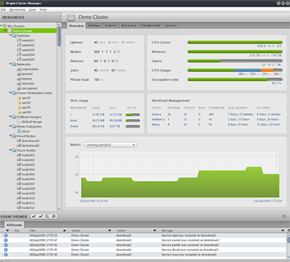
Bright Computing Draws $14.5 Million to Expand Focus on Linux Clusters

Bright Computing, a startup that works with companies that manage Linux clusters and is closely involved with Hadoop for mining Big Data, has picked up $14.5 million in Series B funding. Hadoop and other Big Data tools have been rapidly gaining popularity in enterprises and even smaller businesses, and clusters are the platforms where the large data sets reside and are processed.

Founded in 2009, Bright Computing specializes in management software for clusters and clouds used in high performance computing (HPC), storage, databases, Hadoop, and OpenStack.


Read more at Ostatic

Android Crypto Blunder Exposes Users to Highly Privileged Malware

The majority of devices running Google’s Android operating system are susceptible to hacks that allow malicious apps to bypass a key security sandbox so they can steal user credentials, read e-mail, and access payment histories and other sensitive data, researchers have warned.

The high-impact vulnerability has existed in Android since the release of version 2.1 in early 2010, researchers from Bluebox Security said. They dubbed the bug Fake ID, because, like a fraudulent driver’s license an underage person might use to sneak into a bar, it grants malicious apps special access to Android resources that are typically off-limits. Google developers have introduced changes that limit some of the damage that malicious apps can do in Android 4.4, but the underlying bug remains unpatched, even in the Android L preview.

Read more at Ars Technica.