Orchestration can bring benefits to many parts of IT, but its potential may well be greatest of all in the highly complex world of cloud computing. While there are numerous cloud orchestration tools available today — both proprietary and open source — a new contender recently emerged that aims to provide a universal and open source solution.
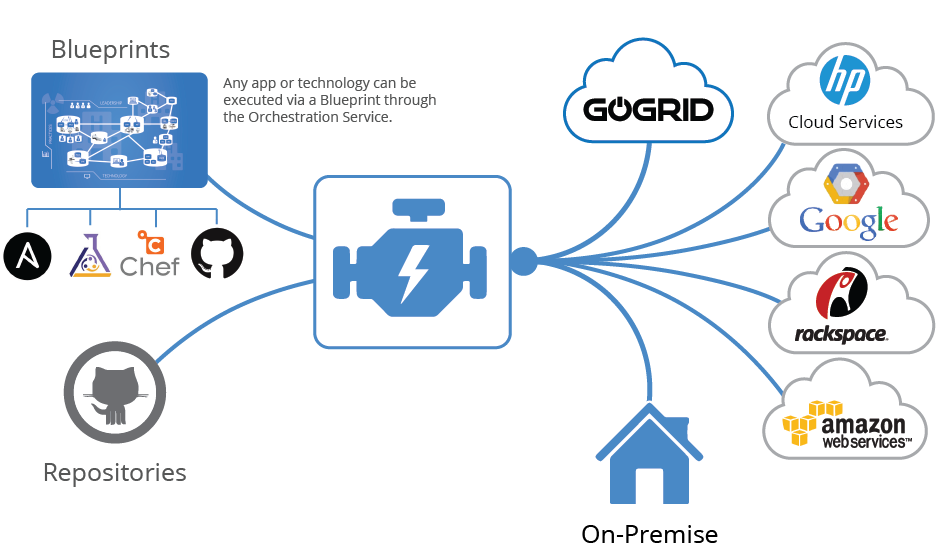
Specifically, GoGrid-sponsored OpenOrchestration.org hopes to advance the open data services ecosystem with a free orchestration service, software library and community. Essentially, the effort aims to do for entire clouds what virtualization did for servers by delivering a range of complex, “full-stack” solutions. Users, in turn, can then easily deploy complex applications in a single cloud, across multiple clouds, on-premises or any combination in between.
Designed in part to deliver an alternative to proprietary offerings such as Amazon Web Services, the effort taps GoGrid’s existing orchestration engine technology and has already delivered a library of big data software solutions, with many more to come.
“GoGrid is launching and sponsoring the site because orchestrated solutions are a necessary evolution of the marketplace in the face of dominance by one or two large commodity cloud services,” said GoGrid CEO John Keagy.
‘Unopinionated in Both Cloud and Tool Set’
Keagy and GoGrid are not proposing OpenOrchestration.org as an alternative to related open tools such as Puppet and Chef, however.
“We’re not motivated by any limitations in those tools,” Keagy told Linux.com. “In fact, it’s the opposite — we see those tools as so valuable and powerful that we want to take advantage of them.”
Indeed, “we saw many customers use Puppet and Chef and wanted to take it up a level and be able to orchestrate their complete solutions on our infrastructure,” noted Heather McKelvey, GoGrid’s CTO and senior vice president of engineering. “We wanted to make sure our orchestration engine was ‘unopinionated’ in both cloud and tool set.”
Capable of using any cloud and any provisioning tool such as Ansible, Chef or Puppet, the resulting orchestration engine service is now up and running with more than 10 big data software solutions technologies already live. Future efforts will target other application areas as well.
“We have a whole bunch of solutions planned — everything from CRM to Drupal to ERP to e-commerce solutions,” Keagy explained.
Basho, Cascadeo, Cloudera, Clustrix, Couchbase, DataStax, Hortonworks, MemSQL and MongoDB are also among the software partners already involved.
‘It’s Choreographed for You Automatically’
Essentially what the service does is install all the environments and software, including downloading in real time, and set it up “just like you’d do if you were a sys admin,” Keagy said. “It’s choreographed for you automatically. This ensures you get going successfully without any of the little details that may pop up.”
The video below explains the premise in more detail.
Looking ahead, Keagy’s aim with OpenOrchestration.org is “making complex infrastructure in the cloud easy,” he said — specifically, by “creating an on-demand solutions library and enabling automation through the use of off-the-shelf tools.”
Among the long-term goals is making those solutions easy to use not only on GoGrid, “but also on lots of clouds,” he concluded. “We want to have partnerships with other global and regional telco operators so that our ISV partners have the broadest base possible for their on-demand solutions.”
 Hey my name is Christian and I’m a student currently in the third year of the Bachelor of Science course with information systems and management major in Nuremberg, Germany. During my time at university I already was interested in developing web applications and gained first experience. Google Summer of Code at openSUSE was a great opportunity for me to improve my knowledge and work together with other excellent developers. There are only two weeks left which makes now the perfect time to summarize what I have achieved and learned so far.