Home Blog Page 1463

The People Who Support Linux: Engineer Thanks Father for His Linux Career

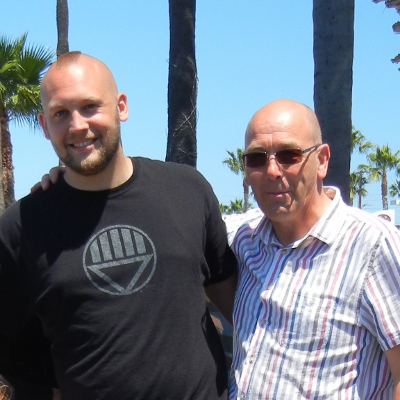
Thomas and Christopher Gibbons

Software engineer Thomas Gibbons remembers from an early age working with his father to set up mail servers in their home in Kidderminster, England. His dad, Christopher Gibbons, a BT (British Telecom) engineer, was always eager to teach him about things he expressed interested in, he said via phone this week.

“He got me into programming as well. I’m where I am today because of my father’s faith in me,” Gibbons said. “Whenever I wanted to learn something, he said ‘Great, we’ll learn it together.”

In the 90s as the web was starting to get big, for example, Gibbons heard about websites at school and wanted to learn about them. So his dad went out and bought a visual website editor called HotMetal Pro to experiment with. They learned HTML together. And when Thomas’s Tamagotchi digital pet inspired him to build a game, his dad bought Visual Basic 5.0, and they built a high-low game together. That was his first foray into Windows development.

“We didn’t have a lot of money growing up, but if I had something I wanted to learn, be it books or software, he got it,” he said.

It was only natural, then, that in 2002 when Thomas wanted to learn about Linux, his dad helped him do that, too.

“We had a Windows server on the machines at the time. I can’t remember how I heard of Linux, but I asked my father about it and he got a copy of Red Hat 8.0 and we played around together,” Gibbons said. “I think he quickly lost interest but I was quite taken with it.”

Early Learning Led to Linux Career

Today Gibbons is a software engineer specializing in DevOps for Maker Studios, based in Los Angeles. All of the companies that he’s worked for over the past 10 years, including Live Nation and Napster, have relied on Linux for their development servers. Lately he’s become adept at spinning up a group of web servers on Amazon Web Services, using tools such as the AWS Linux command line tool and Chef.

Fedora is still his desktop distro of choice, though CentOS powers his home servers now, including the Asterisk PBX he set up a few years ago when he moved from England to the United States for work. His PBX drives the landline in his house and connects to the PBX at his dad’s house so they can talk on the phone at much cheaper long-distance rates.

Last year, more than a decade after he first learned about Linux with his dad, Gibbons used that PBX to guide his dad through a Fedora desktop installation over the phone. His father is using Linux now and getting more familiar with it, he said, but he still needs help occasionally. Gibbons can SSH into his machine and do anything as if he was there in front of him, he said.

“I owe an awful lot to my father,” he said. “I’m very fortunate that he was willing to teach me.”

Gibbons is also grateful for the freedom and openness of the Linux platform, he said, which has allowed him and so many others to experiment with programming at low to no cost. To contribute back to the communities that he’s learned from, he’s very active helping new Linux users in forums and websites such as Reddit. He also recently became a Linux Foundation individual supporter.

“I want to help Linux thrive, to fly the flag and be a part of something truly life changing,” Gibbons said. “Amazing projects such as One Laptop per Child are possible because of Linux and I want to help drive such innovation.”
 

Dear Google: Don’t Screw Up Android

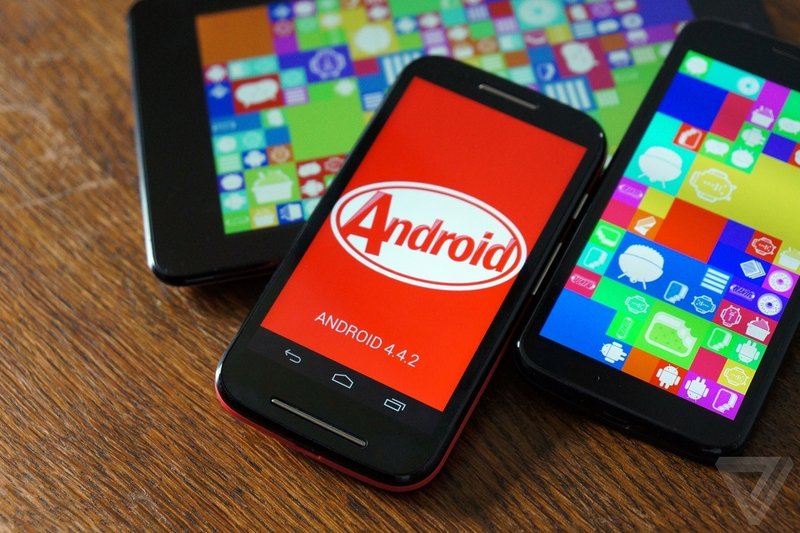
The history of Android has always been about more. From its inception with the T-Mobile G1 in 2008, Google’s mobile operating system has sought to compete by having more features, higher specs, and bigger devices than everyone else. Improving relentlessly with each new release, Android’s rise has produced excellent new phones but also many disappointed users who were either left on an old version of the software or bought a device that was never good enough in the first place. Late last year, Google sought to correct that by putting the brakes on and introducing Android 4.4 KitKat, an OS update that was about less.


Continue reading…

Read more at The Verge

Check out the Tizen Samsung WW9000 Washing Machine and Its 5-inch Touch Screen

  Tizen is being heralded as the “OS of Everythingâ€, and you can really see it in action on the Samsung Gear 2, Smart camera’s, and Smart TV’s . We have previously mentioned the Tizen based Samsung WW9000 washing machine, but here are some more details regarding some of its features.

Use the touch screen or remote control it with your smartphone The 5-inch color Full Touch Screen can be used to swipe through the different menu options or you can use Smart Control, which lets you remotely control and monitor the machine using your smartphone. You can start or pause a cycle, receive notifications on the remaining cycle-time and when the wash is complete.   

Read more at Tizen Experts

Tesora Has Open Sourced Its OpenStack Cloud Database Software

As we’ve been covering recently, Icehouse, the next major release of the OpenStack cloud platform, is picking up steam. One notable thing about Icehouse is that it has introduced a new database-as-a-service feature, focused on building and managing relational databases, called Trove.

Trove is starting to get a lot of notice, and Tesora is among the companies with a stake in Trove’s success. The company is focused on Database-as-a-Service technology, and it announced this week that the source code of its previously proprietary database virtualization engine is now freely available. You can click here to download the Tesora Database Virtualization Engine. 


Read more at Ostatic

Outlook Web App Arrives, Native for Android

While Android has been a barnstorming success as an open mobile platform, it has still largely been a consumer phenomenon. There are still enterprise IT departments that won’t sanction Android devices for employee use, due to purported security concerns, and, in some cases concerns about compatibility with Microsoft’s application and messaging platforms.

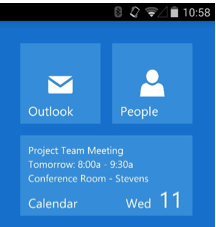
Now, though, an Outlook Web App (OWA) is going live as a native Android app, which could shut down some of the Android compatibility issues. At the Microsoft Exchange Conference (MEC) in March, officials announced that the company would be bringing a native OWA mobile app to Android phones. The pre-release of this app is now available in the Google Play store.


Read more at Ostatic

Tizen-Based Samsung NX1, 28MP Sensor Camera to Launch in September?

  Samsung have delivered several Tizen powered Smart cameras and now according to a new leak, they are getting ready to deliver another Tizen based flagship model named the Samsung NX1. The expected announcement of this new Camera is thought to be at the Photokina event in September.

Specification wise we are looking at a 28-megapixel APS-C sensor (compatible with existing NX lenses), which is an upgrade over the 20.3MP sensor that is in the current flagship NX30 camera. 

Read more at Tizen Experts

Database Monitoring Key to Reducing Security Breaches

Only 48 percent of respondents to a recent survey indicated that they test or validate third-party software to ensure it’s not vulnerable to SQL injection.

Read more at eWeek

How IBM Is Making Cities Smarter Worldwide

IBM helps cities around the world become smarter by enabling them to analyze and act upon the immense streams of data they generate.

Read more at eWeek

Hands-On: Installing digiKam 4.0 on openSuSE 13.1

A new release of digiKam (4.0) hasn’t made it to the openSuSE 13.1 general distribution yet. Here is an easy way to install it yourself.

Using OpenStack for Scientific Research

As scientists and researchers develop new and better methods for collecting data, from new sensor technology to advancements in data mining techniques, the sheer volume of data to be analyzed grows accordingly. For big data, you need big clusters, and OpenStack has proven to be an important tool for many scientific institutions seeking to manage and orchestrate their machines and workloads.

read more

Read more at OpenSource.com