
Home Blog Page 1479

Digital Signal Processors Market – Global Industry Analysis, Size, Share, Growth, Trends And Forecas

Large scale adoption of digital signal processing in consumer electronics has lead to increased utilization of DSP chips that have penetrated into a number of applications that use advanced digital signal processing. Electronic design automation (EDA) vendors, foundries, fabless and fab manufacturers, intellectual property (IP) vendors, assembly & testing and packaging vendors are some of the key industry players in this market. IP market can be classified into standard non-customizable, customizable, application specific integrated circuits (ASIC), and programmable (FPGA & PLD) DSP core IP.

Enquiry before Buying @ http://www.transparencymarketresearch.com/sample/sample.php?flag=B&rep_id=1483

Design architecture market can be segmented as product design, IC design and DSP System-On-Chips (SOC) design. Product segment markets can be enlisted as general purpose, application specific and programmable DSP ICs. IC design segment markets are standard non-embedded, embedded, single-core, and multi-core DSP processors markets.

Applications sectors can be enlisted as computers and computer peripherals, wireless communication, surveillance, VoIP, consumer electronics sector, automotive sector, industrial sector, medical sector, radar communication applications and nanotechnology. The increased use of DSP in the high demand consumer electronic equipments such as set-top-boxes, digital cameras and printers are driving the growth of this market. The application of DSP in automobile industry has increased. Automobile equipment manufacturers are using DSP for manufacturing vehicle parts. Moreover, several location-based service providers use advanced digital signal processors to manufacture vehicle surveillance equipments. North America and Asia Pacific are the largest manufacturer and consumer of in digital signal processing market. The leading nations in DSP market are U.S., China, Japan, Taiwan and Korea. Asia Pacific is now the leading destination for electronics manufacturers due to availability of skilled workforce and low production cost.

Some of the market players in this industry are Analog Devices Inc., Altera Corp., Broadcom Corp., Freescale Semiconductor Ltd., Ceva Inc., Infineon Technologies AG, Marvell Technology Group Ltd., LSI Corp., MIPS Technologies Inc, Qualcomm Inc., NXP Semiconductors N.V., Renesas Electronics Corp., ST Microelectronics N.V., Samsung Electronics Co. Ltd., Toshiba Corp., Texas Instruments Inc. and Xilinx Inc.
Canonical, Microsoft, and Apple Want OS Convergence, Who Will Get There First?

The idea of OS convergence is starting to take a hold in the world and major companies like Microsoft, Apple, and Canonical are working hard to achieve it.

Read more at Softpedia.

Thermal Issues Appear To Cause My ASUS Zenbook Linux Woes

As I’ve expressed on Twitter and in a past article I’ve run into some tough times recently with the ASUS Zenbook UX301LAA ultrabook under Linux. ASUS wasn’t of much help and after further system reboots, the issue appears to be heat-related with this Intel Haswell ultrabook…

Read more at Phoronix

Distribution Release: SparkyLinux 3.4 “LXDE”, “E18”, “Razor-qt”

Paweł Pijanowski has announced the release of SparkyLinux 3.4 “LXDE”, “E18” and “Razor-qt” editions, a set of Debian-based distributions with a choice of three lightweight desktop interfaces: “SparkyLinux 3.4 ‘Annagerman’ LXDE, Razor-qt and Enlightenment 18 is out. The new ISO images of SparkyLinux 3.4 provide tons of updates,….

Read more at DistroWatch

European Union Launches $4B Project to Innovate in Robotics

The EU has launched “the world’s largest civilian research and innovation programme in robotics”, which it expects to create more than 240,000 jobs.

Apache Makes Stratos PaaS Cloud a Top-Level Project

Want a fully open source Platform-as-a-Service cloud framework? Apache’s just made Stratos a top-level project.

Microsoft’s Touch-Friendly Office May Launch on Android Before Windows

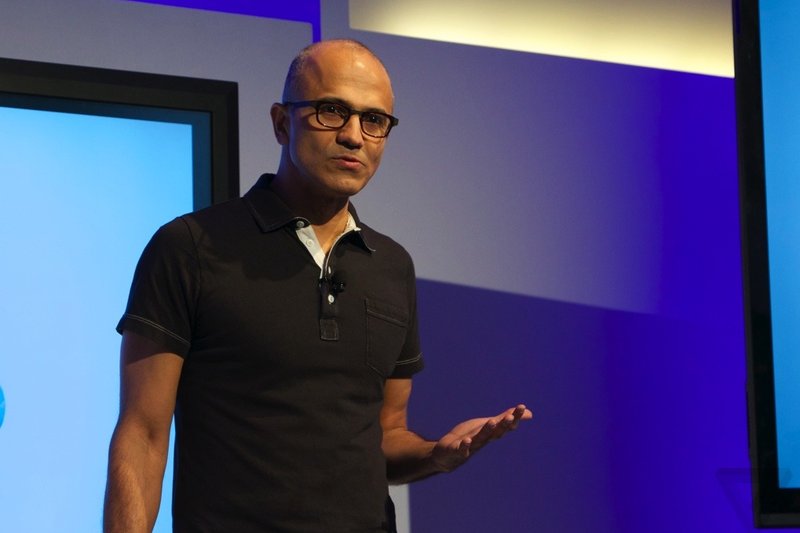
Microsoft CEO Satya Nadella hasn’t been leading the company very long, but he’s already put forward a very clear message: the new Microsoft wants its best apps and services on all platforms, and it’s not playing favorites. The launch of Office for iPad was clear evidence of that, and now it seems Microsoft is preparing to bring a touch-optimized version of its productivity suite to Android — “months” before it rolls out a Windows equivalent. ZDNet is reporting that the redesigned mobile Office will arrive on Android by the end of 2014. The Windows 8 “Metro” incarnation, by contrast, has apparently been pushed back to spring 2015 despite initial hopes it would arrive this year.

That’s great news for Android tablet owners, but it’s also…

Continue reading…

Read more at The Verge

Intel Brings QuickAssist Support To Linux: Crypto & Compression

Intel has published a new Linux kernel patch-set that adds Quick Assist Technology support to Linux along with a driver to handle their DH895xxC hardware accelerator. This is a new chip for trying to accelerate cryptography and data compression tasks…

Read more at Phoronix

A Crock-Pot Slow Cooker With Wi-Fi Smarts (Hands-on)

The $130 Linux-based Crock-Pot WeMo Smart Slow Cooker was unveiled at CES earlier this year, and will be available in stores soon. I got to spend some time with one this week and thought I’d share some early impressions ahead of the full review. Belkin and Jarden Home Brands’ app-controlled slow cooker struck me as an unlikely smart home contender at first. Slow cookers are about as low maintenance as possible, so how much value could WeMo integration add to something already so straightforward?

That depends on how much hands-on time you want with your slow cooker. This model takes what looks like a standard Crock-Pot-brand slow cooker, simplifies the physical layout, adds a subtle WeMo logo, and makes everything controllable on your Android or iOS device via the free WeMo app (the same one you use for your other WeMo devices). I wouldn’t go so far as to say that this is the design that will finally make slow cookers seem sexy, but ditching those dated touch-pad buttons for something less cluttered is a clear improvement.

Read more at CNET.

GNOME Foundation Board Candidate Questions Red Hat’s ‘Dominance’

 A candidate vying to become one of the directors of the GNOME Foundation has raised the issue of Red Hat’s domination of development of the GNOME Desktop Project, claiming that “for the last several years, Red Hat’s wants/needs have trumped what anyone else wants/needs, including the larger user base of GNOME.”

Read more at ITWire