
Distribution Release: Point Linux 2.3
Peter Ryzhenkov has announced the release of Point Linux 2.3, an updated build of the project’s desktop Linux distribution based on Debian GNU/Linux 7.4 and featuring the MATE 1.4 desktop environment: “These release notes for Point Linux 2.3 (taya) provide an overview of the release and document the….
Read more at DistroWatch
Peregrine: World’s Largest Supercomputer Dedicated to Renewable Energy
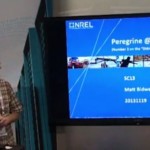 Matt Bidwell from NREL presented this talk at SC13. “NREL’s HPC center is home to the largest HPC system in the world dedicated to advancing renewable energy and energy efficiency technologies. The HPC capabilities of the center propel technology innovation as a research tool by which scientists and engineers find new ways to tackle our nation’s energy challenges—challenges that cannot be addressed through traditional experimentation alone.”
Development Release: GoboLinux 015 Beta
Lucas C. Villa Real has announced that the beta release of GoboLinux 015 is now ready for testing. GoboLinux is a distribution that attempts to redefine the entire file system hierarchy by placing applications into their own directories.
Distribution Release: Calculate Linux 13.11.1
Alexander Tratsevskiy has announced the availability of Calculate Linux 13.11.1, an updated release of the project’s Gentoo-based distribution with separate editions for desktops (with KDE or Xfce), servers and media centres: “We are happy to announce the release of Calculate Linux 13.11.1.
IBM’s Mike Day: KVM More Visible Through Collaboration
About a year ago IBM doubled down on its commitment to the open source cloud, announcing that all of its cloud offerings would be built on OpenStack and renewing its investments in KVM, the Linux-based kernel virtual machine. Since then, both projects have undergone major changes, including the move last fall of KVM and the Open Virtualization Alliance (OVA) to become a Linux Foundation Collaborative Project.
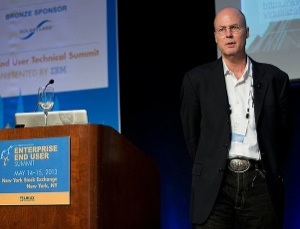 “The industry is much more aware of KVM,” says Mike Day, distinguished engineer and chief virtualization architect at IBM. “The Linux Foundation and the OVA have made a real difference.”
Here, Day discusses what’s new with the open cloud and KVM and gives us a sneak preview of his upcoming keynote at the Linux Foundation Collaboration Summit. Day will partner with HP’s Distinguished Technologist Monty Taylor to present “KVM, OpenStack and the Open Cloud,” and will teach an on-site training course, “Introduction to Linux KVM Virtualization.” Those who enroll for the course will automatically be registered for the invitation-only summit to be held on March 26-28 in Napa, Calif.
Linux.com: What is the state of the open cloud today? What’s going well for IBM and the industry in general, and what needs more work?
Mike Day: OpenStack has a lot of momentum, obviously. Together with CloudStack it is providing an open infrastructure that matches up well with Amazon and the others. IBM is in the midst of re-engineering its products and services around OpenStack; initial results are positive but we have a huge amount of work yet to do. OpenStack itself is still gaining new features at a rapid pace. This, and the immaturity or absence of consumer-oriented validation suites is attenuating deployment of OpenStack. Right now sophisticated IT departments are deploying or piloting it. The fact that vendors and Linux distributors are providing stable releases of OpenStack with certification will prove helpful.
How about the state of the KVM hypervisor?
Day: KVM is gaining deployments at a steady pace. It has a small market share but wields influence disproportionately to its market share. I attribute KVM’s influence on other hypervisors and systems software to its performance and the fact that KVM is consistently out early with new or advanced features. Now it is a multi-platform hypervisor, with upstream support for ARM, s390, and PowerPC.
How has the project changed since the Open Virtualization Alliance joined the Linux Foundation as a collaborative project last October?
Day: The industry is much more aware of KVM. The days are mostly gone when people assumed you could only run a Linux guest over KVM. There are more management, backup, and security products that support KVM. KVM has more high-profile reference customers as well. The Linux Foundation and the OVA have made a real difference.
When we talked around this time last year you said that one of the challenges facing KVM was building better configuration defaults for ease of setup and maintenance. How is that changing?
Day: The default configuration parameters are steadily improving. They are much better than when we last spoke. Right now in upstream there is a reworking of hot-plug and pci configuration, for example. In addition, there are more management tools that make configuration easier. Kimchi (https://github.com/kimchi-project/kimchi) and oVirt (http://oVirt.org) are a couple of good examples.
You’re also teaching a class at Collaboration Summit that will cover how to couple KVM with such tools as oVirt, libvirt and OpenStack to create an entire open source virtual IT infrastructure. Who should attend this class and why?
Day: I will cover some theory and background, but mostly this will be a hands-on class focused on using KVM to run guests. Attendees will bring a Linux laptop and use it to run Lab exercises in the class. We will explore different ways to use KVM from command-line utilities to graphical management tools. It will be fast-paced and I think useful to those who are interested in KVM, as well as those who are using KVM and want to learn more about it. If you attend this class you should learn some new methods for using KVM and also understand how they work and why they are useful.