
Continue to following article to Install Apache Tomcat 7 on CentOS/RHEL Servers.
Cantata, a Qt-based music player for MPD (Music Player Daemon), has reached version 1.3.0 just yesterday, and a fix for compiling it in KDE, 1.3.0.1, was put out a few moments ago. This release comes with 87 fixes and improvements. Some major changes and new features include:
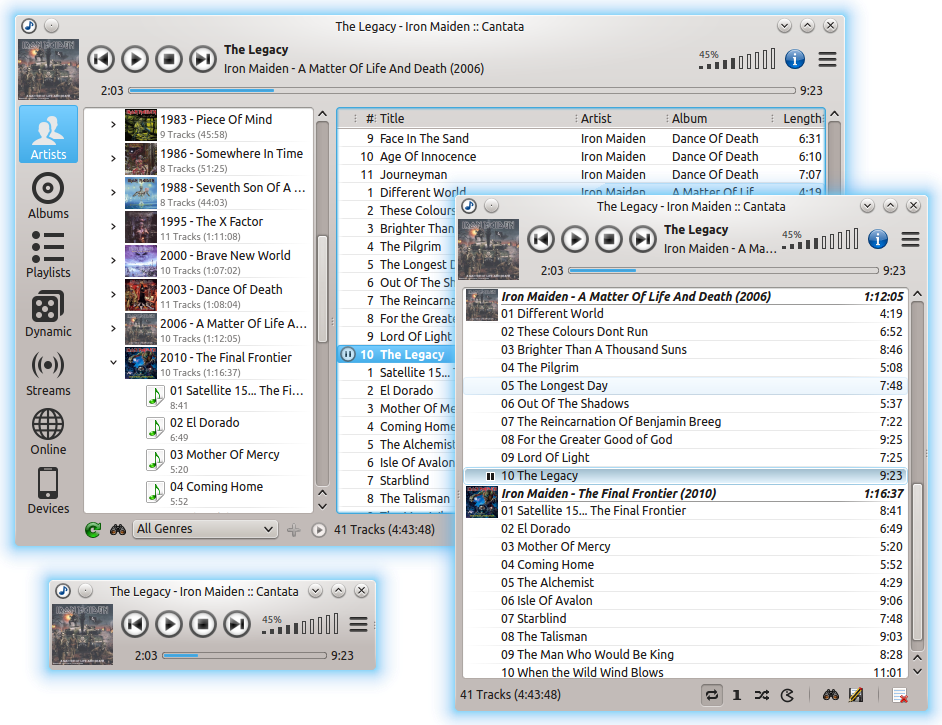
Image source: Image credit
Overall, Cantata suffered major overhauls on all levels. The interface has suffered lots of fixes and improvements; communication with MPD was improved too; playlist and play queue handling also suffered fixes.
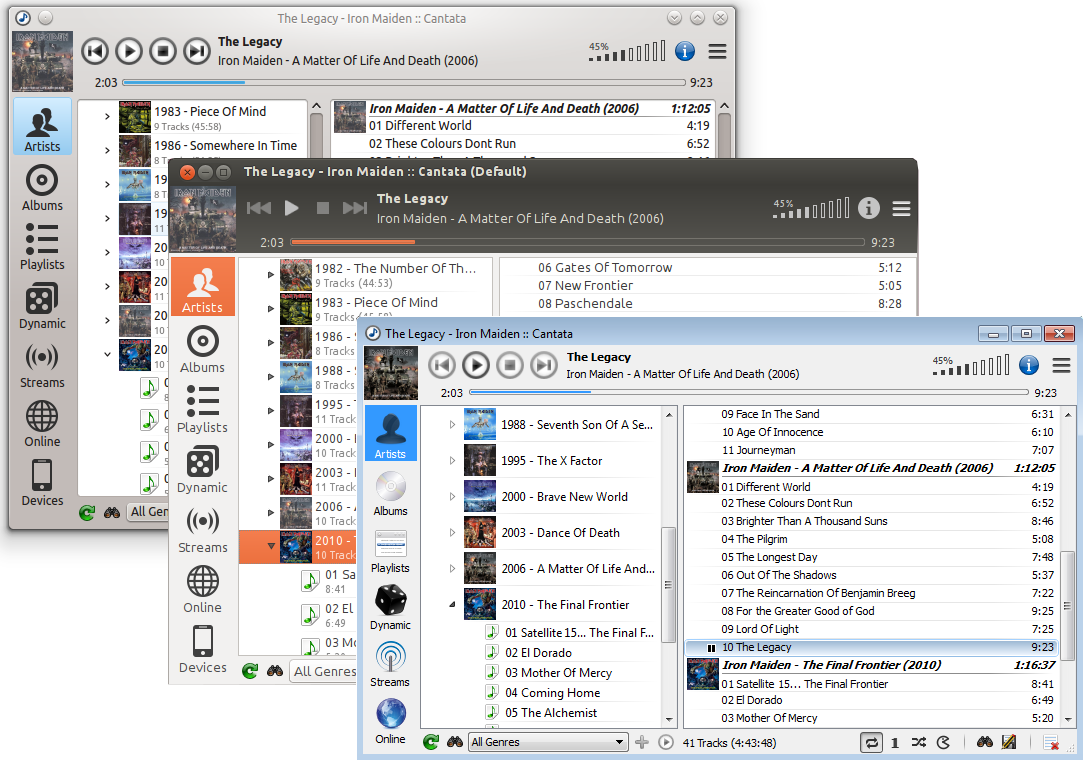
Image source: Image credit
Installing from the PPA
Open the terminal and type the following commands to install Cantata from the PPA:
sudo add-apt-repository ppa:ubuntuhandbook1/cantata
sudo apt-get update
sudo apt-get install cantata
Installing from Source
Make seems to give the following error on Ubuntu 13.10 with Cantata 1.3.0 (this was fixed in Cantata 1.3.0.1):
lconvert: could not exec '/usr/lib/i386-linux-gnu/qt4/bin/lconvert': No such file or directory
make[2]: *** [translations] Error 1
make[1]: *** [po/CMakeFiles/translations.dir/all] Error 2
make: *** [all] Error 2
However, the binary is successfully built, available in the build directory and you can run Cantata as ./cantata.
Cantata 1.3.0.1 was released few moments ago with a fix for compiling it. Follow the next steps:
Download the source tarball from here and uncompress it:
tar -xjf cantata-1.3.0.1.tar.bz2
Next, install the dependencies:
You will need the source repositories enabled for this to work.
Finally, change the working directory to cantata-1.3.0.1 and type the commands:
mkdir build && cd build
cmake ..
make
sudo make install
To install as normal user in a different prefix, use this:
mkdir build && cd build
cmake .. -DCMAKE_INSTALL_PREFIX=$HOME/usr
make
make install
Cantata offers a wealth of options, as well as Internet services like Jamendo and support for podcasts:
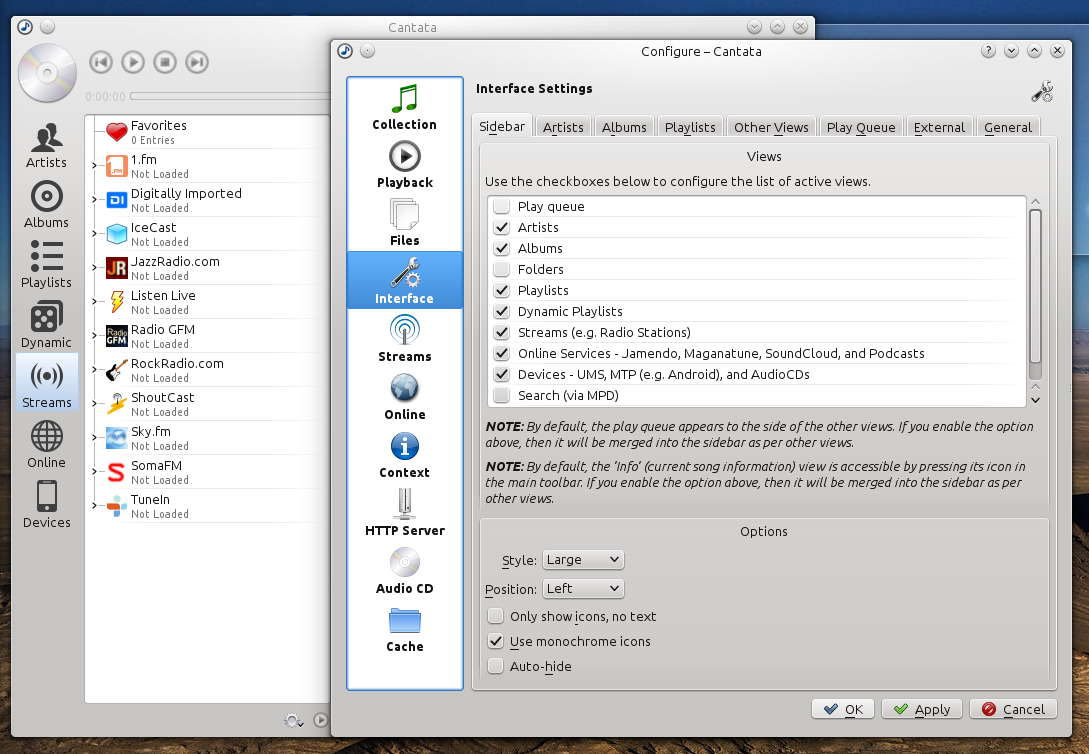
 The OpenStack cloud computing platform continues to head in a lot of interesting directions. There are many IT departments interested in deploying it for its flexibility and customizability, but there are also those who simply want a well supported OpenStack platform that will let them take advantage of private cloud functionality.
Just this week, SUSE announced the availability of SUSE Cloud 3, the next version of its OpenStack distribution for building Infrastructure-as-a-Service private clouds. And, Metacloud, which has focused on deploying and operating OpenStack as a service for many companies, launched Metacloud Hosted Private Cloud, a turnkey hosted solution that delivers the company’s OpenStack-based cloud platform alongside full support plans.
 We’ve only hit February, and it already looks like 2014 is going to be the year of the open source phone. Not only is Android continuing to dominate the smartphone space in terms of market share, but Mozilla is widening its Firefox OS phone strategy and Canonical announced this week that Spain’s bq and China’s Meizu will be the first companies to bring Ubuntu smartphones to global users.
Canonical has remained busy enhancing the architecture of the Ubuntu Desktop, pushed into the television market, and is now going to pursue making Ubuntu a viable mobile phone platform.