In this interview Swapnil Bhartiya, creator of TFiR, sat down with Shuli Goodman, Executive Director of LF Energy to discuss the role open source and the foundation is playing in helping the energy sector to embark on its own digital transformation and cloud-native journey.
Here is a lightly edited transcript of the interview:
Swapnil Bhartiya: Shuli, first of all, welcome to the show once again. When we look at the energy sector – we see power lines and grids. It creates the image of an ancient system to move electrons and protons from one place to another. Are we still talking about the same power lines and grids or we’re also talking about a modern infrastructure?
Shuli Goodman: Well, we’re definitely talking about modern infrastructure. One of the defining features of the grid that we’re moving from is you have centralized energy generation that is being pushed out over high voltage to distribution systems. We lose nearly 60% of the electrons. There’s a tremendous opportunity for optimization and being able to reduce the amount of electron loss.
The digitalization of energy, in terms of the metadata and the data, enables system operators to be able to work much more effectively. It’s going to be critical in ensuring that we actually are able to balance supply and demand in a different way than we’ve been balancing supply and demand for the last 150 years.
Swapnil Bhartiya: What role is LF Energy playing in helping address these problems?
Shuli Goodman: We’re at the beginning of a period of accelerated innovation, which will be addressing these issues. The Digital Substation project, for example, is addressing the ability to have torrents of data being managed from the edge, and to be able to provide grid intelligence out at the edge, and have a mechanism for being able to bring that in and then to be able to orchestrate, choreograph, and to even have control or shared control mechanisms that enable us to manage the grid.
What we’re working on now is blocking and tackling at a very fundamental level. You have utilities who have always thought of themselves as hardware guys – dealing with power lines. It’s been a very manual, highly intensive industry.
We are moving towards network operators, almost carriers like approach. Kind of an amalgamation of electricity, telecommunications and the internet. This whole new process of being able to orchestrate energy and digitalization is essential in that paradigm. It could even be up to 50% of that. And then there’s other stuff that’s happening both at the chip-level and at the hardware-level that is going to enable that intelligence at the edge and the ability to choreograph that through market signals.
What we’re doing is shifting to a price-based grid coordination model. In other words, that price signals that will shift and change based on the amount of sun, or the amount of wind, or the availability of energy. We’ll actually begin getting pushed out to the edge and enable coordination between assets at the edge.
Swapnil Bhartiya: You mentioned the Digital Substation Project. Tell us more about it.
Shuli Goodman: So, for those of you who are watching, who’ve been along the journey with LF Networking or have seen what’s happened with 5G, the revolution of 5G was the virtualization and the dis-aggregation. The shift from purely hardware-centric to really moving to 75% virtualization.
The Digital Substation, the DSAS project, is an umbrella of four different projects that are addressing the digitalization at the substation. The Substation is the critical infrastructure that separates high, medium, and low voltage between the generation and then moving it, stepping it down before it goes out into your house. I refer to them as edge node routers, which may or may not be exactly the right term, but we’re moving into a territory where we’re inventing things.
I think of the edge node and the DSAS project is really about virtualizing hardware, abstracting the complexity of hardware and software so that we begin to have really software-defined environments. And perhaps in the future, we’ll have increasingly software-defined substations, transformers. All kinds of things that we considered to be de facto the standard today, may in fact move more and more towards software-defined. And the DSAS project is really the start of that.
Swapnil Bhartiya: What kind of collaboration is there around DSAS?
Shuli Goodman: It’s a great project. It really started with RTE. Last summer we had a series of meetings and we opened it up to all of the OEMs, vendors, suppliers, such as, GE, ABB, Schneider Electric and all the network operators, utilities all over the world that wanted to participate.
We have a core group, from RTE, France, and then we have Alliander and TenneT, which are the distribution and the transmission system operators in the Netherlands. TenneT also operates in Germany. We have General Electric, which is driving it from a vendor, OEM perspective. And then Schneider Electric is also participating, and we hope that others will join us.
Swapnil Bhartiya: You also have something called CoMPAS or Configuration Modules for Power Industry Automation System. What is that?
Shuli Goodman: So, CoMPAS is the first of the four projects in the DSAS umbrella. It’s essentially a configuration model. One of the problems that end-users – the utilities – have is that when they think about their portfolio of hardware and software there are tremendous interoperability challenges. 61850, which is an IEC Standard, was created precisely in order to facilitate interoperability. The CoMPAS project is leveraging 61850 to enable interoperability between various different vendors so that we can have a more heterogeneous environment for things like a substation. There are millions of substations on the planet so any single player managing at the transmission level could be managing thousands of these. And if you are at the distribution level, you would be managing many thousands of thousands.
So if you don’t have that interoperability, then you have vendor lock-in. And if you have vendor lock-in, it’s not just that it’s bad for the utility, it’s also really bad for the OEM, because it slows innovation. It keeps the vendor and the supplier sort of focused on a portfolio as opposed to really looking ahead. Right now, solving this interoperability problem is ground zero, and that’s where CoMPAS comes in.
Swapnil Bhartiya: How has Open Source made your life easier to not only convince these stakeholders, these players, to collaborate with each other but also to innovate at a much faster rate than it would take traditional companies to do in a proprietary manner?
Shuli Goodman: So, if just for a moment, you just imagined in your mind, a pie, and each of the wedges in the pie represented parts of the stack that you need to build and support in order to go to market. What Open Source does is it allows us to identify what are the commodity parts of that pie, and can we agree on working on those together. That then frees up engineers and resources and facilitates interoperability. It does really great things to accelerate innovation because instead of, let’s say, Siemens, GE, ABB or Schneider Electric, putting in 30% of their resources to supporting the 61850 integration, or something like that, they can put in a quarter of those engineers and then relocate those resources somewhere else. The same thing is true with the utilities, because, for the most part, utilities have given responsibility for their network operations at a digital level.
Vendors need to become Digital Native and Cloud Native, because to get to where we need to go, it is going to be so digitally intensive, perhaps 50% of the problem is going to be digital. So, we need to really build that capacity.
I just graduated from my internship at Linux Foundation’s Community Bridge program, and I’d like to share my experience and explain why you should also consider applying if you are new to open source or the cloud-native world.
I already had some experience with cloud-native projects, I’ve been using cloud-native tools at my workplace for a couple of years. It is thanks to them that I got my first full-time job as an Infrastructure Analyst and later on as a Cloud Architect. And if you are reading this blog post, I assume that you have at least some knowledge about what CNCF does and you do know some of its projects, like Kubernetes and Prometheus, i.e.
When the Linux 5.8 Release Candidate opened for testing recently, the big news wasn’t so much what was in it, but itssize. As Linus Torvalds himselfnoted, “despite not really having any single thing that stands out … 5.8 looks to be one of our biggest releases of all time.”
True enough, RC 5.8 features over 14,000 non-merge commits, some 800,000 new lines of code, and added around a hundred new contributors. It might have gotten that large simply because few have been traveling thanks to COVID-19, and we’ve all been able to get more work done in a release window than usual. But from the perspective of this seasoned Linux kernel contributor and maintainer, what is particularly striking about the 5.8 RC release is that its unprecedented size just was not an issue for those that are maintaining it. That, I’d argue, is because Linux has the best workflow process of any software project in the world.
What does it mean to have the best workflow process? For me, it comes down to a set of basic rules that Linux kernel developers have established over time to allow them to produce relentlessly steady and reliable progress on a massive scale.
One key factor is git
It’s worth starting with a little Linux history. In the project’s early days (1991–2002), people simply sent patches directly to Linus. Then he began pulling in patches from sub-maintainers, and those people would be taking patches from others. It quickly became apparent that this couldn’t scale. Everything was too hard to keep track of, and the project was at constant risk of merging incompatible code.
That led Linus to explore various change management systems including BitKeeper, which took an unusually decentralized approach. Whereas other change management systems used a check-out/modify/check-in protocol, BitKeeper gave everyone a copy of the whole repo and allowed developers to send their changes up to be merged. Linux briefly adopted BitKeeper in 2002, but its status as a proprietary solution proved incompatible with the community’s belief in open source development, and the relationship ended in 2005. In response, Linus disappeared for a while and came back withgit, which took decentralized change management in a powerful new direction and was the first significant instantiation of the management process that makes Linux development work so well today.
Here are seven best practices — or fundamental tenets — that are key to the Linux kernel workflow:
Each commit must do only one thing
A central tenet of Linux is that all changes must be broken up into small steps. Every commit that you submit should do only one thing. That doesn’t mean every commit has to be small in size. A simple change to the API of a function that is used in a thousand files can make the change massive but is still acceptable as it is all part of performing one task. By always obeying this single injunction, you make it much easier to identify and isolate any change that turns out to be problematic. It also makes it easier for the patch reviewer only to need to worry about a single task that the patch accomplishes.
Commits cannot break the build
Not only should all changes be broken into the smallest possible increments, but they also can’t break the kernel. Every step needs to be fully functional and not cause regressions. This is why a change to a function’s prototype must also update every file that calls it, to prevent the build from breaking. So every step has to work as a standalone change, which brings us to the next point:
All code is bisectable
If a bug is discovered at some point, you need to know which change caused the problem. Essentially, a bisect is an operation that allows you to find the exact point in time where everything went wrong.
You do that by going to the middle of where the last known working commit exists, and the first commit known to be broken, and test the code at that point. If it works, you go forward to the next middle point. If it doesn’t, you go back to the middle point in the other direction. In that way, you can find the commit that breaks the code from tens of thousands of possible commits in just a dozen or so compiles/tests. Git even helps in automating this process with the git bisect functionality.
Importantly, this only works well if you abide by the previous rules: that each commit does just one thing. Otherwise, you would not know which of the many changes in the problem commit caused the issue. If a commit breaks the build or does not boot, and the bisect lands on that commit, you will not know which direction of the bisect to take. This means that you should never write a commit that depends on a future commit, like calling a function that doesn’t exist yet, or changing the parameters of a global function without changing all its callers in that same commit.
Never rebase a public repository
The Linux workflow process won’t allow you to rebase any public branch used by others. Once you rebase, the commits that were rebased will no longer match the same commits in the repositories based on that tree. A public tree that is not a leaf in a hierarchy of trees must not rebase. Otherwise, it will break the trees lower in the hierarchy. When a git repository is based on another tree, it builds on top of a commit in that tree. A rebase replaces commits, possibly removing a commit that other trees are based on.
Git gets merging right
Getting merging right is far from a given. Other change management systems are a nightmare to merge code from different branches. It often ends up with hard to figure out conflicts and takes a huge amount of manual work to resolve. Git was structured to do the job effortlessly, and Linux benefits directly as a result. It’s a huge part of why the size of the 5.8 release wasn’t really a big deal. The 5.8-rc1 release averaged 200 commits a day, with 880 total merges from 5.7. Some maintainers noticed a bit more of a workload, but nothing was too stressful or would cause burnout.
Keep well-defined commit logs
Unfortunately, this may be one of the most essential best practices that are skipped over by many other projects. Every commit needs to be a stand-alone, and that includes its commit log. Everything required to understand the change being made must be explained in the change’s commit log. I found that some of my most lengthy and descriptive changelogs were for single line commits. That’s because a single line change may be for a very subtle bug fix, and that bug fix should be thoroughly described in the changelog.
A couple of years after submitting a change, it is highly unlikely that anyone would know why that change was made. A git blamecan show what commits changed the code of a file. Some of these commits may be very old. Perhaps you need to remove a lock, or make a change to some code and do not precisely know why it exists. A well-written changelog for that code change can help determine if that code can be removed or how it can be modified. There have been several times I was glad I wrote detailed changelogs on code as I had to remove code, and the changelog description let me know that my changes were fine to make.
Run continuous testing and integration
Finally, an essential practice is running continuous testing and continuous integration. I test every one of my pull requests before I send them upstream. We also have a repro called linux-next that pulls in all the changes that maintainers have on a specific branch of their repositories and tests them to assure that they integrate correctly. Effectively, linux-next runs a testable branch of the entire kernel that is destined for the next release. This is a public repo so anyone can test it, which happens pretty often – people now even release bug reports on code that’s in linux-next. But the upshot is that code that’s been in linux-next for a couple of weeks is very likely to be good to go into mainline.
Best practices exemplified
All of these practices enable the Linux community to release incredibly reliable code on a regular 9-week schedule at such a massive scale (average of 10,000 commits per release, and over 14,000 for the last release).
I’d point to one more factor that’s been key to our success: culture. There’s a culture of continuous improvement within the kernel community that led us to adopt these practices in the first place. But we also have a culture of trust. We have a clear pathway via which people can make contributions and demonstrate over time that they are both willing and able to move the project forward. That builds a web of trusted relationships that have been key to the project’s long term success.
At the kernel layer, we have no choice but to follow these practices. All other applications run on top of the kernel. Any performance problem or bug in the kernel becomes a performance problem or bug for the applications on top. All error paths must exit peacefully; otherwise, the entire system will be compromised. We care about every error because the stakes are so high, but this mindset will serve any software project well.
Applications can have the luxury of merely crashing due to a bug. It will annoy users, but the stakes are not as high. Quality software should not take bugs lightly. This is why the Linux development workflow is considered the golden standard to follow.
About the author: Steven Rostedt (@srostedt) is a Linux kernel contributor and an Open Source Engineer at VMware. You can learn more about Steven’s work at blogs.vmware.com/opensource or @VMWopensource on Twitter
From its efforts to reshape computing through open source to its aggressive push to increase internet connectivity around the world, Facebook is a leader in open innovation. Perhaps more important today than ever, Facebook’s focus on democratizing access to technology enhances opportunity and scale for individuals and businesses alike. That’s why we’re so excited to announce the company is joining the Linux Foundation at the highest level.
Facebook’s sponsorship of open innovation through the Linux Foundation will help support the largest shared technology investment in history with an estimated $16B in development costs of the world’s 100+ leading open source projects and supports those project communities through governance, events and education. The company is also already the lead contributor of many Linux Foundation-hosted projects, such as Presto, GraphQL, Osquery and ONNX. It has been an active participant in Linux kernel development, employing key developers and maintainers across major kernel subsystems.
In addition to these efforts, Facebook has a long history of leveraging open source to unlock the potential of open innovation:
Through Facebook Connectivity and the open source Telecom Infra Project (TIP) Foundation, Facebook hopes to bring fast, reliable internet to those without it. Facebook’s Magma open source project allows telecom operators to easily deploy mobile networks in hard-to-reach areas — reducing the costs of building and maintaining telecom networks. Together, Facebook Connectivity and TIP have created hundreds of billions of dollars of value through open source collaboration.
Facebook created a unique dataset of over 100,000 videos and launched the Deepfake Detection Challenge in order to accelerate development of new ways to detect deepfake videos. This open, collaborative effort will help the industry and society at large meet the challenge presented by deepfake technology and help everyone better assess the legitimacy of content they see online.
Facebook’s Data for Good program enables geographic data to be shared with the aim of addressing some of the world’s greatest humanitarian issues, including COVID-19.
Facebook also leads the industry in open hardware, having founded the Open Compute Project (OCP), which uses open source to enable the creation of efficient, flexible, and scalable hardware designs for data centers.
By creating and sustaining an open source ecosystem around PyTorch, Facebook also accelerates the pace at which data scientists and developers can leverage the power of artificial intelligence and machine learning in computer vision, natural language processing, and other disciplines.
Facebook’s React.js library powers some of the world’s most popular websites and has become the standard for frontend web development due to its simplicity and flexibility.
In working with Github to sponsor the first-ever remote open source fellowship run by Major League Hacking, Facebook also hopes to create a trend of empowering a new generation of diverse open source contributors.
Facebook’s commitment to the open source community can be seen in both its multi-million dollar investments and its genuine passion for technology development. It is this combination that makes the company an incredible supporter of the open source developer community.
As a Platinum member of the Linux Foundation, Facebook’s Kathy Kam joins the LF board. Kathy is head of Open Source at Facebook where she manages the Open Source Engineering, Developer Advocacy, and Open Source Program Management teams. Kathy is a 20-year engineering, product management, and developer relations leader previously with Google and Microsoft.
The Linux Foundation would like to reiterate its statements and analysis of the application of US Export Control regulations to public, open collaboration projects (e.g. open source software, open standards, open hardware, and open data) and the importance of open collaboration in the successful, global development of the world’s most important technologies. At this time, we have no information to believe recent Executive Orders regarding WeChat and TikTok will impact our analysis for open source collaboration. Our members and other participants in our project communities, which span many countries, are clear that they desire to continue collaborating with their peers around the world.
As a reminder, we would like to point anyone with questions to our prior blog post on US export regulations, which also links to our more detailed analysis of the topic. Both are available in English and Simplified Chinese for the convenience of our audiences.
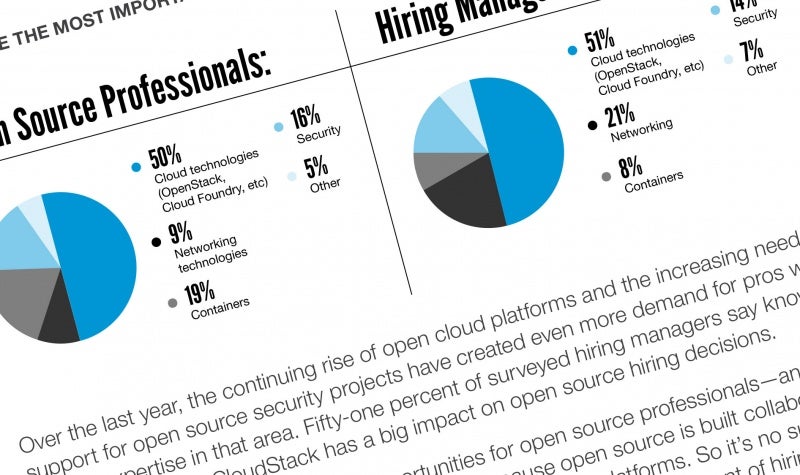
The Linux Foundation has partnered with edX to update the Open Source Jobs Report, which was last produced in 2018. The report examines the latest trends in open source careers, which skills are in demand, what motivates open source job seekers, and how employers can attract and retain top talent. In the age of COVID-19, this data will be especially insightful both for companies looking to hire more open source talent, as well as individuals looking to advance or change careers.
The report is anchored by two surveys, one of which explores what hiring managers are looking for in employees, and one focused on what motivates open source professionals. Ten respondents to each survey will be randomly selected to receive a US$100 gift card to a leading online retailer as a thank you for participating!
All those working with open source technology, or hiring folks who do, are encouraged to share your thoughts and experiences. The surveys take around 10 minutes to complete, and all data is collected anonymously. Links to the surveys are at the top and bottom of this post.
LFD272, developed in conjunction with Hyperledger, is designed for developers who want to master Hyperledger Fabric chaincode – Fabric’s smart contracts – and application development.
Linux Foundation Executive Director Jim Zemlin recently spoke at Cloud Native + Open Source Virtual Summit China 2020. We’d now like to republish his opening comments and a guide on how to get involved with the TARS project, the open source microservices framework.
The pandemic has thrown our global society into a health and economic crisis. It seems like there are conflicts every day from all over the world. Today, I want to remind you that open source is one of the great movements where collaboration, working together, and getting along is the essence of what we do.
Open source is not a zero-sum game, but it has had an incredible impact on us in a net positive way. I like to remind everyone that open source is public goods that will be freely available to everyone worldwide, no matter what wind of political or economic change brings us. The LF is dedicated to all of that.
Today, we are working hard to help folks during hard times, expanding our mentorship programs with over a quarter of million dollars of new donations to allow people to come in and train themselves on new skills during this tough time. We had a wonderful set of virtual events with thousands of people from hundreds of companies from countries worldwide working together.
We want to bring the power of open source to help during these times and have several new initiatives that we are working on. Most notably, our recently launched LFPH initiative, which has started with seven members: Cisco, doc.ai, Geometer, IBM, NearForm, Tencent, and VMware, and it’s hosting exposure notification projects such as Covid-Shield and Covid-Green, which are currently being deployed in Canada, Ireland, and several U.S. states to help find and reduce the spread of COVID-19.
We are also working on a considerable number of new initiatives, which I will talk about. Still, I like to remind you of what we are here to talk about, which is cloud computing, and how much cloud computing has impacted all of us. Microservices are an essential part of that. In China we are seeing the TARS project; the microservices framework is really taking off.
Two years ago, TARS joined the Linux Foundation, and ever since its community has been growing and new projects and contributors have been coming in. The TARS project provides a mature, high-performance microservices framework that supports multiple programming languages. We will talk more about the TARS Foundation in a little bit, but the microservices ecosystem has been growing and quickly turning applications and ideas in scale.
In addition to TARS, we have been seeing amazing work going on in the open source community. It begins with things such as the Software Package Data Exchange specification (SPDX), which was recently contributed as an international specification to the ISO/IEC JTC 1 for approval. This will help us track the usages of open source software across a complex global supply chain and reaffirm our commitment to the global movement.
We also see growth and projects with recent releases, such as our networking project, the Open network automation platform Frankfurt release, which is being used to automate the networks and edge computing service for telecommunication providers, cloud providers, and enterprises.
We‘ve seen new projects join our organization. One good example is MLflow — this project was contributed to our organization from Data Brick. This project has had an impressive community with over 200 contributors, which has been downloaded more than 2 million times. MLflow is part of the LF AI initiative. It will be a neutral home and open governance model to broaden the adaptation and contribution of things like MLflow. We have also seen new projects come to our organization, such as the FinOps Foundation, the consortium of financial companies. We are working together to grow the use of open source throughout our global financial system.
It’s impressive to see all the different projects that have been coming. And today, I’d like to introduce the TARS Foundation formally. TARS has been an amazing project, and in just the last few years, I’ve noticed that developers here in China are for the first time incubating and sharing new open-source projects in China and the rest of the world.
And the rest of the world is watching the progress of open source projects and seeing fantastic work. We are so proud of the work that is coming out of TARS.
You know, Just like the Linux Foundation is about more than Linux, the TARS Foundation is more than just TARS. It’s a microservices ecosystem.
Unfortunately, because of the COVID-19 pandemic, we had to cancel the Linux Foundation Member Summit this Spring, and we were unable to announce the TARS Foundation at that time.
But today, the Linux Foundation is proud to announce again that the TARS project has become the TARS Foundation, an open-source microservice foundation within the overall framework of the Linux Foundation, and its outcome has been rapid growth for both the TARS project and projects associated with TARS. TARS has really taken off, and it’s just amazing to see the amount of development.
We hope the TARS foundation will create a neutral home for additional projects for solving significant problems surrounding microservices, including but not limited to:
Agile development, DevOps best practices, and the comprehensive governance that we have will enable multi-languages, high performance, scalable solutions.
It is my pleasure to present what the TARS Foundation has achieved in the open source community.
There are many companies whose contributions are instrumental in establishing TARS’ microservices ecosystem. The TARS Foundation is proof of that. Currently, the TARS Foundation has Arm and Tencent as premier members and five general members: AfterShip, Ampere, API7, Kong, and Zenlayer.
In terms of TARS applications, it serves more than 100 companies from different industries, including Edge, E-sport, Fintech, Streaming, E-commerce, Entertainment, Telecommunication, Education, and more.
Furthermore, the TARS Foundation is striving to expand its microservices ecosystem, and it’s incorporating more functions such as Testing, Gateway, and Edge, to name a few. So far, the TARS Foundation has more than 30 projects.
Developers around the world are starting to realize that the TARS project is amazing and contribute as such. There are 12,000 developers actively using TARS. Also, 150 developers contribute code to TARS projects, from companies like Arm, Tencent, Google, Microsoft, Vmware, Webank, TAL, China Literature, iFlytek, Longtu Game, and many more.
An overview of the TARS framework and how you can contribute to the open source microservices community
What is TARS?
TARS is a new generation distributed microservice application framework that was created in 2008. It provides developers and enterprises with a complete set of solutions to build, release, deploy, and maintain stable and reliable applications that run at scale.
In June 2018, TARS joined the Linux Foundation umbrella and became one of its projects. On March 10th, 2020, it was announced that the TARS Project would transition into the TARS Foundation,
“a neutral home for open source microservices projects that empower any industry to quickly turn ideas into applications at scale”.
The TARS Foundation’s goal is to address the most common problems related to microservices application, including solving multi-programming language interoperability issues, mitigating transfer issues, maintaining data storage consistency, and ensuring high performance while supporting a growing number of requests.
Many companies have successfully used TARS framework from diverse industries such as fintech, esports, edge computing, online streaming, e-commerce, and education, to name a few.
Here is a complete timeline of the TARS Foundation’s development:
Initially developed by Tencent, the world’s largest online gaming company, the TARS project has created an open source microservices platform for modern enterprises to realize innovative ideas quickly with the user-friendly technology in the TARS framework.
In March 2020, the TARS project transitioned into the TARS Foundation under the Linux Foundation umbrella, aiming to support microservices development through DevOps best practices, comprehensive service governance, high-performance data transfer, storage scalability with massive data requests, and built-in cross-language interoperability. TARS has a mission to support the rapid growth of contributions and membership for a community focused on building a robust microservices platform.
The TARS Foundation provides a great platform for developers who are interested in contributing to an open source project. The organization extends different opportunities for developers to contribute to open source projects and the possibility to take on leadership roles and create major contributions in the broader open source community.
There are Contributor, Committer, Maintainer, and Ambassador roles in their open source ecosystem, each having different requirements and responsibilities.
How to become a Contributor
To get involved with TARS open source projects, you can first become a Contributor by participating in software construction and having at least one pull request merged into the source code.
There are several ways for software developers to engage with the TARS community and become contributors:
Help other users and answer questions.
Submit meaningful issues.
Use TARS projects in production to increase testing scenarios.
Improve technical documentations.
Publish articles on applications and case studies related to TARS projects.
Report or repair the bugs found in TARS software.
Write source code analysis or annotate.
Submit your first pull request.
Here are the steps to submit your pull request:
Fork the project from the TARS repository to your GitHub account.
Git clone the repository to your local machine.
Create a sub-branch.
Make changes to the code and test it on your local machine.
Commit those changes.
Push the committed code to GitHub.
Open a new pull request to submit your changes for review.
Your changes will be merged into the master branch if accepted.
Now you did it! You’ve become a TARS Contributor, and you will receive a Contributor t-shirt!
How to become a Committer
A Committer is a contributor who has made distinct contributions to the TARS repositories and has accomplished at least one essential construction project or has repaired critical bugs. He or she can also take on some leadership opportunities.
The Committer is expected to:
Display excellent ability to make technical decisions.
Have successfully submitted and merged five pull requests.
Have contributed to the improvement of project code quality and performance.
Have implemented significant features or fixed major bugs.
After meeting the above requirements, you can submit a Committer request:
STEP 1: Provide your proof of the above criteria under Repo ISSUE.
STEP 2: Submit your pull request after you receive a response with instructions
STEP 3: Once your application is accepted, you will become a TARS Committer!
As a Committer, you are able to:
Control the code quality as a whole.
Respond to the pull requests submitted by the community.
Mentor contributors to promote collaborations in the open source community.
Attend regular meetings for committers.
Know about project updates and trends in advance.
How to become a Maintainer
Maintainers are responsible for devising the subprojects in the TARS community. They will take the lead to make decisions associated with project development while holding power to merge branches. They should demonstrate excellent judgment and a sense of responsibility for subprojects’ well-being, as they need to define or approve design strategies suitable for developing subprojects.
The Maintainer is expected to:
Have a firm grasp of TARS technology.
Be proactive in organizing technical seminars and put forward construction projects.
Be able to handle more complicated problems in coding.
Get unanimously approved by the technical support committee (TSC).
As a Maintainer, you have the right to:
Devise and decide the top-level technical design of subprojects.
Define the technical direction and priority of sub-projects.
Participate in version releases and ensure code quality.
Guide Contributors and Committers to promote collaborations in the open source community.
How to become an Ambassador
Passionate about open source technology and community, Ambassadors promote and support extensive use of TARS technology to a wider audience of software developers. Ambassadors’ expertise and involvement in TARS projects will also acquire greater recognition in the community.
The Ambassador can:
Become a general member of the TARS Foundation.
Participate in TARS Foundation’s projects as a contributor, lecturer, or blogger.
Engage with developers by presenting at community events or sharing technology articles on online media platforms.
Looking forward
Ultimately, the TARS Foundation encourages a contributor to becoming a member of the governing board and the Technical Support Committee (TSC). At this level, you will focus on the organization’s strategic directions and decision-making as a whole.
Contributing to open source projects has many benefits. It strengthens your development skills, and your code is reviewed by other developers who can give a new perspective. You are also making new connections and even lifelong friendships with like-minded developers in the process of contributing. This is the open source model that has built many tech innovations that all of us enjoy today. Its sustainability depends on a free exchange of ideas and technology in our global community. Open source value and innovations are embedded in developers like you who can attempt development challenges and share insights with the broader community.
Software Package Data Exchange (SPDX) is an open standard for communicating software bill of materials (SBOM) information that supports accurate identification of software components, explicit mapping of relationships between components, and the association of security and licensing information with each component. The SPDX format has recently been submitted by the Linux Foundation and the Joint Development Foundation to the JTC1 committee of the ISO for international standards approval.
A group of eight healthcare industry organizations, composed of five medical device manufacturers and three healthcare delivery organizations (hospital systems), recently participated in the first-ever proof of concept (POC) of the SPDX standard for healthcare use.
This blog post is a summary of the results of this initial trial.
Why do we care about SBOMs and the medical device industry?
A Software Bill of Materials (SBOM) is a nested inventory or a list of ingredients that make up the software components used in creating a device or system. This is especially critical in the medical device industry and within healthcare delivery organizations to adequately understand the operational and cyber risks of those software components from their originating supply chain.
Some cyber risks come from using components with known vulnerabilities. Known vulnerabilities are a widespread problem in the software industry, such as known vulnerabilities in the Top 10 Web Application Security Risks from the Open Web Application Security Project (OWASP). Known vulnerabilities are especially concerning in medical devices since the exploitation of those vulnerabilities could lead to loss of life or maiming. One-time reviews don’t help, since these vulnerabilities are typically found after the component has been developed and incorporated. Instead, what is needed is visibility into the components of a medical device, similar to how food ingredients are made visible.
A measured path towards using SBOMs in the medical device industry
In June 2018, the National Telecommunications and Information Administration (NTIA) engaged stakeholders across multiple industries to discuss software transparency and to participate in a limited proof of concept (POC) to determine if SBOMs can be successfully produced by medical device manufacturers and consumed by healthcare delivery organizations. That initial POC was successfully concluded in the early fall of 2019.
Despite the limited scope, the NTIA POC results demonstrated that industry-agnostic standard formats can be leveraged by the healthcare vertical and that industry-specific formats are unnecessary.
Next, the participants in the NTIA POC explored whether a standardized SBOM format could be used for sharing information between medical device manufacturers and healthcare delivery organizations. For this next phase, the NTIA stakeholders engaged the Linux Foundation’s SPDX community to work with the NTIA Healthcare working group. The goal was to demonstrate through a proof of concept whether the open source SPDX SBOM format would be suitable for healthcare and medical device industry uses. The first phase of that trial was conducted in early 2020.
Objectives of the 2020 POC
The stated goals of this 2020 proof of concept (POC) were to prove the viability of the framing document created by the NTIA SBOM Working group (of which the Linux Foundation was a contributor) from their earlier POC for the medical device and healthcare industry.
This NTIA framing document defines specific baseline data elements or fields that should be used to identify software components in any SBOM format, which can be mapped into corresponding field elements in SPDX:
NTIA Baseline
SPDX
Supplier Name
(3.5) PackageSupplier:
Component Name
(3.1) PackageName:
Unique Identifier
(3.2) SPDXID:
Version String
(3.3) PackageVersion:
Component Hash
(3.10) PackageChecksum;
Relationship
(7.1) Relationship: CONTAINS
Author Name
(2.8) Creator:
The 2020 POC conducted by NTIA working group had a stated objective to determine if SBOMs generated by Medical Device Manufacturers (MDMs) using SPDX could be ingested into SIEM (Security, Information and Event Management) solutions operated by the participating Healthcare Delivery Organizations (HDOs).
The MDMs included in this POC included Abbott, Medtronic, Philips, Siemens, and Thermo Fisher. The HDOs included Cedars-Sinai, Christiana Care, Mayo Clinic, Cleveland Clinic, Johns Hopkins, New York-Presbyterian, Partners/Mass General, and Sutter Health.
Execution and implementation of the SPDX SBOMs
The participating HDOs provided an inventory of the deployed medical devices in use within their organizations.
A best-effort approach was used to determine software identity as the names that software packages are known by are “ambiguous” and could be misinterpreted.
An example SPDX was created along with a guidance document for the MDMs to follow for use with the medical devices identified by the HDO inventory exercise.
The MDMs produced 17 distinct SPDX-based SBOMs manually and with generator tooling.
The SBOMs were delivered via secure transfer using enterprise Box accounts, simulating delivery via secure customer portals offered by each MDM.
Consumption of the SBOMs in the SPDX POC
As a result of the 2020 POC, all participating HDOs successfully ingested the SPDX SBOM into their respective SIEM solutions, immediately making the data searchable to identify security vulnerabilities across a fleet of products. This information can also be converted into a human-readable, tabular format for other data analysis systems.
Multiple HDOs are already collaborating with vendor partners to explore direct ingestion into medical device asset/risk management solutions as part of their device procurement. One of the HDOs is working with one of their vendor partners to explore direct ingestion into a healthcare Vendor Risk Management (VRM) solution, and another has developed a ”How-To Guide,” focusing on how to correctly parse out the Packages fields using regular expressions (regex).
As a positive indicator of SPDX’s suitability when used with asset management systems, two HDOs have begun configuring their respective internal tracking systems to track software dependencies and subcomponents. Additionally, multiple HDOs are collaborating with vendor partners to manage devices into medical device asset/risk management solutions through the device’s life by allowing for periodic updates and an audit trail.
Ongoing considerations for SPDX-based SBOMs for medical devices in healthcare organizations
Risk management, vulnerability management, and legal considerations are ongoing at the participating HDOs related to the use of SPDX-based SBOMs.
Risk management
All of the responding HDOs are exploring vulnerability identification upon procurement (i.e., SIEM through initial ingestion of the SBOM) and on an on-going basis (i.e., SIEM, CMDB/CMMS, VRM). The participating HDOs intend to explore mitigation plan / compensating control exercises that will be performed to identify vulnerable components, measure exploitability, implement risk reduction techniques, and document this data alongside the SBOM.
The SPDX community intends to learn from these exercises and improve future versions of SPDX specification to include requested information determined to be needed to manage risk effectively.
Vulnerability management at HDOs
An HDO is already working with its Biomed team to manually perform vulnerability management processes on information extracted from SBOM data.
Another is working with their Vulnerability Management team to evaluate correlated SBOM data to credentialed/non-credentialed scans of the same device, which may prove useful in an information audit use case. A second HDO is currently working with their Vulnerability Management team on leveraging the SBOM data to supplement regular scanning results.
Legal
Participating HDOs have been developing SBOM product security language to add cybersecurity safeguards to the contract documentation.
Conclusion
The original POC was able to validate the conclusions of the NTIA Working Group that proprietary SBOM formats specific to healthcare industry verticals are not needed. This 2020 POC showed that the SPDX standard could be used as an open format for SBOMs for use by healthcare industry providers. Additionally, the ability to import the SPDX format into SIEM solutions will help HDOs adequately understand the operational and cyber risks of medical device software components from their originating supply chain.
There is work ahead to improve automation of SPDX-based SBOMs, including the automated identification of software components and determining which component vulnerabilities are exploitable in a given system. Participating HDOs intend to perform compensating control exercises to identify and implement risk reduction techniques building on this information. HDOs are also evaluating how SPDX can support other improvements to vulnerability management. In summary, this POC showed that SPDX could be an essential part of addressing today’s operational and cyber risks.

 Click the image above to read the August 2020 newsletter