Home Blog Page 1638

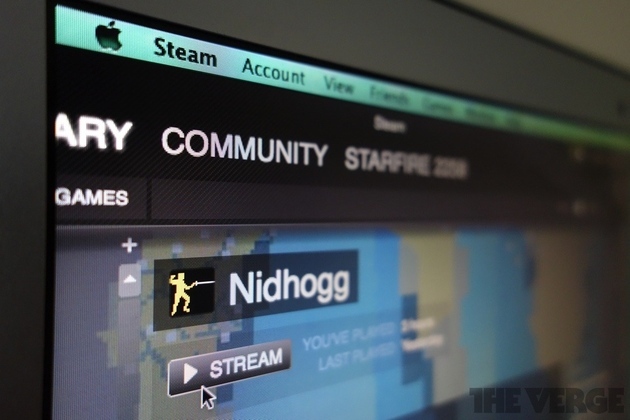
Steam In-Home Streaming Preview: A Short-Range Slingbox for Your Gaming PC

With the right hardware setup, you may no longer need to sit in front of your gaming machine. With a PlayStation Vita, you can play PS4 anywhere in your house. With an Nvidia Shield, you can do the same with a Windows gaming PC. But what if you don’t want to buy a multiple-hundred dollar handheld game system to play Tomb Raider in bed? Valve is building a game streaming solution right into its free Steam game platform, so you can sling games from your beefy desktop PC to laptops as thin as a MacBook Air. Late last week, Valve invited a host of new users into the Steam In-Home Streaming beta, and we made it in. Read on for our first impressions.

Continue reading…

Read more at The Verge

Ome: A New Cross-Platform Desktop Environment

There’s yet another new desktop in the Linux land. Ome is short for the Open Minded Environment and is a cross-platform desktop environment built around web technologies…

Read more at Phoronix

Voting Proposed For Debian Jessie’s Init System

After last week having an update on the current init system debate within Debian — largely between systemd and Upstart — and a major music company coming out in favor of systemd, the init system for Debian Jessie may now be taken to a vote…

Read more at Phoronix

Stable kernels 3.12.9 and 3.10.28

The 3.12.9 and 3.10.28stable kernel updates are out; each contains another set of important fixes.

Read more at LWN

Tiny Core 5.2 Linux Comes In At Under 9MB

Tiny Core 5.2 was released yesterday as the latest version of the ultra light weight Linux distribution. The bare-bone version of this Linux distribution with the flwm window manager comes in at just an 8.9MB ISO while the “Core Plus” version with extra GUI functionality is still a mere 72MB…

Read more at Phoronix

Benchmarking CompuLab’s Small, Low-Power Linux PCs

Yesterday I delivered some interesting results showing Freescale’s i.MX6 quad-core ARM SoC outperforming one of the original Intel Atom SOCs, with both devices being from low-powered Linux-friendly CompuLab PCs. While the full review of the i.MX6-based CompuLab Utilite is still being written, here’s some more preview benchmarks comparing the quad-core i.MX6 to the Atom Z530 to a NVIDIA Tegra 2 to a low-power Ivy Bridge CPU…

Read more at Phoronix

New Malware Uses Windows to Infect Android Devices

Users are advised to turn off USB debugging on Android devices when it’s not needed to avoid falling victim to this new infection vector.

The post New malware uses Windows to infect Android devices appeared first on Muktware.

Read more at Muktware

Celebrating the Marriage of Automotive and Consumer Electronics at CES

With an average number of 315 weddings per day, Las Vegas definitely takes a top spot on the list of locations for forging bonds. Ever since Ford CEO Alan Mulally’s keynote at CES 2010 the automotive industry has come back to Sin City in early January for dates with consumer technologies. CES 2014 was no different except maybe that this time cars have taken center stage at the annual event. One could claim that the two industries have finally exchanged rings.
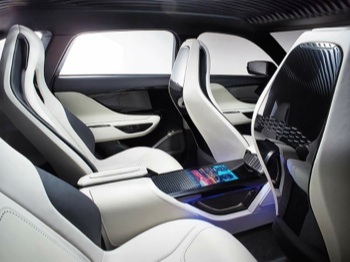
Jaguar interiorAudi’s opening keynote on Monday evening delivered by Chairman Rupert Stadler had all the elements of a successful keynote of a tech titan: a celebrity with Big Bang Theory‘s Kunal Nayyar, a flashback into the company’s remarkable history with a Horch 850, and exciting product revelations in the form of a concept car featuring laser-powered headlamps and an A7 that drove itself onto the stage. Anyone who ever doubted that the over 100-year-old industry, literally the granny from the industrial revolution, would be capable of stealing the show from the youngsters of the information age learned their lesson that evening.

Remember the days when just automotive aftermarket exhibitors sparsely populated the floors of CES? Tucked away in a portion of the North Halls of the Las Vegas Convention Center – next to an adult entertainment convention taking place at the same time — the makers of vehicle alarms, high-powered car audio systems, DIY Bluetooth mobile phone integration solutions and others showcased their products. Long gone are those days.

This year’s CES featured over 125 automotive companies the who-is-who of the industry on over 140,000 square feet of exhibition space, a 25 percent increase from the prior year. Among the OEMs, Audi, BMW, Chrysler, Ford, General Motors, Kia, Mazda, Mercedes and Toyota put their latest technologies on display. However, not just the car makers but also the suppliers to the industry such as Bosch, Continental, Delphi, Denso, Visteon and others stepped out from behind their OEM customers into the limelight of the show.

Connected Car

So what were the automotive tech trends shown at CES 2014? As one would expect, electric vehicles, autonomous driving and the connected car were omnipresent. While Tesla Motors, the pioneer of mainstream electric cars, did not have an exhibit at CES their Model S was featured at the GoElectricDrive TechZone sponsored by the Electric Drive Transportation Association.

Ever wished you could communicate with your car via a wristwatch like David Hasselhoff in the cult show Knight Rider? Your wish is granted with the new BMW i3 in combination with the Samsung Galaxy Gear. Check your ride’s charging level, unlock its doors, send destination addresses to its navigation system using Samsung’s S Voice Command, remotely activate heating or cooling, and more. While the car has a self-parking feature I will unfortunately still have to wait for the built-in valet feature: “BMW find a parking spot” and “BMW pick us up” after a candle-light dinner with my wife.

Electric Vehicles

Electric car innovation is also driving many supporting technologies such as photo-voltaic and batteries for generation and storage of electric energy. Ford showed their solar-powered concept car, the C-MAX Solar Energi, a variant of the C-MAX Energi hybrid that you can already purchase at Ford dealerships. C-MAX Solar Energi features about 15 square feet solar panels on its roof that charge the car’s batteries. By itself the solar panels only generate about 300 Watts of power which is hardly enough to charge the batteries in a day. However, Ford also has developed a concept for carport that uses lenses as a roof to concentrate the solar energy on the panels on the car. In addition, the car can autonomously adjust its position underneath the carport to align itself with the position of the sun.

Digital Interior

Car interiors are going all digital. The days of instrument clusters with analog gauges are over. Virtually all car makers either have already released or are working on new models with instrument clusters featuring displays rather than electro-mechanical instruments. The new Mercedes Benz S Class integrates two large screens into the dash: one for the instrument cluster and one for the infotainment. At CES Audio revealed its vision of a digital interior with the 2015 TT. Jaguar Land Rover’s C-X17 concept among other screens in the dash integrates a touch screen in the rear center console.

The automotive industry is once again re-inventing itself. The cars of tomorrow will be much more than smartphones or computers on wheels as many predict. The will be play a major part in our connected lifestyles, seamlessly integrating physical mobility with cyber mobility.

SysAdmin Class Teaches Ins and Outs of a Good Local Security Policy

Sarah Kiden had never used Linux before she landed a job four years ago as a Web and E-learning Administrator at Uganda Christian University in Kampala. There she is in charge of maintaining the university’s information systems on servers that largely run Linux.

She had taken one college course in Information Technology, which gave her enough background to get started, she said. The rest she learned on her own, on the job, through trial and error and a lot of hard work.

Sarah Kiden“Many times I was not even sure that I was doing the right thing,” Kiden said via email.
Seeking more formal training, she applied for a Linux Foundation training scholarship last fall and was one of five winners to receive free registration for a Linux training course of their choice. In December she completed the Linux Foundation’s Linux System Administration (LF242) course online. The four-day class covers how to install, administer, configure and upgrade a Linux system running Red Hat, SUSE, or Debian/Ubuntu.

The training has given Kiden more confidence to take on system administration tasks such as setting up LDAP, group ownership, access control lists and others aspects of user management, she said. And one section covering local security was especially helpful to her.

“I realized that many organizations do not have security policies; those that have policies do not put attention to updating them regularly, yet security threats and solutions change all the time,” she said. “Issues such as security and backup will be at the back of my mind as I administer systems.”

Creating a Local Security Policy

Organizations can prepare for a security breach by first creating a written security policy that’s simple and easy to understand and not “lore as passed around a campfire,” said Kevin Smallwood, who taught the system administration course at the Linux Foundation. A good security policy assesses risks and specifies enforcement actions, as well as what to do in the event of a security breach, he said. It should also assess the cost and personnel needed and detail the methods for protecting confidentiality, data integrity, availability, consistency, control and audit capabilities.

“A security policy (also) promotes a philosophy; do you allow everything, unless you explicitly disallow it, or do you disallow everything, unless you explicitly allow it?,” Smallwood said. “With thought and planning, a security policy will prepare an organization for what they hope will never happen.”

Kiden has taken this advice to heart and has already talked to her technical manager about creating a security policy for the university.

“I would definitely encourage my colleagues to take a course from Linux Foundation. The courses are highly practical and there is so much to learn,” Kiden said. “In addition, Linux Foundation is a well-established and well-known organization and it is fulfilling to have had my training there.” 

For more information on available Linux Foundation training courses, visit training.linuxfoundation.org.

Research Shows Chromebooks Doing Very Well in the Education Market

For more than a year now, sales have been downright dreary for PCs and PC equipment makers, but new-generation Chromebooks running Google’s Chrome OS platform have shown signs of bucking the trend. Late last year, there were many reports that Chromebooks were not selling well at all. For example, a ZDNet column cited some IDC research that apparently showed Chromebooks struggling.

As we’ve noted multiple times, though, Chromebooks are finding a home in the education market, thanks to their low prices and their reliance on free applications and resources that reside in the cloud. Now, fresh data is out showing that Chromebooks represent nearly a fifth of all portable computer sales to schools. That’s nothing to shake a stick at. 

Read more at Ostatic