
Home Blog Page 1761

How to Take, Keep and Share Great Android Smartphone Photos

It’s not all photo apps and more apps when it comes to taking photographs with an Android smartphone — there are some basics that you need to know, unique to smartphones, that have nothing to do with imaging apps. If you’re finding that you’re migrating from dedicated digital camera and taking more photographs with your phone but are disappointed with the results, here are some pointers on how to take better photographs with a smartphone, along with some ways to keep the images, and to share them.

Read more at LinuxInsider

DirectFB Project Draws Up Plans For The Future

Earlier this week DirectFB developers published support for running Wayland’s Weston on the Direct Frame-Buffer. This was just one of several interesting projects out of DirectFB and now they have a bit of a road-map concerning the future of their project…

Read more at Phoronix

Wayland-Based Hawaii Desktop Planned For Fedora 22

With the upcoming Fedora 20 release there is an early tech preview experience of Wayland with the GNOME Shell. Already expressed as a possibility is having Wayland be the default display server over the X11/X.Org with Fedora 21 about six months later, but there’s now already talk of another Wayland-based desktop coming around Fedora 22…

Read more at Phoronix

Haswell’s Resource Streamer Still Being Poked On Linux

Patches are still baking to enable the use of Haswell’s Resource Streamer by the open-source Intel Linux graphics driver. The resource streamer that’s new to Haswell processors have the ability of accelerating certain commands that otherwise take time on the CPU…

Read more at Phoronix

Samsung Announces the Galaxy Round, a Smartphone with a Curved OLED Display

Samsung has taken the wrapper off its rumored smartphone with a curved OLED display. The Galaxy Round, which will launch on SK Telecom in South Korea, has a 5.7-inch 1080p screen the same size as seen on the company’s Galaxy Note 3, but there’s a difference — it curves on the vertical axis in a similar fashion to some of Samsung’s OLED TVs.

Check battery life by tilting your phone on a table

The potential benefit of this screen technology isn’t quite clear yet, but Samsung is touting a new feature called “Round Interaction,” which allows you to look at information such as missed calls, battery life, and the date and time when you tilt it on a flat surface with the screen off. Samsung also claims that switching between home screens…

Continue reading…

Read more at The Verge

2014 Enterprise Trends: BYOD Pain, HTML5 Apps, Hybrid Cloud, SDx

If you thought the hybrid cloud was hyped already you just wait. And software-defined everything will be spouted from a vendor near you.

Microsoft Enables CodePlex Projects to Use GPLv3 License

Microsoft is now allowing developers hosting open-source projects on its CodePlex site to use the once-dreaded GPLv3 open source license.

Google Summer of Code 2014 and Google Code-in 2013/14

Google has announced its next Summer of Code program a bit earlier than usual because they will be celebrating an anniversary: “To date, the program has produced 50 million lines of open source code from more than 8,500 student developers—and in 2014, we’ll mark the 10th anniversary of Google Summer of Code.” The program will be getting larger and, this year, participants are getting larger stipends.

Read more at LWN

Congratulations to Nobel Prize Winners, and a Nod to Mass Collaboration

The Nobel Prize for physics was announced today, which went to François Englert and Peter Higgs for the Higgs boson discovery of the subatomic particle that helps define the fabric of the universe, known to many as “the God particle.” This was a highly-anticipated announcement by the science and technology community and is one to be celebrated.
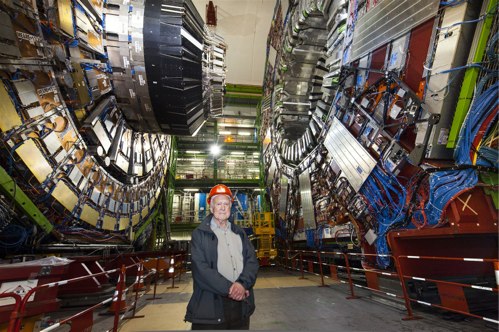
Higgs colliderProfessor Higgs first put forward the idea of the existence of the particle in 1964 while at the University of Edinburgh, but it wasn’t until last year that its discovery was confirmed through the work of CERN’s Large Hadron Collider. What happened in those nearly 50 years between theory and confirmation? Many things, including the tireless work of passionate, dedicated scientists. I’d also propose that advances in new technologies and an increasing movement towards collaboration helped bridge idea to discovery.

Michael Turner, president of the American Physical Society, is quoted today in a Washington Post story reporting on the Nobel Prize saying: “Discoveries more and more involve a village. It took 10,000 people and $10 billion and 20 years to build the instrument that made this discovery.”

Big breakthroughs in science have been enabled by open discourse and the ability of new generations of scientists and inventors to “stand on the shoulders of giants,” those who came before us and who shared with us their ideas and passion. We believe the same holds true for software, which is made better through open development and sharing of code.

We’re honored and humbled that Linux was able to play a part in facilitating the discovery of Higgs boson (“Finding the Higgs was done almost entirely with Linux. Indeed, many of the scientists we’ve spoken to say it couldn’t have been done without it.”). Created nearly 30 years after Higgs first postulated the existence of the particle and 20 years before its existence would be confirmed, Linux provided one of the needed technologies with which this work could be done. Additionally, the principles of mass collaboration that informed the way thousands of scientists over five decades were able to achieve a critical discovery is embraced daily by the Linux community.

The Linux Foundation is preparing to host LinuxCon and CloudOpen Europe in Edinburgh in just a couple weeks. How appropriate that Linux played a small role in the Higgs Boson discovery that was rooted in that very city.

Congratulations to Mr. Englert and Mr. Higgs and the 10,000 others who contributed to this achievement. We are grateful.

 
Read more at Jim Zemlin’s Blog

HP Debuts First ARM-Powered Chromebook

Can an ARM-powered Chromebook with a price tag of $279.99 turn heads? HP hopes so with the all-singing, all-dancing Chromebook 11.