
Red Hat’s second quarter was another roaring success no matter by any standard.
Read more at Enterprise Open Source Toolkit
A new generation of Linux talent is emerging, and it’s inspiring to witness. We see hundreds of new faces in our Linux training courses each year and newcomers participating in sessions at Linux events like LinuxCon and CloudOpen in both North America and Europe.
We are also seeing this trend in our 2013 Linux Training Scholarship program, the winners of which we announced last week at LinuxCon. Nearly 700 people submitted applications for the opportunity to learn Linux. The average age of applicant was just 25 years-old, representing a whole new generation of developers and IT managers who are both passionate about the Linux platform but who also understand it’s the future of technology and a smart career choice.
The 2013 Linux Training Scholarship winners will be profiled on Linux.com and are detailed in the recent announcement. But please let me personally congratulate them and introduce them to you:





The Dice.com and Linux Foundation Linux Jobs Report this year showed that 93 percent of employers would hire a Linux pro in the next six months, whle 90 percent also said that finding these pros is difficult. With more opportunities for Linux training available and the interest and passion we see from a new generation that is distributed around the globe, we see a lot of opportunity for all.
High-availability (HA) Linux is increasingly being used to help companies meet market demands for fast-paced R&D and shorter product cycles. The medical industry, for example, is using server clusters to model the effect of drugs, conduct gene sequencing and develop personalized medication. Large telcos, banks and stock exchanges, ISPs and government agencies also rely on HA Linux to ensure minimal service disruptions in their mission critical workloads.
There’s hardly a business out there today that can tolerate user-facing downtime. Outages not only mean the immediate loss of revenue, but damage credibility and result in future losses as well.
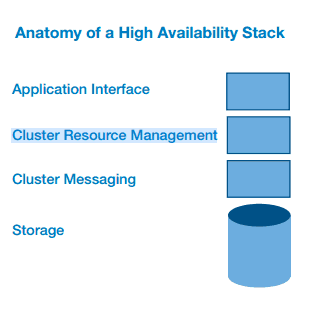 In short, just about any systems administrator, regardless of industry, can benefit from using a high availability architecture. The transition from legacy systems to HA Linux can be daunting for IT architects, however. With such business-critical systems it’s important to get it right, while also being efficient and cost-effective.
Choosing the right servers with advanced RAS (reliability, availability, serviceability) features, such as an x86 processor-based architecture, and an operating system with high-availability capabilities such as Linux, are the first steps toward implementing a new HA architecture, says Intel engineer Anil Agrawal.
He also recommends seeking knowledge and training, such as that offered in the Linux Foundation’s new High Availability Linux Architecture corporate training curriculum. Here, Linux Foundation course instructor Florian Haas explains why a HA Linux stack is worthwhile, what you’ll learn in the course and what skill level is needed to get the most out of the experience.
What are the benefits of high availability Linux over other platforms?
The high availability stack on Linux is not only on par with, but exceeds commercial competitors in features and reliability in many places. It has seen some heavy backing from industry heavyweights and some pretty significant adoption recently. SAP recently embraced the SUSE Linux high availability extension as their default HA stack on Linux, for example, which is a testament to the reliability of the stack.
Could you give an example of how high availability Linux is an improvement over alternatives?
The Linux HA stack is completely storage agnostic, for example. It can plug into a system based on a storage area network (SAN), software-defined storage (SDS) or application-based replication. Whereas many commercial or non-open source HA stacks tend to be married to a specific idea or concept on how you should build your storage. Other recent enterprise features are site-to-site fail-over and geographic redundancy.
Red Hat Enterprise Linux 6, for example, is optimized for Intel Xeon processor-based servers and includes major enhancements in memory management and scheduling that help to provide more efficient performance on large, multi-processor systems. Its NUMA support enables each core to make optimal use of fast, nearby memory to minimize latencies, while also supporting efficient memory sharing among all cores. And its use of control groups ensures that multiple applications or processes running on the same physical server all receive the CPU, memory, network, and storage resources they need. Built-in features also include policy-based resource management, high-availability clustering, advanced error management, and predictive failure analysis — costly add-ons in a proprietary UNIX environment.
In terms of quantifiable metrics, an open source stack gives you far better hooks and gauges to monitor the system.
HA Linux is 100 percent open source from storage through cluster management, all the way to the application. We can build applications that are highly available over the long run on 100 percent open source software.
What does the course cover?
You’ll get a general familiarization with the concept of high availability and the tools that the Linux high-availability stack offers to achieve and deploy HA systems. Then it covers several common high-availability scenarios such as an HA relational database and virtualization, site-to site fail-over, geographic redundancy, and open source software-defined storage solutions, including both GlusterFS and Ceph. (For an introduction to setting up geographical redundancy in high-availability clusters watch the Linux Foundation’s free tutorial video. Registration is required.)
It also familiarizes attendees with the automation, monitoring and deployment of high availability environments. The design of high availability systems goes beyond planning and deploying a certain set of servers in a given way, but includes networking, virtualization, storage, physical redundancy and other topics.
Who should take this course?
It’s aimed at systems administrators, with intermediate to advanced Linux sysadmin skills. It’s an expert-level course designed for those with several years of practical experience working on Linux or Unix systems.
The LInux Foundation’s next high availability Linux architecture course will be held Dec. 16-19 online. Enroll now.
Finding your way in the urban jungle of a sprawling city is probably one of the most challenging tasks a motorist has to tackle. The days of folded paper maps may long be over, but electronic maps and automated navigation systems have yet to satisfy the modern navigator’s wishlist.
* What does 3456 Main St. actually look like?
* Where is the nearest parking to the entrance?
* Is it available and what is the cost?
* What other parking options do I have?
* How do I get my end destination once I leave my car?
Maps and map data are at the center of any navigation system. Going beyond typical geodetic data, one of the hottest trends in navigation is 3D design, which gives the the driver a realistic three-dimensional view of current surroundings such as buildings, monuments, bridges, tunnels and more. This greatly helps identify destination and waypoints, avoiding missed turns thanks to directions like “If possible, make a legal U-turn.”
However, 3D mapping is only as good as the data it displays. And, keeping constantly-changing navigation data current is one of — if not the most challenging — data problems. Even cloud services providers that deliver instantaneous updates to the connected car on demand have not solved the data problem yet.
Someone still has to collect relevant information and translate it into data records for the navigation systems to consume. This includes static data such as streets, buildings and more, as well as increasingly temporary events like construction sites, public events and accidents. With data rapidly increasing, the cost of collecting, classifying, storing and providing this data is also constantly on the rise. As a result, map updates, real-time traffic information and location-based services (LBS) from car makers and service providers are selling at a significant premium.
Long before cell phones, drivers used citizen’s band radios to share road and traffic information to other drivers with transmitters within reach. Radio stations still rely on listeners in their cars to call in real-time traffic and accident updates via their cell phones. From that perspective, crowdsourcing of traffic information is not an entirely new concept. Mapping data has just begun to benefit from a more collaborative, crowdsourced approach.
OpenStreetMap (OSM, www.openstreetmap.org) is an open source, collaborative project to create a free map of the world. Inspired by the success of Wikipedia, it debuted in the United Kingdom in 2004 and includes a combination of satellite images and human updates to survey and document the world. Driven by the restrictions of proprietary map data, the lack of map information in many areas of the world and the advent of inexpensive portable satellite navigation devices, the collaborative project is now hosting the world’s largest free mapping information database. More than one million registered users are contributing to the project’s database. An open REST API lets applications access the database for navigation and other purposes.
OpenStreetMap uses the Open Database License (ODbL), which is a share-alike license that allows anyone to use and share OSM as long as all of the data one person or company puts into it is made available to all OSM users.
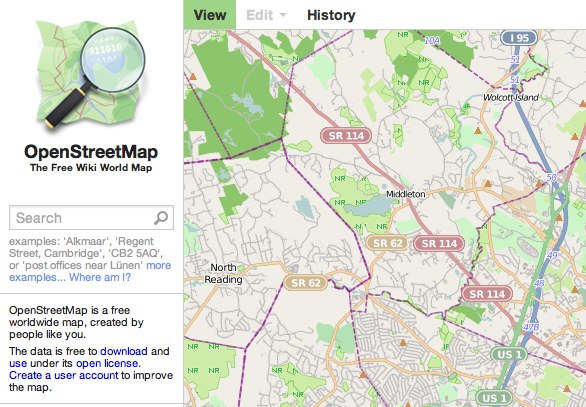
OSM is very much like Linux, which was created by Linus Torvalds out of the desire to run a UNIX-like system on inexpensive PC hardware. Linux quickly gained the support of many individual developers around the globe who tirelessly added new features and ported applications to the system. However, not until commercial entities started contributing code did the system move from its niche position into the limelight of mainstream computing. As the Linux Foundation’s annual report on “Who Writes Linux” documents, the majority of the Linux developers today are employees of companies who are working on Linux as their daytime job.
Will we see something similar happen to OSM? In my opinion yes. OSM has already gained the support of companies such as Automotive Navigation Data (AND), which donated entire road data sets of the Netherlands and trunk road data for China and India to the project. AND offers a road database that connects more than 200 countries in the world, including fully attributed navigation maps of Western Europe.
Just as IBM realized that the real value it offers is in integrated business applications, not the operating system stack, carmakers and suppliers will realize road map data is merely a foundation for value-added services, offering no real differentiating value to their customers.
GPS, sensors and cameras installed in modern cars can accelerate collection and maintenance of map data. While the early OSM pioneers had to more or less manually collect information via portable GPS system, a digital camera and a notebook computer, this process can essentially be fully automated with today’s in-vehicle systems. GPS provides position data, pictures from multiple cameras can be distilled into 3D views, and speed and other information collected from vehicle sensors can be used for calibration and correction.
At the Linux Foundation’s Automotive Linux Summit on October 24 and 25 in Edinburgh/UK you will have the opportunity to hear from worldwide recognized 3D navigation expert Marek Strassenburg-Kleciak. In his keynote, Marek will provide insight into OSM and its new 3D data collection efforts. He will analyze how sensors in modern cars and mobile phones can be utilized to support 3D data collection.
And, of course, we’ll have more keynotes and presentations on Linux and open source for the automotive industry. Click here to view the full schedule.
I am looking forward to meeting you there!