Home Blog Page 1787

Kernel Developers, Linus Torvalds Emphasize Diversity for Innovation

Linus Torvalds and the Linux kernel maintainers on stage today at LinuxCon and CloudOpen covered a range of topics, from personal hobbies to advice for getting patches upstream. But one consistent theme emerged in the discussion: Growing the size and diversity of the Linux kernel developer community — on the kernel side as well as in user space — will help push continued innovation even as technology changes.
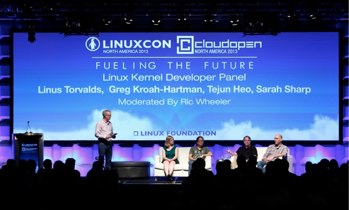
Kernel panelMore than 10,000 developers from more than 1,000 companies have contributed to the Linux kernel since tracking began in 2005, according to the Linux Foundation’s annual development report released this week. The sheer size of the project may be intimidating for newcomers, but the number of developers involved also shows just how many people have found ways to contribute, Torvalds said.

“The kernel can be hard to get involved with because it’s big and complicated,” Torvalds said during the keynote panel. “But it can be easier than other open source projects because we have so many things you can do.”

Unlike proprietary projects overseen and built within a single corporation, the Linux kernel will take contributions from anyone who submits good code. Before Tejun Heo, became a kernel developer, he was passionate about operating systems. But he lived in Korea and wasn’t sure how he’d get a job at one of the companies building them. There was no Microsoft or Sun in Korea and he didn’t speak enough English to qualify, he said.

“But with Linux it didn’t matter where I came from or what degree I had. If you can do it, you can do it. It doesn’t matter who you are are where you came from,” said Heo, who now works for Red Hat.

Heo says he’s seen an increasing interest and level of contribution from developers and China, which he predicts will be the next hot country from which Linux developers are recruited.

The kernel community this year has also ramped up its recruiting efforts among women. Kernel developer Sarah Sharp, who works on the USB subsystem for Intel, oversaw the first Outreach Program for Women Linux kernel internships this summer. Women accepted into the program were paired with mentors in the kernel development community to learn more about the Linux development process and gain direct experience writing and submitting patches.

Linux stable kernel maintainer Greg Kroah-Hartman, who was a mentor in the Outreach Program for Women, said the intern working with him submitted more than 60 patches this summer and many will be merged.

“My goal is to see Linux continue to succeed. We need to keep changing along with the rest of the world and make sure that more people are contributing,” Kroah-Hartman said.

Recruiting efforts to increase kernel contributions extends beyond individuals to companies as well. For companies that base their products and processes on Linux, getting involved in the kernel community by submitting their own patches upstream is one way to help increase the quality of their own offerings as well as the kernel as a whole.

Kroah-Hartman urged companies to get involved with the kernel community really early in the design and integration cycle to ensure the patches they need to get upstream for their hardware have time for review.

“Intel really understands this, we ripped code out of the kernel for an Intel chip that never shipped,” Kroah-Hartman said.

Torvalds agreed that being early was helpful, but just as important was being really involved in the community in the first place. Instead of building patches within the walls of your company, work with the kernel community to find common problems and solve them together.

“In order to get things merged you need to solve not just your problem,” Torvalds said. “Realize the kernel is bigger than your company.”
 

Announcing Goose Chase Contest Winners, More Prizes for LinuxCon Europe

Round one of the great LinuxCon Goose Chase contest ends this week at LinuxCon North America. But it’s not too late to enter! Round two begins now with more prizes in store for participants heading into LinuxCon Europe in October.

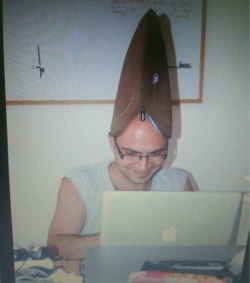
bobim6 laptop cover on his headToday we’re announcing the winners of round one, which kicked off July 24. More than 80 contestants have entered since then, sending us hundreds of photos through the Goose Chase app to complete their missions. The three contestants who earned the most points are walking away from this round with prizes.

Razvan-Costin Ionescu, “bobim6,” is the grand prize winner of a $500 Amazon gift card with 17,700 points. Ionescu is a security engineer for Intel OTC in Bucharest, Romania and contributes to the Yocto Project by testing it on various x86 platforms. 

The first place, $200 gift card goes to Donnie Roberson, “roberd13”, with 12,300 points. And Artur Myszka, “devLNX,” wins second place, a $50 Amazon gift card, with 7,700 points. Congratulations!

Along with new entrants, any entrants who didn’t win in this round will keep their points and stay in the running for the chance to win one of three Amazon gift cards in round two. Grand prize will earn a $500 Amazon gift card and the opportunity to be interviewed on Linux.com, first place a $200 Amazon gift card and  second place will win a $50 Amazon gift card. Round 2 winners will be announced at LinuxCon Europe in Edinburgh, Oct. 23, 2013.

Round two will include new missions and several opportunities to earn bonus points. New entrants take note: this is a great way to catch up! Be sure to follow our Twitter account for occasional announcements on how to earn extra points.

If you’re ready to play, here’s how it works.

1) Download the GooseChase app from Android or iTunes.

2) Choose the Great LinuxCon Wild Goose Chase game. (Search ‘Linux’ if it doesn’t appear right away.)

3) Select and complete Missions to earn points. Missions consist of small, fun tasks for which you take a picture with your phone and submit it for points.

4) The most cumulative points by LinuxCon Europe wins!

To see some of the best photos submitted in round one, visit the “Best of LinuxCon Wild Goose Chase Photos” slideshow.

Nvidia’s Blueprint for the Perfect $199 Android Tablet

Last year, the Nexus 7 set a new bar for Android tablets, bringing unheard-of performance and quality to a $199 price point. Part of the credit for that success belongs to Nvidia, whose Kai program was responsible for driving down the cost of components.

Continue reading…

Read more at The Verge

LinuxCon and CloudOpen Live Blog Day 3: Intel, Linus Torvalds and Kernel Developers

We’re live blogging from LinuxCon and CloudOpen in New Orleans at 9 a.m. Central, Sept. 16-18. See yesterday’s coverage and follow today’s keynotes here and on the live video stream.

 9 a.m.

Dirk Hohndel, Intel, “The New Frontiers.”

Linux Kernel Developer Panel: Linus Torvalds, Sarah Sharp, Tejun Heo, Greg Kroah-Hartman, Ric Wheeler, moderator. 


Video: Test Your Knowledge of Linux Trivia, Live from LinuxCon

 What is a black squirrel wake-up call? What do the letters in UEFI stand for? We asked LinuxCon and CloudOpen attendees to give us their best answers to these and many more Linux trivia questions on video. They played along and came up with some great answers — some more correct than others. The video was then shown on the big screen in front of hundreds of Linux professionals who laughed appreciatively, and knowingly. Thanks to all of our participants for helping to make this a fun conference!


https://www.youtube.com/watch?v=eHfymaDHryw” frameborder=”0

Development Release: Slackware Linux 14.1 Beta

Today Patrick Volkerding declared the “Current” branch beta which means that the upcoming stable Slackware Linux 14.1 is in the final stages of development. Quoting from the changelog: “Hey folks, I’m calling this a beta! Really, it’s been better than beta quality for a while. There will probably….

Read more at DistroWatch

Wine 1.7.2 Released – Install on Ubuntu 13.04/12.10/12.04/11.10 and Linux Mint 15/13

Wine is an open source, free and easy-to-use program that enables Linux users to run some Windows based applications on Unix-like operating systems. Wine is a compatibility layer for installing almost all versions of Windows programs. Read also : Install Wine 1.7.2 in RedHat / CentOS / Fedora This…

[[ This is a content summary only. Visit my website for full links, other content, and more! [[

 
Read more at TecMint

Live from LinuxCon: The CloudCast Podcasts on SaltStack, OpenDaylight, Xen and CoreOS

CloudCast-logoThe CloudCast hosts Aaron Delp and Brian Gracely are recording their podcast on site at LinuxCon and CloudOpen this week in New Orleans, sponsored by Citrix and Linux.com. Today they talked with Thomas Hatch, founder and CTO of SaltStack about DevOps and SaltStack architecture; Kyle Mestery, Chris Wright and Brent Salisbury about OpenDaylight, SDN architectures and OpenStack integration; Lars Kurth about Xen on ARM and the differences between Xen and Xen Server; and Brandon Philips, CTO for CoreOS on the reason he’s building a new operating system for massive, scale-out applications.

Listen to the episodes, below, or visit www.thecloudcast.net for the full show notes. If you’re attending the conference, be sure to catch the hosts on Wednesday at their booth on the second floor for impromptu discussions on the open source cloud!


Systemd Gets Generic Multi-Session, Session Devices

The logind component of systemd now has support for “session devices” and generic multi-session handling as part of the work done by CONFIG_VT-killer David Herrmann…

Read more at Phoronix

Ubuntu on Windows Azure gets Juju DevOps

Want a really easy orchestration tool for Ubuntu on Microsoft’s Azure cloud? It’s here now with Ubuntu Juju.