Home Blog Page 1812

How to Send Mail from the Linux Command Line

 For sending and receiving mails we are used to web based services like gmail, yahoo etc or desktop based mail clients. However on linux we can easily send/receive mails from command line as well. This is useful in situations like sending mails from shell scripts or through some other kind of program.

This tutorial explains, how to use to the mail command on linux to send and receive mails.

Read more at Binary Tides.

[$] Calibrating Calibre 1.0

[Calibre's grid browser] File management does not seem to be a one-size-fits-all proposition. Thus, while general-purpose file managers exist, it often appears that much of the development effort goes into domain-specific management tools. We have a whole set of photo management applications, for example, and even more music managers. When it comes to electronic books, though, there seems to only be one viable project out there: Calibre. LWN last looked at Calibre almost exactly two years ago. The recent version 1.0 release provides an obvious opportunity to see what has been happening with this fast-moving utility.

Read more at LWN

Creating An NFS-Like Standalone Storage Server With GlusterFS 3.2.x On Debian Wheezy

Creating An NFS-Like Standalone Storage Server With GlusterFS 3.2.x On Debian Wheezy

This tutorial shows how to set up a standalone storage server on Debian Wheezy. Instead of NFS, I will use GlusterFS here. The client system will be able to access the storage as if it was a local filesystem. GlusterFS is a clustered file-system capable of scaling to several peta-bytes. It aggregates various storage bricks over Infiniband RDMA or TCP/IP interconnect into one large parallel network file system. Storage bricks can be made of any commodity hardware such as x86_64 servers with SATA-II RAID and Infiniband HBA.

Read more at HowtoForge

Hello Art World: Smithsonian Acquires First Piece of Code for Design Collection

iPad app Planetary has just been added to the Cooper-Hewitt, National Design Museum’s collection, but the institution has also gone as step further by acquiring the app’s code. This is the first time the museum has acquired a piece of code, and it has also worked with the original creators to make the source code available to everyone, in an attempt to preserve software as if it was a living thing. “With Planetary we are hoping to preserve more than simply the vessel,” Cooper-Hewitt’s Sebastian Chan explains, “more than an instantiation of software and hardware frozen at a moment in time.”


Continue reading…

Read more at The Verge

U.S. School Systems Say Yes to Chromebooks

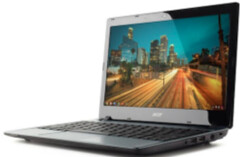
Throughout this year, market research news has been basically dreary for PCs and PC equipment makers. But, as sales of PCs slip, sales of new-generation devices are rising. Chromebooks, running Google’s Chrome OS platform, have been one of the bright spots in the hardware market. Now, school systems around the U.S. are purchasing Chromebooks for students, a trend that Google could subsidize and one that is reminiscent of Apple’s strong focus on the education market from years ago.

If you stay tuned to news from U.S. school districts, you’ll see that school systems are purchasing Chromebooks at a steady clip. Westwood High School in Massachussetts is buying Chromebooks to issue to students who will return them once they graduate. The Bell-Chatham school board has approved Chromebook purchases for students, as has the Sumner School District.


Read more at Ostatic

22 Years Later, The Linux And Open Source “Cancer” Is Wonderfully Benign

Linus Torvalds in his younger days.

Twenty-two years ago Linux was born as a “(free) operating system” that founder Linus Torvalds was quick to downplay as “just a hobby” that wouldn’t “be big and professional.” My, but how times have changed. So much so that Linux now dominates mobile (Android), servers and cloud. No wonder that Microsoft CEO Steve Ballmer derided Linux in 2001 as a “cancer” that “attaches itself… to everything it touches.” 

He was right. At least, as it relates to Linux’s effect on Microsoft.

Earlier this week Torvalds celebrated the 22nd birthday of Linux by cheekily calling Linux “just a hobby, even if it’s big and professional” now in a way he never envisaged back in 1991. To help gauge just how far we’ve come since then, I asked Eucalyptus CEO (and fellow Finn) Marten Mickos and Cloudera Chief Strategy Officer Mike Olson to help put open source in perspective. Both men have had an outsized impact on open source, particularly the business of open source, and neither were shy about estimating open source’s impact.

Read more at ReadWriteCloud

Samsung’s Galaxy Gear Smartwatch to be Unveiled on Sept. 4

The device won’t come with a flexible display, according to a Samsung executive, but that could eventually change. [Read more]

Read more at CNET News

OpenMP 3.1 Support Readied By Intel For LLVM Clang

Intel software engineers have implemented full support for OpenMP 3.1 onto LLVM’s Clang C/C++ compiler front-end…

Read more at Phoronix

The Public Versus Hybrid Cloud Rorschach Test

Are we heading for a world full of public cloud, or a future dominated by hybrid architectures? It all depends on which way you look at it.

As IBM Readies 12-headed Power 8 Chip, Will it Leave x86 Behind?

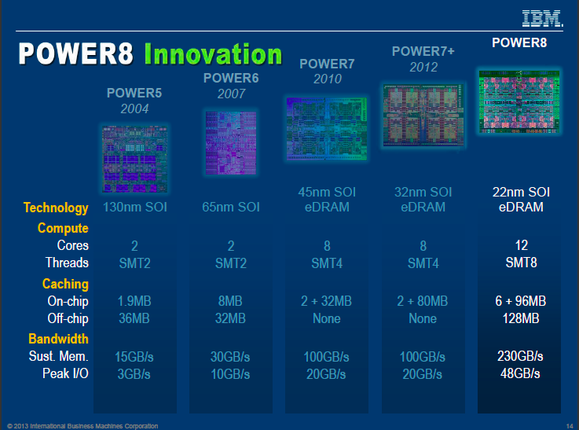
Over at VentureBeat, Dean Takahashi writes that IBM released details this week on its massive 12-core Power8 microprocessor for enterprise IT.

The chip is 650 millimeters square and will be built with IBM’s 22-nanometer silicon-on-insulator manufacturing technology. Capable of transferring data within the chip at speeds of 230GB per second, the 4 GHz Power8 has a 96MB memory cache embedded within the processor. According to IBM, each core is twice as efficient as past chips.

The entire Power-based ecosystem has lost many supporters in the industry like Freescale, AppliedMicro, Xbox and Playstation, so Power 8 is very important to get right,” said Patrick Moorhead, an analyst at Moor Insights & Strategy. “It will be a real challenge to fight both Intel and AMD in this space given their scale, and very important to IBM given they are banking on Power architecture for the their platform future. We believe IBM will exit the X86 server market and sell their line to Lenovo, making Power8 critical to IBM’s future success.”

Read the Full Story.

Related posts:


The post As IBM Readies 12-headed Power 8 Chip, Will it Leave x86 Behind? appeared first on insideHPC.

 
Read more at insideHPC