Home Blog Page 1859

Motorola Using its Own Multi-Core Chip in New Droids

Lb_7652_large

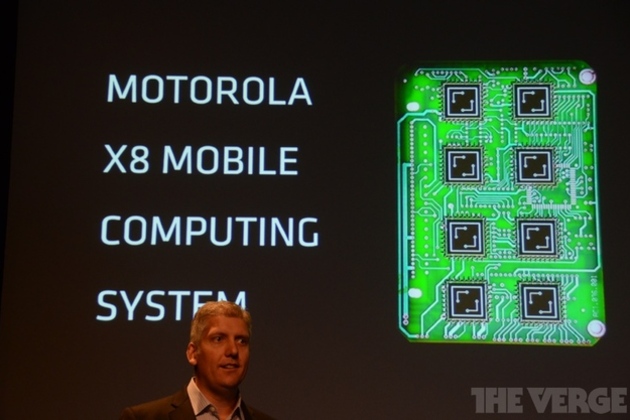
Motorola is getting into the system-on-a-chip game. At Verizon’s event in New York City today, the Illinois-based manufacturer announced the Motorola X8 Mobile Computing System, which the company is calling an “8-core” chip. It has a dual-core application processor, four graphics cores, a contextual computing core, and another core for “natural language processing.” Multiple cores designed for different processes like voice recognition should leave the dual-core processor free to handle traditional tasks from apps and save battery at the same time. The technology also supports functionality like “touchless control,” which was announced today. The feature allows users to use voice commands while the phone is in standby, and it’s likely…

Continue reading…

Read more at The Verge

Linus Torvalds to Deliver Keynote at LinuxCon

The Linux Foundation has announced the schedule and program for LinuxCon and CloudOpen North America events which take place in New Orleans, La., September 16-18, 2013.

Read more at Muktware

OpenStack Wranglers Release Atmos-on-a-Budget Object Store

SwiftStack touts object store for dollars per terabyte

Software-defined storage company SwiftStack has announced the general availability of its OpenStack-based object store, and claims it already has “multiple petabytes” under management.…

Read more at The Register

Fedora Developer Proposes Big Changes Focused on Agility, Better Design

Fedora remains a very popular flavor of Linux, and is favored by some of us at OStatic. Now, it looks like the working model for how Fedora’s ongoing versions are built might forever change. Matthew Miller, who is Fedora’s Cloud Architect, has announced a proposal to reshape the way that the Fedora Project builds its Linux distribution, focusing on more cohesive integration of the distro’s components. ‘Fedora.Next’ is a concept for organizing Fedora around a series of ‘rings’ that would have their own package requirements and component integration rule sets.


Read more at Ostatic

IBM Unveils New “Mainframe for the Rest of Us”

Ready to run your Linux cloud, the zBC12 can run virtual Linux servers for about a dollar a day.
IBM

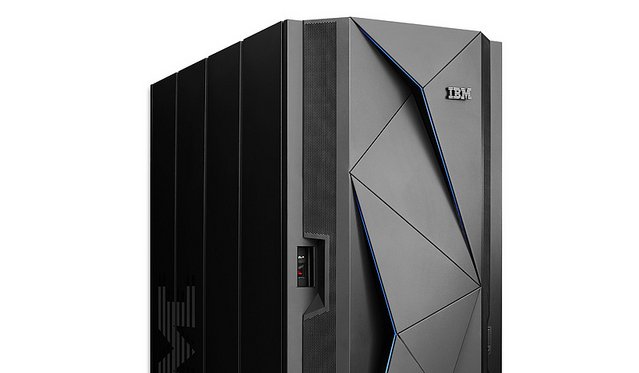
Today, IBM unveiled the latest edition to its family of enterprise “big iron” aimed at broadening the appeal of mainframes. And while IBM’s existing mainframe customers may have reason to be interested in the zEnterprise BC12 as an upgrade, IBM is offering a version aimed squarely at new customers: one that runs Linux only. IBM claims the zBC12 is capable of running 520 virtual Linux servers simultaneously at a cost as low as a dollar a day per Linux server instance.


Read more at Ars Technica

Linux Fuels Automotive Innovation: Call for Automotive Linux Summit Speakers

After General Motors introduced the first-of-its-kind Cadillac User Experience (CUE) technology, now standard in the XTS and SRX, Toyota debuted a Linux-based, in-vehicle infotainment system in the new 2014 Lexus IS. This marks only the beginning of a major shift unfolding within the automotive industry, moving from a closed ecosystem with proprietary technology to an open innovation and collaboration environment.
Automotive-linux-summitThe Linux Foundation continues to lead this charge, hosting our third Automotive Linux Summit this fall. The 3rd Annual Automotive Linux Summit, to be held Oct. 24-25, 2013, in Edinburgh, UK, will join the most innovative minds from the automotive industry and open source communities. It is the premier event covering technologies around Linux and open source for in-vehicle and infrastructure systems for infotainment, driver assistance, connected cars and more.

Whether you are an authority on vehicle communication buses at an automotive company, a software developer working on mobile applications, a university researcher exploring user interfaces, an open source compliance and licensing specialist, or a generalist involved in Linux and open source, I personally invite you to submit your speaking proposal.

Suggested topics for The Automotive Summit include:

* Linux on in-vehicle systems such as head-units and instrument clusters

* Linux for mission-critical applications

* User interfaces and graphics

* Driver assistance such as night vision, surround view, and augmented reality

* Virtualization

* Car and cloud

* Automotive grade Linux (long-term support, robustness, self-healing)

* Over-the-air delivery of software updates and content

* Legal issues, compliance and licensing

* Intelligent infrastructure such as roadway instrumentation.

Be among the exclusive group of internationally recognized expert speakers and take advantage of this excellent forum for presenting your work to many of the most inventive automotive and open source professionals. We also welcome great ideas for engaging panel discussions, as well as workshops taught by preeminent practitioners.

For more information and to submit your speaking proposal visit http://events.linuxfoundation.org/events/automotive-linux-summit-fall/program/cfp.

But hurry, the call for proposals ends on July 31.



Windows 8 vs. Linux Graphics, Source Benchmarks Coming

Before the end of the month will be many new and exciting Linux benchmarks on Phoronix, including the Radeon Dynamic Power Management results in full, many updated Windows 8 vs. Ubuntu Linux tests, and Valve Source Engine Linux GPU benchmarks, among others…

Read more at Phoronix

Apache OpenOffice 4.0 Released

The Apache OpenOffice 4.0 release is now available. “OpenOffice 4.0 features a new, more modern user interface, improvements to Microsoft Office interoperability, enhanced graphics support and many other improvements.” See the release notesfor lots of details.

Read more at LWN

NVIDIA Releases Beta OpenGL 4.4 Linux Driver

The Khronos Group only publicly unveiled the OpenGL 4.4 specification yesterday, but already NVIDIA Corp has out public beta drivers for Windows and Linux of their first graphics drivers to support OpenGL 4.4 and GLSL 4.40…

Read more at Phoronix

Shutterstock’s Chris Fischer: Making the Most of Open Source’s ‘Huge Tech Edge’

Shutterstock has a nearly insatiable appetite for data storage. From its inception, the company — a global provider of licensed photographs, vectors, illustrations and videos — refused to pay higher prices just to stuff its storage needs into somebody else’s cloud. Instead, the almost 10-year-old image-storing warehousing operation built its own server farm and created its own cloud software system at home. Shutterstock’s storage appetite continued to grow. Towards the end of 2012 it stored some 20 million images.

Read more at LinuxInsider