
Samsung Electronics has dramatically ramped up their Linux hiring and development efforts in the past three years and they are still on track for hiring another 20,000 Linux and open-source developers…
Read more at Phoronix
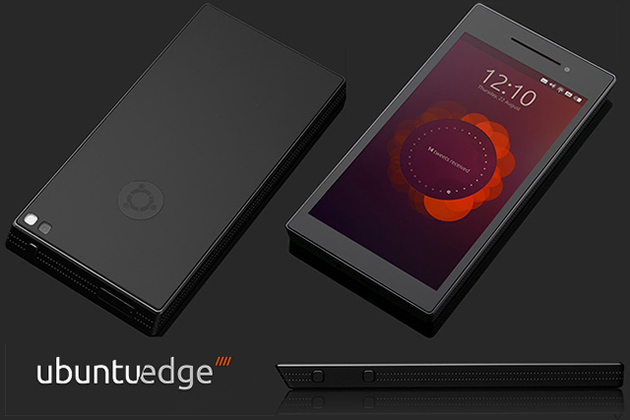
Canoncial, the company behind Ubuntu Linux, looks set to become the latest software maker to launch its own smartphone. Renders of a device labelled “Ubuntu Edge” were shared on the company’s website before an Ubuntu event later today. The images depict a harshly angular device with a distinctive wedge shape at the top, two volume keys, and a power key. There’s also another key at the top, but it’s not clear what that’ll be for. There are no physical buttons for navigation — the OS is gesture-based, after all. Here’s our early preview of the OS from Canonical’s January launch event:


The other day I came across a new initiative for funding open source development called the Bitcoin Grant. While interesting at first sight, I was wondering: How is this better than the traditional donation button most open source projects have? The Bitcoin Grant then seems to limit who can donate and how you can use those donations (you can’t pay rent with bitcoins just yet).
Alan Baghumian has announced the availability of the third test release of Parsix GNU/Linux 5.0, a Debian-based desktop Linux distribution with GNOME 3.8: “The third and final testing release of Parsix GNU/Linux 5.0, code name ‘Lombardo’, has been released. This is an RC-quality release and the goal is….
 This has already been a banner year for the Xen Project. We have already seen the 10th anniversary of the project, the birth of Xen as a Linux Foundation Collaboration Project, and the release of version 4.3 of the Xen Project software. More than that, this is also the first year we are hosting three excellent community events.
• the Xen Project Hackathon in Dublin, Ireland in May
• the Xen Project User Summit in New Orleans. Louisiana, USA in September, and
• the Xen Project Developer Summit in Edinburgh, Scotland in October.
The Hackathon was a great success in May, and the Developer Summit promises to be a terrific close to the year in October, but the User Summit is on the immediate horizon.
In years past, the Xen Project has hosted a number of Xen Summits. These events were often a mixture of developer and user content, often with a majority of the sessions oriented toward developers. This year, we have split the former Xen Summit into two distinctly different events: one for developers, and one for users.
The Xen Project User Summit is the first truly user-centric event in the project’s recent history. Co-located with LinuxCon North America on September 18, it will be a time for users of Xen Project software to get together and learn from each other. We expect to hear updates on the state of the project, as well as the plans for the future. But the focus of the day will be on the users.
We are looking for talks – all types of talks – which will appeal to the Xen Project user community. These include:
• User talks: We want to hear from users who are willing to discuss their experiences with Xen. We welcome proposals from folks who will talk about how they use Xen, why they picked Xen, and the value it brings to their organization. You don’t need to be an experienced speaker, just someone with a story to tell and a willingness to tell it. Your proposal might be a case study, a benchmark, a performance analysis, or something altogether different. It’s up to you what you propose.
• Integrator talks: If you are a system integrator using Xen, consider discussing the architecture you employ, the solutions you’ve created, and the tools you’ve used to make it all happen.
• Service provider talks: If you are a service provider using Xen, we’d welcome proposals on the scalability and performance of Xen in your environment, the cloud software you’re using, or the optimizations you’ve employed.
• Vendor talks: If you are a vendor, we’d like to hear how Xen powers your solution. We don’t want a sales pitch, but we’d welcome proposals which talk about the technical details of your Xen-related product and the value it brings to you and your customers.
The Call for Participation closes on July 26, so act now. You will find the information you need here. Send in your proposal soon and plan to join us in September in New Orleans!