Home Blog Page 1894

Sony Hints a New SmartWatch is Coming Next Week

Sony_smartwatch_review7_1020_large

Sony’s SmartWatch was part of a rush of smartphone-connected watches released between 2010 and 2012, as developers looked to update Dick Tracy’s wristwear for a world full of Android and iOS devices. But the Kickstarter-funded Pebble swept many of them away, gaining the kind of cultural cachet that other connected watches never even approached. With the Pebble a few months past release and Apple’s iWatch still a rumor, Sony is teasing an update to its SmartWatch for this year’s Mobile Asia Expo.

Continue reading…

Read more at The Verge

The People Who Support Linux: 19-Year-Old Aims to be a Kernel Developer

Kieran Grant works in IT support for a financial services company but unabashedly aspires to be a Linux SysAdmin and, someday, a kernel developer. After using and hacking Linux for five years, the 19-year-old from Logan City in Queensland, Australia is well on his way to achieving that goal.
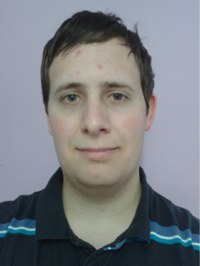
Kieran Grant

His love of machines and “anything mathematical” led him to first start learning assembly code using the MS-DOS debug program. He switched to Linux because it meant he could “learn how a real OS worked, straight from the source code,” and it helped him learn C programming. At the time, he had a slow Internet connection and low usage limit so his first distribution was SimpleMEPIS — a dated version he bought on eBay.

After finishing high school he earned a TAFE diploma in IT Networking and went to work with his brother, Ryan, at Wealth & Retirement Solutions in Brisbane as an IT support consultant.

“I’m currently hacking together scripted templates for their online-based database system (Xplan from Iress) using a variant of Python (XMerge Code for XPlan),” he said via email.

When he can, he practices Linux networking in a virtual environment using KVM accelerated Qemu running a variety of Linux distros including CentOS, Fedora, and Ubuntu. He works in a virtual network that varies from using IPv4 forwarding – “I love playing with IPTables,” — to using tun devices.

“I love the fact that still, in 2013, I can write a script or do something on the CLI that can be done faster then *ANY* GUI,” he said. “And also, working on a Linux terminal, tapping away changes or tests to IPTables to set up a NAT router, to changing it to have a non-NAT full fledge router with DHCP, DNS and anything else in between. What’s not to love?”

Learning Linux

As a side project, he’s trying to get a minimal bootstrapped Linux system running on either a virtual environment or on his PowerPC iMac “from source, to see how minimal one can go, and what can be done to enhance security.”

Take a Linux router, for example, he says. “One can have the minimum hardware, and either have all “modules” in-kernel, and then disable module loading, or maybe have a minimum set that is signed, and force signature requirement for loading.

“This is something I am keen on as I am really interested in using Linux routers instead of spending loads of money on some big-brand router,” he said.

While he already uses his Linux desktop as a Linux router for his PowerPC Ubuntu box, he’s hoping this project will help him better appreciate the different parts of the system and how to enhance security and reduce response time.

At the same time, he’s working on another side project using straight native C programs for writing CGI scripts for web servers. “Why wait for the overhead of an interpreter when you can run straight machine code!” he said. He’ll be writing programs that use only the C Library on top of the kernel itself, with the goal of keeping it POSIX compliant for portability.

New Linux Foundation supporter

Kieran recently joined the Linux Foundation as an individual supporter because he believes Linux is the best environment for producing open, free and creative work.

“It will also allow me to better participate in the Linux community and to be able to continue learning about Linux and the awesome things that can be done,” he said, “and hopefully it will help in finding a job in a Linux environment.”

 Welcome to The Linux Foundation, Kieran!

 

Cumulus Networks is Linux in Name Only

clinux

Cumulus Networks recently unveiled their flagship product, Cumulus Linux, as Sam reported yesterday, but don’t let the name fool you. Although Cumulus Linux is based on Debian, it is not open source. It is an operating system optimized for a short list of networking devices. Cumulus Linux has an impressive list of capabilities designed for a modern data center, but using the Linux name when they are not giving back to the community is a missed opportunity.

Cumulus Networks repeatedly states that they want to “bring the Linux revolution to your network”, but it appears that they are missing the point. Capabilities are one thing, and the software defined network and data center are certainly the future, but the Linux revolution was not about what a Linux distribution could do when it was shipped by the vendor. It was about the community as a whole having access to the source code so that everyone could keep making it better. Cumulus Networks is benefiting from the work done by the community, and holding back their contributions so they can charge licensing fees. You know, like Microsoft.


Read more at Ostatic

Google Opening Android Nation Retail Stores Across India

Web giant’s latest attempt is further aimed at penetrating the Indian market with Android devices, and will see retail stores set up across India starting in New Delhi later this year.

Nvidia Launches CUDA Support for ARM Server Chips

This week Nvidia announced that version 5.5 of CUDA will support the ARM chip architecture. This was welcome news at ISC’13, where a number of talks and exhibits were touting ARM-based computing.

Since developers started using CUDA in 2006, successive generations of better, exponentially faster CUDA GPUs have dramatically boosted the performance of applications on x86-based systems,” said Ian Buck, general manager of GPU Computing Software at NVIDIA. “With support for ARM, the new CUDA release gives developers tremendous flexibility to quickly and easily add GPU acceleration to applications on the broadest range of next-generation HPC platforms.”

Combining high-performance CUDA-enabled GPU accelerators with low-power ARM-based SoCs enables ARM-based systems to penetrate new markets that require the highest levels of energy-efficient compute performance. Read the Full Story.

Related posts:


The post Nvidia Launches CUDA Support for ARM Server Chips appeared first on insideHPC.

 
Read more at insideHPC

GCC 4.8 vs. LLVM/Clang 3.3 On Intel’s Core i7 4770K

Complementing the earlier Phoronix article about optimized binaries for Intel Haswell CPUs via the “-march=core-avx2” Haswell compiler optimizations, in this article is a comparison of the GCC and LLVM/Clang compilers when targeting the new Core i7 4770K CPU. GCC 4.7.3, GCC 4.8.1, LLVM Clang 3.2, and LLVM Clang 3.3 were the tested compilers under Ubuntu Linux when seeing how well these different compilers optimized for Haswell.

Read more at Phoronix

Slackel KDE-4.10.4 “Live” Released

Slackel is a live system based on Slackware and usually ships in Openbox and KDE editions. Today the Slackel crew announced their latest, Slackel Live KDE-4.10.4. “A collection of two KDE live iso images are immediately available that can be burned to a DVD or used with a USB drive.”

Slackel KDE-4.10.4 Live is based on the current tree of Slackware and features Linux 3.9.5, KDE 4.10.4, Xorg X Server 1.13.4, GCC 4.8.1, and Firefox 21.0. It also includes lots of other software like Clementine, VLC, and the Calligra office suite too, as well as a long list of configuration tools. I didn’t see one for installing proprietary graphic though (although, that doesn’t guarantee it doesn’t exist). So assuming it’s really not there, it looks like we may have to install them the old-fashioned way because Slackel uses nouveau for NVIDIA chips by default.


Read more at Ostatic


First Android-Based Camera With Interchangeable Lenses

Samsung unveiled a quad-core, 20-megapixel Galaxy NX camera with 4G LTE and a 4.8-inch display, billed as being the first Android-based, connected interchangeable-lens camera, following up on last week’s announcement of its Android-powered 16-megapixel, 10x-zoom Galaxy S4 Zoom. Also today, Samsung unveiled the Ativ Q, a dual-boot 13.3-inch convertible tablet that runs Android and Windows […]

Read more at LinuxGizmos

Samsung’s Ativ Q: Can Dual Boot Windows 8, Android Device Sell?

It’s unclear whether a dual-boot tablet is a real winner for technology buyers, but Samsung is going to give it a shot.

Google Glass Could Be the Next iPhone?

A new Forrester report shows that 12 percent of the U.S. population is willing to wear the augmented reality eyeglasses on an everyday basis. [Read more]


Read more at CNET News