In retrospect, Roadrunner could be viewed as a something of a design cul-de-sac, created by the artificial goal of the petaflop milestone. But it’s notable that even in the contrived race to a quadrillion flops, something of worth endured. Although the PowerXCell 8i was a commercial dead end, x86/accelerator combo servers took off and are now sold by every HPC system vendor, IBM included. For the time being, accelerators offer the only commodity-based technology that delivers multi-petaflops of supercomputing in reasonable power envelopes, not to mention tiny systems with multi-teraflops capability. The energy efficiency of these accelerators, compared to standard processors, is driving the technology into mainstream HPC and is stretching the number of FLOPS that can be squeezed into a datacenter or into a deskside cluster.
It’s no secret that brand image is a crucial consideration in most any consumer product’s success, and Linux is surely no exception. That’s been a hot topic of conversation before, but recently it’s popped up again with a fresh new twist. “The Linux Inside Stigma” was the title of the post that started the ball rolling this time, and rolled it has. “It’s remarkable how Google doesn’t mention the word Linux anywhere in their marketing of the Google Chromebook,” began author Dietrich Schmitz.
Konstantin Kochereshkin has announced the availability of an updated release of ROSA 2012 “Enterprise Desktop” edition, code name “Marathon” and supported with security updates for five years. From the release announcement: “ROSA is pleased to announce the second update pack for ROSA Marathon 2012 operating system with an…
The company will launch its own “phablet” designed to compete with such devices as Samsung’s Galaxy Note, a source tells The Financial Times. [Read more]
The chip manufacturer plans to use this acquisition to build a reputation as a service provider in other IT areas. Mashery offers management tools for web and on-premise APIs
While startups, developers, and small businesses flock to behemoth public clouds like Amazon Web Services and Google Compute Engine that give them a profoundly efficient bang for their buck, bigger enterprises largely stick to paying the high cost for private clouds. They are wary of potential availability and security issues that, rightfully, could hamper (or cripple) their business. The perceived risk-reward of saving money by turning IT operations over to a public cloud hasn’t yet permeated through to big businesses.
Applications vary depending on the operating system or OS the phone has. One of the most widely used OS is Android. This is so because of the many brands of smartphones that run on Android. Some of these phones are Samsung, Sony, and Alcatel. To make the most out of your phone, below are the essential utilities and tools apps especially designed for Android.
Easily Manage your Android with AirDroid
AirDroid is a fast and free app that allows users to manage their Android wirelessly. This can be possible by using the favorite browser.
As an undergraduate engineering student Karen Sandler was used to being the only woman in a class. At the time she didn’t want to talk about why there weren’t more women in technology, though, believing the attention would only make things worse. That attitude has changed over time, however, as she experienced sexism more directly. At tech conferences, for example, her male colleagues would sometimes ask her whose spouse she was, not knowing that she was actually a speaker at the event.
Now as a FOSS attorney and the executive director of the GNOME Foundation, Sandler is taking a different approach by addressing sexism head-on.
“In our space it’s a real problem. We don’t have that many women,” Sandler said in her presentation Wednesday at The Linux Foundation Collaboration Summit in San Francisco. “People who haven’t experienced it directly aren’t aware of how bad it can get. There’s a lot of subtle sexism.”
Programs for Women
The software industry needs a culture change that can best come about by bringing more women to the profession, she said, especially into the free and open source software community. Currently 25 percent of all software developers are women, but only 3 percent work in free and open source software.
“It’s an amazing gulf,” Sandler said.
The good news is that attracting women to open source can be accomplished through intentional outreach. GNOME’s Outreach Program for Women (OPW), an internship designed to welcome and mentor women to the community, has already helped increase diversity for the GNOME project as well as the 10 other open source projects involved.
Since OPW began a few years ago, the number of women applying accepted to work with GNOME in the Google Summer of Code program, for example, has risen from one in 2006, to seven in 2011, and five in 2012. And women attending the GNOME conference GUADEC increased to 17 percent in 2012, from 4 percent in 2009.
The key to the program’s success, Sandler said, was to think about exactly why women weren’t participating and address each concern systematically.
“When we specifically target women, they’re much more likely to apply,” Sandler said. “Many have told me they never thought they could have an internship like this” and wouldn’t have applied without an invitation.
Here are Sandler’s 5 tips for bringing women into a project. She also offered more advice on what to include in an internship and how to follow up with mentors and alumni afterward. For more, watch the video of her presentation, below.
5 tips for Bringing More Women into Open Source
1. Address women directly.
2. Accept non-students and non-coders.
3. Connect women with mentors. “There’s a feeling that women are less likely to ask for help, and find a mailing list intimidating… Mentors respond to newcomers and make them feel welcome,” Sandler said.
4. Require a contribution as part of the application. It can be small like fixing a minor bug or rewording a pagraph of documentation. It gives people a head start for joining the community and also gives program administrators a better idea of who is applying and whether they’re good.
5. Make sure women don’t feel pressure to propose really ambitious projects.
Interested in a FOSS internship for women? May 1 is the application deadline for the next OPW.

 Over at TOP500.org, Michael Feldman from Intersect360 Research writes that the recently retired 1 Petaflop Roadrunner supercomputer set the stage for today’s hybrid supercomputers.

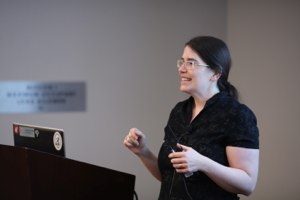 Now as a FOSS attorney and the executive director of the GNOME Foundation, Sandler is taking a different approach by addressing sexism head-on.
  Since OPW began a few years ago, the number of women