
The target of a patent infringement lawsuit, the cloud service provider goes on the offensive with a countersuit against the patent assertion entity. [Read more]
Read more at CNET News
 The Document Foundation today announced the release of LibreOffice 4.0.2 glitch-fix update. How stable is an app that gets “glitch updates?” …just a few glitches to fix. Well, let’s look at the changelogs and see.
Of course, you get the numerous importing bugs fixed, but one interesting fix right at the top is for a resource leak. I’m having a hard time understanding what that’s all about, but you can check out what’s there. There seems to be quite a bit of formating, rendering, displaying, and positioning of elements and the like addressed. A couple of obscure crashes were fixed and one hang when “exporting a particular .ods to .xlsx” was closed. Yep, all in all a pretty boring couplalists, which is a good thing.
See the full announcement on the The Document Foundation Blog, or download LibreOffice 4.0.2 at www.libreoffice.org.
On a related note, Joel Madero has a bug report analysis on his blog.
Like their larger single board computer (SBC) cousins, computer-on-modules (COMs) continue to be dominated by x86 processors, primarily Intel Core and Atom chips. Although Linux-ready, ARM-based COMs have been available for years, most based on ARM9 processors, many major COM vendors have avoided them. In the last year, however, we’ve seen an explosion of new COMs based on numerous ARM architectures and processors, bringing ARM advantages like lower power consumption, Android compatibility, and usually, lower cost, to a broader embedded COTS audience.
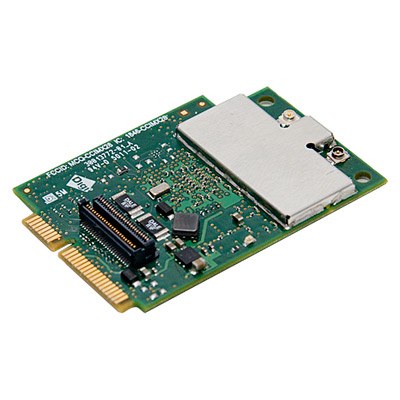 Here I look at 10 Linux-ready embedded ARM COMs that have been announced or shipped in the last six months (click on the Gallery links at the bottom of the page for a slideshow). Most also ship with Android and Windows Embedded support. The COMs, sometimes called system-on-modules (SOMs), are based on system-on-chips (SoCs) ranging from 400MHz ARM9 chips to Cortex–A9 SoCs like the Nvidia Tegra 3, and even a Cortex-A15 design. Freescale’s i.MX6 is particularly popular, as it gives developers a choice of one, two, or four cores.
Although the x86 COM market is thriving, and there are also modules based on Freescale’s PowerPC-based QorIQ SoCs, ARM seems to be the module choice de la moda. The tipping point came last fall when embedded manufacturing giant Kontron received widespread industry support for a new ARM COM standard called ULP-COM, which has since been renamed by the SGET standardization group with the somewhat Bond-sian moniker SMARC. Meanwhile, ARM is also showing up in QSeven and other formats.
The ARM module market has greatly benefited from such standardization efforts, says LinuxGizmos.comeditor and publisher Rick Lehrbaum, who helped establish the PC/104 module form-factor in the late ’90s. “ARM-based COMs and SBCs have tended to lack consistent form-factor or expansion bus standards, resulting in a lack of module-level alternate-sourcing options,” says Lehrbaum.
According to Lehrbaum, the current boom in ARM boards is also fueled by the continuing growth of ARM-friendly Linux, and more recently Android, in the general embedded market. He cites other factors including the increasing speed of ARM SoCs, the increasing demand for power efficiency, led by mobile devices, and the billions of ARM SoCs sold into the smartphone and tablet markets, which have significantly lowered Bill-of-Material (BOM) costs.
On the other hand, unlike x86, ARM parts aren’t typically supported for extended operating temperatures or long component lifecycles required by many embedded applications, he notes. Meanwhile, “Intel is moving rapidly toward mobile-oriented SoCs,” says Lehrbaum.
Unlike SBCs, COMs typically lack real-world ports, and extend their I/O through a connector that supports compatible carrier boards based on standards like COM Express, QSeven, and SMARC. Others use proprietary connectors, often based on a 144-pin SODIMM layout, designed to work only with the company’s own carrier boards. All the modules listed here are available with optional or required carrier boards.
Modules are easier to work with, but less flexible and customizable, than building out directly from a SoC. On the other hand, developing embedded devices using COMs is more difficult and time-consuming than using an SBC like a BeagleBone or Raspberry Pi, but offers more flexibility for hardware customization.
For more information on Linux-ready modules and SBCs of all stripes, including detailed reports on most of the COMs listed here, LinuxGizmos is a great place to start.
Click on the Gallery link below to see 10 hot new ARM modules, in ascending order of processor speed.
Roughly six months after the launch of its “Folsom” release last fall, OpenStack on Thursday unveiled version 2013.1 “Grizzly,” the seventh and latest release of the open source software for building public, private and hybrid clouds.
 More than 500 contributors made 7,620 updates in this new release, which, “more than any before it, was driven by users who have been running OpenStack in production for the past year (or more) and have asked for broader support for the compute, storage and networking technologies they trust and even greater scale and ease of operations,” explained Mark Collier, chief operating officer at the OpenStack Foundation, in a blog post announcing the new software.
Best Buy, Bloomberg, NSA, Cisco WebEx, Comcast, CERN, HP, NeCTAR, PayPal, Rackspace and Samsung are among the companies using OpenStack in production.
Developers who contributed to this release came from more than 45 companies, including Red Hat, Rackspace, IBM, HP, Nebula, Intel, eNovance, Canonical, VMware, Cloudscaling, DreamHost and SINA.
Seven integrated projects make up OpenStack, each with source code now publicly available: Compute (“Nova”), Object Storage (“Swift”), Image Service (“Glance”), Networking (“Quantum”), Block Storage (“Cinder”), Identity (“Keystone”) and Dashboard (“Horizon”).
More than 200 new features are included in this Grizzly release, and some 1,900 bugs were fixed. In anticipation of the launch, Linux.com spoke earlier this week with Thierry Carrez, release manager for the project, to hear about some of the highlights.
“Personally, my favorite key features for this release would be in OpenStack Compute (Nova): introduction of the ‘Cells’ deployment model for massive scale, and isolation of the compute nodes from the rest of the system for better security (‘no-db-compute’),” Carrez began. “I also like how OpenStack Networking introduced support for security groups, as well as a load-balancing-as-a-service feature.”
Meanwhile, “I would also mention how OpenStack Block Storage (Cinder) managed to add a large number of storage drivers from all of the storage industry,” he told Linux.com. Ten new drivers were added, in fact, including Ceph/RBD, Coraid, EMC, Hewlett-Packard, Huawei, IBM, NetApp, Red Hat/Gluster, SolidFire and Zadara.
Finally, “the general drive towards more reuse of code across the various OpenStack projects (through the introduction of the common ‘Oslo’ libraries) is also worth mentioning,” Carrez said.
Other highlights of the new release include significant improvements in virtualization management on the Compute side, with full support for ESX, KVM, XEN and Hyper-V. Quotas were added to the Object Storage system, meanwhile, as was cross-origin resource sharing (CORS), enabling browsers to “talk directly to back-end storage environments,” Collier noted.
For Networking, Grizzly aims to achieve greater scale and higher availability by distributing L3/L4 and dynamic host configuration protocol (DHCP) services across multiple servers. New plug-ins were also added from Big Switch, Hyper-V, PlumGrid, Brocade and Midonet.
The Grizzly Dashboard, meanwhile, is backwards-compatible with the Folsom release. The video below demonstrates the dashboard in action.
These, of course, are just some of the highlights in this new release. For a full list of features in OpenStack Grizzly, visit the software’s Release Notes.
Looking ahead, October will see the release of OpenStack “Havana,” which will feature two new projects incubated during the Grizzly cycle: “Ceilometer,” for central collection of metering/monitoring data, and “Heat,” a template-based orchestration engine. Planning will begin at the OpenStack Summit in Portland, Ore., later this month.