Home Blog Page 1990

Are Androidbooks Upon Us?

The many recent big moves going on at Google got many people excited about the idea that Google might merge its Chrome OS and Android platforms, creating a simple and open unified operating system strategy. I’ve weighed in on why I don’t think this merger will happen.

However, now a new corollary discussion has cropped up on the web, which centers on some reports that say that just as Chromebooks are succeeding as mobile devices, we may very soon see Androidbook portable computers based on the Android mobile OS. Is it possible?


Read more at Ostatic
Ouya Review: Can an Indie Console Take on Sony and Microsoft?

Dsc_2940-hero_large

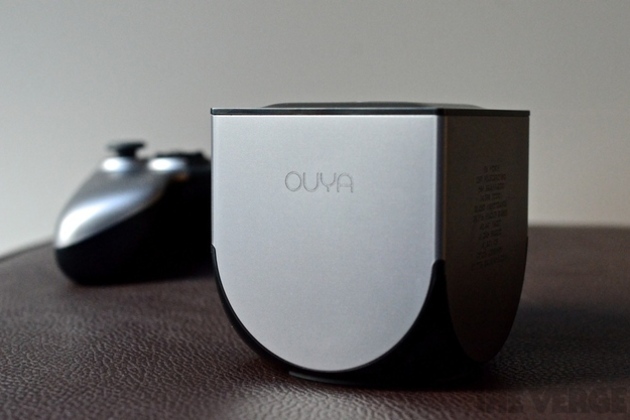
Sony, Microsoft, and Nintendo may no longer be the only names that matter in gaming, but the “big three” is still very much alive in people’s minds. Even as iOS and Android have gotten better games, and better hardware to run those games, capital-G Gaming remains something done with a controller and a console, and something we do on our big-screen TV.

Maybe that’s why Ouya struck such a chord when it hit Kickstarter last July. Basically, the company described a $99 box that would take the many great Android games off of your 4-inch phone and put them onto your TV. Ouya shattered its Kickstarter goal (and a few records for the platform) en route to 63,000-plus backers and more than $8.5 million in funding for the Ouya, and now nine…

Continue reading…

Read more at The Verge

Adapteva’s $99 Supercomputer Is Closer to Fruition

In case you missed it, in October of last year, Adapteva wrapped up a successful Kickstarter campaign to build a Raspberry Pi-inspired $99 Linux supercomputer. The campaign was successful in raising $898,921 for the first versoin of the Parallella computer, a supercomputer equipped with a dual-core ARM A9 processor and a 16- or 64-core Adapteva floating-point accelerator. Quite a few people have questioned this idea, but it’s actually quite interesting and could usher in the era of grassroots supercomputing. Adapteva’s CEO Andreas Olofsson has recently been shedding more light on the project.

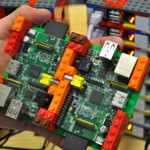
People have been doing lots of tinkering with the Raspberry PI devices, and last year, news came from the University of Southampton that Professor Simon Cox and his team of researchers had lashed together an actual supercomputer made of 64 credit card-sized Raspberry Pis using Lego pieces as the glue for the cluster (see the photo above). 


Read more at Ostatic

How to Install Arch Linux, While Keeping it Simple

Arch Linux is one of the the most tempting GNU/Linux based operating systems. I always wanted to use Arch due to its rolling release model, and I have explained in detail why I jumped ship and switched from Ubuntu to Arch.

Read more at Muktware

Tablets Expected to Surpass Desktop, Laptop Sales by 2015

Lower priced tablets are accelerating the shift away from PCs, according to research firm Gartner. [Read more]

Read more at CNET News

Linux Kernel Port To TI-Nspire Graphing Calculators

The Linux kernel has been ported to the Texas Instruments TI-Nspire. The TI-Nspire series platform powers higher-end graphing calculators in recent years from the Dallas-based company…

Read more at Phoronix

Running PrestaShop 1.5.x On Nginx (LEMP) On Debian Wheezy/Ubuntu 12.10

Running PrestaShop 1.5.x On Nginx (LEMP) On Debian Wheezy/Ubuntu 12.10

This tutorial shows how you can install and run a PrestaShop 1.5.x web site on a Debian Wheezy or Ubuntu 12.10 system that has nginx installed instead of Apache (LEMP = Linux + nginx (pronounced “engine x”) + MySQL + PHP). nginx is a HTTP server that uses much less resources than Apache and delivers pages a lot of faster, especially static files.

Read more at HowtoForge

Sorting Out the Linux Desktop Mess

It seems fair to say that every tech community out there has its own hot-button issues that are pretty much guaranteed to get conversations flowing and blood pressures rising. The Linux community, of course, is no exception, and it’s difficult to imagine a better illustration than a debate that came up recently. “The Linux Desktop Mess” is the title of the post that got the discussion going, and sphygmomanometers throughout the blogosphere have been getting a workout ever since.

Read more at LinuxInsider

Facebook’s New Home on Android: Join us Thursday (Live Blog)

Is it the fabled Facebook phone? Or a new Facebook-integrated Android operating system? Both? Find out live with CNET at 10 a.m. PT Thursday. [Read more]

Read more at CNET News

How to Write CentOS Initialization Scripts with Upstart

On Linux systems, initialization (init) scripts manage the state of system services during system startup and shutdown. When the system goes through its runlevels, the System V init system starts and stops services as configured. While this tried-and-true technology has been around since the dawn of Unix, you can now create modern and efficient CentOS 6 init scripts by using Upstart, an event-based replacement for System V init.

Until its latest release, CentOS used the System V init system by default. SysV init scripts are simple and reliable, and guarantee a certain order of starting and stopping.

Read more at Wazi