
Home Blog Page 2009

BSD Release: FreeNAS 8.3.1

Josh Paetzel has announced the release of FreeNAS 8.3.1, an open-source storage platform that supports sharing across Windows, Apple, and UNIX-like systems: “The FreeNAS development team is pleased to announce the immediate availability of FreeNAS 8.3.1-RELEASE. FreeNAS 8.3.1 is based on FreeBSD 8.3 with version 28 of the….

Read more at DistroWatch

Tiny $50 ARM-Based COM Runs Linux, Android

BDD Group is readying a tiny, sub-$50, SODIMM-style computer module powered by an SOC (system-on-chip) containing a single ARM Cortex A8 core along with a Mali-400 GPU, among other functions. The business card-sized “A10 COM” will be supported with Android and Linux BSPs. BDD’s CEO, Rowdy VanCleave, says the A10 COM was created to enable […]

Read more at LinuxGizmos

Citrix: iOS Leads Enterprise Globally, but Android Growing Fastest in EMEA

Based on a new mobility report from Citrix, iOS is preferred for engaging customers one-on-one while Android is gaining strength with field service organizations.

Building Tablet and Smartphone Apps for the Enterprise

If you want to give your users the absolute best experience when accessing enterprise data, you may find yourself building apps for private use. But how?

Nvidia Ups its Enterprise Computing Game

Among the most notable moves by Nvidia was the launch of its GRID Visual Computing Appliance, which starts at $24,900 and has an annual software license of $2,400.

Can You Help Ferret Out Ubuntu’s Bugs?

Everyone has their favorite Linux distro and mine happens to be Ubuntu. After years of using the OS, I appreciate the ease with which I can run lots of applications that I can’t run on other platforms, Ubuntu’s security, and more. I also have a long wish list of things that I wish Ubuntu could do better.
If you have a similar wish list, you may want to keep track of Canonical’s UbuntuBugDays and Hug Days. The next Hug Day is Thursday of this week, and is a community event that anyone can participate in, but Canonical is also serious about inviting developers to find meaningful bugs in Ubuntu.

 
Read more at Ostatic

Rackpace’s Open Cloud Academy Offers OpenStack Certification

For months now, data from recruitment organizations has shown that skills with the OpenStack cloud computing platform commands power in the job market. Rackspace Hosting, which has been focused on OpenStack-based cloud computing, has announced a number of training initiatives. For example, the company has announced a strategic agreement with Hortonworks, which provides Apache Hadoop development, support and training, to empower customers with an enterprise-ready Hadoop platform targeted to be easy to use in the cloud.

 
Read more at Ostatic

Distribution Release: AsteriskNOW 3.0

Malcolm Davenport has announced the release of AsteriskNOW 3.0, a complete, CentOS-based Linux distribution with Asterisk telephony software, DAHDI driver framework and FreePBX administrative GUI: “AsteriskNOW 3.0. Today, a major update to AsteriskNOW is available. The older 2.x version is now replaced by the new AsteriskNOW 3.0. 

Read more at DistroWatch

Simulating the Brain with a Supercomputer

Img_2529_dxo_large

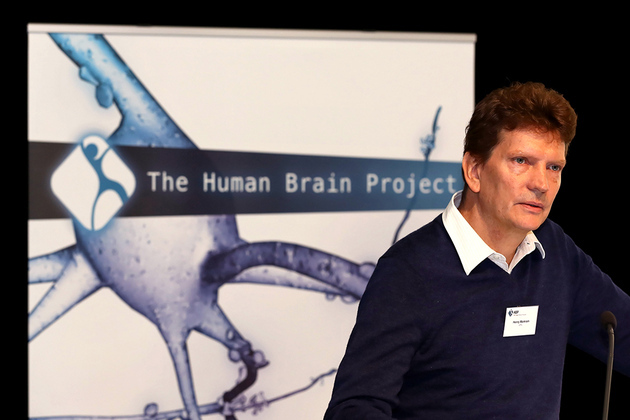
The first incarnation of Blue Brain — a digital representation of the human mind — could simulate 10,000 neurons firing and interacting just as they would in an actual brain. But with 100 billion neurons and 100 trillion total connections in a real human brain, it’ll require a supercomputer to get anywhere close to a true representation. Dr. Henry Markram, creator of the Blue Brain, believes that it will be possible to simulate the entire brain within his lifetime, and the European Union is giving him the grant money to make it happen. However, The New York Times reports that what scientists would do with a true virtual brain, and whether it’s actually possible to make one, is up for debate.

Continue reading…

Read more at The Verge

KDE’s Plasma Media Center 1.0.0 Released

The first release of the Plasma Media Center has been announced. “KDE’s Plasma Media Center (PMC) is aimed towards a unified media experience on PCs, Tablets, Netbooks, TVs and any other device that is capable of running KDE. PMC can be used to view images, play music or watch videos.

Read more at LWN