
Simply put, cloud infrastructure will be a buyer’s market as the table stakes will be low pricing largely on AWS’ terms.
Read more at Enterprise Open Source Toolkit
The job market for Linux professionals this year is even better than it was in 2012. Ninety-three percent of hiring managers surveyed said they plan to hire at least one Linux pro in the next six months — up from 89 percent last year, according to the 2013 Linux Jobs Report released last week by Dice and The Linux Foundation. And 75 percent of Linux pros surveyed say at least one recruiter has called them in the last six months in an effort to find talent for positions that are getting harder to fill.
 Despite the report’s encouraging statistics, though, navigating the Linux job market can still be tricky. So we asked Dice Managing Director Alice Hill for more insight and advice on the real world of Linux careers. Here, she answers our questions about why Linux skills are in such high demand; how other technology careers compare; the future prospects for sysAdmins and DevOps; how to get a recruiter’s attention; and how to land a job as a Linux beginner.
Alice Hill: In some ways, the demand for Linux professionals mirrors what’s happening in technology right now, with companies continuing to embrace open source, cloud development and data analysis and integration. But, I was really surprised that nine out of ten companies said they would be hiring Linux professionals in 2013. Not, that there isn’t demand — Linux is among the top 10 most requested skills on Dice, with more than 11,000 jobs posted on any given day – it’s just such a high-level and an improvement from last year’s already strong reading when we did the same research.
Hill: Tech professionals who are close to the application are on hiring managers’ radars – software developers, programmers, mobile developers. Data analysts are highly sought after. By my personal count, about four out of five tech professionals will roll their eyes if you talk about big data, but harnessing information for business gains is all companies are trying to do – roll your eyes at the marketing, not the opportunity.
Hill: The system administrator position is the perfect example of an evolving, changing role in the tech department. The results were very clear in the survey and that dovetails with the demand we see from hiring managers and recruiters looking for sys admins on Dice. Frankly, many customers believe this role will never totally go away and there is still solid demand. Right now, the unemployment rate for network and system administrators is 4.3 percent, well below the national average of 7.8 percent, according to the Bureau of Labor Statistics. So I would sum it up this way, there are still a lot of opportunities and the market is relatively good. But, if a systems administrator is really concerned their position will become less important to their company – make a move today – no reason to wait around.
Hill: DevOps was added to the survey because it’s part of the answer to those who say system administrators’ jobs will go away. This role is a skill super-coupling that combines development and operations disciplines and we see strong demand for this talent.
Basically, companies want their products to be the first one to the finish line and an agile environment should shrink development time and save money. It’s a tough role, because you have to combine excellence in two disciplines, keep open and clear communication, and thrive in a fast paced environment. I did see a job posting the other day that asked for a DevOps Engineer, with at least ten years of experience. Really? The discipline hasn’t been around that long. Companies can’t search for the purple squirrel, they have to keep an open mind and it’s a way for Linux systems administrators to think about their future.
Hill: A big part of being found is putting your best self forward – definitely do a resume check. Are you showing how you impacted your company or just listing your skill set? Does something as simple as your title make sense? There is a lot of help on Dice.com around resumes and you should post that resume, a lot of positions are never advertised. That’s the behind the scenes recruiting, but you also need a professional online persona – contributing on sites like Stack Overflow, SourceForge or Github – sets you apart as someone who is passionate about their discipline. There are new recruiting tools, like Open Web, pulling that information together for hiring managers to get a complete picture of tech candidates. Finally, I know not every recruiter is the best at matching their position to a particular individual, but there is no reason not to be helpful if you can offer a referral.
Hill: Most entry-level recruiting happens before a tech professional has left school and in large firms college recruiting can be a completely different set of human resources professionals, so new tech professionals should make sure they are sending their resume to the right group. Part of early career management is sharing new ideas when an established background isn’t quite there. Companies are eager for a fresh view and new talent is capable of providing it – do that in an interview, not in an arrogant way, but in a way that shows engagement and interest in what the company is doing and are going to be able to contribute straight away. Otherwise, think start-ups. We see a very specific pattern, those who work at start-ups either tend to be new to the market or very experienced. At the right shop, tech professionals will get the wisdom of experience and the thrill of big contributions to a small company.
 NCSA has gifted the Institute for Genomic Biology a highly parallel, shared memory supercomputer. Named Ember, the SGI system has become part of the IGB biocluster, adding 1536 cores and eight terabytes of memory spread across four nodes.
We’ve been using Ember for a while now through the NCSA, mainly in computational genomics,” said Victor Jongeneel, Director of HPCBio. “It can perform a lot of tasks that our existing systems just can’t. Having it under our own management will allow us better access and faster results.”
IBM has invested boatloads of money in building enterprise and mainframe Linux product lines. Red Hat and SUSE Enterprise Linux both have mainframe editions. That’s right, you can plunk down $75k for an IBM zEnterprise 114 mainframe and run Linux natively on it. That’s one of the smaller, less expensive mainframes; Linux powers the big ones too if you feel like splurging.
 Or, you can run mainframe Linux on your Linux PC with the Hercules project.
But why would you want a mainframe in the first place? What makes them special? Three things:
Mainframes process vast amounts of data 24x7x365, and can run near 100 percent capacity without performance degradation because they are built with massive I/O. They have giant numbers of dedicated channels and super-fast switching for serving thousands of simultaneous transactions. A fully tricked-out zEnterprise system can execute 50 billion instructions per second (BIPS) and run 100,000 virtual machines.
Mainframe hardware is very robust, with lots of redundancy and configurability. For example, you can allocate CPUs and memory in all kinds of ways for different workloads. Mainframe operating systems, including Linux, have special hardware instructions for squeezing out every bit of performance.
Mainframes are not supercomputers. Supercomputers are about sheer raw processing power and speed. IBM’s Watson is a supercomputer built on a big cluster and SUSE Linux.
So with all this Linux-y goodness on these massive machines, can we play with them? We’re used to being able to freely download and play with Linux and Linux software. But it’s not that easy for mainframe Linux. You can build your own Watson Jr. from commodity parts. But building your own mainframe is considerably more difficult if you can even get all the parts, and have a facility with adequate power and cooling to put it in.
The answer, as always in Linux- and FOSS-land, is software. The Hercules mainframe emulator is a mainframe in software, and it runs all IBM mainframe operating systems, such as OS/360, OS/390, the z/OS family, and mainframe Linux. If you want to try out OS/390 or the current z/OS releases, good luck, because they have restrictive licenses that tie them to specific hardware. You might be able to get something if you are already an IBM customer or partner.
However, you can download and use older releases. The licensing on these is not always clearcut, so visit the Hercules FAQ for more information and downloads. The mainframe software world is not a continual rip-and-replace moving target like Linux, but is very stable and backwards-compatible all the way back to System 360, which came out in the early 1960s. Whatever you learn on those older systems is applicable to contemporary systems, so if you’re thinking you want to be an ace mainframe programmer or system administrator, this is a great tool for practice and study. Mainframes are going to be with us for the foreseeable future, and the current generation of professionals are approaching retirement age, so career opportunities are opening up.
 You can run mainframe Linuxes without fear of the license police. RHEL and SLES are battle-hardened supported commercial editions. Of course there are also free-of-cost mainframe Linuxes:
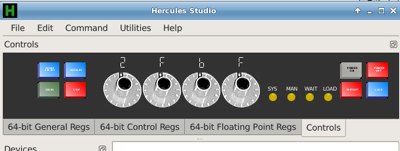
The Hercules System/370, ESA/390, and z/Architecture Emulator site has a lot of great information, including installation and configuration. But check your favorite Linux distro first, because it may already include Hercules. Debian and its descendants include it, including the herculesstudio graphical front-end. Fedora s390x is a nice bundle with a a good set of configuration files, such as an Ananconda installer configuration, a Hercules config, and boot files. I think openSUSE has the friendliest and best introduction to installing and running Hercules.
Remember your first experiences with Linux, the learning curve and how much time it took to become comfortable with it? It’s the same way with mainframes– they are significantly different from x86 servers, with a different vocabulary and different tools. But Linux on the mainframe is still Linux, so it’s not starting from scratch. Have fun, and everyone with any system Z or Hercules experience, please share some of your stories in the comments.