
The software maker has convinced another device maker using Android as an embedded OS to pay it patent royalties. [Read more]
Read more at CNET News
The DoudouLinux development team has announced the availability of the final test release before the upcoming DoudouLinux 2.0, a Debian-based distribution with software made for young children: “We are glad to announce the latest development release 2013-02. This release is the latest one before the next stable version…
You’ve got to give Microsoft credit for attempting a single OS that bridges PC, phone, and tablet users. What it ended up with, however, was a collection of pseudo-compatible platforms that have left the marketplace confused and largely unimpressed.
Few others have even tried a unified approach, except for the MeeGo project, which supported everything from netbooks to phones to automotive computers, but resulted in only a single Nokia N9 smartphone. The MeeGo-inspired Tizen project, which this week released a final version 2.0 (“Magnolia”), supports a similar variety of platforms, but, so far Tizen has been focused primarily on smartphones and in-vehicle infotainment (IVI).
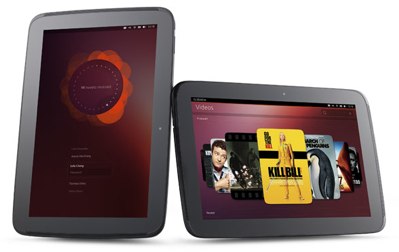 Now here comes Canonical to pick up the convergence gauntlet. The U.K.-based sponsor of the Ubuntu project has released a preview version of a new Ubuntu for Tablets interface in addition to the similar, previously promised Ubuntu for Phones. Both preview SDKs will support Google’s Android-based Nexus devices, and will enable developers to build simple apps that are cross-compatible and also work on desktop Ubuntu and Ubuntu TV, says Canonical.
More robust versions of Ubuntu for Tablets will likely be available for the Nexus 7 and Nexus 10 tablets by the end of the year. However, Ubuntu tablets won’t ship until the UI layer is folded into the fully unified Ubuntu 14.04 in the spring of 2014. Canonical expects to integrate a stable Ubuntu Phone with Ubuntu 13.10 (“Raring Ringtail”) this October, making it available for Nexus 4 and Nexus Phone users, prior to a native Ubuntu-based phone launch in 1Q 2014.
As demonstrated in a Canonical video demo released this week, Ubuntu for Tablets is notable for its Windows 8-like ability to run an unmodified Ubuntu for Phones application side by side with a tablet app using a “side stage” multitasking feature. In addition, users of future touch-enabled Ubuntu laptops will be able to switch easily between touch and keyboard/mouse control. Unlike with Windows 8, the interface remains much the same in either mode, claims Canonical.
As with Ubuntu for Phones, which was unveiled in early January, the stylish, button-free interface features edge gestures from all four sides of the device, resulting in a less cluttered screen environment. It also similarly supports both native and HTML5-based web apps. Other touted features include secure multiple accounts — a feature that Google only recently baked into Android 4.2 — and Canonical’s Heads-Up Display (HUD) voice interface.
Like Ubuntu for Phones, Ubuntu for Tablets is spec’d in low- and high-end versions. In either case, the top-tier profile supports Intel Atom processors in addition to ARM chips. Whereas both phone versions are designed for ARM Cortex-A9 chips, the tablet profiles both call for faster Cortex-A15 processors, using dual or quad cores, respectively. The higher-end quad-core version also supports screen sizes up to 20 inches, and is the only one promised with “full desktop convergence.”
With the great Ubuntu 14.04 unification of 2014, Ubuntu phones will be able to plug into Ubuntu notebooks, tablets, or Ubuntu TV devices for seamless scaling to the big screen, says Canonical. In addition, an Ubuntu phone user will be able to connect a keyboard or display to scale up to a desktop experience.
As PC sales tumble and embedded devices gain touchscreens and more intelligence, the idea of providing a single OS for phone, tablet, desktop, TV, and in some cases, automotive, operating systems is gaining interest. In the case of the new Ubuntu versions at least, unification offers conveniences to multi-screen users, including using the same UI, security functions, and user profiles. In theory, anyway, it should also speed updates.
As Microsoft’s early struggles have shown, however, making one size fits all is easier said than done. As long as data, including video, can move fairly seamlessly between platforms, an integrated solution may not be necessary.
Perhaps this is why Google has so far resisted calls to integrate Chrome OS and Android. Its first attempt at a tablet interface for Android was hazardous enough, involving a fork into a troubled, tablet-only Honeycomb build before the two sides finally come together in Ice Cream Sandwich. And the Android-based Google TV has yet to be fully integrated with mobile Android devices.
Apple has done better at providing a fairly seamless iOS experience across iPhones and iPads, but Apple TV has yet to be fully integrated, and the Mac has been kept largely separate. Meanwhile, attempts by RIM and Palm/HP to add tablet versions of BlackBerry and WebOS phone platforms, respectively did nothing to halt their decline, which in the case of WebOS has proven mortal.
The new open source Linux platforms, including potentially a reinvigorated Open WebOS, are not likely to have an easier time achieving convergence nirvana. Open source advantages like greater flexibility are countered by a lack of control over vendors and carriers.
Of the new wave of mobile Linux contenders, Canonical has demonstrated the greatest progress so far, but not without risk. For example, Ubuntu lost some long-time desktop users in the process of pushing the small screen-oriented Unity interface, which continues in the tablet and phone versions.
Perhaps learning from the scattershot MeeGo project, the other open source mobile projects are taking a more focused approach. Although Tizen is scoped for a variety of form-factors, Samsung smartphones are currently the main course. So far, Mozilla’s Firefox OS and Jolla’s MeeGo/Mer-based Sailfish have announced no firm plans beyond low-cost smartphones aimed at emerging markets.
All three of these projects have one thing Canonical lacks: partners. They have all announced manufacturers committed to the project, and in the case of Tizen and Mozilla, carriers as well.
In a conference call this week, Canonical founder Mark Shuttleworth said his company was working with an unnamed OEM partner on a low- and high-end version of Ubuntu for Phones. According to The Verge, he also said that that the phones might be branded and controlled to some degree by mobile providers.
This carrier-friendly approach, which is similar to that of Tizen, differs from Canonical’s original intent to push Ubuntu as a common brand. Yet Shuttleworth appears to be taking a fatalistic stance, saying, “It’s open source, so it’s possible for people to do grievous bodily harm to it.”