
 A Swedish credit card payments processor has received a four year jail term and has been fined $650,000. He is reported to have been part of an international crime ring which used scareware to extort $71 million from around 960,000 victims. In a press release, the US Department of Justice described people like the defendant as “the backbone of the cybercrime underworld” and stated that, as an established businessman, he had put a “stamp of legitimacy” on criminal activities. Techniques used to snare victims included fake web sites claiming to offer free anti-virus software…Read more at The H
openSUSE 12.3 Milestone 2 released
A month’s work since Milestone 1 shows that the new Release Team are hitting their stride, as they have reviewed and checked in more than 470 updated packages, far more than early milestones in previous releases.
Desktops and apps
The biggest update is in LibreOffice, which jumps from 3.5.4 to 3.6.3. This new version of the office suite fixes a lot of annoying bugs and improves DOCX compatibility. Also this release includes a lot of new functionality, like adding the Lanczos image algorithm for resizing, which reduces aliasing in resized images. In Calc, there are several new functions, like support for color scales and data bars in XLSX and ODS document formats. Please check the release notes for a full description of the main fixes and new features.
In a change to policy, KDE 4.10 Beta 2 has been added to Factory already. Usually only finished KDE releases are added, but…Read more at openSUSE News
Raspberry Pi Gets its Own App Store
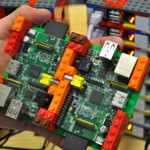 As we’ve reported on several occasions, the diminutive $25/$35 Linux computer dubbed Raspberry Pi is attracting developers and tinkerers, and showing up in multiple types of use cases. The tiny devices have already drawn interest from educational system and technology industry leaders, and there is even a supercomputer constructed with Lego pieces and multiple Raspberry Pi boards (part of which is shown here). Now, though, the Raspberry Pi has what could really make it relevant to a larger audience: it’s own app store.
The Pi Store can be accessed either directly through the Raspbian operating system or through a browser, and…Read more at Ostatic
Google Helps Bring More Ancient Texts Online: Book Deuteronomy, Genesis And More Offered In New Dead Sea Scrolls Digital Library

Continuing its work to help scan and preserve ancient texts, this morning, Google announced that it has been working with the Israel Antiquities Authority to bring a large collection of biblical manuscript fragments online, including the earliest known copies of the Book of Deuteronomy, which includes the Ten Commandments; part of Chapter 1 of the Book of Genesis, and hundreds more 2,000-year old texts focused on the life and teachings of Jesus.
The digitized collection is being hosted at the Leon Levy Dead Sea Scrolls Digital Library, which includes around 5,000 images of these ancient scroll fragments. The move follows Google’s efforts last September, when…Read more at TechCrunch
Author Gabriella Coleman Expands on Role of Linux in Hacker Culture
 Gabriella Coleman is the Wolfe Chair in Scientific and Technological Literacy at McGill University. She recently released a new book titled“Coding Freedom: The Ethics and Aesthetics of Hacking”after having spent three years working and living with hackers in the San Francisco Bay area. The community she chose to study was the Debian Linux community. In this interview with Linux.com, Coleman shares her perspective on the role of Linux in hacker culture and what it really means today to be a hacker.
You spent three years living in San Francisco and exploring the hacker culture. Wired reports that you studied the Debian Linux community in particular. Why did you choose this community? As you immersed yourself in the community, what surprises did you encounter?
Coleman: For the first few months in San Francisco, I scoped various projects including Apache, FreeBSD and Debian. I quickly came to see that these projects were so complex and sociologically rich (and of course fascinating) that I only had the mental bandwidth to really acquaint myself fully with one of the batch. Although it was difficult to choose, I settled on Debian for a handful of reasons, some quite pragmatic, others tied to my interest in ethics.
First with so many developers (it was then and still is now the largest project as measured by numbers of participants), it increased my chances I could talk to a large number of them. Many Debian developers are also involved in other free software projects, so it was a good way to learn more generally about other aspects of free software development. Its size was also significant for other reasons. I was interested in how Debian managed to scale and manage so many developers though policy and governance. Debian also intrigued me for having articulated so explicitly its commitments to free software and its users. I wanted to research how their ethical commitments were articulated in and beyond charters, and this became a key part of my research and writing.
What role do you think Linux has played in the hacker culture overall?
Coleman: First a bit of a caveat about hacker culture: when I started fieldwork, it was clear that while hackers tend to be a bit obsessive about computers, open source is just one part of what makes up this diverse culture.
That aside, Linux was truly game changing and in so many different ways. While by this time UNIX was already uniting hackers all over the world, as Chris Kelty has shown, Linux unleashed the full potential of the UNIX philosophy and showed the world how complex collaboration could arise organically, virtually and vibrantly. It was one of those “OMFG!” moments that really unleashed the full potential of collaboration. By this time networked hacking already existed, but as I note in my book, it helped to:
“usher in a new era of networked hacking, in which project leadership validates
its status as much through its ability to evaluate and coordinate contributions from
others as through the leaders’ own technical prowess. This mature form of networked
hacking differed in at least three respects from previous instances of hacker
collaboration: production was not affiliated solely with a single institution;
production occurred largely independent of market pressures and conditions;
and contributions, from previously unknown third parties, were encouraged
and, if deemed technically helpful, accepted. Through this experimentation,
hackers would ultimately produce software applications robust enough to
compete with proprietary software in the market, although few knew this
at the time.”
Linus Torvalds also injected a strong dose of pragmatism, working to open up up free software to a much greater pool of participants and thus expanded and strengthened a movement largely by way of practical, technical activity.
While the production of FOSS has political ramifications (whether or not someone hacks for political reasons), one does not need to pledge allegiance to a political vision to participate. It can accommodate those with distinct motivations and Linus’ style of leadership helped ensure this.
What did you take away from your experiences attending Linux User Groups in the Bay Area?
Coleman: “Hackers.” The minute the word is uttered to anyone who has never met one, they usually think some version of the following: “solitary, a-social, a bit warped, and really really smart.” By the time I started fieldwork, I thankfully had disabused myself of this stereotype and yet I was still taken aback at the sheer number of hours hackers did spend with each other, online and in person.
While one can happily hack alone, rather uninterested in the social dimensions of this world, my experiences at LUGs, as well as at hackercons and developer conferences, provided powerful and unmistakable evidence of the importance of in person interactions. The great majority of open source projects don’t necessarily require that developers meet regularly or even at all in person but they can benefit from it, especially as projects become larger.
During my second meeting at the Bay Area LUG it also really struck me just how much fun participants were having, really enjoying talking about the mundane and extraordinary details of technology. Joking was also so commonplace and was one pronounced marker of this shared pleasure.
Attending these meetings was really the moment that I came to see how making technology—so often seen as a solitary, rational activity—was full of life, was deeply pleasurable and emerged out of the context of a vibrant community.
Your book tries to answer the question: What does it mean to be a hacker? Can you tell us generally what you found as a response to this question, especially as it relates to Linux and open source software?
Coleman:To be a hacker can mean many different things and concerns an array of practices from open source to security research. But when it comes to open source and hacking, one of the most important lessons it has to teach us concerns what I in the book call productive autonomy.
To hack effectively requires the freedom to determine the shape, contour and direction of technological production. Freedom, in other words, is essential for quality. Sociologist Richard Sennet has has defined this drive in terms of “craftsmanship,” which is “an enduring, basic human impulse, the desire to do a job well for its own sake.” It is not always easy to put this ethic into practice and open source hackers have figured out how to do so, using the right mix of law, tools and project governance to make it happen.
What is also quite pertinent is that while hackers craft together, hackers balance effectively between individual desires and collective goals/needs quite well. Hackers work together all the time but if someone wants to do something differently or use a different license, by all means, one should do so. Collectivism and individualism are not mutually exclusively and hackers have managed to balance between these two drives quite productively.
You talk about the culture of computing hacking being very “deep.” Can you elaborate on this?
Coleman:The deepness of hacking can be seen in many different ways and places. I conducted many life history interviews and a great majority of hackers first learned how to program or tinker with a computer from a very young age, sometimes as young as three years old! By the time they reached their early twenties they were clearly already deep experts.
On the other hand, computing, networks, software and hardware are so complicated, so vast, so ever changing, one cannot know everything and no matter how deep one’s knowledge is, one must depend on the expertise of others to get anything done.
Aside from technical issues, deepness also refers to cultural values.
One of the core arguments in the book is that hacking fosters a deep, extensive and vibrant culture of civil liberties. Famed legal scholar Cass Sunstein has argued, I think persuasively, that a free society not only needs legal protections for free speech and privacy but a culture of civil liberties. Hackers are at the forefront of creating and sustaining a deep culture of civil liberties and in the book I look at the very making of this culture through the angle of protest and art, and even artful and poetic protest.
Aside from the culture of civil liberties, their own lore, history and jokes run fairly deep as well. Unlike the culture of civil liberties, which will be familiar to those outside of the world of hacking, this dimension of hacking will be foreign and unfamiliar to most. I tried in my book to capture some of this particularity largely by way of humor, but I found this to be the most challenging task of all.
You mention in the intro to the chapter on the legal environment that hackers have created a whole technological movement within legal. I find that inspiring and important. What do you think the cultural impact is on the world of copyright across industries?
Coleman: If one delves into the history of IP law, there has been from its start controversy over the existence, scope and implementation of copyrights and patents. Open source is part of this longer history of dissatisfaction with one crucial difference: FOSS hackers managed to hack up a legal and usable alternative with licenses and a clear philosophy that can be copied by others and has been, many times over and all over the world.
In this way, dissatisfaction has been channeled into living practice which has been the basis for others to follow suit. The copyright industries who steadfastly call for more restrictions and more power to prosecute those who violate these terms, must now contend not simply with opposition but with the much stronger fact that an alternative system in its place for others to use, learn from, and even modify. We are no longer faced with one rationalizing logic, one license and this in the end, is a win!
Canonical Updates Ubuntu One Photos
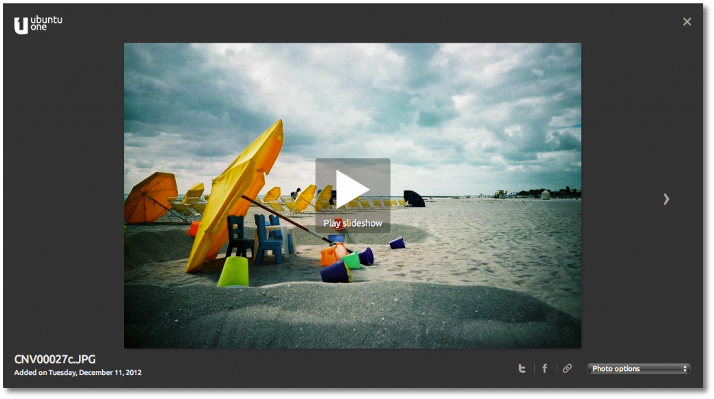 Canonical announced a few days ago that they have updated the online ‘Photos’ feature of they’re Ubuntu One cloud storage service.
The update brings a dedicated tab for the Photos function, which is located on the Ubuntu One dashboard, giving users a proper album view that includes all their saved photos via Ubuntu One or Instagram.
With the new dedicated Photos tab, users will be able to enjoy and share all those treasured memories on all their mobile devices, and between their friends and family, of course.
“We’re thrilled that our latest Ubuntu One feature update comes just in time for the holidays…Read more at Softpedia
30 Linux Kernel Developers in 30 Weeks: Chris Mason
As we narrow in on the final weeks of our 30 Linux Kernel Developers in 30 Weeks series, we talk to Linux kernel developer and Btrfs maintainer Chris Mason. Chris details his desktop and productivity tools, his favorite all-time flame war and shares his advice for getting involved in kernel development.
 Name
Name
Chris Mason
What role do you play in the community and/or what subsystem(s) do you work on?
I maintain the Btrfs filesystem and most of my work is inside the filesystems or other code in the IO paths.
Where do you get your paycheck?
What part of the world do you live in? Why there?
I live in Rochester NY. It’s where I went to college, and working on Linux meant that I never really had to move.
What are your favorite productivity tools for software development? What do you run on your desktop?
I use Arch Linux, mostly because the rolling update model is perfect for working against mainline. I use awesome for a window manager instead of any desktop environment. It’s a slick way to manage tons of windows.
My development tools are pretty basic, just vi and make. For navigating kernel code, I haven’t found anything better than cscope, but I keep hoping someone will integrate a live updating cscope style database into vi.
I’m using mutt for email, but I’ve tried all the gui programs at one time or another. They all have advantages, but the mutt-kz integration of notmuch is turning into a really nice way to index and work with email.
Git is a big part of kernel productivity, and you can’t understate how much git and the kernel workflow have been designed around each other. Every once and while, I end up coaching someone new to git and I realize again how complex all the moving pieces are.
For filesystem analysis, I wrote a tool called seekwatcher. It uses traces from blktrace to visualize what is happening on the disk, making it much easier to track down performance problems.
I recently reimplemented things in C instead of python and made a new tool called iowatcher, where I hope to add all kinds of features to watch what happens on flash devices.
How did you get involved in Linux kernel development?
It wasn’t kernel development, but in 1994 I started helping with the driver for an unsupported graphics card. It was great to get my hardware working, and I still have the distro CDs SUSE sent out back then to reward contributors.
A few years later I was a systems administrator, and I wanted to use Linux in our data center. At the time, Linux didn’t have a journaled filesystem and I couldn’t use Linux in production without one. I’d never worked on storage or the kernel before, so it was a little rough while I figured everything out.
But it was one of those features that everyone wanted, and I had a lot of encouragement and help along the way. Soon after that, I was working full time on the kernel.
What keeps you interested in it?
I’m able to interact directly with the users, which means I get instant feedback on new features and fixes. Going to conferences, I always meet new people using or working on Linux. It’s a great source of new ideas and motivation to keep improving things.
Linux is used in so many different ways that it really is impossible to be bored.
What’s the most amused you’ve ever been by the collaborative development process (flame war, silly code submission, amazing accomplishment)?
The flame wars must seem crazy from the outside, but sometimes they are an important part of fixing things. After a long argument about how easily you could trigger corruptions during power failures, I sat down and made a test. The results surprised many of us, and I still run the same test years later. I probably wouldn’t have spent the time on the test if not for the extra motivation of winning the argument.
My favorite is definitely the O_PONIES flame war. Someone even made a t-shirt in honor of that one. I’m sure I couldn’t do it justice describing it here, but it is a great example of how the compromises we make as developers can create impossible expectations later on.
What’s your advice for developers who want to get involved?
My first suggestion is to pick a project you enjoy using. The kernel has a steep learning curve, and it can be difficult to work your way into a development group. If you enjoy what you’re doing, you are much more likely to stick with it.
After that, fixing bugs is the fastest way to get to know the code. Pick something that you can trigger reliably, and it’ll be much easier to track down. Then do it over and over again until you know the code well enough to review patches from others. By then you’ll know the community well and you can branch out into almost anything.
What do you listen to when you code?
Usually I like the room quiet.
What mailing list or IRC channel will people find you hanging out at? What conference(s)?
There is #btrfs on freenode. For conferences, the Linux Filesystem, Storage and MM Summit each spring is always full of interesting topics. The Linux Foundation consistently does a great job on all of its conferences, and I try to attend them whenever they fit in my schedule.