Microsoft earlier this week made a point of noting that there have been 40 million downloads of Windows 8 since it launched a month ago, putting it ahead of where Windows 7 was at the same point in its sales cycle. But according to figures out today from NPD, in the midst of an overall slowdown in PC sales, this is not translating into robust hardware sales in the influential U.S. market.
U.S. sales of Windows devices in the last month are down by 21% compared to the same period a year ago, with Windows-powered notebooks — generally in decline since the rise of tablets and smartphones — down by 24%. Desktop devices were down, too, but less, at 9%.
It’s been less than half a year since Eucalyptus rolled out version 3.1 of its open cloud platform, but on Monday a brand-new Eucalyptus 3.2 made its official debut.
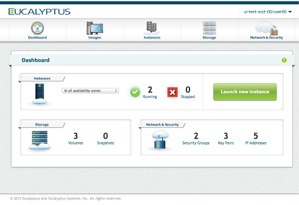
Included in the new release are a graphical cloud user console, extended Amazon Web Services (AWS) compatibility, new management capabilities, and a hardened node controller.
“Eucalyptus 3.2 delivers a highly reliable and robust private and hybrid cloud solution that empowers both enterprises and the open source community to confidently deploy applications and drive innovation in the cloud,” said Marten Mickos, CEO of Eucalyptus, in the official announcement.
Linux.com had an opportunity recently to speak with Andy Knosp, the company’s vice president of product, about the new release.
Self-Service Provisioning
“Really the anchor feature of this release, which points to greater ease of use, is the new Web-based console,” Knosp told Linux.com.
The console provides a Web-based graphical user interface that enables self-service provisioning of compute, network, and storage resources for cloud users, Knosp explained.
With it, users can perform self-service operations including the provisioning of instances, keypair and password creation, Elastic Block Store (EBS) volume and snapshot operations, image catalog listing and registration, user group operations, and elastic IP operations, for example.
Expanded Storage Options
Also new in Eucalyptus 3.2 are expanded storage options through two new adaptors. The new JBOD Storage Adaptor, for example, overlays EBS functionality on top of raw block devices and JBODs, and provides full support of AWS EBS API operations, Knosp said.
The EMC VNX SAN Storage Adaptor, meanwhile, provides expanded SAN support for EMC VNX Series SANs for EBS storage, including high availability for the Eucalyptus Storage Controller, advanced VNX snapshot support, and multi-pathing support for greater redundancy.
Then there are new reporting features designed to give cloud administrators better insight into cloud usage. Using these new tools, administrators can report on cloud compute, storage, and memory usage at the user, group, and cloud level, for example, and generate and export reports via the graphical user interface, API, or command line.
“We’re definitely working toward making the experience around cloud administration easier,” Knosp said. “We want to make it easier to identify faults and issues and to simplify the administration of Eucalyptus clouds.”
A Hardened Node Controller
Perhaps most of all, however, Knosp pointed to a companywide emphasis on building a solution that’s consistently production-ready.
Eucalyptus 3.2, for example, has been “tested at length,” he said, and introduces a
hardened node controller that further increases cloud reliability.“Our goal is to be the most tested and stable open source platform on the market.”
Eucalyptus 3.2 will be available next month. Looking ahead, the next Eucalyptus release is now planned for April 2013. Visible in that next iteration will be an increased focus on adding AWS services like elastic load balancing, autoscaling, and other app-level services, Knosp said, as well as further expanded infrastructure options for deploying Eucalyptus.
One thing that won’t change, however, is the company’s commitment to the open source approach. Simply put, “we think this is fundamentally the best way to build software,” Knosp concluded.
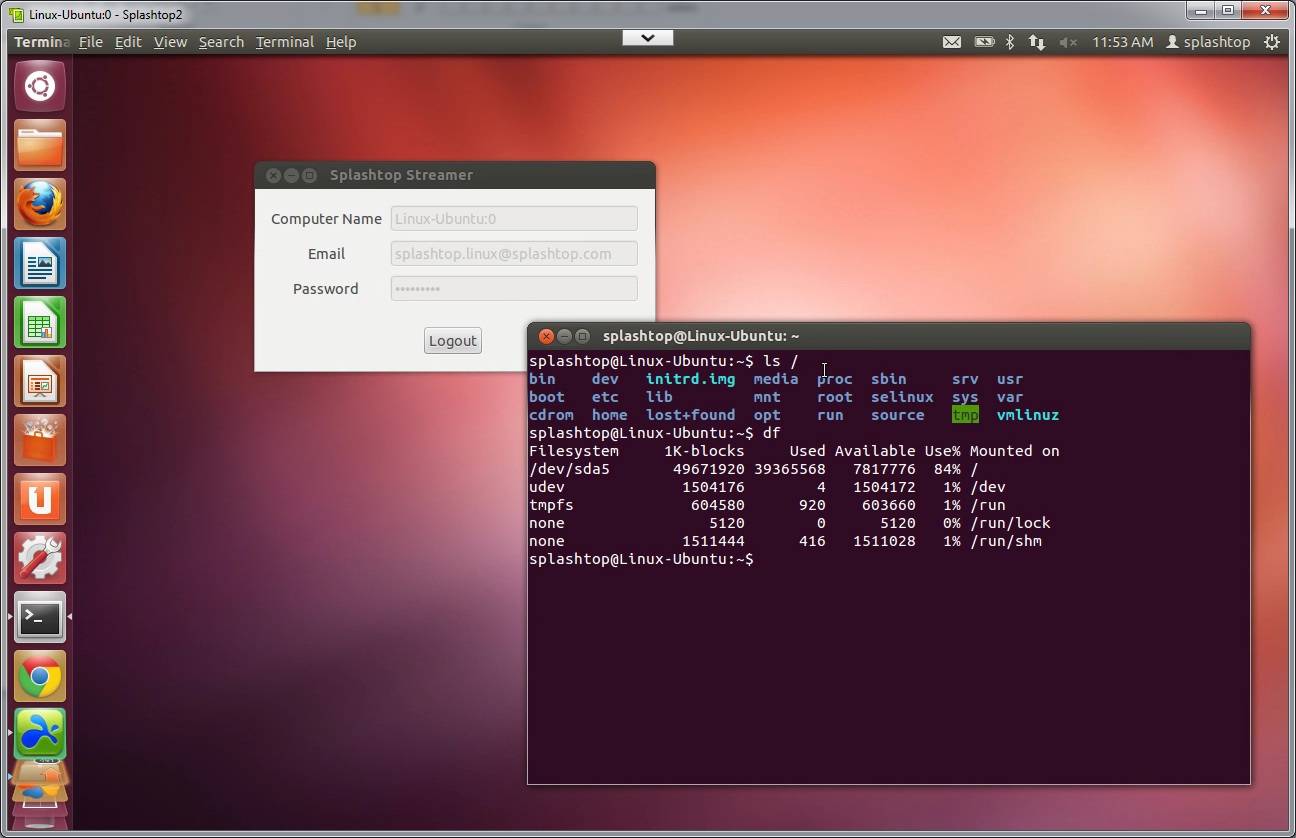
Splashtop today is releasing remote desktop Streamer software for Ubuntu Linux. We’ve been following this company (aka DeviceVM) for a few years and are excited about its evolution and what it’s bringing to Linux users. We share here a Q&A we were able to do with Splashtop CEO Mark Lee about today’s news. It includes a sneak preview for Linux users of what’s coming next.
Congratulations on today’s launch of Splashtop remote desktop Streamer software for Ubuntu Linux. What does this release mean for Linux users?
Lee: First, Linux users will now have a high-performance remote access solution that’s 10X faster than traditional VNC. Splashtop is known for supporting a high video frame rate and low latency – up to 30 frames per second, and under 30 milliseconds – so the user gets a truly amazing experience when viewing high definition video and even playing interactive games. Second, the Splashtop protocol is highly optimized for WAN where the streaming bit rate is dynamically adjusted based on available bandwidth, so anywhere you go you can enjoy the best possible experience while remotely accessing your Linux computer. Third, Splashtop seamlessly traverses the firewall using the SSL security protocol; there is no need for port forwarding or SSH tunneling. Finally, Splashtop offers a consistent remote access app across Android, iOS, Windows and Mac devices.
Linux gamers should enjoy many benefits from this release. Given the latest moves from Valve and the maturing Linux desktop, what’s your forecast for Linux gaming and how can Splashtop have an impact here?
Lee: We are excited to see Valve’s Linux support. With Splashtop, Linux gamers can now redirect their favorite Valve games to their mobile devices anywhere they go. Soon, we will also redirect games to TVs as cross-screen redirection is where Splashtop is heading. Splashtop’s success is largely driven from its unique performance advantage, so we invest in optimizing for the latest hardware. In the process, we push all major silicon vendors to have robust, best-in-class Linux support.
We are very excited about the future of Linux gaming, especially around Android. Android is built on Linux, and more and more GPU cores are being added into mobile chips at an unprecedented pace. The projection is that within a few years, mobile chips will deliver a better gaming experience than game consoles. In 2013, Splashtop will be able to redirect Android gaming to TV screens – part of Splashtop’s any-screen to any-screen, cross-device computing push.
Can you tell us more about your partnership with Ubuntu, especially as it relates to today’s announcement?
Lee: Many Ubuntu users have contacted us asking for a Linux version of Splashtop Streamer. We are excited to bring Splashtop Streamer support to millions of Ubuntu users now, via the Ubuntu Software Center. Besides Ubuntu Desktop users, Splashtop is optimized and ready for Ubuntu Servers, as well the Ubuntu Cloud Infrastructure. Splashtop becomes a powerful alternative to VNC, delivering high performance remote access for users, remote management for IT, and remote app and data delivery for service providers.
The Linux desktop is an interesting discussion topic that varies based on how the desktop is defined. How does Splashtop define today’s desktop and how is that impacting the larger PC market?
Lee: The role of the “desktop” has continued to evolve quickly in the past few years.
Six years ago, Splashtop (aka DeviceVM) invented an instant-on HTML5 Linux OS that boots up in less than 5 seconds. Splashtop’s instant-on OS has shipped on over 100 million PCs from HP, Lenovo, Dell, Sony, Asus, Acer, and others. Effectively, Splashtop’s instant-on Linux-based browser OS has become the largest Linux distribution, and millions of users have been using the instant-on browser OS without knowing it’s Linux underneath.
Three years ago, with the emergence of smartphones and tablets, we realized that the “desktop” was also becoming a “server.” Users want to go everywhere with their mobile devices and want to have access to all their favorite apps and data on their computers. Splashtop turns every desktop into a personal cloud, delivering applications and data to any device, anytime, anywhere. With Splashtop, people are effectively carrying their desktops in their pocket. Splashtop now has over 11 million mobile users accessing their desktops as their own personal clouds today, and now we are excited to turn the Ubuntu desktop into a personal cloud as well.
We believe the future “desktop” is closely integrated with the cloud. Users shouldn’t really care what device they are using, and yet have full access to all types of apps, content, and data, anytime, anywhere. The user experience metaphor could be desktop-centric, app-centric, data-centric, search-centric, or others. Splashtop is positioning itself to be the leader in cross-device computing, bridging across PCs, mobile devices, TVs, and the cloud.
What’s next for Splashtop as we look ahead to a new year?
Lee: Splashtop is always innovating and delivering value and excitement to our users, both individual consumers and businesses. Tens of millions of mobile users are enjoying Splashtop, and they are now taking Splashtop into the workplace. The bring-your-own-device (BYOD) trend is accelerating, and businesses want to mobilize their workforce. Splashtop for Business is the fastest, simplest, and most secure way to “tabletize” businesses. As we head into a new year, our goal is to bring more and more exciting capabilities and value to consumers and businesses, enabling them to take advantage of mobility and the cloud.
In connection with your current product release, I hear that you have a treat to share with us today…
Lee: Yes, I’d like to give Linux fans a sneak preview of an upcoming Splashtop 1-to-many streaming technology that enables a Linux PC to stream 10+ concurrent Ubuntu desktop sessions to mobile devices. Check out this video for your preview.
It’s time yet again for another Enlightenment E17 Alpha release. It’s only been four days since E17 Alpha 5 but there is now already E17 Alpha 6 with a huge number of changes…
As we’ve noted before, Canonical and giant PC maker Dell Computer have already found new horizons for Ubuntu in China in India. And, Dell deserves praise for being one of the few big hardware makers to offer Linux options on its computers over the years. Now, as Canonical employee Rick Spencer reports in a blog post, on Cyber Monday, Dell was listing the very same Vostro notebook for $369 with Windows 7 pre-loaded versus $299 for it with Ubuntu pre-loaded. The real news here is that you can actually get a solid portable computer with Ubuntu or any Linux distro pre-loaded for much less than $299.
For those that don’t closely follow the Mesa Git repository, there’s finally a few more “RadeonSI” Gallium3D driver fixes that arrived this morning for slowly but surely bringing up the AMD Radeon HD 7000 series 3D support.
It was a Battle Royale at SC12 recently as the two leading accelertor vendors rolled out new products. Over at The Inquirer, Lawrence Latif writes that Nvidia is claiming that Intel’s entry into the HPC GPGPU market validates the use of accelerators and increases the market for its own Tesla GPUs.
Sumit Gupta, GM of Nvidia’s HPC business unit sees Intel’s entrance as an opportunity to capitalise on a big brand validating accelerator based HPC computing. Gupta said, “We are delighted to have Intel in the market. If you think about it, until a year ago Nvidia was the only company trying to convince everybody to move to this accelerated way of computing and it’s a hurdle. If you have the leading company there, Intel, telling everyone ‘no no no, CPUs are going to get better’, it is much harder to keep growing the market. Now Intel is telling everyone the same thing, […] they are basically saying you have to use an accelerator and obviously they will promote their accelerator.”
A hacker called [Sprite_tm] AKA Jeroen Domburg built his own teeny, tiny Raspberry Pi-based MAME cabinet using some laser-cut plexiglass, some custom controls, and a eeny, weenie 2.4-inch TFT display. The best part? The cabinet even has a small OLED marquee at the top that shows the current game in play.
The instructions are pretty hardcore and involves tweaking jumpers in order to make the TFT talk to the Rasberry Pi’s onboard graphics chip. While he could have just run a fat HDMI cable out of the thing, it’s impressive that he went out of his way to reduce nearly everything to microscopic size.
FocusWriter uses an intriguing concept that makes you wonder why other word-processing tools do not offer the same hide-away tools panels to eliminate distractions. It offers a set of writing tools with the ease and speed of unencumbered text editors. Focuswriter is a full-screen writing program. It has no option to resize or minimize. Its user interface lacks the traditional windows-control icons to minimize, maximize or close the window. This may require some personal workflow adjustments if you multitask or use numerous virtual workspaces on the Linux desktop.

 “Eucalyptus 3.2 delivers a highly reliable and robust private and hybrid cloud solution that empowers both enterprises and the open source community to confidently deploy applications and drive innovation in the cloud,” said Marten Mickos, CEO of Eucalyptus, in the official announcement.
  Splashtop today is releasing remote desktop Streamer software for Ubuntu Linux. We’ve been following this company (aka DeviceVM) for a few years and are excited about its evolution and what it’s bringing to Linux users. We share here a Q&A we were able to do with Splashtop CEO Mark Lee about today’s news. It includes a sneak preview for Linux users of what’s coming next.
 As we’ve noted before, Canonical and giant PC maker Dell Computer

