

In the last couple of weeks we’ve seen the announcement or release of a number of new products: the iPad Mini, an updated version of the full-size iPad, and Microsoft’s Windows 8 and Surface tablet.
Read more at OpenSource.com
In the last couple of weeks we’ve seen the announcement or release of a number of new products: the iPad Mini, an updated version of the full-size iPad, and Microsoft’s Windows 8 and Surface tablet.
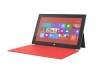
Microsoft CEO Steve Ballmer has told a French newspaper that sales of Redmond’s shiny new Windows 8 tablet PC, Surface, have gotten off to a modest start. Talking to French daily Le Parisien, published on Saturday, Ballmer is quoted as saying Surface sales “are starting modestly” but would not provide exact sales figures.
Ballmer reportedly put modest sales down to the slate only being available to buy online and in a few Microsoft stores in the U.S. We’ve reached out to Microsoft for more and will update with any response. Update: Microsoft said it has no further comment at this time.
Today SGI announced their latest installation an ICE X supercomputer at the Japan’s Central Research Institute of Electric Power Industry (CRIEPI). With a peak performance of 670.9 teraflops, the cluster system will be one of the fastet supercomputers in Japan.
The system is a large scale-out cluster system consisting of 4,032 Intel Xeon E5-2670 processors (equivalent to 32,256 cores) with a total memory capacity of 67.5 terabytes. A high-speed InfiniBand 4x FDR provides interconnection to blade servers with 2,016 nodes (at two processors per node). Storage is provided by a massive 2.88 petabytes of total disk capacity in a Lustre file system. A water cooling system is used to avoid the need for additional air conditioning, reducing overall power consumption.
Read the Full Story.
Related posts:
Tony Atkinson’s technical expertise runs deep as a Linux systems administrator for a telecommunications company in Essex, England. He works with the Asterisk PBX (private branch exchange) and communications server and Nagios notification system, writing and maintaining bespoke PHP and shell scripts to control and coordinate phone and SMS services and other general operations in the U.K., U.S.A. and Australia.
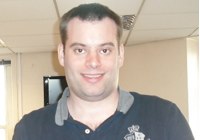 “I recently started a long-term project to consolidate our existing servers (some 30 physical machines), replacing them with highly-available virtual machines running on six physical hosts via the KVM hypervisor,” Atkinson said via email.
But he confesses to be a bit of a luddite when it comes to smartphones and tablets. It’s a contradiction that sometimes confuses his friends and family who often rely on him for technical support, he says.
“I am quite content with using my 6-year-old Samsung D900 mobile phone,” he said. “I have no doubt I’ll be drawn in sooner or later, at which point I’ll probably opt for Android, or Tizen if it becomes viable.”
He prefers to spend his free time creating media projects with free and open source software. He’s dabbled with audio production under Linux using Ardour, the Hydrogen drum machine and Audacity. More recently he’s experimented with CGI animation, inspired by Sintel and Tears of Steel from the Blender Foundation, he said.
“I tend to use Linux for everything,” Atkinson said. “All my personal machines run some distribution of Linux, with Gentoo on my main machine and Debian on my personal fileserver the most used. But there’s also Ubuntu and Fedora in the mix (used on my DVR and netbook respectively).”
His devotion to free software is a habit he picked up in senior school (age 11+) from one of his friends who had a relative involved in the GNU project, though he didn’t learn about Linux until 1998.
“I got my hands on DemoLinux (one of the first LiveCD distributions), but my first Linux install was in 1999 with Corel Linux,” he said. “I used Corel Linux for some time before moving up to Debian in the early 2000’s.”
These days he finds the most interesting Linux innovations happening with ad-hoc mesh networks, such as the B.A.T.M.A.N. (Better Approach to Mobile Ad-Hoc Networking) routing protocol.
“The next globally disruptive shift in communications will be made possible by the use of such mesh networking infrastructures,” Atkinson said. “And I’m looking forward to how the technology progresses over the next few years.”
As a new individual member of The Linux Foundation, Atkinson is also looking forward to taking advantage of discounts on O’Reilly books and the Linux Journal. Welcome to The Linux Foundation, Tony!
Are you interested in joining The Linux Foundation? Get more information and sign up at http://www.linuxfoundation.org/about/join