

By design, MP3 players are very modern looking devices, but if you’d like a little more retro flair, electronics blog Arduino Guay shows how to build a great looking MP3 player with an Arduino and a few spare parts. More »
Read more at Lifehacker
By design, MP3 players are very modern looking devices, but if you’d like a little more retro flair, electronics blog Arduino Guay shows how to build a great looking MP3 player with an Arduino and a few spare parts. More »

After just under three months of development, Google’s wrapped up its experimental work on bringing the Sony Xperia S into the Android Open Source Project fold. According to Sony, AOSP Technical Lead Jean-Baptiste Quéru considers the effort a success, but the device is being taken off the project’s roadmap so Mountain View can focus on its own hardware. Currently, an AOSP build boots on the Xperia S hardware with support for SD-Cards, Wi-Fi and its built-in sensors. Audio and the phone’s modem are also operational, but they require proprietary binaries Hirai and Co. can’t publish just yet. Work on polishing the handset’s vanilla Android experience isn’t over, however. Sony has moved the code to its GitHub account and is welcoming developers to pitch in and help with the open source effort. For more details and to see what code has already been laid down, tap the second source link or check out the video of the smartphone in action below.
Filed under: Cellphones, Mobile, Sony, Google
Google kicks Xperia S Android Open Source Project out of its nest, Sony takes it under its wing (video) originally appeared on Engadget on Fri, 09 Nov 2012 06:01:00 EDT. Please see our terms for use of feeds.
Permalink  Android Central |
  Sony Developer World, Sony (GitHub) | Email this | Comments
CloudStack has released its first new code since becoming an Apache incubator project in April, according to top open source cloud headlines this week. Also new this week, Eucalyptus will soon have a new release to compare with its open source competitors; Microsoft needs an open cloud strategy; the open cloud is built on Linux; and Netflix releases an open source tool for monitoring AWS deployments.
 CloudStack Thrives Under Apache, Adds Amazon Web Services Support
InfoWorld
The open source cloud platform this week released its first new version as an Apache incubator project. New features include Amazon Web Services integration, inter-VLAN routing and local storage support.
Eucalyptus Won’t Be Left Behind In Network Virtualization
Information Week
The next version of the open source Eucalyptus cloud is expected to come in early December. It will join OpenStack and CloudStack in adding network virtualization features.
Microsoft Needs to Step Up Its Cloud Game
InfoWorld
David Linthicum writes that Microsoft needs to stop its “WAID (Whatever Amazon Is Doing)” approach and adopt open standards in order to be truly innovative in cloud computing.
The Cloud Made of Penguins: Open Source Goes ‘Industrial Scale’
The Register
The commercial cloud is based on Linux and its increasingly open source, according to a joint IDC and Linux Foundation report released in full at LinuxCon Europe on Monday.
Netflix Open Sources Dynamic Query Goodness for Amazon Cloud
GigaOM
The Netflix tool, called Edda, helps engineers monitor their AWS cloud deployments.
Apple recently completed its trio of 2012 mobile launches, adding a 7.9-inch iPad Mini along with its iPad 4 and iPhone 5 upgrades. Meanwhile, Nokia and Microsoft should edge back into the game with an impressive Nokia Lumia 920 phone, as well as Microsoft’s similarly Windows 8 powered “Surface” tablets.
 The combination of the iOS announcements, Apple’s legal victory over Samsung, and the Windows 8 launch are expected by many to start reversing Android’s long-running advance. Yet as the holiday shopping season nears, Google and its Android partners have good reason to cheer.
First, Android’s base continues to grow, recently passing the 75 percent milestone in global smartphone shipments and cutting deeply into Apple’s tablet share, according to IDC. At the same time, the iPad Mini does not appear to be the Kindle Fire killer many had expected, especially considering the high $330 price.
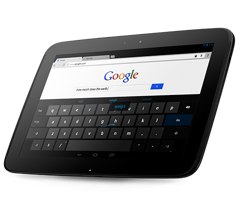
In addition, Google has addressed its Achilles Heel — security — with major enhancements in Android 4.2. The release runs on two impressive Google-branded Nexus devices: LG’s affordable Nexus 4 phone and Samsung’s speedy, high-resolution Nexus 10.
Here’s a closer look at why team Android can expect continued good tidings for the holidays:
Although iPhone users are often surprisingly unaware of it, Android has been dominant in smartphones for years. Now, according to IDC, three out of four new smartphones run Android. Android has surpassed the 75 percent mark in 3Q global smartphone shipments, up from 57.5 percent the year before, says IDC. Apple’s share also soared, reaching 14.9 percent, but at a slower 57.3 percent growth rate.
In addition, an Oct. 30 survey from Strategy Analytics reports that 88 percent of iPhone owners in the U.S. say they are likely to buy their next phone from Apple, down from 93 percent in 2011. In Western Europe the rate dropped from 88 percent to 75 percent.
As long as Apple avoids product licensing or spins out some lower-end models, it’s doomed to grow relatively slowly. By contrast, by offering diversity and range in both price and features, Android has siphoned off RIM, Symbian, and Microsoft share at a much higher rate than Apple. It should continue to do so, except for Microsoft, which will likely start reversing its falling tide.
The iPad has been so far ahead of Android tablets that Apple could compete on the low end simply by discounting older iPads. That strategy looks to be in peril, having already been tested last year by Amazon’s low-cost Kindle Fire. Indeed, affordable but powerful 7-inch tablets like the Fire HD and Nexus 7 are leading the Android charge on tablets while Samsung is thriving with a range of tablets.
According to a Nov. 5 report from IDC, global shipments of Android tablets surged in the third quarter as Apple’s iPad share dropped from 59.7 percent to 50.4 percent year over year. No cumulative figure was cited for Android, but considering that RIM’s PlayBook has slid sharply and Windows 8 tablets are only now appearing, it’s likely to be well over 40 percent.
Continuing the trend set by Amazon when it upended the tablet market with the Kindle Fire, the online retailer took 9 percent of the market, boosted by the September release of the Kindle Fire HD. Asus surged to 8.6 percent, based in large part on the success of its Google-branded Nexus 7.
Yet Samsung was the biggest winner, jumping 325 percent to a second-place, 18.4 percent share, based on tablets ranging from the Galaxy Note to the Galaxy Tab 10.1. Samsung has yet to aggressively target the low-end tablet market, suggesting that Android can now win on the high end as well.
Apple’s new iOS products are faster, but otherwise relatively unremarkable. To be sure, spinning off a smaller 7.9-inch iPad Mini tablet was notable, but by pricing it at $330 (16GB) to $550, Apple missed an opportunity to squelch the Fire HD and Nexus 7, which sell for $200 to $250.
People expect iPads to cost more, but $329 seems steep for a device with lower 1024 x 768 resolution and an older A5 processor instead of the faster A6 chip in the iPad 4 and iPhone 5. The well-designed Mini should do well, but it may cut into iPad 4 sales as much as it affects Android tablets.
Aside from being faster, the 9.7-inch iPad 4 hasn’t added much. Considering its pre-existing Retina display — and its much greater selection of tablet-optimized apps than Android — it remains a good value. Yet, iPads are expected to lead, not follow.
The iPhone 5 offers more improvements, including a larger screen and slimmer design, but several Android phones provide better resolution. All told, Apple’s 2012 line is business as usual, giving Android and Microsoft a chance to make gains.
With last week’s announcement of Android 4.2 (see below), Google advanced its pure Android vision with two impressive new Nexus models. LG’s Nexus 4 phone is no game changer, but at a starting price of only $299, unlocked, it brings the skin-free Nexus concept to a whole new audience.
Google’s Samsung-built Nexus 10, however, pushes the tablet market forward on many different levels. It leads the field with its 2560 x 1600 resolution, debuts the speedy, dual-core Cortex-A15 processor, and features a 9000mAH battery that lasts for over a day. Starting at a reasonable $399, the Nexus 10 is clearly the 10.1-inch tablet to beat.
By spreading the Nexus love to two manufacturers simultaneously — neither of them Motorola — Google continues to assuage Android vendors and quiet critics warning of Google over-reach. This could blunt the Android vendors’ experiments with Windows 8 devices, and diminish a potential migration to new Linux-based contenders like Tizen and Firefox OS.
Android 4.2 is a modest upgrade, maintaining the same “Jelly Bean” moniker as the more significant Android 4.1. Yet, it also confronts one of Android’s biggest shortcomings: shoddy security.
Google added greatly improved ASLR randomization features in Android 4.1, but Android 4.2 offers an even more significant security upgrade with its real-time app scanner. This is essentially a native version of the malware-scanning service added to the Google Play store in February. It scans new apps for malware even when you download them from third-party stores or “sideload” them from an SD card. The opt-in service flags potentially invasive programs and prohibits the loading of serious malware. In short, it gives enterprise IT managers an extra level of comfort when judging Android security.
Other Android 4.2 enhancements include camera improvements like 360-degree photos (Photo Sphere), keyboard gesture enhancements, multi-user profiles for tablets, and Google Now updates. These changes should add to appeal of the Nexus 4 and Nexus 10. Apple will no doubt get its holiday bump, but Android is strong and getting stronger.