
7-inch Android slates and Microsoft Windows RT and Windows 8 models will dominate the non-iPad tablet market, according to supply chain manufacturers.
Read more at Enterprise Open Source Toolkit
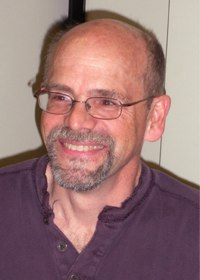
Stephen Hemminger is a Linux kernel developer who specializes in networking and maintains the bridging and iproute2 utilities. In this Q&A, part of the ongoing 30 Linux Kernel Developers in 30 Weeks series, he shares one of his favorite moments in kernel development: when a relatively small project leads to big opportunities.
 Name
Name
Stephen Hemminger
What role do you play in the community and/or what subsystem(s) do you work on?
I am one of the contributors to the networking subsystem. My contributions have been all across the map from writing new device drivers and fixing bugs to integrating contributions from research projects. As a side effect of these project efforts, I also maintain the bridging and iproute2 utilities.
Where do you get your paycheck?
I work for Vyatta which is a Linux distribution specialized for networking. Because we are a small company, I end up playing lots of roles including kernel maintainer and performance engineer. It has provided me with the excuse to learn about Perl, routing protocols and Debian.
What part of the world do you live in? Why there?
Although I grew up on the East Coast, we moved to Portland, Oregon many years ago so I could work on Unix workstations at Tektronix. That didn’t last very long, but the opportunities here have allowed me to work for both big companies and several startups.
What are your favorite productivity tools for software development? What do you run on your desktop?
The most productive tool right now is KVM. It lets me spin up a new machine (or even a whole network) with a minimum of fuss. I still spend way too much time moving hardware and cables around, but now it’s much less than just a few years ago.
Since Vyatta is Debian based, it is easiest to just run Debian on the desktop. My secret addiction is upgrading all of the time. Maybe it is because of my the optimistic belief that the world will always get better, but as a result I end up testing (and trying to fix) new releases all the time.
How did you get involved in Linux kernel development?
When I started at OSDL, I was hired as manager of the Data Center Linux initiative. DCL was a project in search of a problem, since Linux was already suceeding without any additional marketing or technical efforts. This was during the middle of the 2.5 development cycle when many things were changing all at once. Pat Mochel was working on sysfs, and I went ahead and implemented it for network devices.
The next turning point was when Linus asked “Can we get rid of the brlock?”; which led me to changing all the network protocol. Then David wanted to fix network device startup which meant changing every network device driver. These are examples of where Linux developers have no fear of doing refactoring that other projects refuse to do.
What keeps you interested in it?
On the technical level, I love being able to keep up-to-date and implement new hardware and protocols. My list of projects (like the stuff in my garage) keeps growing. More importantly, the community is very supportive and active. Being able to work with people all around the world is great.
What’s the most amused you’ve ever been by the collaborative development process (flame war, silly code submission, amazing accomplishment)?
What amazes me the most is how much traction relatively small projects can get. I did some refactoring to isolate the TCP congestion control (the part of TCP that decides how much to send at once). Each module was changing the same places in the kernel, and at the suggestion of another developer, I added a virtual function interface. This had the side effect of adding even more TCP congestion control modules. It led me to work with researchers at several universities, including a one-month sabbatical at Hamilton Institute in Ireland.
The same interface was integrated into other projects. It was ported into the network simulator used during the research process. This let students try out algorithms in a simulator without writing any kernel code. Then the BSD developers copied the same idea.
What’s your advice for developers who want to get involved?
Although Linux looks like a huge monolithic community, it is actually partitioned into many small groups. Get involved and read the
mailing lists for the areas where you have some expertise.
For a first project, choose something that you can test fairly easily. I.e don’t tackle something huge like scheduling or TCP algorithms. Don’t get discouraged easily; keep trying and learn from your mistakes.
What do you listen to when you code?
My old Nexus phone has been repurposed as an Internet radio. My music tastes vary from alternative, swing music, Celtic music
and even J Pop. My current favorite is a station from Australian Triple J because it fun to listen to and has no advertising or
maybe I can’t help think about LCA. The phone works great for podcasts, too. One standout is the networking operations podcast “Packet Pushers“.
What mailing list or IRC channel will people find you hanging out at? What conference(s)?
I used to hang out on IRC a lot, but it was too distracting. Now I stick to netdev and other project mailing lists. Linux Plumber’s was
the best conference (most technical) over the last couple of years. Japan has always been great; I got to meet the Vyatta users
group last year.
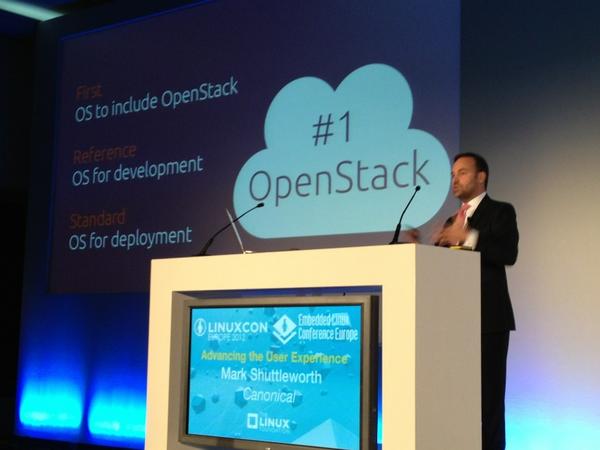
The days of smart people working alone are over. As we head toward the future of computing, we must focus on collaboration, communication, and integration at the operational level, not just the tech level. This was the message delivered by Canonical Founder Mark Shuttleworth in his keynote presentation Monday morning at LinuxCon Europe.
 Cloud and mobile driving change
“To build on the momentum we already have, we must be thinking about the user experience in everything we do in Linux,” said Shuttleworth. With cloud computing and mobile technology driving the industry forward, the open source community must not only understand what the future looks like, but must also work together across disciplines and technologies to accelerate Linux adoption, making it readily available to anyone, anywhere, and on any platform.
Shuttleworth identified several “fundamental shifts” in the industry, including a shift from scale-up to scale-out workloads, and a shift in the way we think about risk. “In the cloud, risk is addressed at the application level,” said Shuttleworth. “We have thousands of nodes, and in order to reduce the cost per node, we must think about the economics and operational elements of the operating system.”
Ubuntu on every cloud
Shuttleworth pinpointed several key issues for any organization building out clouds. “We need an understanding of the scale that drives Amazon and Google economics,” he said. “We also need the agility to adopt technologies fast and accelerate development. And we’ve got to help developers navigate the complex web of components that drive everyone crazy.”
To get developers easily set up and hacking, Shuttleworth called upon the industry to continue investing in user experience and design thinking, so that Linux can become more ubiquitous and easy to use than ever before. “We can take the standard Ubuntu and blow it out across servers,” said Shuttleworth. “The goal of Ubuntu is to be on every cloud, including Azure.”
Crowdsourcing solutions
Shuttleworth evangelized for crowdsourcing at the operational level to provide a better user experience and greater agility for every type of organization, from startups to large-scale operations. “Instead of having a large number of recipes across institutions, let’s have crowdsourced nuggets of goodness—so that the best ideas bubble to the top,” he said.
Citing JuJu as a new solution for sharing DevOps best practices, Shuttleworth explained what he called the “DevOps magic” that can happen when the community comes together. “You can have one group using Chef, and another group using Puppet, and with JuJu, they can easily connect and use each other’s knowledge, leveraging the unique skills that they both bring to table,” he said. “It’s a complete buffet of all the goodness that open source offers.”
The goal of all this software development collaboration and crowdsourcing? Ten times more productivity in any place where systems administrators hack.
Form factors converging
To deliver platforms that embrace the future instead of racing to catch up, Shuttleworth called for an increased focus on researching, designing, and refining advanced technologies that address the imminent convergence of all form factors.
“Soon, the computer in your pocket will be the only computer you need,” he said. “The lines are going to intersect, and we have to be ready for that transition.”