Home Blog Page 2174

The New Software Hygiene: Declare a License or Risk Losing Participation

I had the privilege of working with David Tilbrook almost 25 years ago. He was the first person with whom I ever worked that clearly articulated proper software construction discipline for collaborative endeavours and captured a summary of it under the title, Washing Behind Your Ears: Principles of Software Hygiene.


read more

Read more at OpenSource.com

Development Release: FreeNAS 8.3.0-BETA3

The fast and furious development of FreeNAS, a FreeBSD-based operating system designed to provides free Network-Attached Storage (NAS) services, continues with a new beta: “The FreeNAS development team is pleased to announce the availability of FreeNAS 8.3.0-BETA3. This is the last planned public beta of 8.3.0 ….


Read more at DistroWatch

Samsung Aims to Become Key Player in Digital Content Distribution Through Company Buyouts

Samsung aims to become key player in digital content distribution through company buyouts

The writing has been on the wall ever since Samsung’s acquisition of mSpot, but the Korean firm today confirmed to Reuters that it plans to join the ranks of Apple, Google and Amazon in the world of digital content distribution. Most importantly, it plans to do so through buyouts. Samsung executive Kang Tae-jin offered a rather frank overview of the company’s ambitions, saying that it will grow Music Hub into one of the top four services in terms of revenue and subscribers within the next three years. According to Kang, the push isn’t so much to tap a new source of revenue, but rather to drive hardware sales — perhaps it sees Apple’s rumored move into music streaming as a bit of a threat. That said, the announcement also dovetails with rumblings of Samsung’s efforts to build a more self-sufficientsoftware ecosystem. Whatever the true reason, we’d imagine that the folks at Pandora, Spotify and the like are now watching the phone a bit more intently. Wouldn’t you?

Read more at Engadget Mobile

AMD Catalyst 12.9 Beta Linux Driver Released

AMD has released a beta proprietary Linux driver for Catalyst 12.9.


Read more at Phoronix

LG Hits Samsung With OLED Display Patent Suit; Galaxy SIII, Galaxy Note Both Accused

LG-logo

LG has filed a patent infringement lawsuit against fellow South Korean electronics giant Samsung over the latter’s use of advanced OLED display technology in smartphones and tablets, the Wall Street Journal is reporting.

The paper reports that alleged patent infringements include the design of OLED panels, driver circuitry and device design, and says LG intends to seek damages and a permanent injunction against the sale of accused devices in South Korea.

Read more at TechCrunch

Linux-Based Servergy Advances Data Center Efficiency

Energy efficiency has been a hot topic in the cloud computing world recently following the publication of a New York Times story last weekend entitled, “Power, Pollution and the Internet.”

“A yearlong examination by The New York Times has revealed that this foundation of the information industry is sharply at odds with its image of sleek efficiency and environmental friendliness,” writes author James Glanz in this first part of a series planned by the publication, and he goes on to paint a dark picture, indeed.
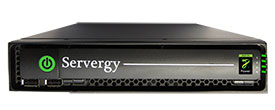
Servergy CTS-1000For example: “Most data centers, by design, consume vast amounts of energy in an incongruously wasteful manner, interviews and documents show,” he writes.

“Data centers can waste 90 percent or more of the electricity they pull off the grid,” he adds.

The list of charges leads Glanz to conclude that “the inefficient use of power is largely driven by a symbiotic relationship between users who demand an instantaneous response to the click of a mouse and companies that put their business at risk if they fail to meet that expectation.”

An Outdated Picture?

Now, it would be difficult to dispute the validity of Glanz’s research — particularly when it comes to data centers still using traditional server technologies. 

Nevertheless, his article has been met with considerable outcry, not least from the tech industry itself via Wired, InformationWeek and beyond. First and foremost among critics’ rebuttals is that the Times article focuses primarily on older data center technologies, largely ignoring all the many advances in efficiency that are being made today.

With that in mind, Linux.com spoke earlier this week with Bill Mapp, CEO, chairman and founder of Servergy, along with William Mapp IV, the company’s vice president of strategic projects. As a member of the Linux Foundation and a maker of hyperefficient, high-performance Power Linux servers, Servergy is on the forefront of some of the efficiency gains now coming to the modern data center. 

‘The Huge Need Out There’
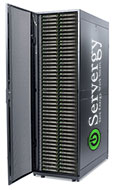
Servergy rack“This is a major reason why Servergy was born,” vice president Mapp told Linux.com. “As the whole world goes online, that’s a lot of apps downloaded, Netflix movies streamed and Dropbox files exchanged. All that has to be stored someplace, and it has to be done in a more efficient manner.”

ARM, of course, is one architecture increasingly being embraced for server use by companies including Dell for its power efficiency, among other features, but Servergy chose to build its own platform on the mature Power architecture instead.

Compared with traditional data center servers, Servergy’s compact Power Linux systems boast savings of 80 percent or more in both server power costs and space requirements, the company says.

“This is only going to get more important as we move forward,” CEO Mapp pointed out. “That giant sucking sound you hear is the huge need out there for lower power.”

‘No Single Technology’

Indeed, earlier this month Pike Research, a part of Navigant’s Energy Practice, released some data affirming just that. Specifically, it predicts that the worldwide market for green data centers will grow from $17.1 billion in 2012 to $45.4 billion by 2016, representing a compound annual growth rate of nearly 28 percent. 

Virtualization and cloud computing are two of the biggest trends behind those improving efficiencies, it adds.

“There is no single technology or design model that makes a data center green,” noted Pike research director Eric Woods. “In fact, the green data center is connected to the broader transformation that data centers are undergoing – a transformation that encompasses technical innovation, operational improvements, new design principles, changes to the relationship between IT and business, and changes in the data center supply chain.” 

‘An Accelerator for Linux’

Servergy, meanwhile, is a big proponent of the many benefits of using Linux, including not just efficiency but also security.

“It provides an ecosystem in which people can come together — both hardware vendors like us and the open source community with software — to come up with efficient solutions,” vice president Mapp asserted.

“It’s not just a trend, it’s the future — it’s where the data center is going,” he concluded. “This area is going to be an accelerator for Linux.”

Does Hardware Matter in the Cloud? Oracle is Hoping So

Next week Oracle will give an update on its cloud strategy. But it will have a very different take on the future of the cloud than its rivals.

Symantec State of the Data Center Survey Results: Not Surprising, But Useful

Symantec routinely funds a “state of the data center” survey. The results are not surprising. IT organizations are having to react to increasing complexity, access from many different types of devices and the increasing need for data governance.

To Master Tech You Must Master Software – And Open Source – Even If You’re Apple

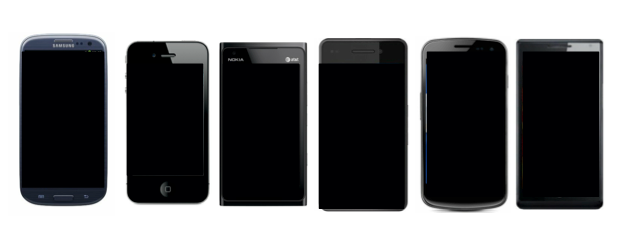
During my keynote at LinuxCon, I showed a picture of five smart phones from five different manufacturers with their screens blacked out. Think you could tell them apart? Without a UI they are all virtually indistinguishable from each other. When their screens are enabled, it’s easy to tell the difference between Blackberry’s and iPhone’s, Samsung’s Android devices and Nokia’s Windows based machine. My point? Software is where the heart of differentiation lies.

BlackOutPhonesThe leaders in technology understand this. Marc Andreessen of Andreessen Horowitz had a brilliant op ed last year in The Wall Street Journal about how software is eating the world. He’s right. To master technology you must master software.
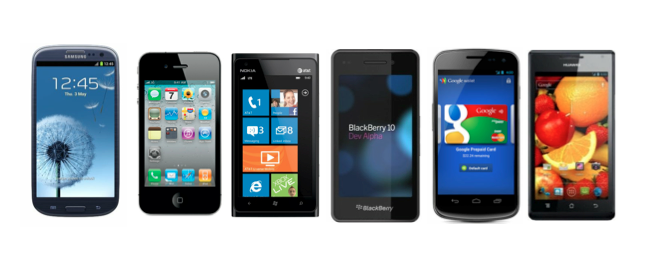
SoftwarePhones But there is a corollary: To master technology you must master open source. The real leaders in tech are understanding that to go it alone and develop software in a company cloister is foolish, expensive and time intensive. It’s also a great way to lose market and financial share. Just ask RIM and Nokia, two of the most prominent and last remaining examples of companies who don’t leverage open source prominently in their products. Nokia, which chose to bet it all on Microsoft, has seen its share price dwindle over the last two years. And RIM, which purchased a proprietary version of Unix in QNX, teeters on a fiscal cliff.  
You may be saying, but what about Apple? Look at their success being the most closed company in the world.

Of course, Apple is closed; from its semiconductors to its app store policies, it runs a tight ship. But the company’s market success can’t be denied. Apple has sold 5 million iPhone 5s in a week. And it’s doing it by leveraging the use of open source to power its business. Pick up your iPhone and take a look at the legal notices in the About file. You will find the GNU General Public License, you will find names of Linux developer copyright holders, you will find names of Linux distributions. Apple’s market cap is $623 billion. It is worth more than Intel, IBM and Dell combined. Did it buy one of these companies to expand its closed reach? No. in 2007 it purchased CUPS, an open source printing service which it continues to offer under an open source license. Even Apple knows it must leverage the massive research and development resources available via open source.

Other traditionally closed stalwarts have also gotten into the open source game. VMWare recently spent $1 billion for Nicira, a networking company that makes up the core of the OpenFlow open source project. With Nicira, it will now allow customers to choose its closed source product ESX or open source choices KVM and Xen. This would have been taboo to even think about at VMWare just a year ago.

Even Microsoft, the traditional villain against all that is open, has realized that to expand to cloud it can no longer restrict developers to its closed source offerings. Go to its Azure cloud platform and you can choose Windows guests, but also Linux offerings such as Ubuntu, Red Hat and SUSE. Microsoft has gone from touting Linux as a cancer to offering it to its customers on the same footing as its own cash-cow. In 2011, Microsoft became a top contributor to the Linux kernel for the first time. Times have clearly changed.  

Nowhere will this collaborative development process be more pronounced than in the cloud. The cloud has and will continue to change the economics of the technology industry forever. Amazon has an early lead with its platform built entirely with open source software. The vendors instead of going it alone are joining forces in such projects as OpenStack and CloudStack. Where once you looked to your vendor for help navigating the waters of technical trends, you now will turn to the open source projects that comprise the cloud. Projects led by engineers, not business people, that include Linux, KVM, Xen, Gluster, Ceph, oVirt, Puppet, Chef and others.

I joked during the keynote that while the suits were up at VMWorld talking about the cloud, the geeks were at LinuxCon actually building it. The one thing I left out is that there were plenty of suits in the room too, trying to meet, influence and hire the open source geeks that will lead the next wave of computing.

Cisco Acquires Wi-Fi Location Data Analytics Startup ThinkSmart

think

Cisco has made an interesting acquisition today, announcing the purchase of ThinkSmart Technologies, a company that delivers location data analysis using Wi-Fi technology. Financial terms of the deal were not disclosed.

ThinkSmart’s technology enhances a wireless network infrastructure with location analytics for service provider and enterprise customers. The startup’s location analytics collects information on movement within a venue including time of day, traffic patterns and dwell times. Cisco says that this information then allows enterprises and venue operators improve the customer experience by identifying appropriate staffing levels, reducing wait times, optimizing business processes, and improving customer flows.

 
Read more at TechCrunch