Python has turned into a data science and machine learning mainstay, while Julia was built from the ground up to do the job.
Of the many use cases Python covers, data analytics has become perhaps the biggest and most significant. The Python ecosystem is loaded with libraries, tools, and applications that make the work of scientific computing and data analysis fast and convenient.
But for the developers behind the Julia language — aimed specifically at “scientific computing, machine learning, data mining, large-scale linear algebra, distributed and parallel computing”—Python isn’t fast or convenient enough. It’s a trade-off, good for some parts of this work but terrible for others.
The kernel development cycle has evolved so beautifully overtime that it has set an example in the open source world. Having contributed to the kernel I actually enjoyed learning about the whole development cycle. Terms like mainline kernel, rc, stable release, long-term support confused me a lot initially but with time I understood at least the basic work-flow.
Keeping in the mind the volume of code that sits inside the kernel, it is very difficult for a single person to inspect each and every part of the project perfectly. Hats off to Linus and people like Greg. To make the process easier (it looks easy :P), the kernel is broken down into subsystems with each subsystem having its own main developer or as generally said top level maintainer. These maintainers decide which patch goes to the mainline kernel.
For this analysis we’ll look at all the PushEvents published by GitHub during 2017. For each GitHub user we’ll have to make our best guess to determine to which organization they belong. We’ll only look at repositories that have received at least 20 stars this year.
Marie Drottar, 62, of the United States, is one of two recipients of the 2017 Linux Foundation Training (LiFT) Scholarships in the Women in Open Source category. The LiFT scholarships provide advanced training in open source to existing and aspiring IT professionals globally.
Marie Drottar
Drottar is a clinical research specialist in the neonatal neuroimaging department at Boston Children’s Hospital, and she said a big part of her job is conducting neuroimaging data analysis.
“Enabling my skills in large batch processing of imaging data using Linux scripting will enhance my teaching skills in training new research assistants, post-doctoral employees, and medical/fellowship students, the large majority of whom are women,’’ she noted in her scholarship application.
Drottar said she hopes to use open source to analyze larger and larger volumes of data and make predictive models for health care and early intervention studies with infants and children.
Jona Azizaj
Jona Azizaj, 24, of Albania, is the other scholarship recipient in the Women in Open Source category. Azizaj is in her final year studying business informatics at the University of Tirana. She has been involved in open source for four years now, starting by contributing to Fedora, and is now involved with LibreOffice, Mozilla, Wikipedia, OpenStreetMap, Nextcloud, and more.
“When I started attending some conferences with other Fedora ambassadors I was the only girl on the team,’’ Azizaj wrote in her scholarship application. This was the impetus for her to want to work to tighten the gender gap that she has witnessed in other open source communities.
“But in Albania, at the Open Labs Hackerspace, the situation at my local community is completely different, because more than 70 percent of the members are girls,’’ she explained. “That’s why I think that this training will help me even more to help the girls of my local hackerspace to start their first contributions on different open source communities.”
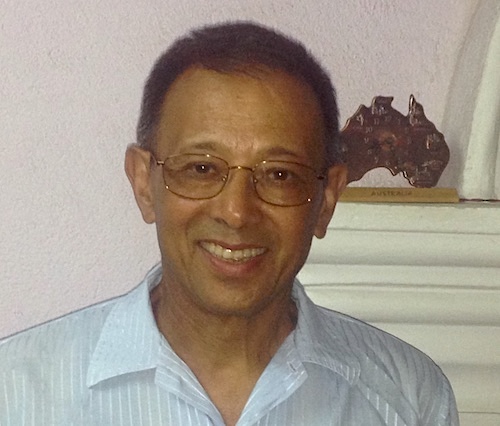
Badri Basnet
The Linux Foundation also awarded two scholarships in the Developer Do Gooder category. The recipients are Badri Basnet, 65, of Australia, and Pedro Guarderas, 33, of Ecuador.
Basnet uses Ubuntu, along with an open source Geographic Information Systems (GIS) software, QGIS, and open source learning management system Moodle. He said he is using all of these systems to develop hands-on GIS learning resources and to teach GIS skills to undergraduates at the University of Southern Queensland, in addition to volunteering to educate others about GIS.
“The Linux training scholarship will help me to expand this work further by providing the additional skills necessary for making effective use of open source operating systems, open source software, and open source learning management systems for developing open source QGIS software,’’ he wrote in his scholarship application. Additionally, he said the scholarship would enhance his ability to improve hands-on GIS learning resources.
Pedro Guarderas
Guarderas started with open source by creating a plugin for QuantumGIS with Qt and C++. Since then, his interest in open source development increased, and he has gained experience with Debian, C++, R, Python, Fortran, SQL, Git, and several scientific libraries.
“I have worked extensively developing mathematical models, and many have been employed inside the government and private sector in Ecuador,” he said, and the impact of these models has reached thousands of people. “Today I am deeply interested in knowing more about the Linux deep details; in particular, I am interested in distributed or parallel programming.”
Guarderas hopes to expand his knowledge and develop new scientific applications with high-quality standards.
Now in its seventh year, LiFT initiative has awarded more than $168,000 in training scholarships. This year, a record 1,238 applications were received for 14 scholarships. The Linux Foundation also supports a variety of community initiatives and organizations to help advance free and open source software and increase diversity in technology and the open source community. The Foundation offers training and event scholarships, and works with organizations such as Women Who Code and Goodwill to further these efforts.
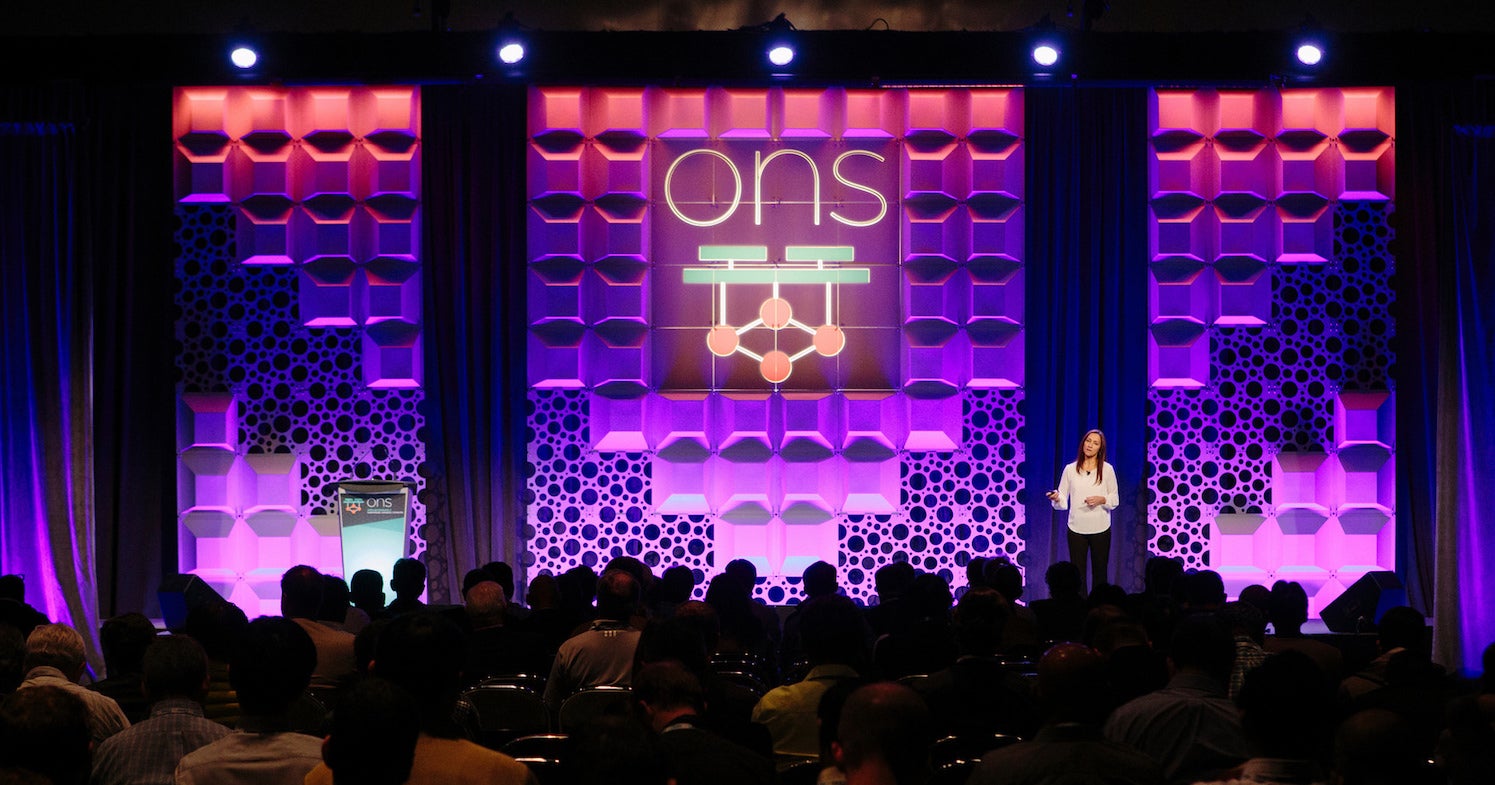
The Linux Foundation has just opened the Open Networking Summit North America (ONS NA) 2018 Call for Proposals, and we invite you to share your expertise with over 2,000 technical and business leaders in the networking ecosystem. Proposals are due by 11:59pm PT on Jan. 14, 2018.
Over 2,000 attendees are expected to attend ONS North America 2018, taking place March 26-29 in Los Angeles, including technical and business leaders across enterprise, service providers, and cloud providers. ONS North America is the only event of its kind, bringing networking and orchestration innovations together with a focus on the convergence of business (CIO/CTO/Architects) and technical (DevOps) communities.
There may be a plurality of operative components inside an OCI standard container, though for now, two are of prime importance. The runccomponent is the executive — the part which makes a container functional unto itself. The second part of the puzzle, containerd acts as the part that “supervises” the lifecycle of containers, and that communicates with the outside world via API calls.
That functionality may replace the need for the continual presence of a full container engine in a production system, clearing the way for Kubernetes, Mesosphere DC/OS, and other container orchestration engines.
The open source program at Dropbox was initially just a mailing list, where some interested engineers wanted to open source projects and develop with open source. Over time, things became more formalized, with a focus on ensuring that the company was consistent about what code it would release versus what code was best kept internal.
They also wanted to ensure that the things they were releasing were things that would actually provide value.
“We set minimum standards for what we would release as open source projects, including a review process, and our program just started to drive a lot of value,” said Luke Faraone, Security Engineer at Dropbox.
This chapter from Building Evolutionary Architectures describes architectures that support incremental change along with some of the engineering practices used to achieve incremental change.
In 2010, Jez Humble and Dave Farley released Continuous Delivery, a collection of practices to enhance the engineering efficiency in software projects. They provided the mechanism for building and releasing software via automation and tools but not the structure of how to design evolvable software. Evolutionary architecture assumes these engineering practices as prerequisites but addresses how to utilize them to help design evolvable software.
Our definition of evolutionary architecture implies incremental change, meaning the architecture should facilitate change in small increments. This chapter describes architectures that support incremental change along with some of the engineering practices used to achieve incremental change, an important building block of evolutionary architecture. We discuss two aspects of incremental change: development, which covers how developers build software, and operational, which covers how teams deploy software.
TL; DR: The focus maybe on AWS EKS, the managed Kubernetes offering. The future is with AWS Fargate and similar services
The rapid commoditization of components is a well understood concept in economic theory. What was complex often becomes simple with abstraction. Substitution between vendors becomes easy, and you see increased transparency in product features across both offerings and pricing. Vendors can continue to innovate on a technology level beneath the abstraction, but the longer-term economics now require you to have a volume business, with its inherent structural advantages, to grow your overall margins.
With the announcement of the Amazon Elastic Container Service for Kubernetes (EKS), Kubernetes has become a commodity across the public cloud ecosystem. Amazon, Google, Microsoft and IBM all now have a managed Kubernetes offering of some form. More significantly, in terms of world-wide growth, Alibaba have quietlycertified their offering under the CNCF certification program, and we anticipate that their extensive involvement with the CNCF will only serve to grow their Kubernetes install base.
Jack Wallen shows you how to use the open source gpg to sign documents for a cost-effective way to ensure your clients the files you send them are, in fact, from you.
There may be plenty of times and reasons why you might want or need to digitally sign a file. For instance, say you’re sharing sensitive information and you want to ensure the recipient can trust the file that contains the data. One way is to digitally sign that file prior to sending it to the client. Once the client receives the file, they can verify the signature and if they trust the digital signature, extract the file within and use the data.