The most recent commits in https://github.com/openstack/tripleo-quickstart
allow to use Fedora 25 Server (32 GB) as target VIRTHOST for TripleO
Quickstart HA Deployments and benefit from QEMU’s (2.7.1) && Libvirt’s (2.2.0)
the most recent KVM virtualization features coming with last Fedora release.
Prior to deployment on VIRTHOST install KSM and enable ksm.service :-
Ah, the age-old question…one that holds far more importance than simply pointing out which Linux distribution is a fan-favorite. Why is that?
Let me set the stage: You have a user—one who has, most likely, spent the majority of their time in front of either a Windows or Mac machine—and they’ve come to you for an alternative. You want to point them in a direction that will bring about the least amount of hiccups along the way and highlight the power and flexibility of Linux.
But, remember, the single most important aspect is that they must get it, out of the box.
That’s why we often take the time to point out which distributions are best designed for new users — because bringing new users into the mix is the best way to spread the word and grow the base.
With that said, what are the best distributions for new users? I’m going to take a bit of a different approach this time and point out which distributions would be best for users coming from different environments. You can also check out my list of best distros for 2017.
From Windows 7 to Linux: ZorinOS
When Windows 8 rolled out, there was a reason so many wanted to stick with Windows 7—familiarity. Users had been working with the same desktop metaphor for decades and they had no desire to migrate to the more touchscreen-centric platform of Windows 8. So, what distribution do you turn to for that? You first must consider desktop environment. Why? Because that is where you immediately hook those Windows 7 users. And what better distribution for such a task than ZorinOS?
ZorinOS was designed specifically as a replacement for Windows (and Mac) computers, so it goes a very long way to replicate the look and feel of those desktops. In fact, you’d be hard-pressed to find a Linux distribution that does as good a job of making the transition from Windows 7 to Linux—while still retaining that which makes Linux such a powerful, flexible platform.
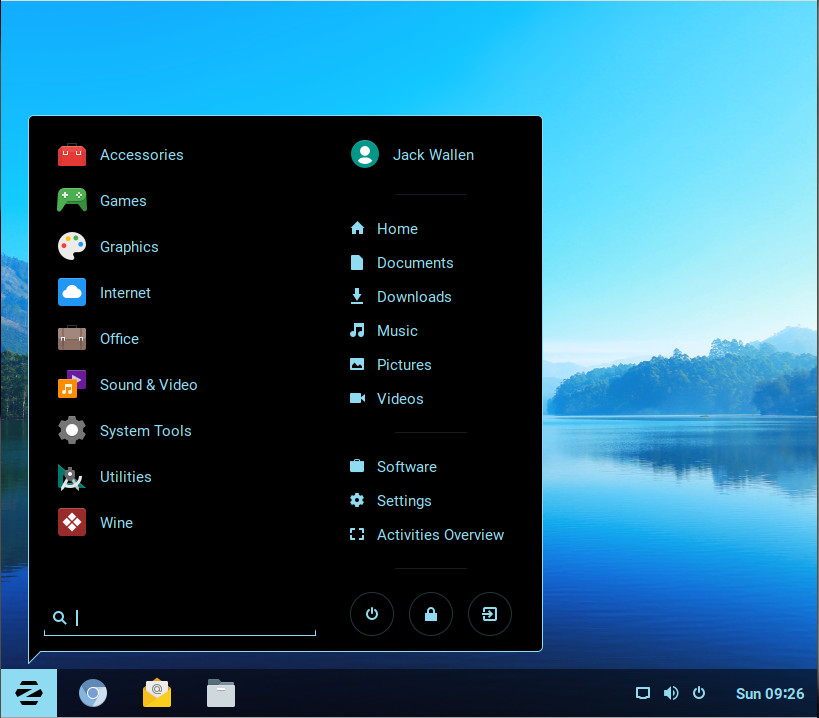
Beyond the desktop environment (Figure 1), ZorinOS is based on Ubuntu, so under the hood, everything is going to just work (so there’s little need to worry their hardware won’t be detected). Couple that with the readily available software and you have the perfect distribution for new users coming from Windows 7.
Figure 1: The ZorinOS Windows 7-like desktop ready to serve.
Do note, however, there are two versions of ZorinOS: Zorin Ultimate and Zorin Core. While Core is free, it doesn’t include nearly the amount of software that you’ll find in Ultimate. If you want an out of the box distribution that will please anyone coming from Windows 7, I highly recommend purchasing Zorin Ultimate (for approximately $20.00 USD). Of course, if you don’t want to splurge for the Ultimate edition, you can always install nearly everything you need from the included Software package management tool.
From Windows 8 to Linux: Ubuntu GNOME
The shift to Windows 8, brought about a very touchscreen-centric environment that changed the way users interact with their machines. The old metaphor of Star Menu/Panel/System tray was replaced with an interface that shined in a touchscreen environment. If you’re looking for the best environment to give a new-to-Linux user something different, yet still function as a best-in-breed should, look no further than Ubuntu GNOME.
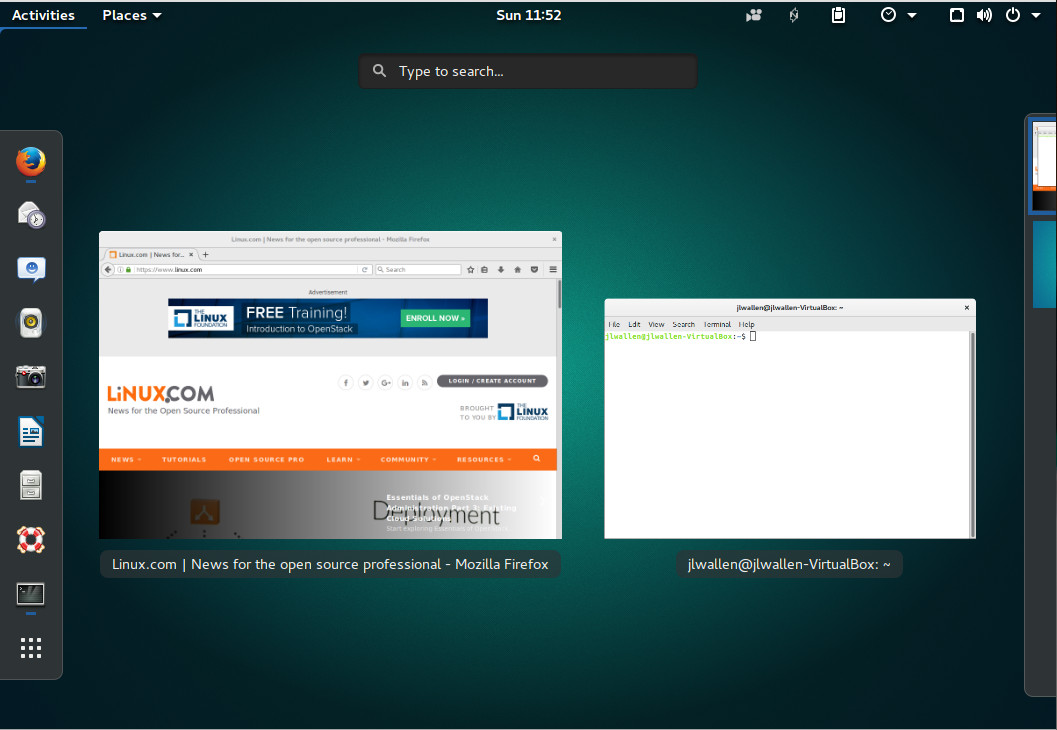
Ubuntu GNOME is a best of two worlds amalgamation between Ubuntu and GNOME (Figure 2). Replacing the Unity interface with a desktop that is equal parts modern elegance and user-friendly simplicity, Ubuntu GNOME shouldn’t cause much in the way of issues for any user coming from Windows 8. Not only does this distribution lay its foundation on the latest LTS release of Ubuntu (so support will last), it makes use of the latest stable release of the GNOME desktop—which means the user will enjoy an incredibly solid experience.
Figure 2: Simplicity at its elegant best can be found in Ubuntu GNOME.
From Mac to Linux: Elementary OS
Without a doubt, the hands-down winner for this category is Elementary OS. Although Elementary does an incredible job of looking and feeling like an OS X desktop, it is much more than that. Elementary OS is, at its very heart, Linux—it just happens to have taken a cue from OS X for many of the design elements.
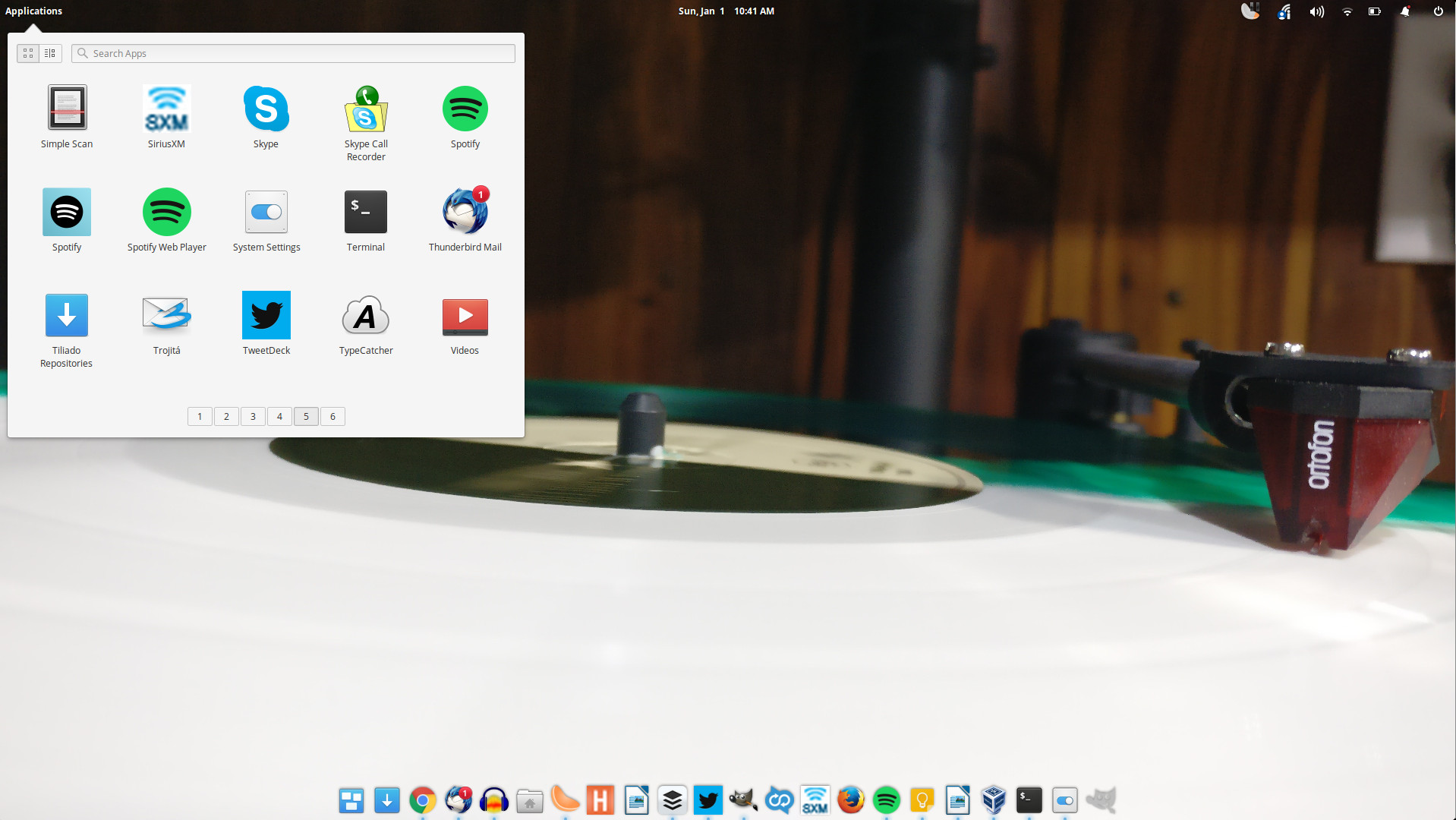
Any Mac user would feel immediately at home on the desktop environment (Figure 3). With an all-too familiar doc and the inclusion of an applications menu, Elementary OS always stands at the top of my best-of distribution list. And, if we’re talking about Mac users, there is no better drop-in replacement than Elementary OS.
Figure 3: The glory that is the Elementary OS desktop.
One thing that Mac users will greatly appreciate is how great a job the Elementary OS developers have done keeping design consistency throughout the desktop. From the dock, panel, menus, and included applications, you will not find a single element that doesn’t look and feel like it belongs.
There is one caveat that I would add to Elementary OS. You’ll need to install a sufficient browser (as it “ships” with Epiphany—a browser not widely supported by many necessary sites) and you’ll want to install LibreOffice from the downloadable package from the official LibreOffice site (as the package found in the Elementary OS AppCenter is a bit out of date).
From Android to Linux: Ubuntu
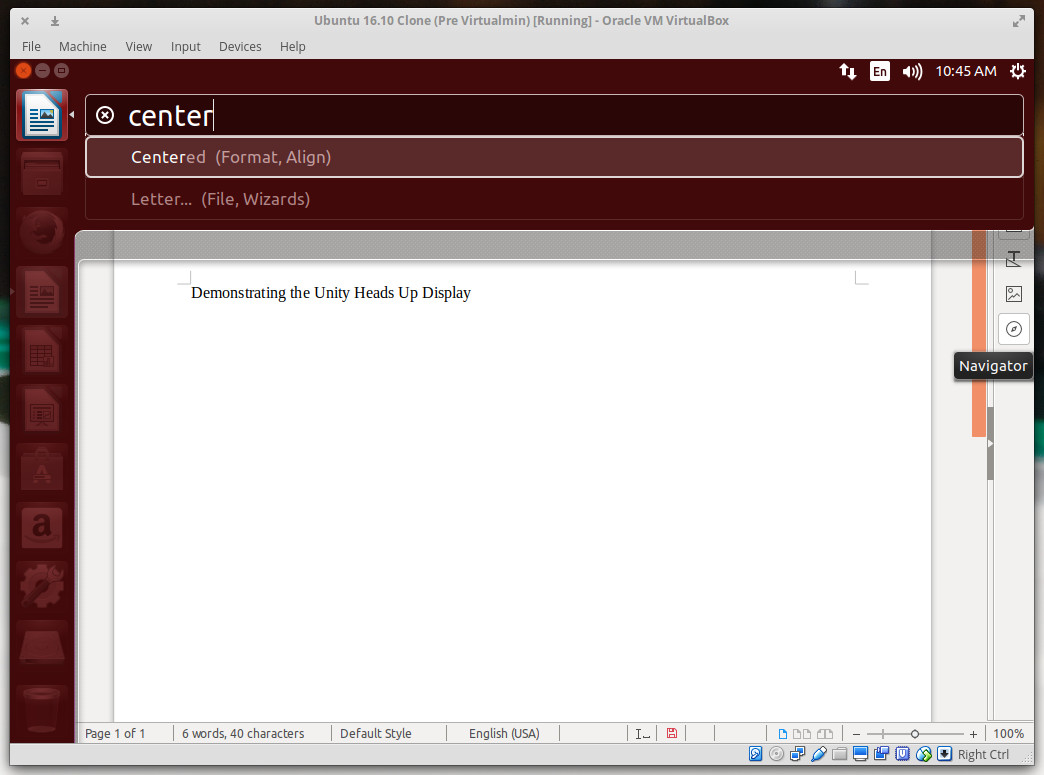
This may seem like a bit of a stretch, but considering how dominant Android is within the global market, you will come across users who might need a Linux desktop that would make them feel instantly at home, after coming from a more mobile-centric interface. For me, there is no clearer winner than Ubuntu. Why? Ubuntu Unity does an outstanding job of making the desktop feel more like an all-encompassing interface than any other. If you want, you can include online search results (now disabled by default), which is something found in nearly every mobile environment. Also, the Unity HUD menu system (Figure 4) is one of the most unique menu systems found in any interface. With this, users can depend less on the mouse (as they would on a mobile device powered by Android).
Figure 4: The Unity Heads Up Display in action.
Of course, Ubuntu also offers one of the most stable desktop platforms on the market, so the user experience will be nearly flawless.
There’s a distribution for everyone
One of the important things to remember is that there is a distribution of Linux that is sure to please everyone. But for those coming from specific environments, I highly recommend finding a flavor of Linux that will help make the transition seamless. Give one of these a try and see if you find yourself humming along smoothly with the power of Linux and open source at your fingertips.
In this keynote, Ashley Williams, Developer Community and Content Manager, discusses how npm works as a service and shares some of the remarkable numbers associated with the registry.
This week in Linux and OSS news, Steven J. Vaughn-Nichols explains why Linux is forcing Windows to up its gaming game, blockchain is especially important in the current sociopolitical climate, and more! Read on to keep on top of the most important tech stories.
1) Linux can take some credit for improving Windows gaming, writes Steven J. Vaughan-Nichols
Ashley Williams kicked off her colorful “paint by number” keynote at Node.js Interactive by explaining that npm is actually a for-profit company. Npm makes money by selling its enterprise services and, apart from the amounts required to run the everyday operations of a regular company, its revenue is invested in running the npm registry.
Williams, as the Developer Community and Content Manager, described her job as the person in charge of “explaining how npm works.” Because her audience was probably already familiar with npm as a tool, Williams focused on how it works as a service and some of the staggering figures associated with the registry.
For example, in the 28 days prior to the talk, users had installed 18 billion (“billion” with a “b”) packages from the registry, although this translated to “only” about 6 billion downloads. The downloads are substantially lower than the installs because approximately 66 percent of the installs are now being served from the cache.
The figures regarding downloads are not the only ones that have seen exponential growth. The number of packages is also growing at an accelerated rate. At the beginning of 2015, the registry contained about 12,500 packages. But at the time of Williams’ talk, the number was already up to nearly 400,000. In the week before, 4,685 packages were published in the registry.
Interestingly, the npm repository is also used as a first step to getting into programming for Node. About 160 people publish their first package every week in the registry and, at the current rate of growth, Williams predicts that will increase to an average of 200 people a week through 2017.
Currently, 102,460 active unique publishers are already working within the system, and there are 314,582 registered users. Williams remarks on how amazing this figure is considering the sole advantage of registering on the site is the ability to publish in the registry.
11 lines of code that broke the Internet
Williams also addressed the elephant in the room by tackling the topic of unpublishes. In March 2016, a disgruntled developer unpublished all his modules from the registry. Among them was a seemingly harmless chunk of code 11 lines long — left-pad. left-pad padded out the left hand-side of strings with zeroes or spaces and did nothing else. However, a huge amount of other modules relied on left-pad and broke when the module was removed from the registry, causing no small amount of chaos.
Williams admitted that the left-pad debacle happened because of naive policies at npm. Since, the npm team have devised new policies, the main one being that you are only allowed to unpublish a package within 24 hours of publishing it.
They also hosted a forum on GitHub to get feedback from the community and discovered that most people unpublishing packages were doing so because they didn’t want that package listed on their user page anymore. This led to the new dissociate and deprecate policy. The new policy avoids packages from being erased from the registry, but developers can re-assign the package tonpm user. This dissociates the package from the original developer and deprecates it, marking it as unmaintained.
Although Williams admitted that having dissociated and deprecated packages hanging around in the registry is not ideal, it does guarantee there won’t be another random unpublish that will break other people’s setups.
Reliability
So anotherleft-pad won’t happen, but, what would happen if all the registry went down? Williams said this highly unlikely. ping.npmjs.com shows in real time stats the availability of public services npm runs. The site consistently shows that the registry’s services offer a 99.999 uptime.
Williams also pointed out that the registry is also very fast. That’s because the vast majority of the data they need to serve is now served statically. Data is only updated when the registry receives something from the “changes fee.” According to Williams’ benchmarks, downloading from the registry, as opposed to downloading directly from a module’s Git repository, is 75 percent faster.
The registry is also huge. At over 350,000 packages, the npm registry contains more than double the next most populated package registry (which is the Apache Maven repository). In fact, it is currently the largest package registry in the world.
The downside is that 80 percent of npm users are doing front-end development and 20 percent are using npm ONLY for front-end code. Npm was designed for people writing modules in Node and not for developers writing applications or client-side JavaScript. This means that npm’s set of tools are sometimes inadequate for what users want to do.
Fortunately, the community has started writing their own tools to compensate. Williams gave the example of Greenkeeper.io, a service that keeps dependencies updated in front-end applications. Npms, another external service, offers an advanced search of the registry, including metrics. Yarn is especially designed for people who require speedy package installs. It also prevents malicious code from being executed in applications by checksumming the integrity of all installed packages.
Williams pointed out that npm actively supports developers building cool stuff on top of the core services, and she encouraged her audience to check out the registry API documentation and resources like the Replicate service. The latter allows you to see in real time the changes happening within the registry.
Finally, Williams recommends that everybody regularly update their npm package with
npm i npm@latest -g
because the npm provided with the standard Node.js installation tends to be several versions old.
If you are interested in speaking or attending Node.js Interactive North America 2017 – happening in Vancouver, Canada next fall, please subscribe to the Node.js community newsletter to keep abreast with dates and time.
You have vast database schemas with hundreds of tables, applications that need to combine OLTP and OLAP functionality, queries that may join 50 or more tables across disparate data sources, oh, and the user is waiting, so you’d better deliver the results online with low latency.
It sounds like a recipe for disaster, yet this is exactly the situation that Google faced with many of its business systems, especially it seems with their advertising campaign management system. Business logic and data transformation logic was becoming tangled bottlenecking development, queries were way too large to be expressed gracefully in SQL (especially when considering the dynamic aspects), and traditional techniques to speed up queries such as maintaining materialized views either increased the cost of writes too much, or gave unacceptably stale data.
A new framework built atop Kubernetes is the latest project to offer serverless or AWS Lambda-style application architecture on your own hardware or in a Kubernetes-as-a-service offering.
The Fission framework keeps the details about Docker and Kubernetes away from developers, allowing them to concentrate on the software rather than the infrastructure. It’s another example of Kubernetes becoming a foundational technology.
I recently watched 2 great talks on container security by Justin Cormack from Docker at Devoxx Belgium and Adrian Mouat from Container Solutions at GOTO Stockholm. We were following many of the suggestions but there was still room for improvement. So we decided it was good time to do a security tuneup of our dockerfiles.
Official images
We’re longtime users of Alpine Linux as we prefer the smaller size and reduced attack surface compared with Debian or Ubuntu based images. So we were using the official alpine image as the base for all our images. However an added benefit of the official images is that Docker have a team dedicated to keeping them up to date and following best practices.
QUANTUM COMPUTING IS real. But it’s also hard. So hard that only a few developers, usually trained in quantum physics, advanced mathematics, or most likely both, can actually work with the few quantum computers that exist. Now D-Wave, the Canadian company behind the quantum computer that Google and NASA have been testing since 2013, wants to make quantum computing a bit easier through the power of open source software.
Traditional computers store information in “bits,” which can represent either a “1” or a “0.” Quantum computing takes advantage of quantum particles in a strange state called “superposition,” meaning that the particle is spinning in two directions at once.
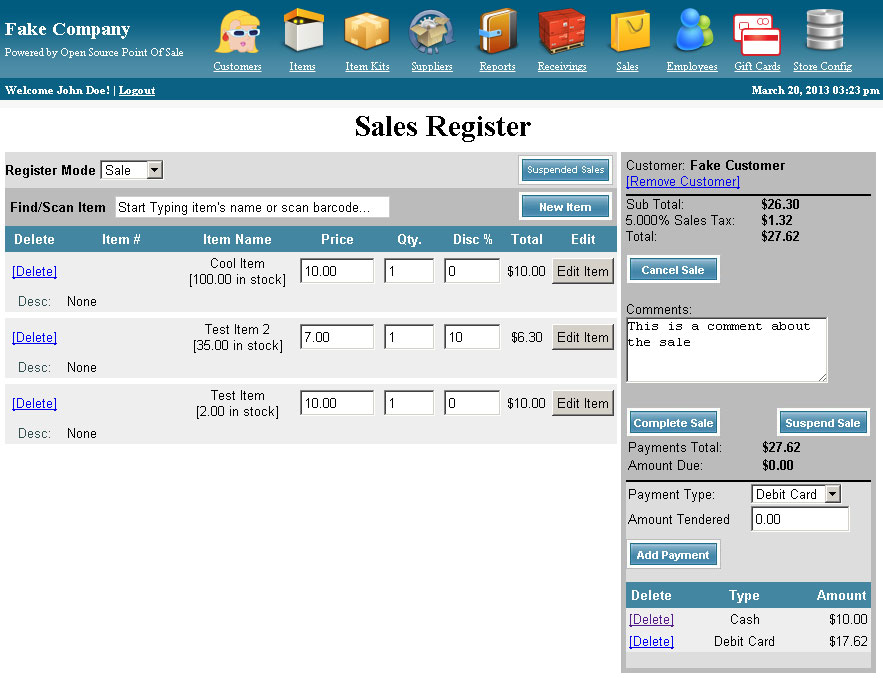
As Linux became more stable and popular business are looking for saving every bucks and Open source Point of Sale applications are getting first choice especially for small businesses for managing work, sales and inventory. We have seen some of the Open source POS have grown such an extend that exceed known close source POS brands. Here is a short list of POS that you can at try free of cost.
1. PHP Point of Sale
Platform: LAMP Type: Retail Reviewer’s Rating 3/5
PHP Point of Sale System is in the market for last few years. It’s a Lamp based Point of sale suitable for small and medium stores. The site also provide active support and has predefined list of hardware. It has master database for customer, sales, supply, employee and provides flexible reporting. Being a web based POS it has limited support for POS printer and cashdrawer.
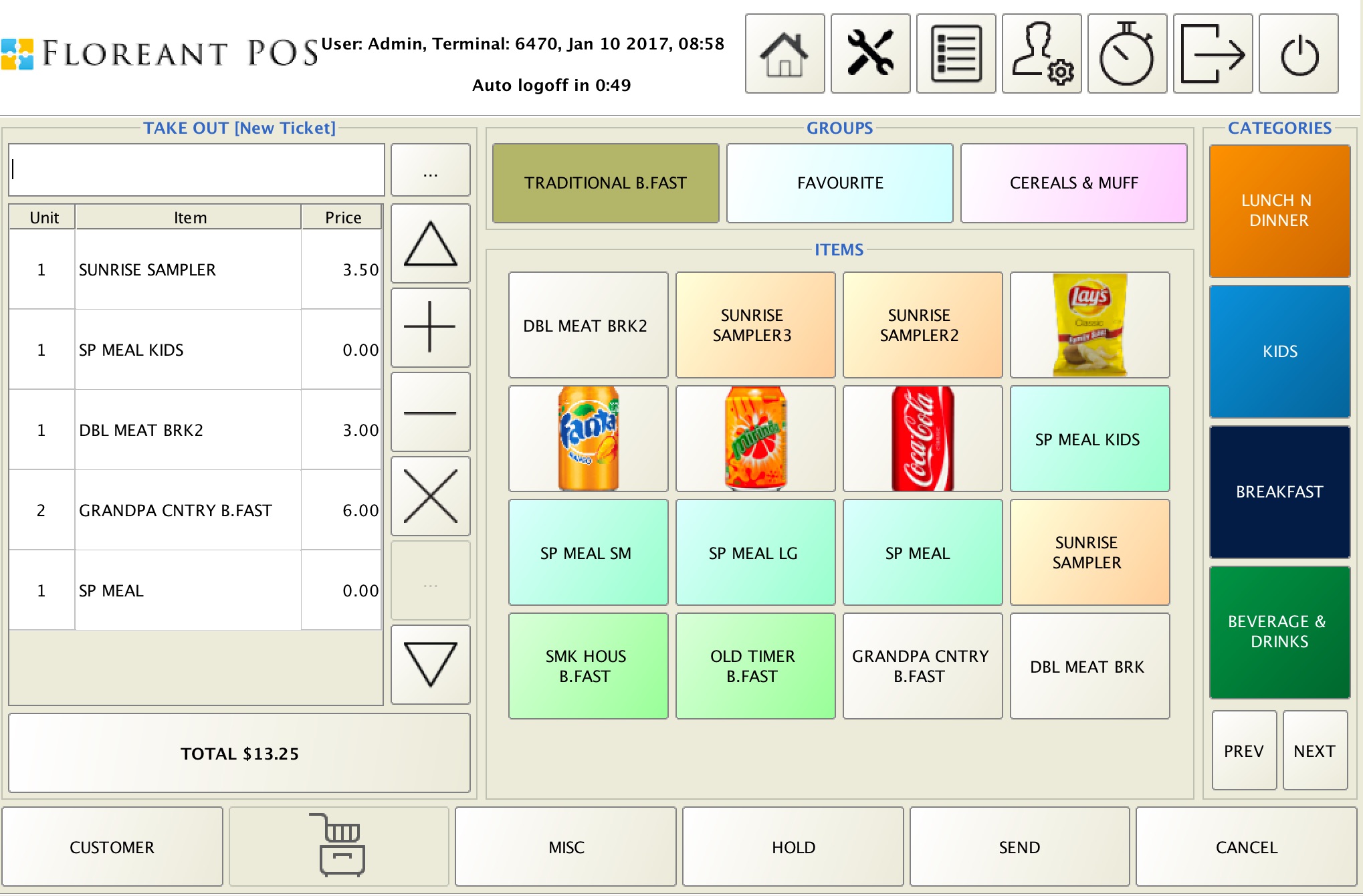
Floreant POS was originally designed for Dennys restaurant chain and then released as open source in 2009. Being a Java based application it has advantage of support for different type of hardware including customer display pole, digital scale and barcode scanner. Some features we find are
Kitchen & Receipt printer routing & KDS
Pizza Builder
Support for Dine In, Take out and Home delivery order type
Discounts, Coupons and Shift wise pricing
Back office reports
Compared to other POS Floreant has simple User Interface that fits for tablet and large monitors. It has customizable order types. If a restaurant has dine in as well as small restail outlet this could fit it well. Floreant handling back office features like Tax, Customer, Payroll, Server tips, Drawer pull etc. It also produce sales analysis, hourly sales and server productivity. Its founder company OROCUBE LLC maintains this open source system and also offers commercial support for them.
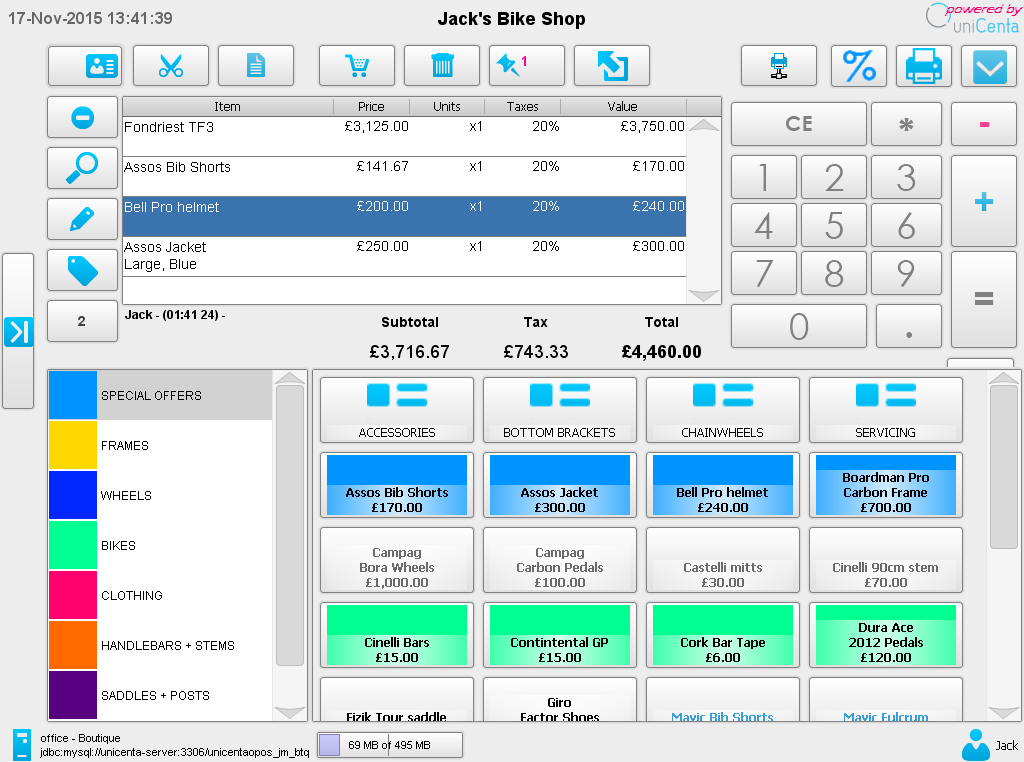
Unicenta is award winning POS used in huge number of retail stores. This one is fork of another open source POS named Open bravo. Unicenta features touch screen based POS, inventory, table layout and web based report plugin. Being a Java based system it supports wide range of hardware, barcode, scanner, cash drawer. It has both free and paid supported releases.
Platform: Web Type: Retail
Reviewer’s Rating 3.5/5
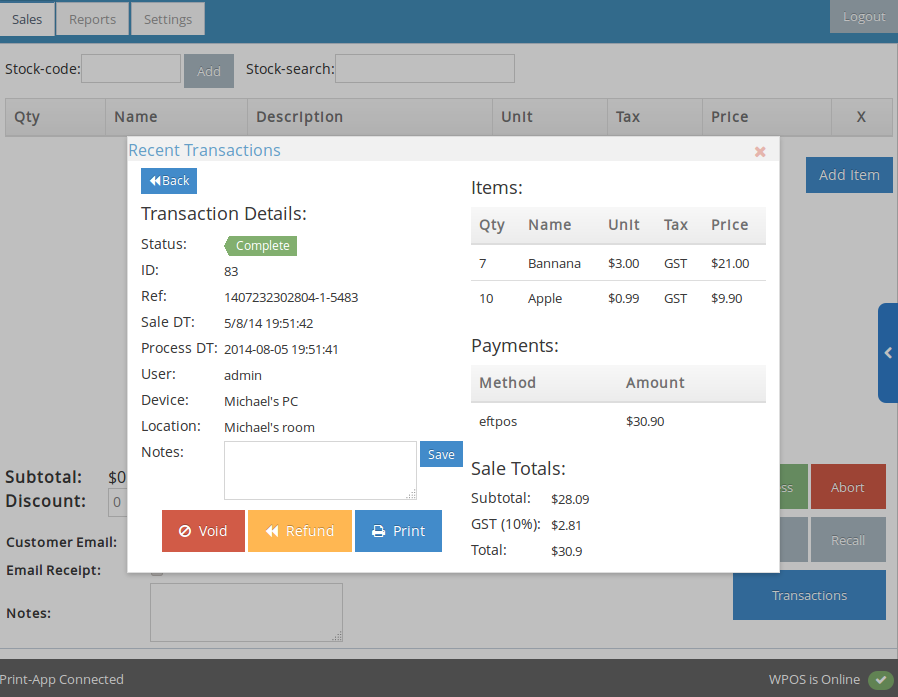
Wallace seems to be very promising Web based Point of sale system for reports. It has very nice design and rich set of reports. It has role based user permission, multiple terminal and support for return, discount and cancellation. Being a web based system it has limitation of terminal wise sales report generation and supports limited hardware.
Platform: LAMP Type: Restaurant and Retail
Reviewer’s Rating 3/5
Chromis POS was part of Unicenta Project and this fork added extensive improvement in last a year. They have variable pricing system that is needed for fish market. Their Kittchen display is simple and supports bump bar. Chromis is better solution for Quick server stores than Fine Dine-ins. Reason is it has limited features for Table service and server cash out.
Platform: Web Type: Restaurant and Retail
Reviewer’s Rating 3.5/5
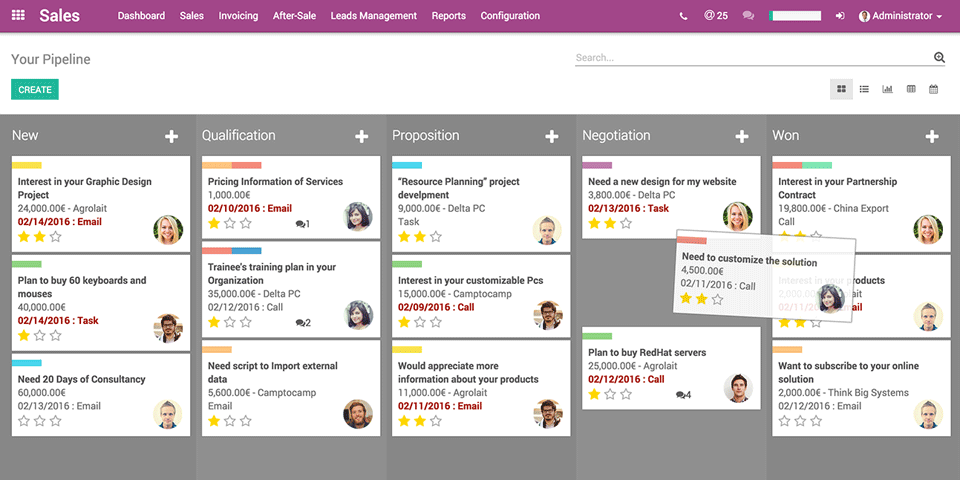
Odoo is a popularl ERP that has POS system inside. Odoo’s open source edition is released under an LGPL version 3, and the source is available on GitHub. Odoo is primarily written in Python.