Home Blog Page 688

Linux Founder Torvalds: Intel x86 Is King, but ARM Is ‘Disappointing’

LINUX FOUNDER Linus Torvalds has said that ARM is unlikely to dislodge Intel from heavyweight computing as Intel’s ‘infrastructure’ is more unified and open. 

Torvalds made the comments in a Q&A with David Rusling, chief technology officer at ARM tools vendor Linaro, in response to a question about his “favourite architecture”.

“It’s because of the infrastructure. It’s there and it’s open in a way that no other architecture is. The instruction set and the core of the CPU is not very important,” said Torvalds.


Read more at The Inquirer

Watch the First Episode of New Series Trust Disrupted: Bitcoin and the Blockchain

We have a new series launching this week called Trust Disrupted: Bitcoin and the Blockchain. The six-episode series examines the rise of Bitcoin and the tech that allows it to operate. 

The first episode will answer all your questions about the Bitcoin platform and how it works. Why did futurists want to create a totally digital currency? How would it work? What will the effects of Bitcoin and the blockchain have on the future of our economy?

Read more at TechCrunch

Nailing Down Architectural Principles

Software architecture needs to be documented. There are plenty of fancy templates, notations, and tools for this. But I’ve come to prefer PowerPoint with no backing template. I’m talking good old white-background slides. These are way easier to create than actual text documents. There are no messy worries over complete sentences. Freedom from grammatical tyranny! For a technical audience, concision and lack of boilerplate is a good thing. A nice mix of text, tables and diagrams gets the point across just fine. As a plus, this is naturally presentable — you don’t need a separate deck to describe your architecture when the deck is the reference document to begin with. As the architecture evolves, the slides evolve.

I’ve done a couple of architecture-level projects in the last two years, one of which got built and delivered as a SaaS platform that I’m discussing here. The first thing I captured were three- to five-year business goals. These were covered in an earlier post. The next section in the deck are the architectural principles.

Read more at David Joyner’s Blog

Beginner’s Guide to the Linux Desktop

There is much talk in the Linux world about the mythical “average user.” There is no such thing with Linux. First off, people who use Linux usually are those who know a thing or two about computers to begin with and want to take advantage of all the choices Linux offers. Linux has been considered the place for nerds, hackers and programmers for years. These folks are NOT typical at all. Secondly, it is unfortunate but true that most advanced Linux users are completely out of touch with what an average user really is.

The vast majority Windows and Mac users are those who have learned just enough to get done what they need to get done. They’re clueless about how the machines they use everyday get those tasks accomplished and the idea of popping open a bash terminal to work with configuration files or fix problems is way out of their comfort zones. This does not mean that Linux can’t offer them a safe and friendly environment to work in, far from it. Linux offers a wide variety of Graphical User Interfaces (GUIs) that make working with a Linux box a point and click affair.

Read more at Freedom Penguin

AT&T Will Launch ECOMP Into Open Source in 2017

A top AT&T executive said the company will launch its Enhanced Control, Orchestration, Management, and Policy (ECOMP) platform into open source by the first quarter of 2017. And the Linux Foundation will be the host of the open source project.

Jim Zemlin, executive director of the Linux Foundation, said in the post that ECOMP “is the most comprehensive and complete architecture for VNF/SDN automation we have seen.”

Read more at SDx Central

Black Duck Lays 2017 Open Source Security Predictions

The software industry accepted that it could still provide commercially supported services to open source software (and therefore monetize it) and so the golden age of open source arrived somewhere around the start of the new millennium. So was it all happily ever after at that point? Ah hem, well no, not quite.

Three of today’s top five most popular database management systems are open source: MySQL, PostgreSQL and MongoDB… but there is still an open source security education process that we need to go through. This is the opinion of Mike Pittenger in his role as VP of security strategy at Black Duck, an open source security management specialist.

Pittenger says that yes, 2017 will be the year of the open source unicorn. But despite this, the number of cyber attacks based on known open source vulnerabilities could increase by as much as 20% in real terms.

Read more at Forbes

Technology Drivers for the IT Industry

The Internet of Everything, a fully networked and analyzed society, seeks to enhance the quality of life of all people and drive new technologies, products, services, and markets. But where are developments headed, and what are the driving factors, fields of application, and challenges?

To begin, two concepts need to be distinguished: The Internet of Things (IoT) and the Internet of Everything (IoE). You might think that these two expressions describe the same thing: well, yes, but with tiny differences.

IoT describes networking of everyday things that are not yet online (dark assets, e.g., domestic electrical appliances, traffic lights, online classrooms, and fully networked industrial production, in which goods are no longer stockpiled but are automatically delivered and dropped off the production line to reflect the customer’s wishes). 

Read more at ADMIN

2016 LiFT Scholarship Winner Lorien Smyer: Bookkeeper Turned Technologist

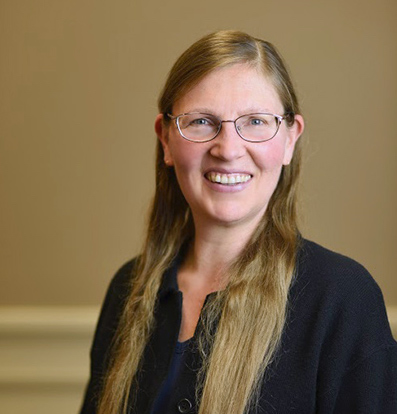
Lorien Smyer is a former bookkeeper who decided she wanted to start a new career in computer science. She was one of 14 aspiring IT professionals to receive a 2016 Linux Foundation Training (LiFT) scholarship, announced in August.  

Lorien Smyer, LiFT Scholarship Winner
Lorien completed a six-month web development bootcamp, followed by Intro to Linux through edX, where she achieved a 100% grade. She hopes that the additional training provided by this scholarship will increase her chances of finding a job that will allow her to exercise her love of coding.

Linux.com: Why are you switching careers, and why did you choose technology?

Lorien Smyer: I was a bookkeeper for many years. Long ago, I had to hand-enter all data to a paper spreadsheet with a pencil.

When my clients started getting computers, I was fascinated by everything about these amazing tools: the hardware, the software, how customizable it all was. In my spare time, I started taking occasional computer-related classes at my local community college, and doing many IT-related tasks for my clients, in addition to the bookkeeping I was already doing for them.

In 1995, I met the man who became my husband. He got a personal computer that same year, and happily allowed me to become our home IT expert.

A few years ago, the company I had been working for as a bookkeeper and occasional IT tech informed me that my office would be moving to Santa Cruz. Since I didn’t want to move to Santa Cruz, I needed to find something else to do. They were kind enough to give me a year’s notice, so I increased the number of computer-related classes I was taking at my local community college, thinking I might be able to ease into a job in some tech-related field.

When the year was up, initially I continued working generally in bookkeeping/office managing, with some tech responsibilities; but I still hadn’t made a full career switch. My husband and I then agreed that I could start studying full time, in order to try and make my tech career switch possible. I still enjoyed bookkeeping, but really felt most engaged professionally when I was involved in tech-related tasks at work.

The first class I took after starting full-time studying was the Introduction to Linux class on edX, which had just become available. I finished the class in two weeks, with a score of 100, and got my verified certificate. Completing that course gave me confidence that I had made the correct decision to pursue a job in tech.

After that, I completed a full semester of computer science and web development classes at community college, then attended a six-month, 70-hour-per-week immersive web development program at Galvanize.

I am now in the process of trying to pick a field within tech to pursue professionally. I have studied many different areas, and I think they all have attractive aspects.

Linux.com: What is your ultimate dream job, and what are you doing to accomplish it?

Lorien: My ultimate dream job would have a great team of co-workers. I believe, with the right group of people, who all share the goals of working together to help the company succeed and genuinely care about each others’ well-being, I could be happy doing many things.

As previously mentioned, I enjoy pretty much all aspects of the tech field. My dream job, practically speaking, is one that is interested in hiring an older female career-switcher, so it would have to be a job that needs juniors, and has some mentoring and onboarding for new hires. Beyond that, I’m pretty open to what kind of company I work for.

What I’m doing to accomplish finding my dream job? Right now, I’m continuing to add to my skills, and looking at many job listings every day, to see what kind of skills are in demand in the SF Bay Area (where I live).

Linux.com How do you plan to use your LiFT Scholarship? How will it help you advance your career?

Lorien: I plan to use my LiFT Scholarship to take the Linux System Administration (LFS201) virtual course, and then take the LFCS exam. There are many Linux System Administrator jobs available in the SF Bay Area, and I will be very happy to be able to put that skill on my resume.

Interested in learning more about starting your IT career with Linux? Check out our free ebook “A Brief Guide To Starting Your IT Career In Linux.

[Download Now]


Apache Milagro: A New Security System for the Future of the Web

With 25 billion new devices set to hit the Internet by 2025, the need for a better worldwide cryptosystem for securing information is paramount. That’s why the Apache Milagro project is currently incubating at the Apache Software Foundation. It’s a collaboration between MIRACL and Nippon Telegram and Telegraph (NTT), and Brian Spector, MIRACL CEO and Co-Founder, discussed the project in his keynote at ApacheCon in May.

Spector said the project was born in a bar on the back of a napkin after a brainstorm about how one would rebuild Internet security from the ground up. That sounds like a lot of work, but Spector believes it’s absolutely necessary: the future of the Web is going to be very different from the past.

“Something is going to change, and that something is the proliferation of IoT devices and software applications that will be acting in an app-centric way,” Spector said. “If you believe that we’re going to start moving from a browser model to an IoT and app-centric model, the architecture and hence the requirements are going to be fundamentally different. This is where things get interesting.”

That back of the napkin read something like this:

A modern cryptosystem would:

  • Have distributed trust authorities, not centralized on four or five browser companies offering certificates and all from the United States

  • Have no single point of compromise

  • Use state of the art mathematics so that identities are burned into security keys

  • Fix things like revocation of trust so they actually, you know, worked

  • Be open source and easily auditable, not proprietary

And so Apache Milagro was born.

Spector and his team are building a system with no public key infrastructure (PKI) and therefore no passwords at all; you’re not authenticating yourself to billions of different web servers, so there aren’t as many opportunities for fraud. This system allows you to choose your “trust” providers, each with a piece of your master key, distributed around the world in countries whose governments respect privacy of their citizens.

“Milagro envisions a world where we have a fleet of new service providers come on line that we called distributed trust authorities,” Spector said. Instead of certificate authorities that would digitally sign somebody’s public key, thereby stating that you are the owner of that digital certificate and hence the corresponding private key, you get shares, or fractions of a private key issued to you by these distributed trust authority providers. And the keys have your identity burned into them, so you don’t need to have a certificate.

“These keys are issued to clients and services that will run Milagro applications for authentication or secure channel or have the code embedded inside of them,” Spector said. “So what can you do with the keys that have been issued out of the distributed trust authorities? This is where Milagro gets interesting. With Milagro multi-factor authentication, you can embed this into your web or mobile application in minutes.”

Spector believes Milagro does three things no other platform current does:

  1. It gets rid of the risk of password database breach, in part because it gets rid of the need for passwords all together.

  2. Improves the authentication user experience: Users only need a four-digit pin, with 128-bit security baked in to your master key.

  3. It’s extendable to any number of authentication factors, including biometrics, geolocation, hardware, etc.

Spector said the project is in early stages but has some fairly significant implementations, including the British tax office and the credit agency Experian.

However, the project needs people’s feedback and help, and Spector said he welcomes everyone to have a look at the project and make suggestions.  

Watch the complete presentation below:

https://www.youtube.com/watch?v=bIaA7-Eady0?list=PLGeM09tlguZTvqV5g7KwFhxDlWi4njK6n

linux-com_ctas_apache_052316_452x121.png?itok=eJwyR2ye

Neural Net Computing Explodes

Neural networking with advanced parallel processing is beginning to take root in a number of markets ranging from predicting earthquakes and hurricanes to parsing MRI image datasets in order to identify and classify tumors.

As this approach gets implemented in more places, it is being customized and parsed in ways that many experts never envisioned. And it is driving new research into how else these kinds of compute architectures can be applied.

Fjodor van Veen, deep learning researcher at The Asimov Institute in the Netherlands, has identified 27 distinct neural net architecture types. (See Fig. 1 below). The differences are largely application-specific.

Read more at SemiConductor Engineering