Home Blog Page 697

Diffs and the Power of the Docker Layering Model

Recently I’ve been working more with the sophisticated tool that is Docker, and it hasn’t escaped me that the foundation of the DevOps world is essentially composed of layer after layer of diffs.

For those readers who aren’t hard-core hackers, a diff in back-­in-­the-­day Unix terms simply means a difference. At a glance, as a Unix utility at least, it seems to have been around since the 1970s. The command simply allows you to compare files or directories so it’s easier to spot any differences between them. All modern­-day Linux boffins will attest to the fact that it’s still a highly useful command, which frequently saves the day (if you’re curious, the GNU version can be found here).

Of course, any self-­respecting coder will have been using revision control software for years. There are several available, such as the super­popular Git, partly written by Linus Torvalds himself. As a coder, once you have performed a commit (or save) of your first version of a new piece of code, whether that be one or a thousand lines long, when using Git, its clever software repositories will only save the difference between that first version and any future version which you then commit.

By only dealing with diffs, this process becomes uber-­efficient, meaning that restoring previous versions can be done at breakneck speed, and as you’d imagine storing even hundreds of thousands of lines of precious code into your repositories is kind to disk space.

The Layering Model

For the uninitiated, somewhat surprisingly, Docker doesn’t work too differently. Its inherent layering model affords Docker images the luxury of being lightweight and exceptionally performant and, to my mind at least, the construction of Docker images is a thing of beauty.

Once a base layer has been decided upon for direct download or adjusted to your liking (such as Debian’s) then with a little tweaking, it’s perfectly possible to run your customized applications using an unfathomably thin slice of disk space on top of that base layer.

There are no gold stars being handed out for immediately guessing how that might work.

Correct. The intelligent Docker to all intents and purposes also uses diffs. Whenever you make a change to an already existing image, you’re effectively adding a layer to Docker which simply sits on top of any existing layers. If you’re generating too many layers to keep track of, then a simple way to reduce the number of layers for simplicity is by chaining commands together.

For example, the following two commands, without the two ampersands chaining them together, would otherwise be two different layers because they’re two distinct adjustments to the underlying layer(s):

$ apt­-get update && echo “Chris says hello”

This layering model dramatically reduces the amount of detail that Docker needs to remember, and of course by that I actually mean save to disk. When there’s a few Debian containers residing on a host, Docker simply treats the base layer as a dependency and effectively makes the other changes, which are found within the diffs as the container is launched. By way of an example, one base layer would serve your web, database, and SMTP servers as three distinct containers with a few hundred megabytes of diffs being the only difference between them in total.

A story for another day is how Copy­On­Write (COW) works with Docker images — but aside from that complexity, the undeniably excellent layering model employed by Docker is remarkably simple.

Just like the super-­slick Git and lightning-­fast Docker, the next time you approach a complex problem, I encourage you to flex your lateral thinking muscles before meekly committing to a decision.

Simplicity after all is key in this brave new world.

Chris Binnie is a Technical Consultant with 20 years of Linux experience and a writer for Linux Magazine and Admin Magazine. His new book Linux Server Security: Hack and Defend teaches you how to launch sophisticated attacks, make your servers invisible and crack complex passwords.

2.5 and 5 Gigabit Ethernet Now Official Standards

For most of Ethernet’s history, new standards progressively added more bandwidth, expanding the top end of speed. That progression is now changing, as the IEEE has now ratified the 802.3bz standard that defines 2.5 Gbps and 5 Gbps Ethernet speeds.

In 2014, multiple groups started efforts to create new mid-tier Ethernet speeds with the NBASE-T Alliance starting in October 2014 and MGBASE-T Alliance getting started a few months later in December 2014. While those groups started out on different paths, the final 802.3bz standard represents a unified protocol that is interoperable across multiple vendors.

Read more at Enterprise Networking Planet

Wyoming’s Open Source Enterprise Code Library a Secret No More

NASCIO award-winning project speeds app development, slashes costs.

As described in Wyoming’s NASCIO awards program entry submitted by Deputy State CIO Meredith Bickell, the project launched in 2013 and its main purpose is to serve as a repository of reusable code modules (or “lego blocks”) that can be employed and added to by state agencies building applications. ETS provides internet and enterprise IT services to Wyoming’s executive branch, agencies, boards and commissions.

The upshot of the code library is that apps can be built faster and less expensively – in some cases reducing costs from hundreds of thousands of dollars to less than a thousand. As you might imagine, plenty of what needs to go into such apps, from secure logins to reporting and notifications, is common across agencies.

Read more at Network World

What’s the Difference Between Consumer and Industrial IoT?

The Internet of Things is invading everything from consumer to industrial products, but all platforms are not created equal.

The Internet of Things (IoT) is the latest product-development buzzword, akin to other terms like “the cloud” or “smart cities.” These terms are typically very nebulous, but generally apply to an important set of identifiable products or technologies. They can be more focused, such as “cloud storage” and “cloud computing,” and many companies often identify themselves as providing products and services that fall over these names. The more-focused terminology helps narrow the collection of vendors, products, and services to a more manageable or understandable level. Hopefully, this will be the case with consumer, commercial, and industrial IoT (IIoT).

Read more at Electronic Design 

Build And Run Your First Docker Windows Server Container

Microsoft announced the general availability of Windows Server 2016, and with it, Docker engine running containers natively on Windows. This blog post describes how to get setup to run Docker Windows Containers on Windows 10 or using a Windows Server 2016 VM. Check out the companionblog posts on the technical improvements that have made Docker containers on Windows possible and the post announcing the Docker Inc. and Microsoft partnership.

Before getting started, It’s important to understand that Windows Containers run Windows executables compiled for the Windows Server kernel and userland (either windowsservercore or nanoserver). To build and run Windows containers, you have to have a Windows system with container support.

Read more at Docker blog

Keynote: Join or Die! – Stephen O’Grady, Principal Analyst & Cofounder, RedMonk

https://www.youtube.com/watch?v=VE2MQ3w8d1M?list=PLGeM09tlguZTvqV5g7KwFhxDlWi4njK6n

Open source software is in danger of being beaten at its own game by upstart services that are tightly integrated, less complex, and easier to use, said Stephen O’Grady at ApacheCon North America in May.

Unsafe at Any Clock Speed: Linux Kernel Security Needs a Rethink

The Linux kernel today faces an unprecedented safety crisis. Much like when Ralph Nader famously told the American public that their cars were “unsafe at any speed” back in 1965, numerous security developers told the 2016 Linux Security Summit in Toronto that the operating system needs a total rethink to keep it fit for purpose.

No longer the niche concern of years past, Linux today underpins the server farms that run the cloud, more than a billion Android phones, and not to mention the coming tsunami of grossly insecure devices that will be hitched to the Internet of Things. Today’s world runs on Linux, and the security of its kernel is a single point of failure that will affect the safety and well-being of almost every human being on the planet in one way or another.

Read more at Ars Technica

ODPi Adds Apache Hive to Runtime Specification 2.0

Blog contributed by Alan Gates, ODPi technical steering committee chair and Apache Software Foundation member, committer and PMC member for several projects.

Today, ODPi announced that the ODPi Runtime Specification 2.0 will add Apache Hive and Hadoop Compatible File System support (HCFS). These components join YARN, MapReduce and HDFS from ODPi Runtime Specification 1.0.

With the addition of Apache Hive to the Runtime specification, I thought it would be a good time to share why we added Apache Hive and how we are strategically expanding the Runtime specification.

Why Hive?

ODPi adds projects to its specifications based on votes from ODPi’s diverse membership. We have a one member, one vote policy. In discussions regarding what projects to add to the next Runtime specification, many members indicated that they used Apache Hive, which is data warehouse software that facilitates reading, writing, and managing large datasets residing in distributed storage using SQL. Members indicated that by adding Apache Hive to the ODPi Runtime Specification 2.0, ODPi can reduce SQL query inconsistencies across Hadoop Platforms, which is one of the key pain points for ODPi members and Big Data Application vendors in general.

What is the process?

As with everything we do in ODPi, the addition of any project to the ODPi Runtime specification is done collaboratively, with participation from everyone who has interest. ODPi has established the Runtime Project Management Committee (PMC) to maintain the Runtime Specification.

In order to make sure all voices were heard and use cases considered, the Runtime PMC formed an Apache Hive working group. This group included Runtime PMC members, as well as other ODPi contributors who wanted to be involved. It included representatives from several distributors and application vendors, including: Hortonworks, SAS, IBM, Syncsort, and DataTorrent.  
The working group came together over the course of a month, meeting regularly, to determine how to add  Apache Hive to the spec.

What are we adding?

The working group decided early on to focus on SQL and API compatibility rather than matching a specific version of Apache Hive. We chose Hive 1.2 as our base version that distributions must be compatible with. This gives distribution providers freedom in what version of Hive they ship, while also guaranteeing compatibility for ISVs and end users.

What has to be compatible?  

The working group focussed on interfaces that the ISVs and the distributors’ customers use most frequently. We agreed that SQL, JDBC, and beeline (the command line tool that allows users to communicate with the JDBC server) are used by the great majority of Hive users and so we included them in the spec.  We also included the classic command line, the metastore thrift interface, and HCatalog as optional components; that is the distribution may or may not include them, but if it does they must be compatible.  We chose to make these optional because they are frequently, but not universally, used.

Where can you see our work?
The initial draft of the Runtime PMC is open to the public and everything is published on Github.

How Can You Be Involved?
We are still writing tests for distributions to check that they comply with the specification. We would love to have your helpwriting tests. You can also give feedback on the spec. Participation in the ODPi is open to anyone, with all work being done is public on GitHub. Developers can join the conversation on the mailing lists or Slack channel.

This article republished with permission from ODPi’s blog. 

Linux and Open Source Hardware for IoT

Most of the 21 open source software projects for IoT that we examined last week listed Linux hacker boards as their prime development platforms. This week, we’ll look at open source and developer-friendly Linux hardware for building Internet of Things devices, from simple microcontroller-based technology to Linux-based boards.

In recent years, it’s become hard to find an embedded board that isn’t marketing with the IoT label. Yet, the overused term is best suited for boards with low prices, small footprints, low power consumption, and support for wireless communications and industrial interfaces. Camera support is useful for some IoT applications, but high-end multimedia is usually counterproductive to attributes like low cost and power consumption.

IoT characteristics tend to apply more to endpoints – node devices that collect sensor inputs — rather than gateways. Yet most gateways connect directly to endpoints rather than aggregating inputs from other gateways, and tend to be deployed in large numbers, often in remote areas. Therefore, they must also be affordable, efficient, lightweight devices.

IoT modules and SBCs can often be used interchangeably in home and industrial settings.  Yet, boards for smart home hubs tend to be focused more on wireless support while industrial gateways are also frequently connected to serial, CAN, and other interfaces, or industrial Ethernet technologies like EtherCAT.

MCU IoT

IoT attributes are driven largely by the processor, and for endpoints, this often means microprocessor units. MCUs tend to run a lightweight real-time operating system, like the open source FreeRTOS, or are programmed with the Arduino IDE.

Until recently, the poor wireless support on MCUs limited their appeal for IoT compared to applications processors running Linux or Windows Embedded. The only Linux that runs on MCUs is the aging and somewhat limited uClinux, and it only runs on higher-end MCUs.

For several years, the trend has been to combine MCU-driven Arduino boards with MIPS-based wireless chipsets like the Qualcomm Atheros AR9331, running the more robust OpenWrt or Linino Linux distributions. There are still plenty of hybrid Linux/Arduino SBCs, including the Arduino Yún Mini and Atheros AR9432 based Arduino Tian. Others, such as MediaTek’s Arduino-compatible LinkIt Smart 7688, run OpenWrt on the MIPS-based Mediatek MT7688AN.

Over the past year, low-cost WiFi SoCs, especially the Espressif ESP8266, have made it easier to build wireless-enabled MCU devices without requiring the overhead of application processors running Linux. The open source ESP8266, which is based on a Tensilica RISC core, can be modified to run Arduino sketches directly, if you flash it with an alternative, open-source firmware, as described on GitHub. The ESP8266 can also be reprogrammed to run FreeRTOS or the MCU-oriented, wireless-savvy ARM Mbed.

The ESP8266 has shown up on Arduino boards like Arduino Srl’s Arduino STAR Otto and Arduino Uno WiFi and is frequently hacked into Arduino-based IoT DIY projects. Recently, Espressif shipped the ESP8285 — essentially an ESP8266 with 1MB of flash — and introduced a faster, Bluetooth enabled ESP32 SoC.

ESP SoCs are not the only game in town. Arduino LLC’s MKR1000 board uses an Atmel ATSAMW25H18 for WiFi. Pine64, known for its Pine-A64 Linux hacker board, recently jumped in with PADI IoT Stamp COM based on Realtek’s RTL8710AF, a WiFi-enabled ESP8266 competitor that runs FreeRTOS on a Cortex-M3. Like ESP-based modules, the PADI IoT Stamp is tiny (24x16mm), power efficient, and dirt cheap, selling for only $2 at volume.

Intel’s second generation, MCU-like Quark D2000 and Quark SE processors are also aimed at IoT nodes, in this case running lightweight RTOSes such as Zephyr. The Quark SE drives Intel’s BLE-enabled Curie modules for wearables, as well as Intel’s Arduino 101 board.

Linux IoT

Higher end IoT nodes require application processors running Linux, Windows Embedded, and now Windows 10. Home automation was the leading application in a recent HackerBoards survey of users of community-backed Linux SBCs. Other major categories included industrial applications such as data acquisition and HMI.

Linux-based endpoints are typically used when you require more local processing and must run a web session or HMI screen. They often need to support a wider array of wireless radios or integrate cameras and audio. Linux is more often found on gateways, which aggregate data from IoT nodes. In many cases, however, the same embedded board can drive a low-end gateway or a high-end endpoint.

That is often the case for the Raspberry Pi, one of the most commonly used development boards for IoT. It’s not that the Pi is particularly well-suited for the task, although the WiFi and Bluetooth on the Pi 3 helps. Yet, the Pi and its clones are small and affordable, and there are numerous IoT-oriented add-ons.

IBM, Element14, and EnOcean collaborated on one such add-on. The kit combines a Raspberry Pi with EnOcean’s self-powered, energy harvesting wireless sensors, which gain energy from the motion, light, and temperature of the surrounding environment. IBM has supplied its IBM Watson IoT Platform for cloud-based IoT analytics.

Many IoT platforms support the BeagleBone, which is better suited for industrial IoT and has numerous IoT add-ons. The Cortex-A8 and -A9 based Texas Instruments Sitara SoCs found on the BeagleBone and variants like SeeedStudio’s BeagleBone Green Wireless are widely used in IoT.

For more processing power, NXP’s Cortex-A9 based i.MX6 is a popular choice. Like the Sitara, is supplies numerous industrial interfaces. i.MX6-based hacker boards include HummingBoard and Udoo models, as well as the Wandboard. Both the Sitara and i.MX6 are frequently used in commercial IoT boards, as well.

Atmel’s Cortex-A5-based SAMA-branded SoCs are another IoT mainstay, found on devices such as as Artila’s Matrix remote monitoring computers. Even the aging ARM9 core continues to find a role in IoT due to its small size, low price, and low power consumption. LittleBits’ tiny, ARM9-based, CloudBit SBC connects to scores of LittleBits actuators, sensors, buzzers, dimmers, LEDs, and DC motors.

Other hacker SBCs offer similar IoT add-ons. SeeedStudio’s Grove is one of the most popular family of sensor devices and is tapped by boards including the Intel Edison Kit for Arduino. The Creator Ci40, HobbitBoard, and HummingBoard-Gate, and other SBCs support MikroElektronika’s Click modules.

Higher-end data acquisition devices are often built around Xilinx’s ARM/FPGA hybrid Zynq SoCs. Linux hacker boards based on the Zynq include the Parallella, Z-Turn, and Snickerdoodle.

ARM’s power-sipping Cortex-A7 is increasingly replacing Cortex-A5, -A8, and -A9 SoCs in IoT nodes and low-end gateways. Popular -A7-based SoCs for IoT include NXP’s i.MX6 UltraLite (UL) and Samsung’s dual-core Artik 5 SoC/module combo. Allwinner SoCs are used on a number of Pi clones and other SBCs that end up in IoT projects, but as with Rockchip, Samsung, and Qualcomm SoCs, the higher end models are more typically used in higher-end, multimedia driven devices.

Soon we will see IoT SoCs based on the Cortex-A32, the smallest, and most power efficient ARMv8 core to date. Cortex-A32 is much faster than the -A7 while offering 25 percent higher efficiency. (The S2 SoC in the Apple Watch 2 is rumored to be Cortex-A32.)

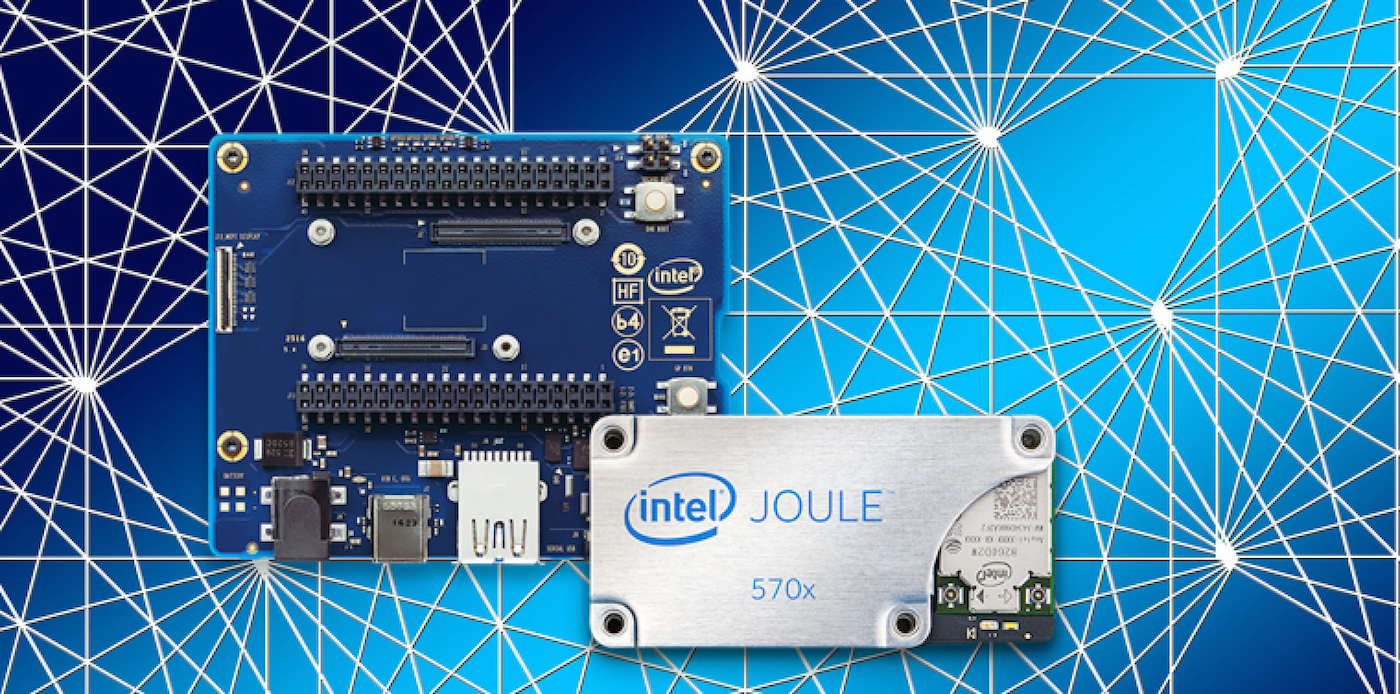
On the x86 side, Intel may have given up on pushing its increasingly power-efficient Atom SoCs at smartphones, but it continues to aim Atoms at the embedded market. Its IoT-oriented Intel Joule module runs on the latest, 14nm “Broxton-M” Atom SoCs — the quad-core Atom T5700 and T5500 – and is supported by the Yocto Project-based Ostro Linux.

While Intel’s latest Quark processors are aimed at RTOSes, its original line of Linux-driven Quarks continue to target both IoT endpoints and low-end gateways. The Quark X1000 runs Linux, and has appeared on low-end IoT gateways such as the Advantech UNO-1252G. Higher-end gateways like Axiomtek’s ICO300-MI are more likely to use Atoms. AMD, meanwhile, has seen its x86-based G-Series SoCs rolled into various IoT boards and devices.

The top-level gateways that aggregate and process data from other gateways tend the use more powerful x86 and ARM platforms. These systems feed data to IoT cloud servers where software, rather than hardware, is the IoT differentiator.

Although industrial, rather than consumer IoT, will likely be the main driver of the industry over the next few years, it will largely remain invisible beyond the developer world. For most people, IoT is a Linux-driven smart home hub, and Android or iOS smartphone app, plus a kit full of “smart devices.” Next week, we’ll look at consumer-facing, Linux-driven home automation platforms, examining both open source and commercial options.


Read the previous articles in this series: Who Needs the Internet of Things? and 21 Open Source Software Projects for IoT.
 
Interested in learning how to adapt Linux to an embedded system? Check out The Linux Foundation’s Embedded Linux Development course.

Open Source Projects Must Work Together to Survive

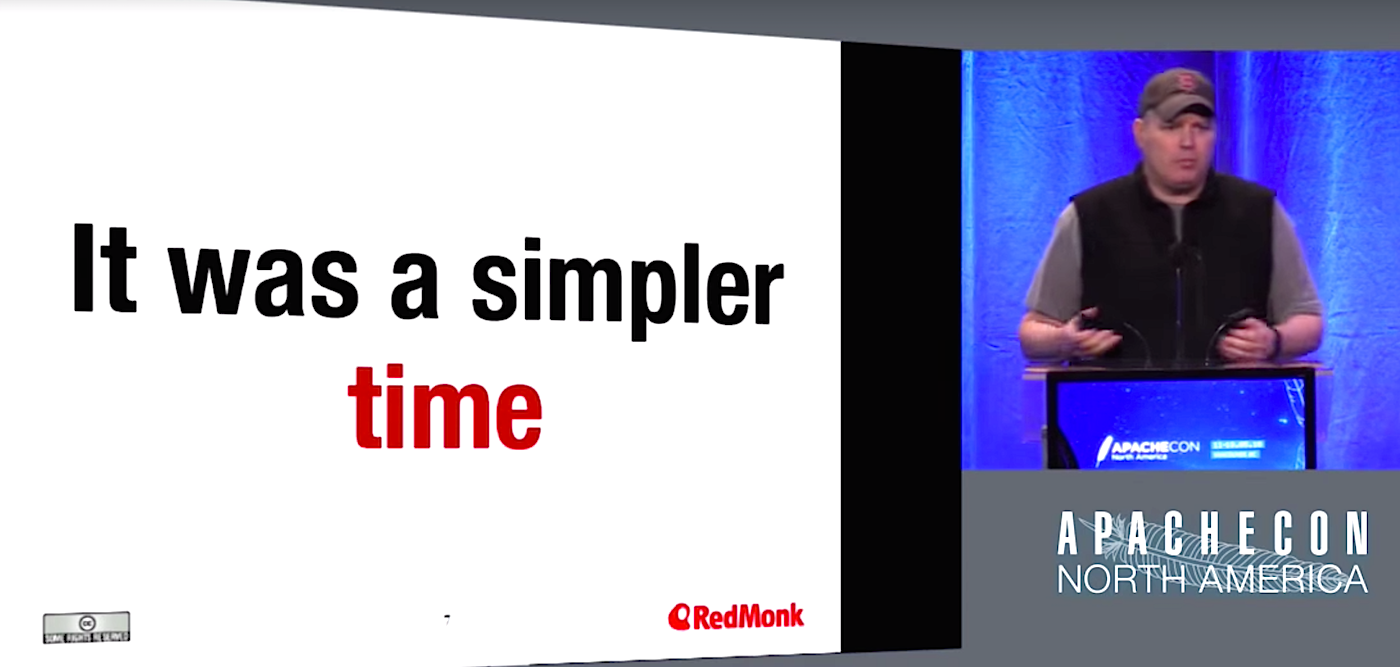
Open source software is in danger of being beaten at its own game by upstart services that are tightly integrated, less complex, and easier to use. That message was at the heart of the cautionary tale told by Stephen O’Grady in his keynote at this year’s ApacheCon North America in May.

O’Grady, Principal Analyst & Cofounder of RedMonk, recalled his years as a systems integrator, pointing out that open source software took a big bite out of the enterprise software market when it became more accessible and easier to use.

“When you’re competing against the traditional (software) companies … you’re competing against something that is complex,” O’Grady said. “What if your competition isn’t complex anymore? What if the new competition is even simpler, easier to use, and faster to pick up than you are? What does that mean? To me, it means that you’re essentially at risk of being divided and conquered.”

O’Grady pointed to Amazon Web Services and the platform’s tight integration and easy to use interface for developers as areas where open source’s competition has an edge.

The problem open source faces, he said, is that the projects are often fragmented and competing, and integration points with other projects aren’t often considered early in their lifecycle. It’s a vast and complex landscape, even just at Apache, and it can be difficult for potential users and customers to know where to start. Too much choice can be bad thing.

“Back in 1998 (pre-open source), my hardest choice was: which product (am I going to buy?),” O’Grady said. “When I look at things today, when I look at the (open source software) market today, I can’t even get to the product or project yet, I have to figure out what my approach is going to be. What is my architecture going to look like and what are the components of that architecture. These are hard questions. They’re hard questions for developers, and they’re even harder for businesses.”

The solution is to start to think about logical groupings for different projects, things that might turn into a reliable technology stack, O’Grady said. He pointed to the LAMP web application stack — Linux, Apache, MySQL, and PHP as an example.

“People rarely use just one Apache project,” O’Grady said. “As all of you move forward, how can (you) create connection points? How do I ease the burden on the user? You have to make friends. You need to join together, or you might die.”

Watch the complete presentation below:

https://www.youtube.com/watch?v=VE2MQ3w8d1M?list=PLGeM09tlguZTvqV5g7KwFhxDlWi4njK6n

linux-com_ctas_apache_052316_452x121.png?itok=eJwyR2ye