Google has emailed Android developers advising them to update Android Studio, the official Android IDE, to fix security bugs. Other versions of the JetBrains IntelliJ IDE, on which Android Studio is based, are also affected.
The bugs are related to the built-in web server in the IDE. A cross-site request forgery (CSRF) flaw means that if the IDE is running and the developer visits a malicious web page in any browser, scripts on the malicious web page could access the local file system.
Security and data privacy spending for the Internet of Things (IoT) will increase this year to $348 million, according to Gartner. Why and how are companies upping their IoT security investments? Here’s a look.
As industry interest in IoT grows, there’s no question that security has now become a major part of the IoT conversation. “IoT security has gone from being the No. 2 to the No. 1 barrier to IoT adoption,” says analyst Christian Renaud of 451 Research. One of the biggest issues is that traditional security strategies don’t necessarily work for IoT devices, due to hardware constraints. For example, as Juniper employee Aditya Chaturvedi explained in a recent blog post, authenticating devices via cryptographic certificates, a technique widely used for applications on the Web, is not feasible for all IoT devices — because some lack the storage capacity and power to handle certificates.
Hybrid cloud storage promises to provide the enterprise with agile, elastic, and reliable virtual storage services that can also accelerate adoption of other cloud-enabled IT solutions. As companies succeed with cloud transformation projects and IT adopts more of an internal service provider orientation, they don’t just save on hybrid cloud economics but business-side IT clients gain from increasingly responsive, agile, application focused IT capabilities.
In recent field research that we’ve conducted here at Taneja Group interviewing a number of hybrid cloud storage adopting IT organization, we’ve found that hybrid cloud storage makes a great cloud “on-ramp” initiative.
Imagine what it would be like if we had to remember the IP addresses of all the websites that we use on a daily basis. Even if we had a prodigious memory, the process…
[[ This is a content summary only. Visit my website for full links, other content, and more! ]]
2016 will be an inflection point for SDN and NFV. Momentum is shifting from early adopters to an early majority of communication service providers.
But as telecommunications organizations begin to move from intent to action, what is the best way for them to map out an aggressive but viable long-term plan to SDN and NFV success? This challenge can best be addressed by asking three questions.
What are the areas of strategic focus for the organization to match technology with business opportunities?
What are the investments needed over the next five years to accelerate the benefits and return on investment from deploying SDN and NFV?
Third, what are the required organizational changes to make this transformation successful?
In order to help organizations navigate this complex set of issues, Intel worked with customers, partners and service providers to develop a Network Transformation Maturity Model designed to help prioritize activities, measure progress in the development of capabilities and allow organizations to benchmark themselves against their peers.
Robert Waterworth presents an outline of the modules, tools, and governance being developed by an international group organized by the Clinton Climate Initiative for use in monitoring, reporting, and verification of carbon emissions from the land sector. He discusses the international agreements that have led to the need for such tools and why a second generation of technology is critical for handling the enormous quantities of data now available from satellites and ground-based measurements on topics ranging from deforestation and land restoration to agriculture.
Having largely accomplished its original mission of moving carriers to voice-over-IP (VoIP), the i3Forum is now expanding its scope to help wholesale carriers adopt network functions virtualization (NFV).
The i3Forum is a nonprofit group for wholesale voice carriers. Its members include AT&T, BT, CenturyLink, Deutsche Telecom, Orange, Verizon, and Vodafone. It was created to help voice wholesalers — carriers that create interconnections between each other’s networks — migrate away from time division multiplexing (TDM).
The i3Forum recently published a “Primer on NFV,” which says wholesalers will likely deploy NFV first in greenfield networks. The paper says network elements where NFV can make sense are:
Evolved packet core (EPC) — for mobile broadband access
IP infrastructure for LTE IP multimedia subsystem (IMS) — for the SIP infrastructure behind VoLTE
Session border controllers — for IP-based voice network interconnection
The paper also gives some potential NFV use cases for wholesalers.
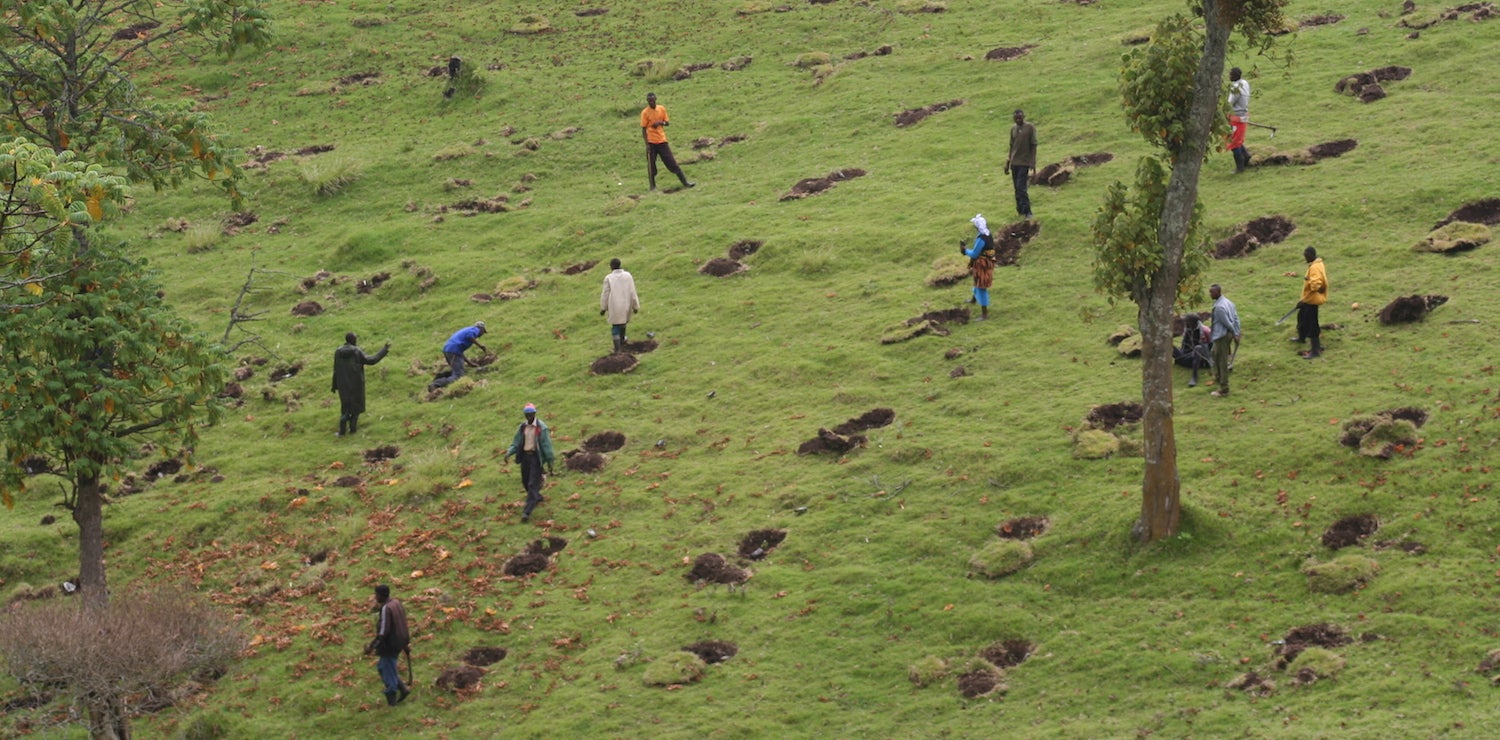
To understand and address issues such as land degradation, deforestation, food security, and greenhouse gas emissions, countries need access to high-quality and timely information. As these challenges have become more urgent over the past decade, the need for more information has also increased. At the recent 2016 Linux Foundation Collaboration Summit, we introduced a new open source project called moja global, supported by the Clinton Foundation and the governments of Australia, Canada and Kenya, that aims to provide the tools necessary to help address these issues.
The past decade has seen considerable advances in satellite technology and methods. There have also been large-scale campaigns collecting ground measurements, which can be combined with satellite data to produce the information required by countries to plan and respond to land management issues.
Unfortunately, few tools exist that can integrate these data into coherent, operational systems. Instead, analysis of satellite and ground data largely continues in isolation, often with little consideration of the expected end uses or actual country need.
This is partly due to the lack of generic tools that allow countries to combine their own ground and satellite data to meet their specific needs. This also leads to countries building several smaller, custom-developed tools. This is slow, inefficient, and results in a proliferation of approaches and systems that are not comparable.
FLINT
The moja global project will help provide software and data solutions for countries and communities to better manage their land. The initiative aims to develop and manage new generic tools that can be used by any country, NGO or private sector organisation to combine satellite and ground data to develop efficient and credible systems that put useful data into the hands of decision makers.
Specifically, the moja global team has developed a new integrating tool, the Full Lands Integration Tool (FLINT) that combines satellite and ground data in ways that meet policy needs. The FLINT is based on more than 20 years of experience building and operating similar tools in Australia and Canada, but additional development work is needed.
The FLINT makes developing and operating advanced systems achievable by all countries. It is a generic platform with a modular structure, allowing countries to attach any variety of models or data to build country-specific systems. The platform handles complex computer science tasks, such as the storage and processing of large data sets, leaving users to focus on monitoring, reporting and scenario analyses. A first implementation of these concepts has been demonstrated in Kenya with the System for Land Emission Estimation for Kenya (SLEEK), which runs on the FLINT platform.
Open Source Support Is Needed
But simply having a new tool is not enough. The FLINT needs to be supported and managed at a level that gives governments and other users confidence that it will be sustained in the long-term. Moja global aims to provide this confidence by managing the FLINT as collaboratively developed, professional-grade software. Moja global can also be used to house other software required by governments and other users, such as satellite data processing methods, databases, and GIS processing tools.
A key element of the FLINT is that all of the software will be open source. True open source approaches are uncommon in the land sector software world. Most groups simply place code on GitHub without licensing or processes that foster a diverse developer and user community. Jim Zemlin’s opening presentation at the 2016 Collaboration Summit provides a clear path that needs to be followed if we are to move away from this.
We look forward to working with organizations like The Linux Foundation to create a true open source approach to land sector software — bringing the experience and expertise of the open source developer community for the good of the planet.
This is just the first step in, hopefully, a long journey. Numerous obstacles lie ahead, that are common to many other software projects. The moja global project must actively address issues of funding, developer time, documentation, community management, organizational roles, and project management. We invite you to join us in building moja global into a vibrant open source project working to create the tools that countries and communities need to improve land management.
To find out more about moja global and assist in the development of the FLINT, please contact us at info@moja.global, or @mojaglobal on Twitter.
Most DevOps platforms and tools are designed with scalability in mind. DevOps environments often run in the cloud and tend to be volatile. It’s important for the software that supports DevOps to be able to scale in real time to address spikes and lulls in demand. The same thing is true for the human element as well, but scaling collaboration is a whole different story.
Collaboration across the enterprise is critical for DevOps success. Great code and development needs to make it over the finish line to production to benefit customers. The challenge organizations face is how to do that seamlessly and with as much speed and automation as possible without sacrificing quality or performance. How can businesses streamline code development and deployment, while maintaining visibility, governance and compliance?
For JJ Asghar, senior partner engineer of OpenStack at Chef, there is one issue that continues to hamper OpenStack’s success: Operations. It’s no secret in the Ops community that there is a large barrier to entry involved in becoming a part of theOpenStack community. When it comes to submitting bugs, reporting issues, and ensuring one’s OpenStack cloud runs smoothly, operations teams find themselves facing an uphill battle.
That is, until now. Asghar’s proposed solution is called OSOps, a place where operations team members of all skill levels can come together in a welcoming and accessible environment to point out the issues they are facing. One where they know someone will go to bat for them.