Which technology will you use to deploy your next big application?
The data center is changing. Again. In the olden days, really not all that many years ago, pretty much every server that sat on a rack in a data center was fairly straightforward (if you could call it that). Each machine ran a single operating system, and often many programs, each requiring their own updates, upgrades, and patches. It was, putting it nicely, a hard situation to maintain, though many management tools emerged to help administrators keep all of their machines safe, secure, and up-to-date.
At The Linux Foundation we support a variety of community initiatives and organizations that are advancing free and open source software and creating opportunities for people from all backgrounds and ages to contribute. We focus this support through partnerships, donations and activities like the workshop we’re planning with Kids on Computers.
Just last week we announced a comprehensive, new partnership with Kids on Computers in an effort to further our commitment to supporting the future of open source. Our partnership includes a hands-on workshop for children to run their first Linux installation and will likely be hosted at a LinuxCon event this year. It also includes free and discounted passes to Linux Foundation events for members and volunteers of Kids on Computers. We are also making a donation to the organization to help advance their larger education and technology accessibility mission.
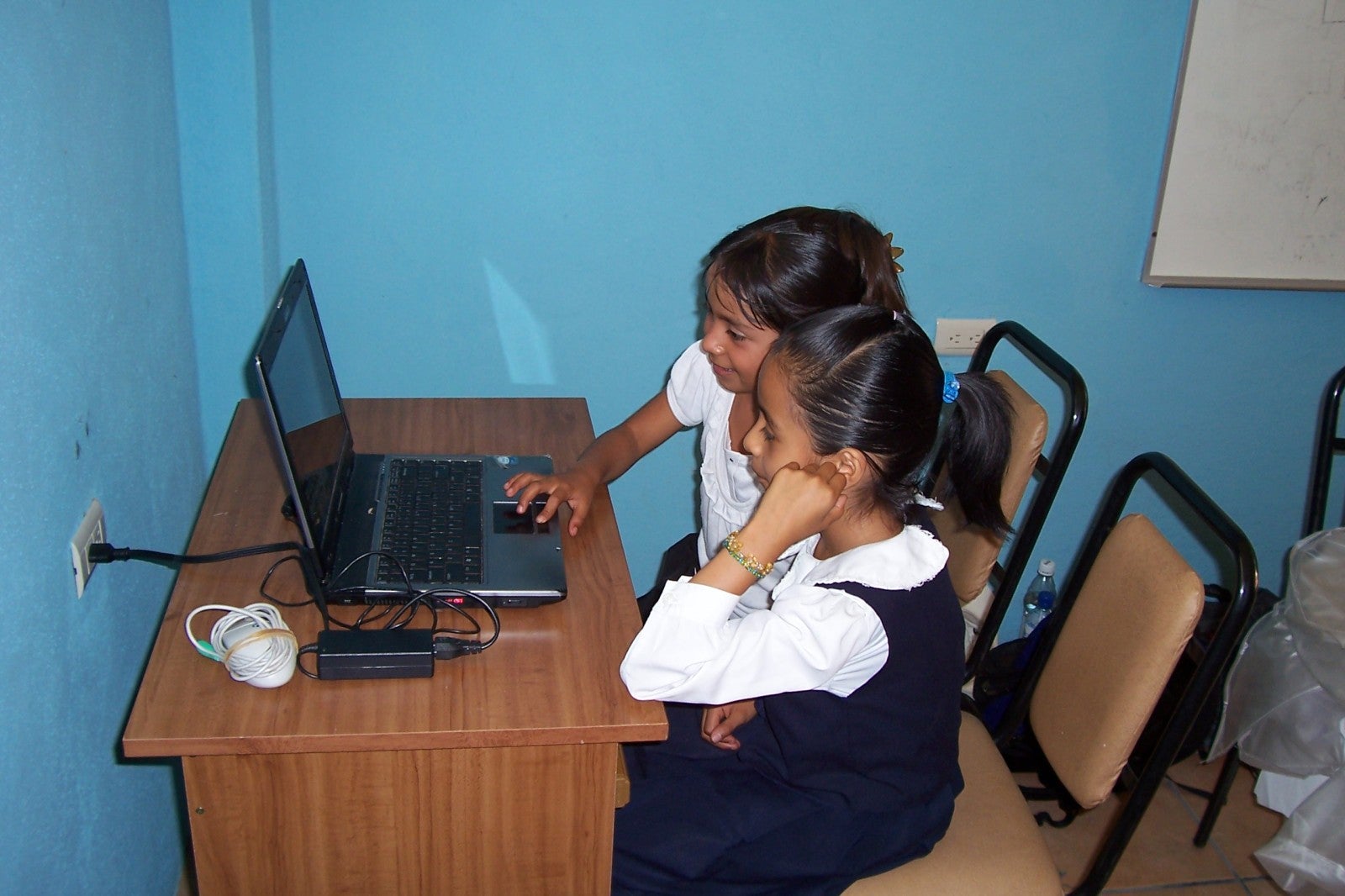
Kids on Computers is a nonprofit organization that establishes computer labs around the world for kids who don’t have access to technology. The organization uses free and open source software (FOSS) to build and supply computers to eighteen computer labs throughout Mexico, India, Morocco, Nepal and Argentina.Their work extends opportunities to the next-generation of FOSS developers and SysAdmins.
“Linux provides a free and open source platform for our kids to learn about technology,” said Avni Khatri, Kids on Computers President. “This partnership with The Linux Foundation aligns with our mission perfectly and will allow us to impact the lives of even more kids. Partnerships like this are what keep the technology field growing and moving in new directions. We thank The Linux Foundation for helping to bring technology to underprivileged kids!”
Through our community giving work we hope to help advance like-minded organizations that protect and advance free and open source software; increase diversity in technology and the open source community; support career development opportunities for the next generation of IT managers and developers, regardless of background or circumstances; and empower open source professionals to take on leadership opportunities and advance open source. The greatest shared technology investments begin with a vision, a passion for innovation, and a talent pool of individuals who understand the power of collaboration. We’re excited about our work with Kids on Computers and for what the future holds.
Refreshing in memory similar problem with Nova-Docker Driver (Kilo) with which I had same kind of problems (VXLAN connection Controller <==> Compute) on F22 (OVS 2.4.0) when the same driver worked fine on CentOS 7.1 (OVS 2.3.1). I just guess that Nova-Docker driver has a problem with OVS 2.4.0 no matter of stable/kilo, stable/liberty, stable/mitaka branches been checked out for driver build.
I have to notice that issue is related specifically with ML2&OVS&VXLAN setup, RDO Mitaka deployment ML2&OVS&VLAN works with Nova-Docker (stable/mitaka) with no problems.
I have not run ovs-ofctl dump-flows at br-tun bridges and etc,because even having proved malfunctinality I cannot file it to BZ.Nova-Docker Driver is not packaged for RDO so it’s upstream stuff.Upstream won’t consider issue which involves build driver from source on RDO Mitaka (RC1).
Thus as quick and efficient workaround I suggest DVR deployment setup.It will result South-North traffic to be forwarded right away from host running Docker Hypervisor to Internet and vice/versa due to basic “fg” functionality ( outgoing interface of fip-namespace,residing on Compute node having L3 agent running in “dvr” agent_mode ).
Thanks to Linux, open source has become the de facto development model for a majority of enterprise software projects — and that’s quickly becoming true in the networking space, as well.
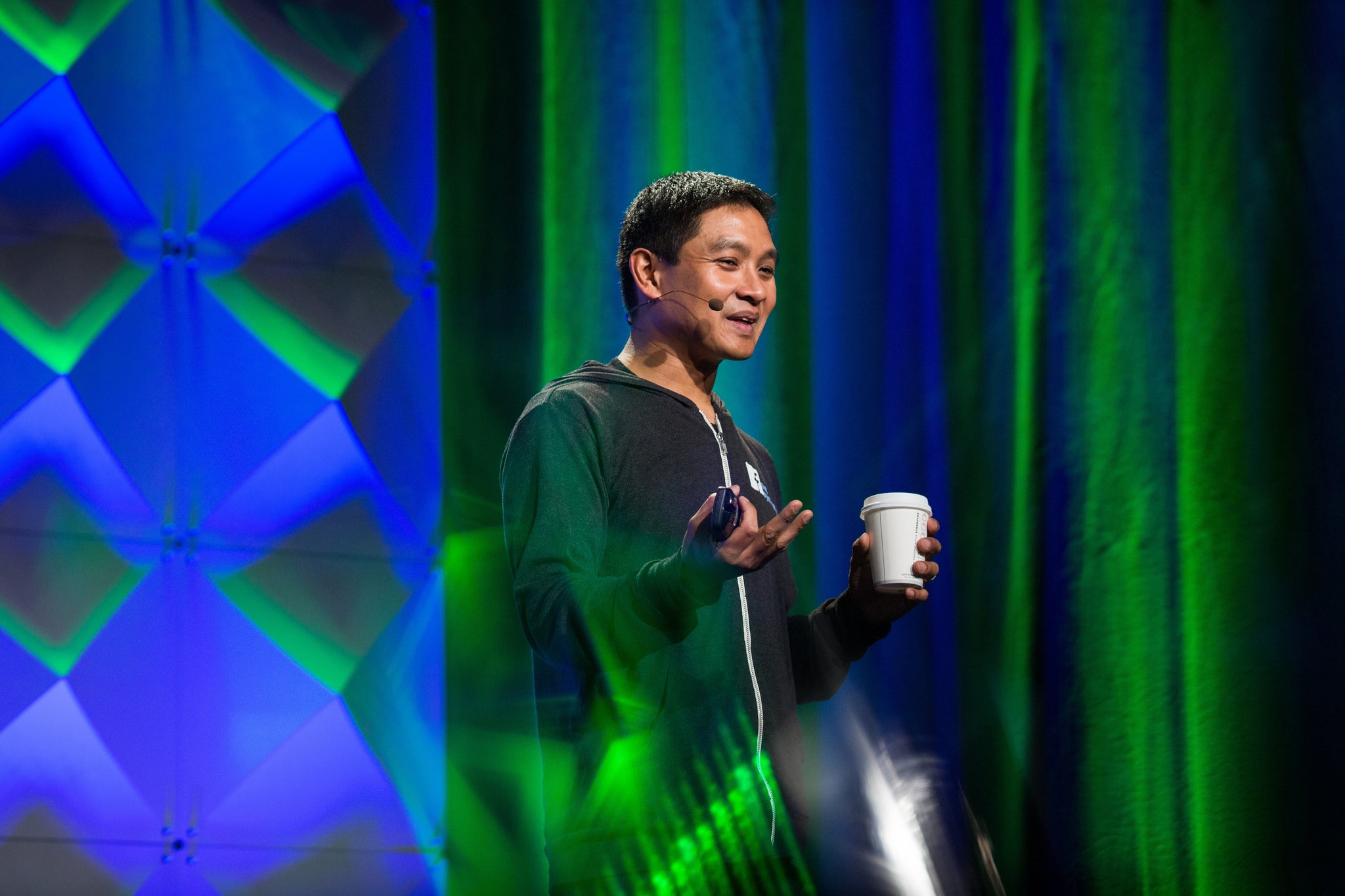
Networking is playing a pivotal role at Facebook, for example, which has written a lot of open source-based software to automate, roll out, and monitor its massive networking infrastructure, said Omar Baldonado, director of engineering at Facebook, in a keynote presentation at Open Networking Summit (ONS) last month.
But one question keeps popping up: how to make money from open source. Peter Levine, general partner at Andreessen Horowitz, a venture capital firm, addressed this question during his ONS keynote. Open source must go beyond Red Hat’s support business model and come up with new business models, he said.
We’ve collected some highlights from these two keynotes, below, and videos are available of more than 20 keynote and plenary sessions from ONS 2016 — watch them now.
Open Source Needs a New Business Model
Although open source has been a tremendous technological innovation, the future of open source is going to require business innovation. Levine said that open source as a service is a great business model and cited the example of companies like GitHub and Databricks that have built businesses around open source. They are not directly monetizing from open source the way Red Hat is.
Another business model, according to Levine is “open core” in which companies build proprietary software on top of open source and sell it as a subscription or traditional licensing model.
Levine then said that the biggest open source company in the world is not what everyone thinks; it’s not Red Hat. Facebook releases a lot of its work in open source and has come up with a business model around advertising — a completely different monetization mechanism.
His point was that companies need to think outside the box to make money from open source.
Developers. Developers. Developers.
Levine also made the interesting point that in today’s world developers are becoming more and more powerful. In the early days, you could buy a piece of hardware and give it to developers to write software for it. Now applications are becoming the lead instead of the underlying hardware or infrastructure.
“If I am a systems company or a networking company and I am going to sell my product, then developers are a very interesting place to start in terms of where products are getting adopted and and how they are getting used,” said Levine. And, as software becomes more and more important, almost every company becomes a software company.
Levine said that every time a disruption occurs, there is an opportunity for new folks to come in and the incumbent base needs to figure out how to actually get there. “Some of this transformation makes it nontrivial to jump over the fence to the other side,” he said.
He gave the example of how virtualization disrupted the server market and it was not the incumbents like Dell, HP, and IBM that benefited; it was software companies like VMware.
We have already seen this change occurring in data centers, and the same is going to happen in the networking space, so the challenge for traditional networking companies is how to make this transformation — which will also cannibalize their own base.
Back to the Future
As an investor, Levine says he doesn’t care about where the hockey puck is; he cares about where it’s going. The gist of what he said was: Cloud computing is not going to be there forever. It will change, it will morph, and he believes that the industry will go from centralized to distributed and then back to centralized. He said that the cloud computing model is going to disaggregate in the not too distant future back to a world of distributed computing.
This is already happening. Whether it’s Tesla or VR handsets, processing is happening locally and not in the cloud. Levine believes that peer-to-peer operations at the end point will become the trend, although it won’t be the same peer-to-peer that we have seen in the past. These peers will be your cars, planes, and boats. It was a very interesting and thought-provoking perspective.
https://www.youtube.com/watch?v=fICRugt9zrY
Both Hardware and Software Matter: Facebook
Levine’s keynote was followed by a presentation from Omar Baldonado, director of engineering at Facebook, who said that both hardware and software are equally important to networking.
He gave an overview of how networking and software are playing a pivotal role at Facebook. No matter what Facebook component you talk about — whether it’s outside-facing products like WhatsApp, Messenger, Groups, Instagram, or Oculus, or internal projects like big data analysis, live streaming, and machine learning — they all run across the same infrastructure and network. The networking teams get involved in everything. Baldonado said they have written a lot of software to automate, roll out, and monitor this massive networking infrastructure.
Facebook’s networking team upgrades the software every week, and Baldonado wants this practice to be adopted elsewhere.This way operations teams don’t have to wait for a whole year and then worry about the 10,000 new features and changes that they have to deal with in upgrades.
The traditional approach to “upgrading” becomes a massive event in itself, which also increases the risk of failure. One or more of those 10,000 features is going to break something, and then it will be hard to find the culprit.
Baldonado also emphasized the policy of “fail-fast” rather than “fail-proof.” He said it’s a tall order to create a 100 percent fail-safe network. He said that we should focus on finding the problem quickly and then automatically resolving it through software. If you assume that different parts of your network are going to fail, your design should accommodate all those failures. You can’t find a perfect switch that never fails. Something will fail, so you should build a system that can detect it and fix it as soon as possible.
He also talked about NetNORAD, which detects network interruptions automatically and mitigates them within seconds — all through software. And, he noted that Facebook has contributed code to some of that work through its open source participation.
But, for all of the amazing things that they are doing with software, Baldonado said, hardware is still just as important. And, that’s where Facebook’s Open Compute Project (OCP) comes into the picture.
“I heard that software eats networking, but software needs to run on something,” he said. And, he noted that OCP shows there is a very rich base of hardware innovation that is waiting for more software to be written to control, manage, monitor, and orchestrate it.
Commenting on the future, Baldonado said that, at Facebook, they want to continue working with the new networking ecosystem, sharing what they do and learning from what other people are doing, too. “We keep on coding!”
Perhaps the biggest surprise to come from Microsoft’s Build developer conference last week was the Windows Subsystem for Linux (WSL).
The system will ship as part of this summer’s Anniversary Update for Windows 10. WSL has two parts; there’s the core subsystem, which is already included in Insider Preview builds of the operating system, and then a package of software that Canonical will provide. The core subsystem is what provides the Linux API on Windows, including the ability to natively load Linux executables and libraries. Canonical will provide bash and all the other command-line tools that are expected in a Linux environment.
DGit uses the sync mechanisms of Git to replicate GitHub’s repositories across multiple servers to make the code hosting platform far less prone to downtime.
GitHub has rolled out a new feature that it claims will make the widely used code hosting platform far less prone to downtime. Distributed Git (DGit) uses the sync mechanisms of the Git protocol to replicate GitHub’s repositories among three servers. Should one server go offline because of a mishap or for maintenance, traffic can be redirected to the other two.
Container orchestration platforms don’t scale very easily by themselves. Containerization truly caught fire early last year when Docker Inc., CoreOS, and new players such as Weaveworks moved overlay networks out of the experimental stage. By providing a view and control of network resources, Overlay Networks can provide a way for containers-based operations to scale into the hundreds of nodes.
But maybe not the thousands. At the Open Network Summit in mid-March in Santa Clara, there was considerable discussion among networking experts about what the major telecommunications carriers call resource orchestration, and how its model of scaling nodes is unworkable, from their perspectives, for scaling at the level required for service orchestration – for addressing thousands of customers simultaneously with high-quality streaming. The telcos are holding out for a full software defined networking (SDN) infrastructure.
The PrimTux project, which develops an education-oriented distribution based on Debian, has released a new version of the French language operating system. The new release, which carries the label “PrimTux Eiffel”, features educational programs…
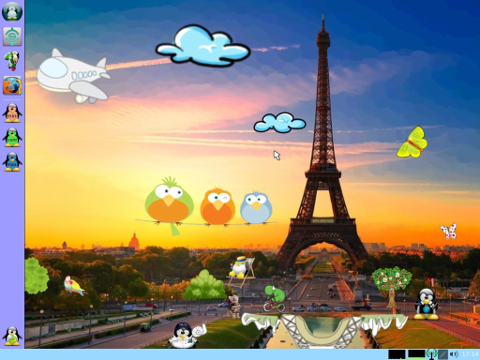
The PrimTux project, which develops an education-oriented distribution based on Debian, has released a new version of the French language operating system. The new release, which carries the label “PrimTux Eiffel”, features educational programs, LibreOffice 4, games and an easy to navigate interface designed with young children in mind. The distribution also features the Handy menu from Handylinux. “PrimTux is developed by a small team of school teachers and computer enthusiasts in the educational environment. For its lightness, it is not intended to replace or become the main operating system of a modern computer, but an upgrade obsolete equipment and pointing toward the school or educational environment in the spirit of education.
Amazon’s Alexa line of products will soon get new home automation skills thanks to the release of an API by the company. Amazon is making a great effort to make Alexa — the smarts behind the Echo — a full platform. This effort includes enabling developers to add “skills” to the Echo, Tap, and Dot products. To aid developers in this process Amazon has released an API — the Smart Home Skill API — for the home automation segment. Read more at ZDNet
The OTA-10 update for the Ubuntu mobile OS has finally arrived today, April 6, 2016, as officially announced by Canonical just a few moments ago, for all supported Ubuntu Phone devices, as well as the first ever Ubuntu Tablet.
We’ve already told you all there is to know about the new features integrated into today’s Ubuntu Touch OTA-10 software update. But to recap, it adds VPN (Virtual Private Network) support, a new welcome wizard, as well as support for downloading phone updates th… (read more)


 Read more at
  The OTA-10 update for the Ubuntu mobile OS has finally arrived today, April 6, 2016, as officially announced by Canonical just a few moments ago, for all supported Ubuntu Phone devices, as well as the first ever Ubuntu Tablet.