Today we are launching the new, redesigned Linux.com. It’s been a long journey since we first surveyed our loyal readers about possible new features. You enthusiastically and generously responded with all of the ways you love – and don’t love – the site. We’ve since taken that feedback and redesigned the site with numerous improvements.
Our goal was to make Linux.com a better experience for our readers:
-
easier to navigate
-
responsive to mobile devices
-
faster to load and page through
-
easier to filter for the content you want, by most popular, most comments, etc.
-
easier to read with a clean, clutter-free design.
You’ll also find many new features including threaded comments, the ability to filter content by keyword tags, and see related content. New personalized profiles also allow registered users to save articles for later viewing, follow comment threads, create and manage blog posts, and see a history of all of their contributions to the site.
In the time that it’s taken to launch the new site the use of open source software has grown and evolved considerably. Open source has become the new norm for software development. What started with Linux, the largest and most successful collaborative project in the history of computing, has now expanded to include technologies all the way up the stack.
The Linux Foundation, which brings us Linux.com, has become the place where a lot of open source development across industries is taking place. It aims to establish, build, and sustain the greatest shared technology resources of our time and support them for generations to come. Projects like Cloud Foundry, Cloud Native Computing Foundation, Core Infrastructure Initiative, Hyperledger, OpenDaylight, the Open Container Initiative, and many others, now have a home at The Linux Foundation.
As a result, Linux.com’s design and focus has evolved and expanded beyond Linux to include a whole host of open technologies. We will continue to provide the Linux information and tutorials you all love and broaden our coverage to topics where open source is quickly becoming the standard including networking, cloud computing, and DevOps.
We’ll also be featuring more blogs from experts inside and outside of The Linux Foundation who are knowledgeable in open source trends and best practices in a new category we’re calling “Open Source Pro.”
Our mission is to help inform and prepare open source professionals who are building the next generation of open technologies, using open source code, tools, and best practices. We want Linux.com to be your go-to resource for the latest in Linux and open source technology, careers, best practices, and industry trends.
To that end, the site we are launching today is a work in progress. We will continue to add features and adjust the content based on your testing and feedback.
We want to hear from you! Please send any feedback or report any bugs you may find on the new site to webteam@linux.com.


 The final release of the Vivaldi 1.0 web browser was launched today, as we reported earlier, and it comes as an alternative to the Opera and Google Chrome browsers for GNU/Linux, as well as Mac OS X and Windows users.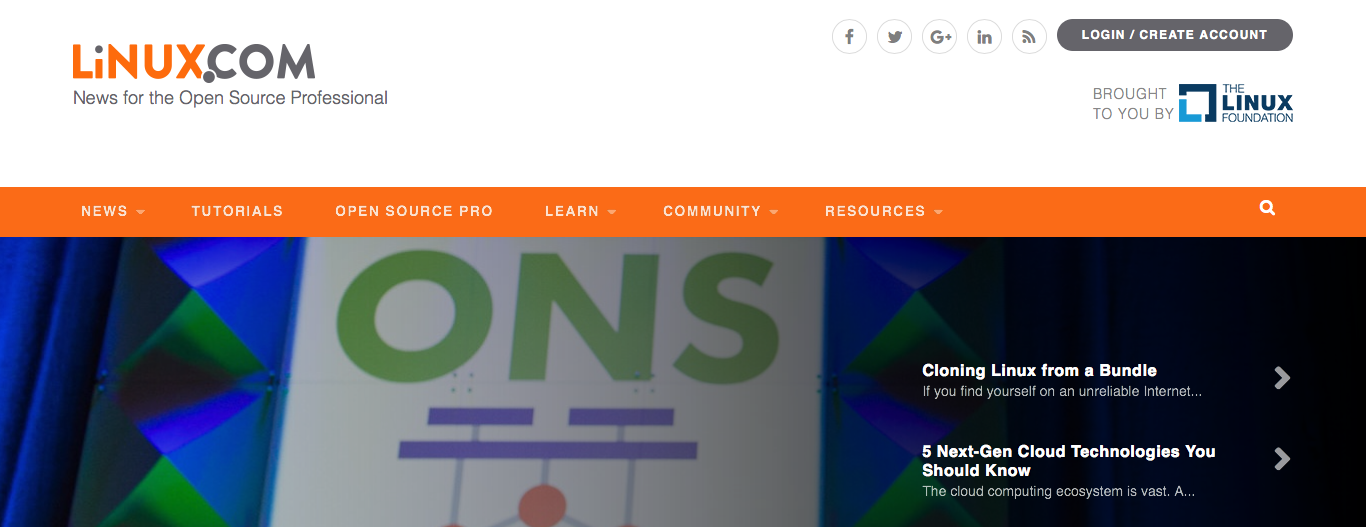
 After being delayed a few weeks, the final release of the open-source Mesa 3D Graphics Library 11.2 arrived earlier today, April 4, 2016, for all GNU/Linux operating systems.
 Łukasz Zemczak of Canonical has just informed the community about the release date of the forthcoming OTA-10 software update for the Ubuntu mobile operating system.
 We reported the other day that the Debian Project announced the availability of the fourth update in the stable Debian GNU/Linux 8 “Jessie” series, along with the Debian GNU/Linux 7.10 maintenance release.